
 English
  Spanish
  Portuguese
  German
  Italian
  Japanese
  French
  Polish
  Russian
  Netherlands
  Hungarian
  Turkish
  Videos
  Thedink Pickleball

The pickleball transition zone is not a sprint. Slow down, stay balanced, and you will reach the kitchen line in better shape to win the rally.
The pickleball transition zone is where most amateur points are lost before they ever reach the kitchen.
You hit a third shot drop, it lands reasonably well, and then you panic.
You sprint forward, arrive off-balance, and pop the next ball straight up for an easy put-away. Sound familiar?This article comes from Mari Humberg Pickleball, and breaks down exactly why rushing through transition is a mistake, what you should be doing instead, and how to move through that middle zone in a way that actually gives you a chance to win the point.
Love pickleball? Then you'll love our free newsletter. We send the latest news, tips, and highlights for free each week.
The Transition Zone Is the Hardest Part of the Court
Most players treat the transition zone like a problem to escape as fast as possible. That instinct is exactly backwards.
The pickleball transition zone is the area between the baseline and the kitchen line.
It is where you are most exposed to hard shots at your feet, and where your balance matters most.
Rush through it and you arrive in a compromised position. Your weight is still moving forward, your paddle is late, and you have no control over the next shot.This clip comes from Mari Humberg Pickleball on YouTube, and the core message is simple: it is not a race.
You do not earn bonus points for getting to the kitchen line in one shot instead of ten.
Why Do Players Keep Rushing?
The rush reflex makes sense on the surface. You know the kitchen line is where you want to be. You know the net player has an advantage.
So your brain tells you to get there fast. But fast and well-balanced are two different things.Getting there fast while leaning forward and scrambling is actually worse than taking an extra two or three shots to arrive in control.
The players who struggle most in the pickleball transition zone are not the ones who move slowly.
They are the ones who move without purpose, never stopping to assess each shot as it comes.According to SFIA's participation research, the rec player pool keeps growing, which means more players than ever are making this exact mistake every weekend.
Check out this breakdown of the three keys to mastering the pickleball transition zone for more on this exact concept.
💡
Need some new pickleball gear? Get 20% off select paddles, shoes, and more with code THEDINK at
Midwest Racquet SportsWhat Does Moving Through Transition the Right Way Actually Look Like?
Here is the framework. Treat each shot in transition as its own individual task, not as a step in a race.
- Hit your shot first. Do not start moving before the ball leaves your paddle. Commit to the shot, then move.
- Take small, controlled steps forward. Do not lunge. Move a few feet, reset your base, and prepare for the next ball.
- Stop before you swing. Every time you can, get your feet set before contact. This is the single biggest balance fix available to you.
- Accept that it might take five or six shots. That is not failure. That is smart pickleball.
- Arrive with your weight centered. Not falling forward, not still moving. Balanced, ready, in control.
This sequence separates players who win transition rallies from players who give points away before they ever reach the line.
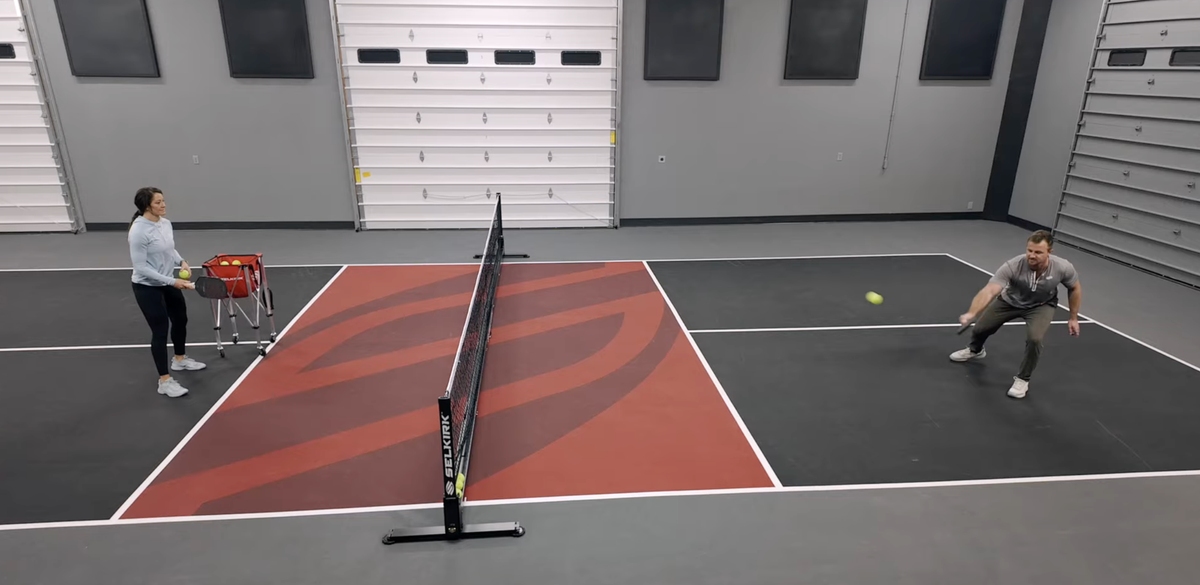
Master the Pickleball Transition Zone: Attack or Reset
The best players in the world aren’t just comfortable in the transition zone – they actively use it to their advantage
 The Dink PickleballThe Dink Media Team
Is There a Right Number of Shots to Get to the Kitchen?
No. There is no magic number, and that is the whole point.
Some rallies will let you advance in two shots. Others will require six or seven.The objective is not speed. The objective is arriving well-balanced with the rally still alive.
If the opponents are hitting hard at your feet in transition, rushing forward only makes that problem worse.
You need time to read each ball, absorb pace, and choose the right shot before advancing another step.
This is also where the transition zone ladder drill becomes extremely useful. It trains you to move in controlled increments rather than sprinting end-to-end.
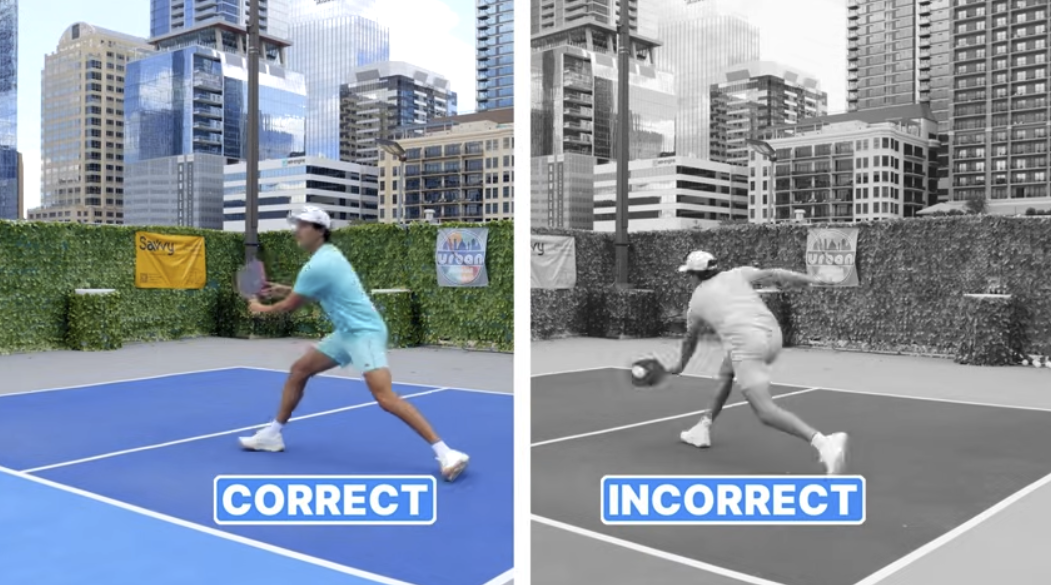
Win the Transition Zone: The Modern Pickleball Guide to Midcourt Aggression
While traditional coaching has long emphasized getting to the kitchen line as quickly as possible, modern pros are turning midcourt aggression into unexpected offensive opportunities
 The Dink PickleballThe Dink Media Team
What Shots Should You Be Hitting While Moving Through Transition?
Your main weapons here are drops and resets. Not drives. Not speed-ups.
The goal of every shot you hit in transition is to take pace off the ball and force your opponents to hit up. That gives you time to move forward safely.
- The drop lands in or just past the kitchen, ideally low enough that your opponent has to lift it back to you.
- The reset is a softer block or dink used when you are under pressure, redirecting a hard shot back into the kitchen.
- The punch volley can work if the ball is high enough, but be careful not to overuse it when you are still moving.
- Driving from transition is almost always a mistake at the recreational level. It keeps your opponents in their power positions and buys you no time to advance.
For a deeper look at managing drives coming at you while you move, read this breakdown on how Mari Humberg handles drives and beats bangers in four steps.
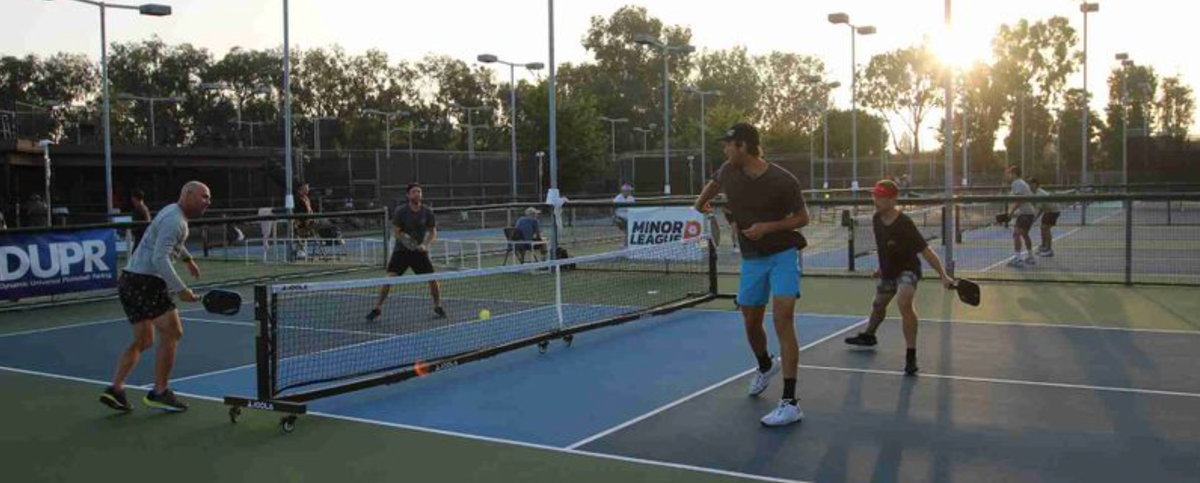
Attack from Pickleball Transition Zone: A Full Guide
Knowing how to attack from transition zone pickleball situations is one of the fastest ways to upgrade your offensive game. This guide breaks down exactly when to pull the trigger, which shots to use, and how to stop bleeding points in no-man’s land.
 The Dink PickleballThe Dink Media Team
Why Does Balance Matter So Much in Transition?
Balance is the foundation of every good shot. When your weight is moving, your paddle face is inconsistent and your contact point shifts. That is where pop-ups come from.
Think about how Anna Leigh Waters moves at the kitchen line. She is never caught leaning. Her footwork is deliberate, and she resets her base before every single shot.
You can apply that same discipline in transition. Every time you feel your weight moving when you make contact, that is a signal you moved too fast.
Stop Hitting Stupid Shots: Why Balance Changes Everything in Pickleball
It’s not about being passive. It’s about being strategic. You’re not giving up the point; you’re buying yourself the chance to win it on your terms, not theirs.
 The Dink PickleballThe Dink Media Team

The Mental Shift That Changes Everything
Stop thinking of the kitchen line as the finish line of a race. Start thinking of it as a destination you arrive at when the conditions are right.
That shift in mindset does something important. It removes the panic.When you are not in a rush, you read the ball better, you make calmer decisions, and you stop giving your opponents easy points off your own mistakes.
This connects directly to the mindset shift that fixes multiple pickleball problems at once. Slowing down your thinking slows down your feet in the best possible way.
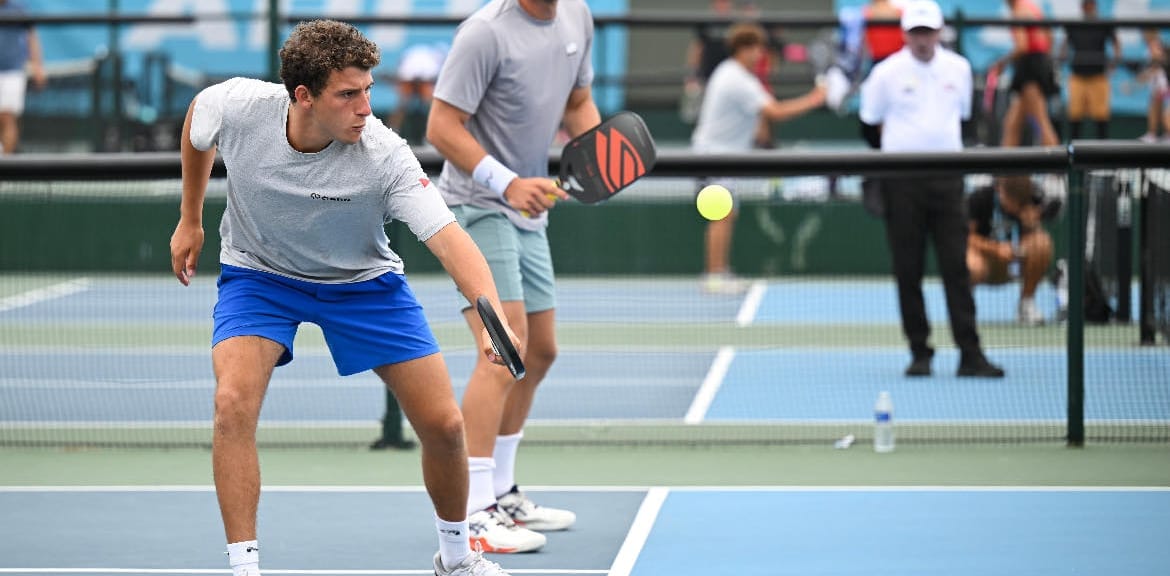
Mental Warfare: What Elite 6.0 Pickleball Players Think During Every Dink
What separates good from great in pickleball is the split-second mental shift that happens the moment the ball leaves the paddle
 The Dink PickleballThe Dink Media Team
Common Mistakes Players Make in the Transition Zone
Here are the patterns you need to recognize and stop doing.
- Moving before the shot is complete. You start walking toward the kitchen while still swinging. Your footwork and your paddle work need to happen in sequence, not simultaneously.
- Trying to drive from transition. Unless the ball is sitting up high and you are already set, this almost never works the way you hope.
- Getting too close to the kitchen too quickly. Charge forward before your opponents are neutralized and you are handing them a ball at your feet.
- Not watching the ball leave your opponent's paddle. Split stepping and reading the ball early is what gives you time to get set before it reaches you.
- Ignoring your partner's position. Transition is a team effort in doubles. Moving together as a unit matters just as much as your own footwork.
For a broader look at patterns holding players back, this list of seven pickleball mistakes killing your game is worth reviewing.
Why Most Pickleball Mistakes Come From the Transition Zone
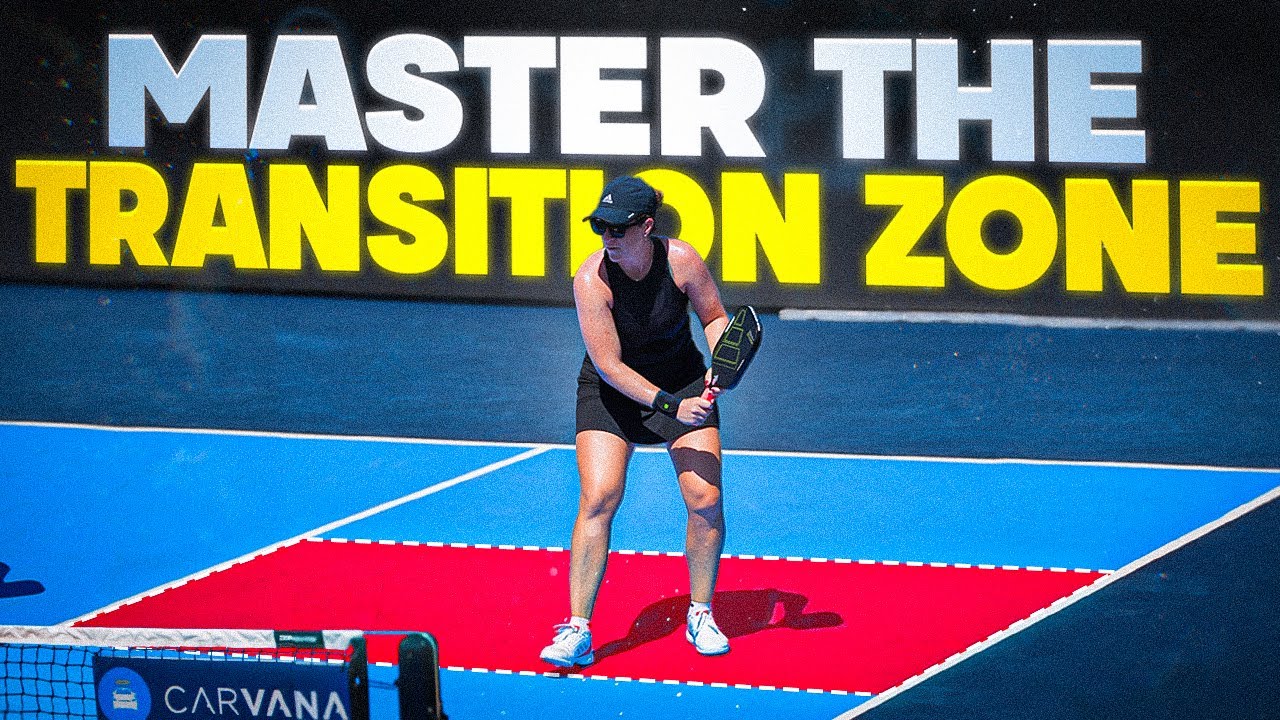
Mari Humberg breaks down her complete transition zone drill sequence, featuring five essential drills that will transform how you move from baseline to kitchen. Master the transition zone drill and become a more complete pickleball player.
 The Dink PickleballThe Dink Media Team
How to Practice This in a Drilling Context
You need reps that specifically train controlled movement. Standing at the kitchen and dinking will not fix this problem.
Start at the baseline and practice working your way forward with a partner feeding from the other side.Focus on stopping before each shot, hitting a quality drop or reset, and only advancing when your shot was good enough to allow it.
If the ball comes back hard, reset again. Do not advance just because time has passed. Advance because your shot earned it.This kind of targeted work pairs well with the approach in this reset drill built specifically for mastering the transition zone.
Master the Pickleball Transition Zone With This Ladder Drill
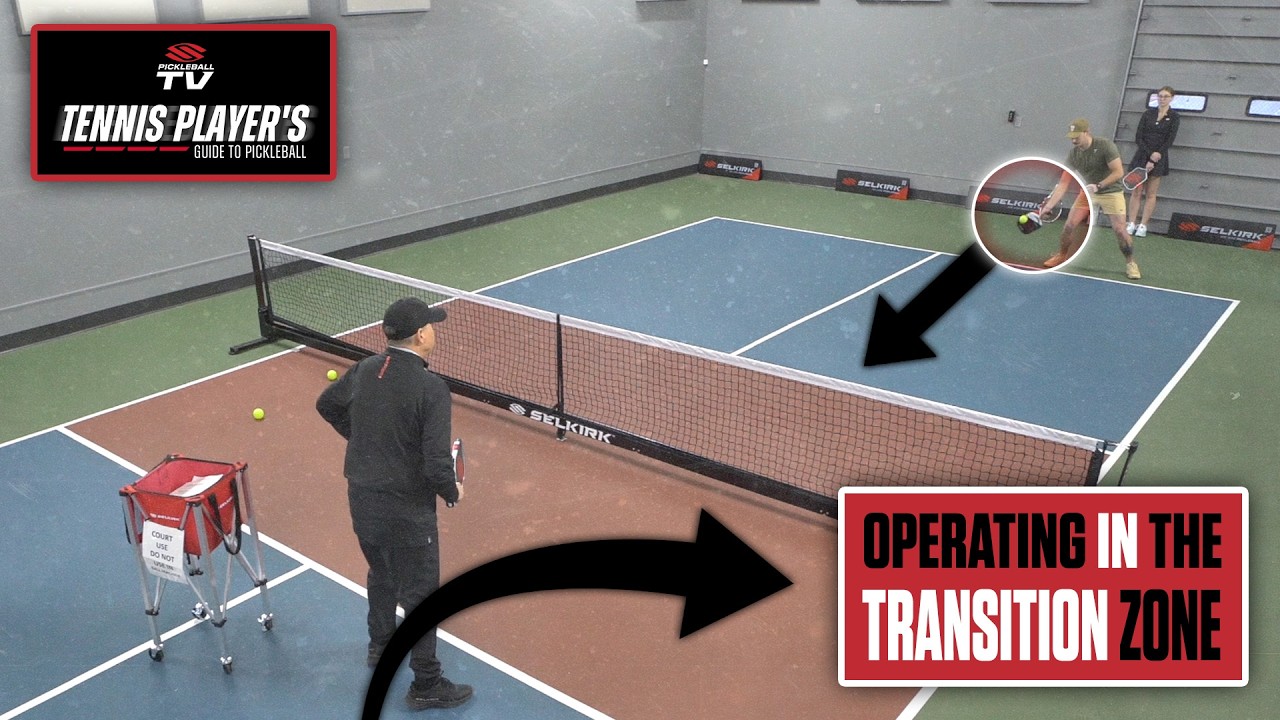
The pickleball transition zone is where most tennis players lose matches before they even know what hit them. This ladder drill fixes the mindset and the movement in one progressive exercise.
 The Dink PickleballThe Dink Media Team
What Happens When You Get It Right
When you move through transition patiently and with control, you arrive at the kitchen in a completely different state.
Your paddle is ready. Your weight is centered. You can actually see the court and make a real decision.That is the version of you that wins points at the kitchen line. Not the version that stumbled forward in three panicked steps and arrived sideways.
The players who consistently win recreational and competitive games are not always faster.
They are more composed. They take the extra shot when they need it, and they never sacrifice balance for speed.If you want to build the full skill set around this, start with what every pro pickleball player does differently. Controlled transition is on that list.
Win the Transition Zone: The Modern Pickleball Guide to Midcourt Aggression
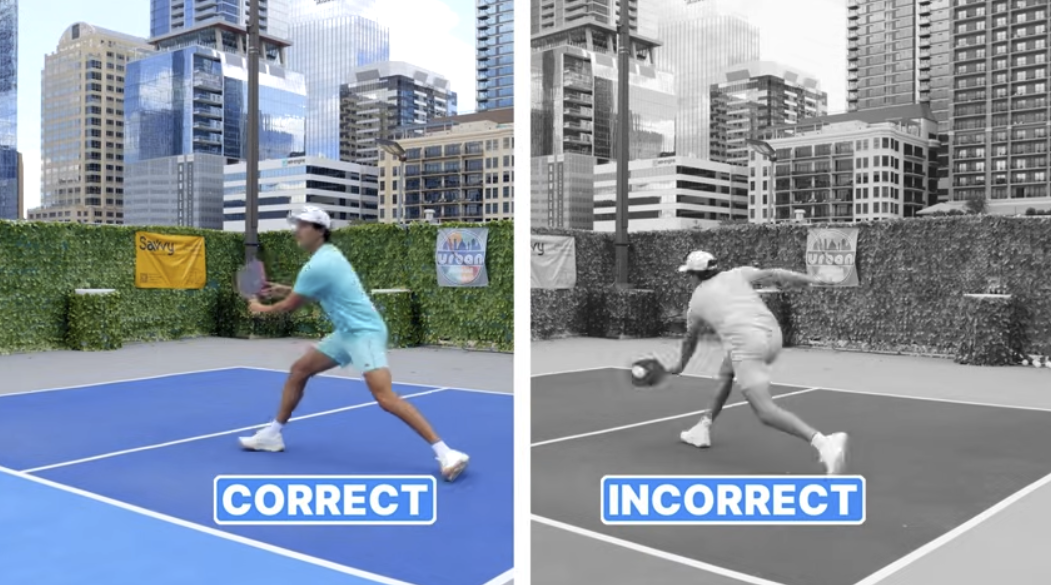
While traditional coaching has long emphasized getting to the kitchen line as quickly as possible, modern pros are turning midcourt aggression into unexpected offensive opportunities
 The Dink PickleballThe Dink Media Team
Putting It All Together
The fix for rushing the transition zone is not complicated. It just requires you to override a bad habit with a better one.
Move forward after each shot, not during it. Stop and get balanced before you swing. Use drops and resets to earn your way forward.And accept that arriving in five or six shots is a win, not a failure.
Your opponents are not giving you points for speed. They are giving you points when you lose your balance and pop the ball up. Take that away from them by slowing down.For more ways to reduce unforced errors and build smarter habits throughout your game, this article on six in-game pickleball mistakes you are making right now covers patterns that show up at every level.
And if you want to see what disciplined transition looks like in a broader strategic context, check out these six third shot drop situations and the right shot for each one.
The third shot is what starts the transition. Getting that right makes everything after it easier.
💡
Heads up: hundreds of thousands of pickleballers read our free newsletter.
Subscribe herefor cutting edge strategy, insider news, pro analysis, the latest product innovations and more.
Frequently Asked Questions
What is the transition zone in pickleball?
The transition zone is the area between the baseline and the kitchen line, roughly the middle third of the court on your side. It is considered the most difficult area to play from because you are exposed to hard shots at your feet and do not have the advantage of being at the net. Most unforced errors in recreational pickleball happen here.
How many shots should it take to get from the baseline to the kitchen?
There is no correct number. It can take two shots or it can take ten, depending on how the rally unfolds. The only goal is to arrive at the kitchen line balanced and in control, however many shots that requires.
Why do I keep popping the ball up when I am moving toward the kitchen?
Popping up in transition almost always traces back to making contact while your weight is still moving forward. When your feet are not set, your paddle face opens up and the ball goes up instead of down. Focus on stopping before you swing, even if it is just for a split second.
Should I drive the ball from the transition zone?
Only if the ball is sitting high enough to attack and you are already balanced. In most cases, a drop or reset is the smarter play because it buys you time to move forward safely. Driving from transition when you are off-balance usually gives your opponents an easy ball to put away.
How do I practice moving through the transition zone correctly?
Start at the baseline with a partner feeding from the opposite kitchen line. Work your way forward one shot at a time, stopping before each contact. Only advance when your shot was good enough to allow it.
Avoid drilling from a static position if you want this to transfer into real match situations.
Anuncie Aqui / Advertise Here
Sua marca para o mundo Pickleball! / Your brand for the Pickleball world!






 English (US) ·
  Portuguese (BR) ·