
 English
  Spanish
  Portuguese
  German
  Italian
  Japanese
  French
  Polish
  Russian
  Netherlands
  Hungarian
  Turkish
  Videos
  Thedink Pickleball

Skip the flashy shots, move well, dink with purpose, and play smart to improve fast.
If you're serious about improving your pickleball game, you might be overthinking it.
Ava Ignatowich, a professional player on the PPA Tour, recently shared the pickleball fundamentals she'd focus on if she had to start from scratch. Spoiler alert: it's not about hitting harder or pulling off flashy shots. It's about the fundamentals that actually win matches.
Love pickleball? Then you'll love our free newsletter. We send the latest news, tips, and highlights for free each week.
1. Pickleball Fundamentals: Master Transition Zone Confidence
The transition zone is where most players panic. It's that awkward middle ground between the baseline and the kitchen, and it separates casual players from competitive ones. Ignatowich emphasizes that beginners often practice drops and resets while standing still, which doesn't translate to real games.
The fix? Always move while practicing these shots. Take a step forward after hitting a drop. Move backward after a reset. This builds the confidence you need when you're actually advancing toward the net during a rally.
Ignatowich recommends two drills to build this skill:
- The Slinky Drill: Start with a dink rally, then take a step back and continue dinking. Keep stepping back until you're at the baseline hitting perfect drops, then step forward to practice moving in. Once you're comfortable, have your partner hit harder to simulate game pressure.
- 7-Eleven: A competitive game where the player starting at the baseline needs seven points and the player at the net needs eleven. This forces you to work your way up the court while playing out real points.
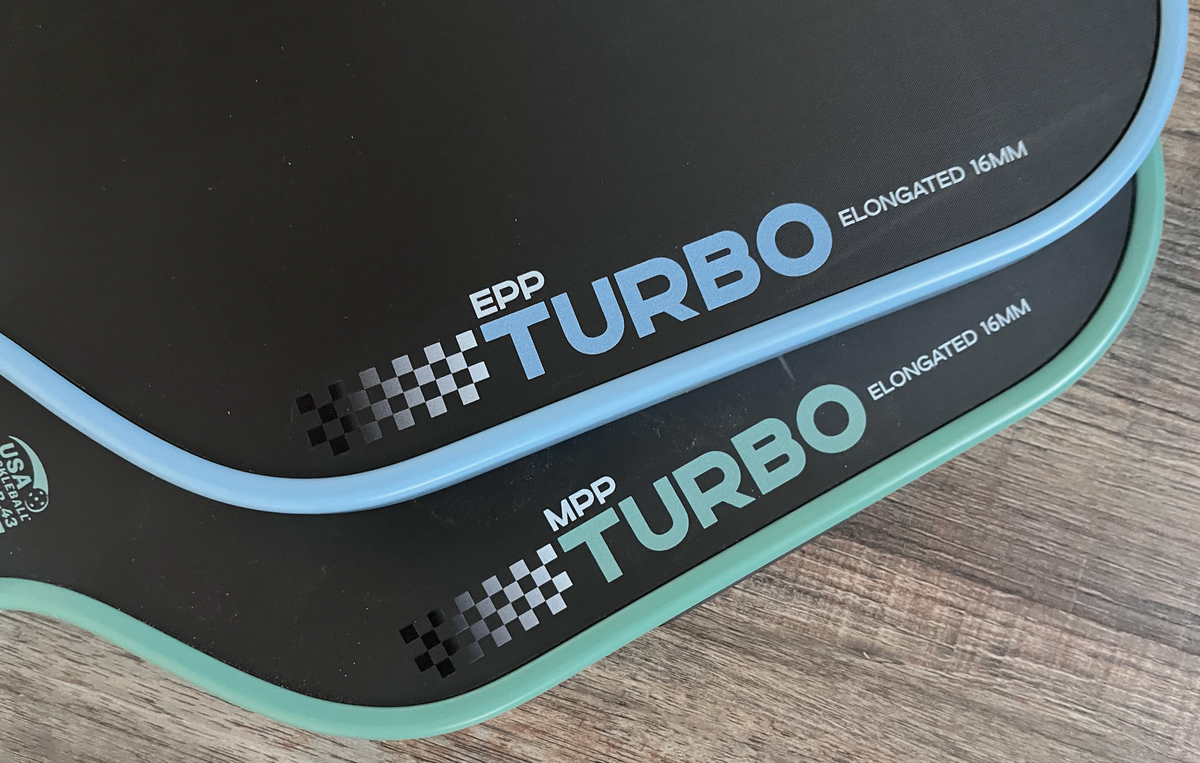
Foam Core Pickleball Paddles: EPP vs. MPP Explained
One is muted and more forgiving, the other is crisper and poppier. Like all paddles, it comes down to feel and player preference.
 The Dink PickleballAlex E. Weaver
2. Dink with Purpose and Read the Kitchen
Random dinking doesn't win games. Strategic dinking does. Ignatowich breaks this into two connected skills: aiming your dinks and anticipating where your opponent will hit theirs.
When you dink, think about placement. Are you hitting wide? Inside foot? Middle? Crosscourt?
Having a plan for each shot creates patterns that set up your team for success.On the flip side, watch your opponent's body and paddle position. Before they even make contact, you should have a guess about where the ball is going. Lean in that direction during your split step.
Over time, you'll notice patterns. If someone's stretched wide on a crosscourt dink, they're more likely to hit middle on the next shot. If your partner is hitting aggressive dinks and your opponent is backing up, a ball might be coming your way soon.
The best way to practice this? Play games and make it a habit. There's no drill that beats real match experience for developing court sense.
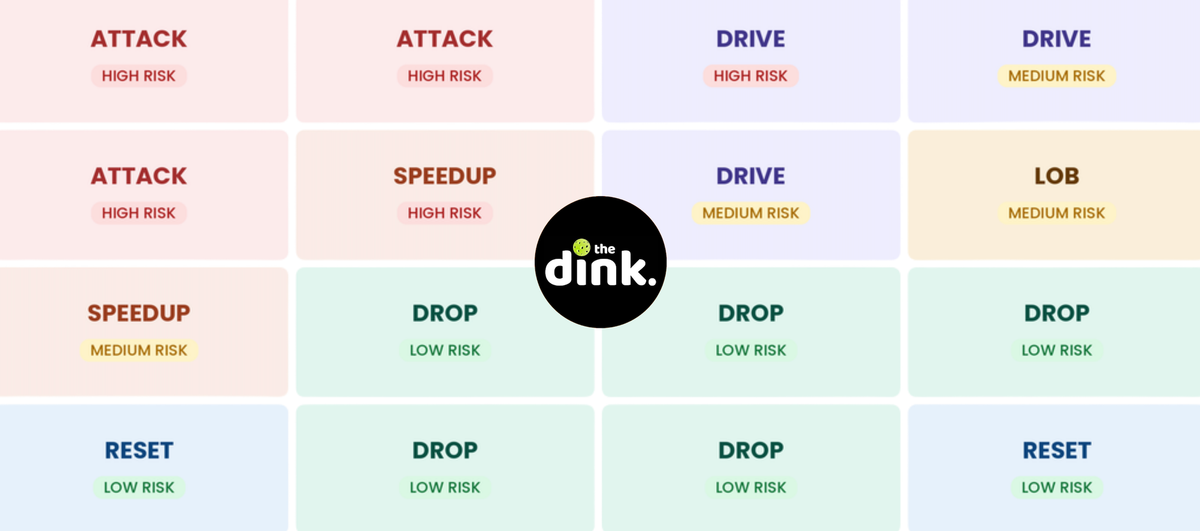
Decision Matrix: When to Attack or Reset in Pickleball
Pickleball is really all about two key factors: your court positioning and the height of the ball. This matrix decodes the game for you.
 The Dink PickleballThe Dink Media Team
3. Know Your Role on Each Side
Here's something that trips up players coming from tennis: in pickleball, the left side and right side have completely different roles. Most balls go through the middle of the court, not the sidelines, which changes everything.
If you're a right-handed player on the left side, your forehand covers the middle. Your job is to play bigger and more aggressive. You're taking at least 55% of the court and looking for opportunities to attack.
On the right side, your backhand is in the middle. Your primary job is setting up your partner for success. Hit crosscourt dinks, work for resets, and create pop-ups for your partner to put away. You're playing a more conservative role, though you'll still attack when a high ball comes right at you.
Understanding these roles early prevents the frustration of trying to play the same way on both sides.
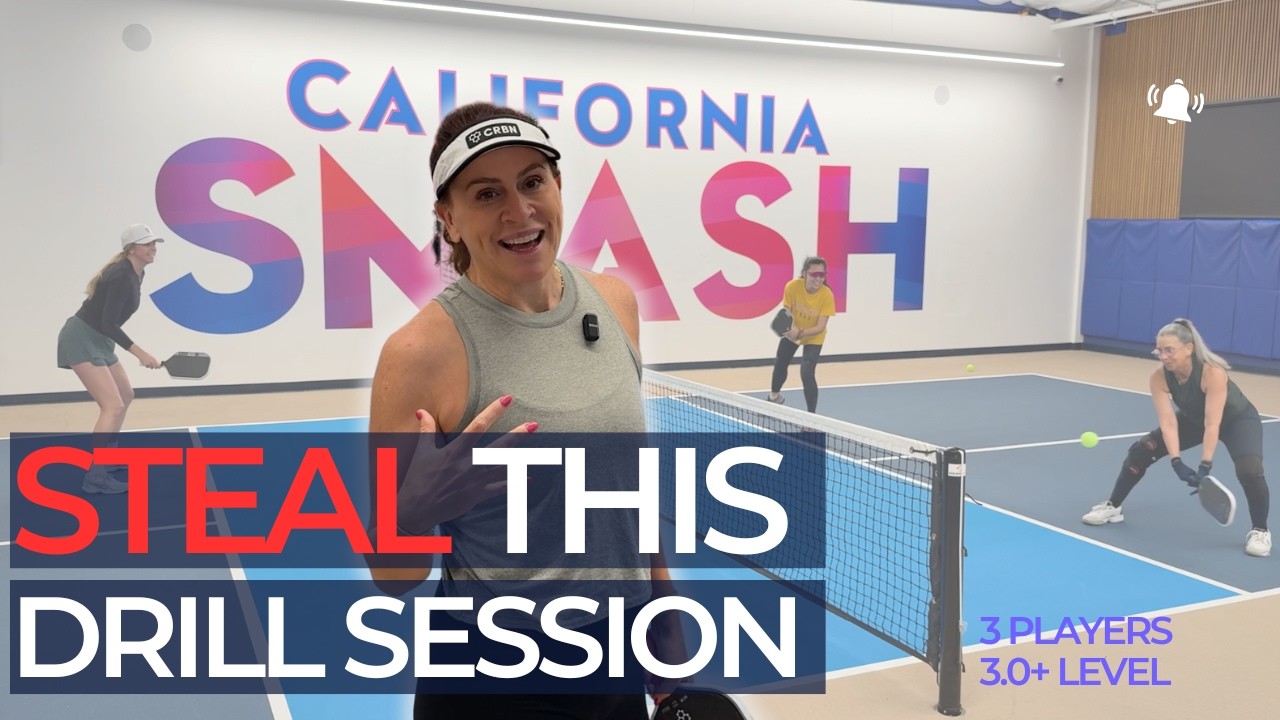
New to Pickleball Drilling? Try This Simple 45-Minute Practice Plan
Before you start drilling, decide which skills matter most to you right now. Intentionality is what separates productive practice from just hitting balls around.
 The Dink PickleballThe Dink Media Team
Bonus Tip: Boring Pickleball Wins
This might be the most important lesson. If you go for five winners and make one but miss four, you've lost four points trying to be flashy. High-percentage play wins matches.
Learn the patterns that work for you. Learn when and where to speed up. Don't be afraid to be aggressive, but also don't be afraid to be boring. The player who makes more balls wins. That's it.
Frequently Asked Questions
What are the most important pickleball fundamentals?
The most important pickleball fundamentals are movement, dinking, positioning, and shot selection. These skills help you control points and win more consistently without relying on power.
How do I improve my pickleball fundamentals quickly?
Focus on repetition and intentional practice. Drilling with movement and playing real games will build your fundamentals faster than casual hitting.
Why is dinking so important in pickleball fundamentals?
Dinking controls the pace of the game and forces opponents into mistakes. It is one of the most reliable ways to create attackable opportunities.
What is the transition zone in pickleball?
The transition zone is the area between the baseline and the kitchen. Learning to move through it confidently is essential for strong pickleball fundamentals.
Is power important in pickleball fundamentals?
Power matters, but only when used at the right time. Consistency and smart decision-making win far more points than hitting hard.
Anuncie Aqui / Advertise Here
Sua marca para o mundo Pickleball! / Your brand for the Pickleball world!





 English (US) ·
  Portuguese (BR) ·