
 English
  Spanish
  Portuguese
  German
  Italian
  Japanese
  French
  Polish
  Russian
  Netherlands
  Hungarian
  Turkish
  Videos
  Thedink Pickleball

A deceptive pickleball shot can turn the tide of any dink battle. This advanced technique gives you three offensive options while your opponents can only defend two.
If you're stuck in endless dink rallies and looking for a way to break through, a deceptive pickleball shot might be exactly what your game needs.
The problem most players face is predictability.
Your opponents read your body language, anticipate your shot selection, and shut down your offense before you even make contact with the ball.
But what if you could disguise your intentions so completely that your opponents couldn't defend all your options at once?
That's the power of the deceptive shot technique that's gaining traction among intermediate and advanced players.
Love pickleball? Then you'll love our free newsletter. We send the latest news, tips, and highlights for free each week.
Why Your Current Kitchen Line Strategy Isn't Working
Let's be honest: if you're playing the same way everyone else is, you're going to get the same results.
Most players approach a neutral ball in the kitchen with their default stroke.
A backhand player hits backhand. A forehand player waits for a forehand opportunity.
Your opponent sees this pattern and positions themselves accordingly.
Tanner Tomassi, the instructor behind this technique, explains the fundamental problem:
"When you're in a dink battle and you get a neutral ball that you can be offensive on, instead of taking it with a backhand like this, I actually want you to run around it and find your forehand."
This simple adjustment changes everything about how your opponent reads the shot.
The Setup: Running Around to Find Your Forehand
Here's where the deceptive pickleball shot begins.
When you receive a neutral ball in the middle of the court, your instinct is probably to take it with whatever stroke is closest.
But the magic happens when you deliberately move to the opposite side of the ball.
By running around the ball, you're not just changing your stroke. You're repositioning your entire body in a way that creates confusion.
💡
Need some new pickleball gear? Get 20% off select paddles, shoes, and more with code THEDINK at
Midwest Racquet SportsYour hips now face toward the sideline or out of bounds, which is the opposite direction of where you're actually going to hit the shot.
This body positioning is the deceptive element that makes the technique work.
Your opponent's brain is trained to read hip rotation and shoulder alignment.
When those signals point one direction and your shot goes another, you've created a split-second advantage that's nearly impossible to defend.
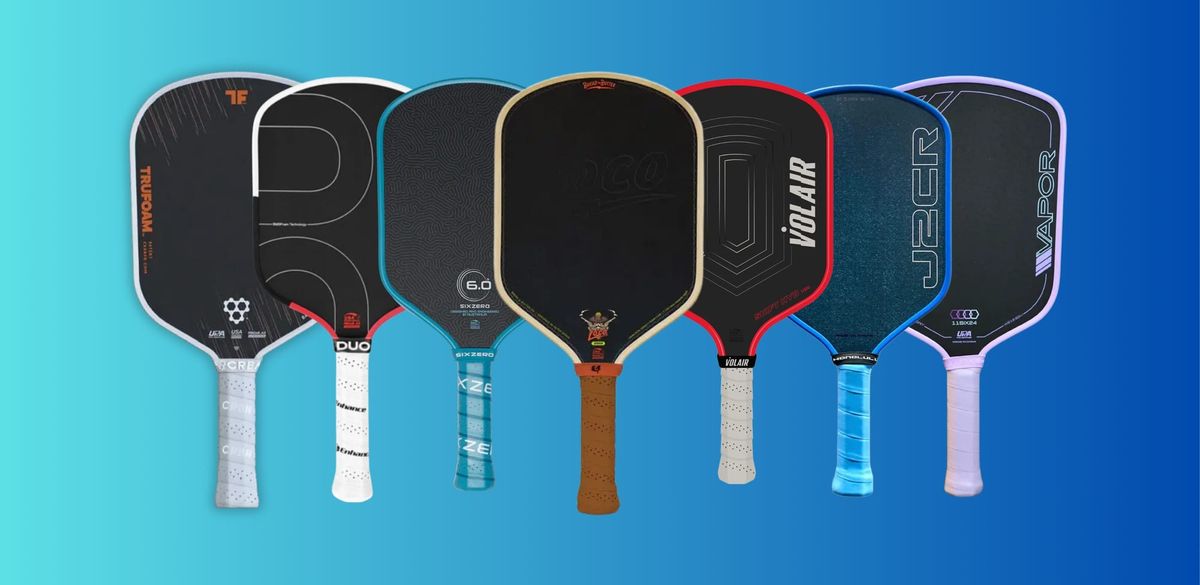
7 Hybrid Pickleball Paddles that Blend Power and Control
None of these are lacking in the oomph department. But their foam cores and hybrid shapes combine to offer more stability, control, and feel when it matters most.
 The Dink PickleballAlex E. Weaver
What Makes This Deceptive Pickleball Shot So Effective?
The real genius of this approach is the math.
Once you've positioned yourself with your hips facing out of bounds, you now have three distinct shot options:
- Speed up down the line
- Speed up through the middle
- Dink it crosscourt
Your two opponents can only defend two of those three options simultaneously.
"My favorite part of the shot is you have three options, but there's only two opponents," Tomassi says.
"So one of these shots is always open for a clean winner."This is what separates a deceptive pickleball shot from a standard offensive stroke. It's not just about hitting harder or placing the ball better.
It's about creating a geometric advantage where at least one of your options will always find open court.The three shot options break down like this:
- Down the line speed up: Targets the sideline on your side of the court
- Through the middle speed up: Splits the two opponents and forces a reaction
- Crosscourt dink: Keeps the ball low and forces your opponents to hit up
Each option has a different trajectory, speed, and landing zone. Your opponent has to commit to defending one area, which leaves the other two vulnerable.
3 Deceptive Pickleball Shots That Will Paralyze Your Opponents
Elite players win by reading body language, staying loose, and disguising their shots until the last possible second
The Dink PickleballThe Dink Media Team

How to Practice the Deceptive Pickleball Shot
Execution matters. You can't just run around the ball randomly and expect results.
The technique requires specific footwork and positioning to be effective.
- First, you need to recognize the right moment. Not every ball in the kitchen is an opportunity for this shot. You're looking for a neutral ball that sits at about waist height or higher, giving you time to move and set up your forehand.
- Second, commit to the movement. Half-hearted footwork will telegraph your intentions. You need to actually run around the ball with purpose, getting your feet set so your hips can face the sideline.
- Third, stay patient with your shot selection. Once you're set up, you have the luxury of choosing which of your three options gives you the best chance at a winner. Don't rush it.
The beauty of this deceptive shot technique is that it works at multiple skill levels. Beginners can use it to create confusion and force errors.
Intermediate players can use it to set up consistent winners. Advanced players can use it as a variation to keep opponents from reading their patterns.
Forehand Flip Pickleball Shot: Master the Deception
Tanner Tomassi shows how small adjustments in setup and timing can completely fool your opponent at the kitchen line
The Dink PickleballThe Dink Media Team

When Should You Use This Deceptive Pickleball Shot?
Timing is everything. You don't want to use this technique on every neutral ball, or your opponents will start anticipating it.
The best time to deploy a deceptive pickleball shot is when you've established a pattern of hitting your normal stroke.
If you've been taking backhand dinks all rally, suddenly running around to your forehand creates maximum confusion.
Your opponent's muscle memory is expecting a backhand, so the forehand comes as a surprise.
You should also use this shot when you're facing opponents who are particularly aggressive at reading your body language.
Some players are naturally gifted at anticipating shots based on hip rotation and shoulder turn.
This technique neutralizes that advantage by giving them false information.
The shot also works well in specific court positions. When you're in the middle of the court with both opponents slightly out of position, that's your window.
If one opponent is already covering the line and the other is covering the middle, you might not have enough open court to make this worthwhile.
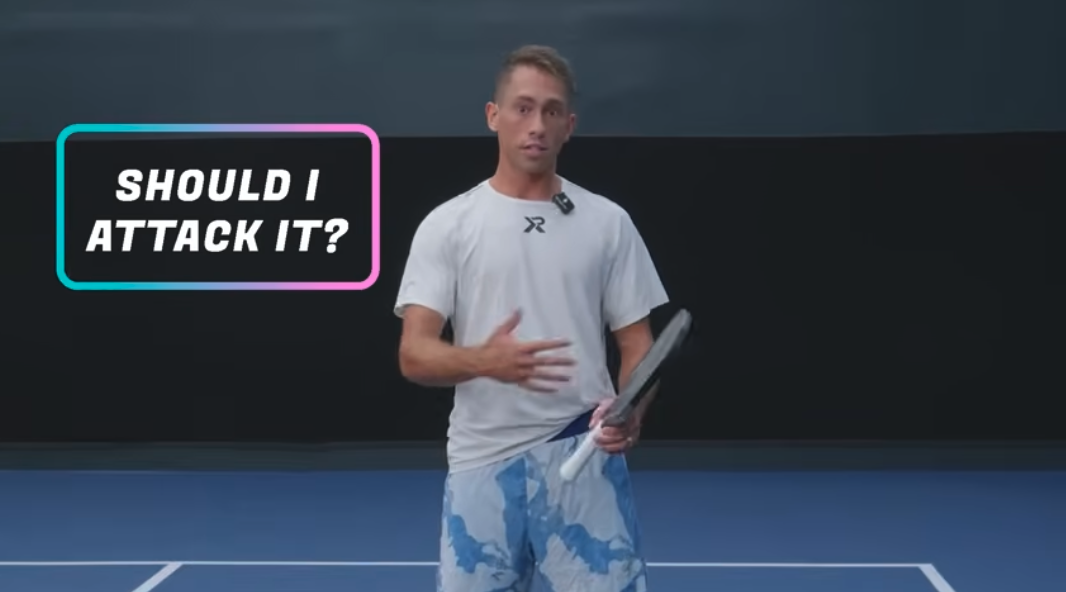
The Backhand Decision Tree: One Pro’s Real-Time Strategy for Cooking at the Kitchen
Zane Navratil has boiled the key steps for a successful backhand dink down to five critical questions he cycles through in real-time. Learn his framework and watch your shot selection – and winning percentage – improve dramatically.
The Dink PickleballAlex E. Weaver
Building Consistency Into Your Deceptive Shot Arsenal
Like any advanced pickleball technique, consistency comes from repetition.
You need to practice this shot enough that it becomes automatic, not something you have to think about during a match.
Start in practice by setting up neutral balls and working on the footwork. Get comfortable with the movement pattern.
Then add the shot selection component. Finally, add the pressure of match play where your opponent is actively trying to defend.
One key detail: make sure you're actually disguising your shot, not just running around the ball.
The deception only works if your opponent genuinely can't tell which of your three options you're going to hit until the last possible moment.
This is where shot placement becomes critical.
Your follow-through, your paddle angle at contact, and your body position through the shot all need to stay neutral until the very last instant.
If you start telegraphing your shot selection early, you've lost the deceptive advantage.
Pickleball Shot Placement: Complete Winning Guide
Whether you’re serving, returning, dinking, or driving, knowing where to aim gives you control over the rally and keeps your opponent reacting instead of attacking.
The Dink PickleballThe Dink Media Team

The Bigger Picture: Why Deception Matters in Pickleball
Pickleball is increasingly becoming a game of information control.
The player who can gather the most information about their opponent's intentions while giving away the least information about their own has a significant advantage.
A deceptive pickleball shot is one tool in that larger strategy.
It's not the only way to win points, but it's an effective way to create opportunities when you're in a neutral position.
The sport has evolved significantly over the past few years.
What used to be a game dominated by power and athleticism is now increasingly about court positioning, shot selection, and tactical awareness.
Techniques like this one represent that evolution.
If you're serious about improving your game, adding deceptive elements to your shot selection is worth the practice time.
It won't work every time, but when it does, it's nearly impossible to defend.💡
Heads up: hundreds of thousands of pickleballers read our free newsletter.
Subscribe herefor cutting edge strategy, insider news, pro analysis, the latest product innovations and more.
Frequently Asked Questions
What's the difference between a deceptive shot and a regular offensive shot?
A deceptive shot uses body positioning and movement to disguise your intentions, while a regular offensive shot relies on speed, placement, or power. The deceptive shot gives you multiple options that your opponent can't all defend simultaneously.
Can beginners use this deceptive pickleball shot?
Yes, beginners can use this technique, though it requires good footwork and court awareness. Start by practicing the movement pattern in drills before trying it in matches. Focus on getting your feet set before worrying about shot selection.
How often should I use this shot in a match?
Use it sparingly and strategically. If you use it too often, your opponents will start anticipating it. The best approach is to establish a pattern of hitting your normal stroke, then surprise them with this deceptive variation when they least expect it.
What if I'm not comfortable running around the ball?
This technique requires some athleticism and court movement. If you're not comfortable with the footwork, practice it in drills until it feels natural. You can also modify the technique by taking a step or two to adjust your positioning rather than a full run-around.
Does this shot work against advanced players?
Yes, it works at all skill levels, though advanced players might anticipate it faster. The key is using it as a variation, not a primary strategy. Advanced players are also more likely to recognize when you're setting it up, so timing and disguise become even more important.
Anuncie Aqui / Advertise Here
Sua marca para o mundo Pickleball! / Your brand for the Pickleball world!






 English (US) ·
  Portuguese (BR) ·