
 English
  Spanish
  Portuguese
  German
  Italian
  Japanese
  French
  Polish
  Russian
  Netherlands
  Hungarian
  Turkish
  Videos
  Thedink Pickleball

The pickleball return of serve is one of the most underrated shots in the game, but mastering it can give you a massive positional advantage. Learn the essential footwork, positioning, and strategy to transform your returns into a weapon.
The pickleball return of serve might be the most overlooked shot in the sport. Most players treat it like a formality, just something to get back over the net.
But here's the thing: if you can develop your return into a strength, you'll gain a massive positional advantage over your opponents before the rally even really begins.
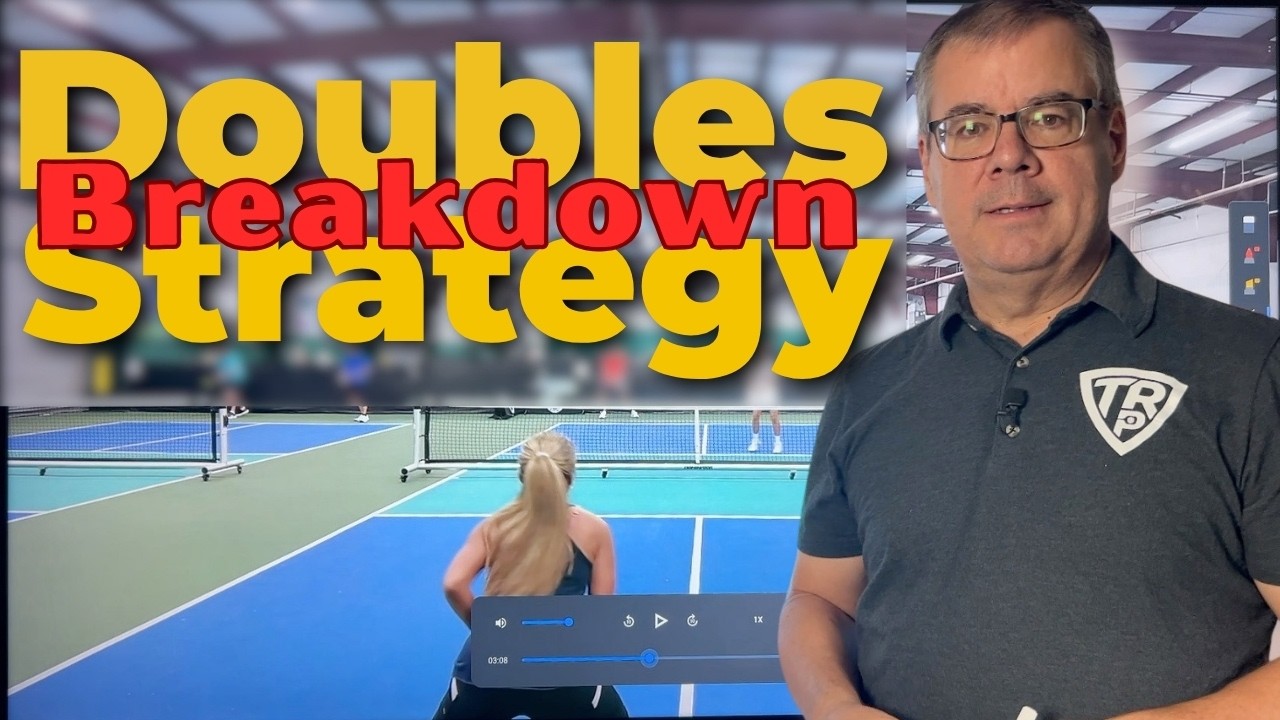
According to Selkirk TV, a leading pickleball education channel, the serve return is where you can immediately shift momentum in your favor.
Your teammate is already positioned at the non-volley zone (the kitchen), while your opponents are stuck at the baseline. That's your edge.
The question is: are you using it?
Love pickleball? Then you'll love our free newsletter. We send the latest news, tips, and highlights for free each week.
Why Your Pickleball Return of Serve Matters More Than You Think
Let's start with the fundamentals. When you step up to receive a serve, you're not just hitting the ball back. You're setting the tone for the entire point.
A weak return gives the serving team time to set up, move forward, and take control.
A strong return does the opposite: it applies pressure, takes away time, and forces your opponents into reactive positions.
DJ Howard, the instructor in the Selkirk TV breakdown, emphasizes that depth is king.
Your primary goal isn't to hit a winner or even to place the ball in a specific corner. It's to get the ball deep into the court, ideally near the baseline.
This simple objective changes everything about how you approach the shot.
When you hit a deep return, the serving team can't immediately advance to the kitchen.
They're forced to hit their third shot from further back, which means less control and more opportunity for you to capitalize. It's not flashy, but it's effective.
The Ready Position: Your Foundation for Success
Before you can hit a great return of serve, you need to be in the right position to receive it. This starts with your ready posture.
Stand with your feet shoulder-width apart, knees slightly bent, and your paddle up in front of your body.
You should be prepared to move either left or right, forward or backward.
The key is anticipation. Watch the server's motion and try to read which direction the serve is coming.
Are they aiming for your forehand or backhand? Is it going to be shallow or deep? The better you can predict these things, the faster you can react.
One critical detail: position yourself slightly behind the baseline. This gives you more time to react to serves that come in deep.
If you stand right on the line, you risk getting jammed up, which means the ball gets behind you and you lose control of the shot.
Pickleball Fundamentals Every Beginner Should Master
John Cincola’s framework offers a clear path forward. Start with understanding the why, layer in better positioning, and keep your mechanics simple.
 The Dink PickleballThe Dink Media Team
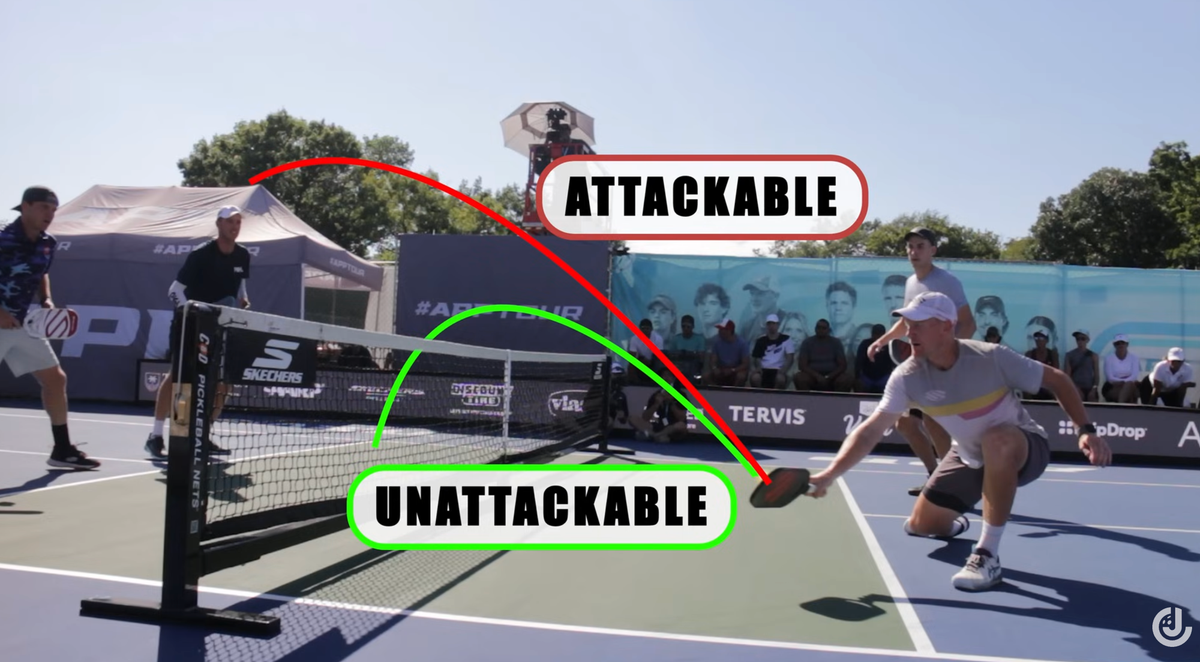
Here's where most players go wrong. They stand flat-footed and just swing at the ball.
But footwork is everything in pickleball, and the return of serve is no exception.
When the serve comes in, your first move should be a small adjustment step to get your body sideways.
If the ball is coming to your forehand, turn your shoulders so your left side faces the net. If it's a backhand, turn so your right side faces the net.
This rotation gives you power and control.
Next, step into the court with your front foot. This is crucial.
By stepping forward, you're doing two things: you're getting closer to the ball, which gives you more time to react, and you're transferring your weight forward, which generates power.
Don't just stand there and reach for the ball. Move into it.
Contact the ball out in front of your body, not beside you or behind you. Specifically, try to make contact out in front of the arch of your foot on whichever side the ball arrives.
This positioning ensures you have maximum control and can direct the ball where you want it to go.
💡
Need some new pickleball gear? Get 20% off select paddles, shoes, and more with code THEDINK at
Midwest Racquet SportsDepth First, Direction Second
This is the mental shift that separates good returners from great ones. When you're receiving a serve, your primary objective is depth. Everything else is secondary.
What does this mean in practice? It means aiming toward the middle of the court rather than trying to place the ball in a specific corner.
By aiming for the middle, you give yourself margin for error. You're less likely to miss, and even if your shot isn't perfect, you're still hitting it deep.
The middle of the court is also the safest target because it creates confusion.
If the serve comes down the middle, both opponents have to make a split-second decision about who's going to hit the third shot. That hesitation is your advantage.
Once you've mastered hitting deep returns consistently, then you can start thinking about direction and placement.
But for now, focus on depth. Get the ball back deep, and let the rest of the point develop naturally.
How Early Preparation Buys Time & Slows Down Pace of Play in Pickleball
When you’re prepared early, you’re not rushed. When you’re not rushed, you make better decisions. When you make better decisions, you win more points.
The Dink PickleballThe Dink Media Team

The Transition: From Baseline to Kitchen
Here's something that separates amateur players from advanced ones: what you do after you hit your return.
Most players hit the ball and then stand there, waiting to see what happens next. But the best returners do something different. They move forward.
After you hit your return, you should be gliding toward the non-volley zone line. This doesn't mean sprinting or running through your shot.
It means maintaining your balance while moving forward with purpose. You want to be in position to hit a volley on the next ball, not stuck at the baseline.
This forward movement accomplishes two things. First, it takes away space from your opponents.
They have less room to work with, which makes it harder for them to hit a good third shot. Second, it puts you in a better position to finish the point.
If you're already at the kitchen line, you can attack the next ball instead of defending from the baseline.
Balance is non-negotiable here. You can glide forward, but you can't sacrifice your stability.
If you're off-balance, you won't be able to react to whatever comes back at you.
How to Move to the Kitchen Line After the Third Shot Drop
Knowing how to move to the kitchen line in pickleball after a third shot drop is the difference between winning and losing rallies. This guide breaks down exactly when to go, how to move, and what to do when you get there.
The Dink PickleballThe Dink Media Team
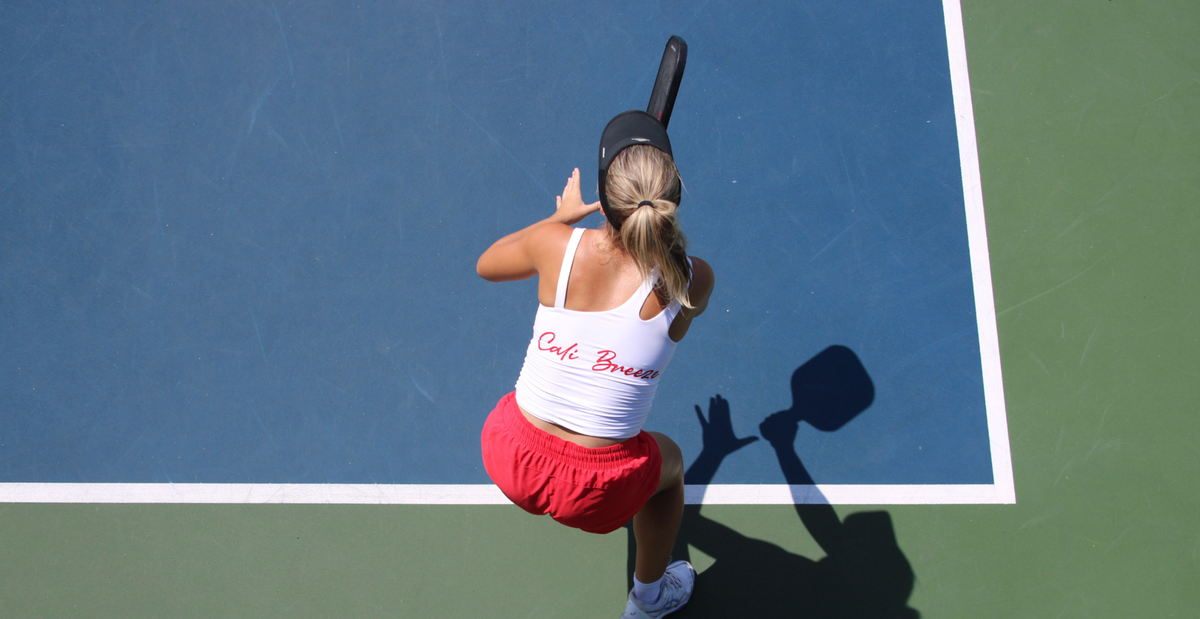
Reading the Serve: Shallow vs. Deep
Not all serves are created equal. Some come in shallow, landing near the service line. Others come in deep, landing near the baseline.
Your response needs to adjust based on what you're receiving.
If the serve is shallow, you have more freedom to step into the court and be aggressive.
You can turn your shoulders, step forward, and really drive through the ball. The shallow serve gives you time and space to work with.
If the serve is deep, you need to be more conservative. You still want to step forward, but you're not trying to hit a winner.
Your goal is simply to get the ball back deep and maintain control. You might even need to take a step back to give yourself more time to react.
The important thing is to stay out in front. Whether the serve is shallow or deep, you want to contact the ball in front of your body.
If you let it get behind you, you've already lost the advantage.
How to Read Your Opponent’s Eyes and Poach More Balls in Doubles Pickleball
The key to winning many pickleball points isn’t just quick reflexes; it’s reading what your opponent is about to do before they do it
The Dink PickleballThe Dink Media Team

Pressure Through Consistency
One of the most underrated aspects of the pickleball return of serve is consistency. You don't need to hit a perfect return every single time.
You just need to hit a good return most of the time.
When you consistently return serves deep, you put pressure on your opponents. They can't rely on hitting an easy third shot. They have to work for every point.
Over the course of a match, this pressure adds up. Your opponents get frustrated, they start making mistakes, and suddenly you're winning more points.
Think about it from the serving team's perspective. If they know you're going to return their serve deep and move forward, they have to adjust their strategy.
They can't just hit a soft third shot and expect to win the point. They have to be more aggressive, which means more risk, which means more errors.
This is why the return of serve is so important. It's not just about one shot. It's about setting the tone for the entire match.
Perfect the Pickleball Serve: Rules, Technique & Strategy
A great pickleball serve is about more than just getting the ball over the net—it’s about applying pressure from the very first shot. Master the official rules, stance, and strategy to win more points.
The Dink PickleballThe Dink Media Team

Putting It All Together: Your Return of Serve Checklist
Let's recap the key elements of a great return of serve:
- Start in a ready position slightly behind the baseline
- Read the serve and anticipate direction
- Turn your shoulders and step into the court
- Contact the ball out in front of your body
- Aim for depth, not placement
- Follow through and glide toward the kitchen
- Maintain balance throughout the motion
- Move forward after the shot to take away space
If you can master these fundamentals, your return of serve will become a weapon.
You'll apply pressure from the very first shot, and your opponents will feel it.
💡
Heads up: hundreds of thousands of pickleballers read our free newsletter.
Subscribe herefor cutting edge strategy, insider news, pro analysis, the latest product innovations and more.
Frequently Asked Questions
What's the most common mistake players make on the return of serve?
The biggest mistake is standing too close to the baseline and letting the ball get behind them. This forces them to reach for the ball, which kills their control and power. Stand slightly back, give yourself time to react, and step into the court as you swing.
Should I always aim for the middle of the court?
Yes, especially when you're developing your return. The middle gives you the most margin for error and creates confusion for your opponents. Once you're consistently hitting deep returns, you can start experimenting with placement.
How do I know if my return is deep enough?
A good return lands near the baseline or in the back third of the court. If your opponent can easily step forward and hit an aggressive third shot, your return wasn't deep enough. Keep working on it.
Can I be aggressive on the return of serve?
You can, but it's risky. Most of the time, your goal should be to hit a solid, deep return and let the point develop. Aggressive returns are for specific situations, like when you're facing a weak serve or when you're already ahead in the match.
How much should I move forward after hitting my return?
Move forward with purpose, but don't sprint. You want to be in position to hit a volley, but you also need to stay balanced and ready to react. Think of it as a controlled glide, not a full-court dash.
The pickleball return of serve won't win you matches by itself. But it will give you the foundation to win them. Master this shot, and you'll immediately see improvement in your game. Your opponents will feel the pressure, and you'll feel the confidence. That's the power of a great return.
Anuncie Aqui / Advertise Here
Sua marca para o mundo Pickleball! / Your brand for the Pickleball world!





 English (US) ·
  Portuguese (BR) ·