
 English
  Spanish
  Portuguese
  German
  Italian
  Japanese
  French
  Polish
  Russian
  Netherlands
  Hungarian
  Turkish
  Videos
  Thedink Pickleball

Separate your elbow and load up on your shoulder; reach toward the ball; follow through all the way toward the ground. But before all that: footwork.
If you've been struggling with consistency on your overheads, you're not alone.
Many players pick up pickleball without a racket sports background, which means the overhead motion doesn't come naturally. But there's good news: former D1 tennis player and current PPA pro Michael Loyd has broken down exactly what it takes to dominate this crucial shot.
Love pickleball? Then you'll love our free newsletter. We send the latest news, tips, and highlights each week.
Think of It Like Throwing, Not Hitting
The biggest mental shift you need to make is this: stop thinking about the overhead as a hitting motion. Instead, picture yourself throwing a ball downward.
This comparison works because the footwork and body mechanics are nearly identical to a football quarterback's throw. When you tell someone to throw a ball, they naturally load up with their legs first, take a step, and then extend. That's exactly what should happen on your overhead.
The key difference in pickleball is the direction. Instead of throwing forward, you're throwing down. Even if the ball doesn't go straight down, your paddle path should be focused on getting it down as much as possible.
Here's where most players go wrong: they focus so hard on the stroke itself that they neglect the footwork. But footwork might be the most important element of a successful overhead, especially if you're new to racket sports.
The footwork sequence matters more than you'd think. If you're not in the right spot, no amount of perfect technique will save you. Take as many steps as you need to get underneath the ball, but no more than that.
- If the ball is right in front of you, you might only need one step
- If it's further back, take the extra steps to position yourself properly
- The goal is to be set and ready before you even think about your swing
6 Stubborn Pickleball Habits Costing You Points
The definition of insanity is doing the same thing over and over and expecting a different result. These six habits are patterns that repeat, and they’re costing you points.
 The Dink PickleballThe Dink Media Team
The Three-Part Motion: Separate, Reach, Throw
Once your footwork is solid, the stroke itself breaks down into three connected movements.
Think of these as one fluid motion, not three separate actions.
- Separate: Start by separating your elbow and loading up your shoulder. This is less about football mechanics and more about creating the coil you need for power. Your shoulder should rotate back while your legs are already engaged.
- Reach: As you begin your motion, reach up toward the ball. This isn't a pure sling or a quick flick. You're extending your arm and creating length in your stroke, similar to how a quarterback extends before releasing.
- Throw: Finally, throw down. Your release point matters just as much as your contact point. If you release too early, the ball goes up. If you wait too long, you lose control. The sweet spot is releasing when your arm is in a position that naturally sends the ball downward.
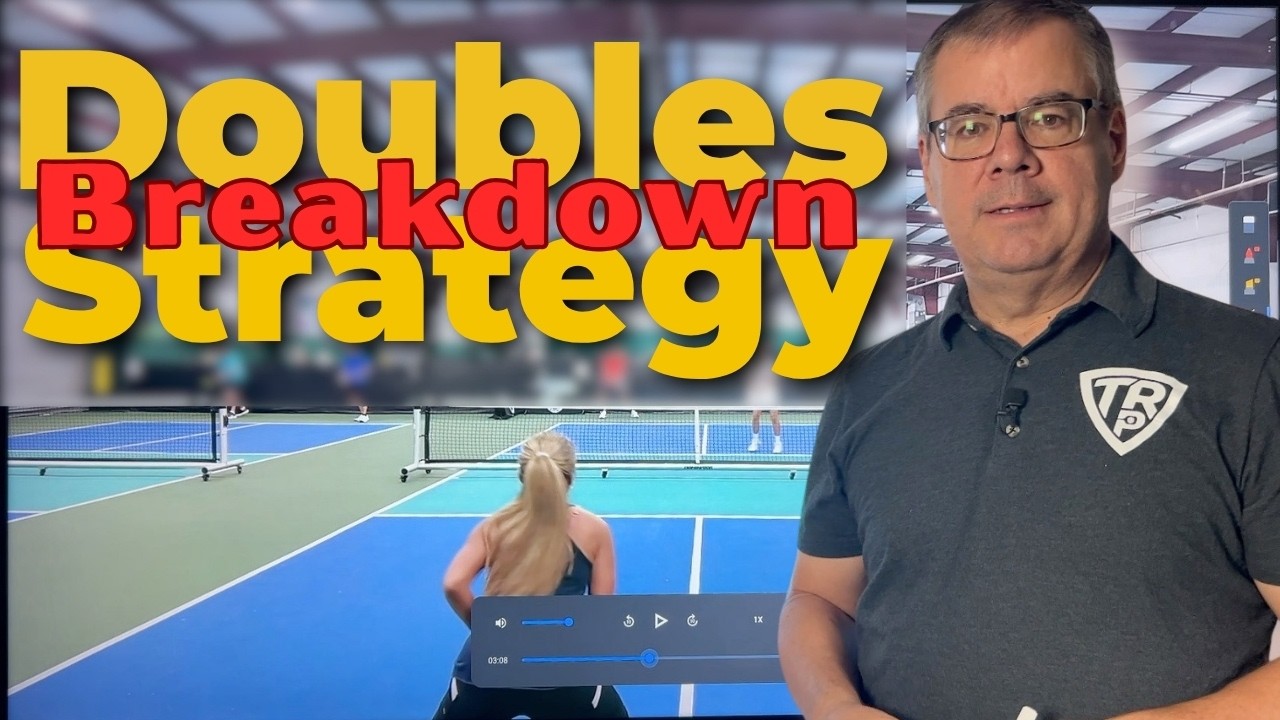
8 Doubles Strategies Nobody Talks About in Pickleball
Pickleball doubles is a game of angles, positioning, and reading your opponent. But there’s a gap between what coaches teach and what actually wins matches.
 The Dink PickleballThe Dink Media Team
Timing and Cadence Are Everything
One common mistake is speeding up your motion when you feel rushed – that's actually a symptom of poor footwork, not a lack of power.
If you didn't separate early enough, you'll feel like you don't have time to complete the motion. So you rush. The fix isn't to swing harder; it's to get your footwork and separation done earlier so you have time to execute smoothly.
Think of it this way: slow and smooth, then go. Your legs create the momentum, and good timing does the rest. You don't need a super fast swing to hit a winner.
💡
Need some new pickleball gear? Get 20% off select paddles, shoes, and more with code THEDINK at Midwest Racquet Sports
Practice the Throw Without the Paddle
Before you even pick up your paddle, grab some balls and practice the throwing motion.
This drill sounds silly at first, but it's incredibly effective.
- Stand at the baseline and practice the footwork and throwing motion without a paddle in your hand
- Focus on the separation, the reach, and throwing down
- Once you feel comfortable with the motion, add the paddle and let the stroke follow naturally
This removes the mental clutter of "how do I hit this" and lets you focus on the fundamental movement pattern. It's the same motion every time, whether you're throwing or hitting.
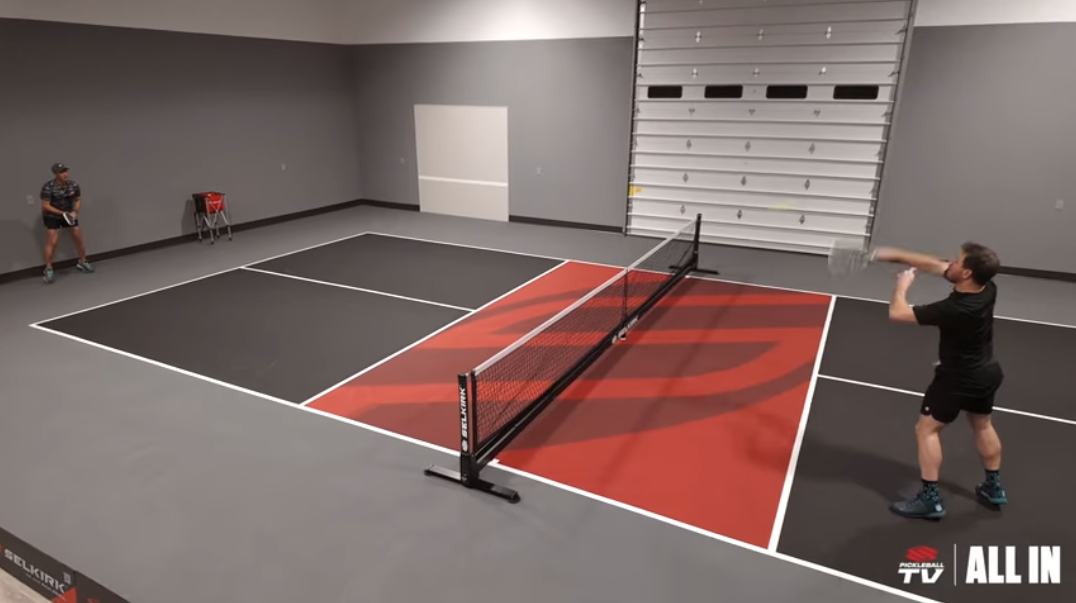
The Survivor Drill: How to Defend the Overhead Smash Like a Pro
Defending against an overhead smash isn’t about hitting a perfect shot right away. It’s an exercise in endurance. You just need to survive long enough to find the right opportunity to turn the tides back in your favor.
 The Dink PickleballAlex E. Weaver
The Release Point Is Your Secret Weapon
Just like your contact point determines where the ball goes on a regular shot, your release point on the throw determines the trajectory of your overhead.
If you're releasing too early, the ball floats up. If you wait until your arm is lower, you can direct it down.This is why patience matters. Don't rush the release. Wait for the right moment, and the ball will go where you want it.
Heads up: hundreds of thousands of pickleballers read our free newsletter. Subscribe here for cutting edge strategy, insider news, pro analysis, the latest product innovations and more.
Put It All Together
The overhead isn't as complicated as it feels. It's just throwing a ball with a paddle in your hand. Master the footwork, nail the three-part motion, and trust your timing.
Once you get this down, your partners won't hate you anymore. You'll be the overhead king on the court.
Anuncie Aqui / Advertise Here
Sua marca para o mundo Pickleball! / Your brand for the Pickleball world!




 English (US) ·
  Portuguese (BR) ·