
 English
  Spanish
  Portuguese
  German
  Italian
  Japanese
  French
  Polish
  Russian
  Netherlands
  Hungarian
  Turkish
  Videos
  Thedink Pickleball

Shots at your feet in pickleball are one of the most frustrating problems in the transition zone. The fix is simpler than you think, and it starts with your paddle position.
If shots at your feet in pickleball are costing you points in the transition zone, there is one specific habit causing most of the damage.
You are carrying your paddle too high. And every time the opposing team gets a ball above the net, you are paying for it.
This breakdown comes from Better Pickleball on YouTube, and the concept is simple enough to fix today if you understand exactly what is going wrong and when.Love pickleball? Then you'll love our free newsletter. We send the latest news, tips, and highlights for free each week.
The Transition Zone Is Where Most Players Lose Points They Should Not Lose
The transition zone is the area between the baseline and the non-volley zone line. You are not at the kitchen yet. You are still moving forward.
This is the most dangerous spot on the court.
You are not settled, your opponents at the kitchen line have the high ground, and if they get any ball above the net height, they are going to attack you.
Most players know this in theory. Very few do anything about it with their body position or paddle placement before the ball is hit.
That delay is what gets you jammed. You are reacting after the attack has already started instead of preparing for it before it comes.Why Your Default Ready Position Is Wrong Here
Your normal pickleball ready position, paddle held up in front of your chest or face, works well at the kitchen line when you are in a dinking exchange or waiting for a reset.
But it is the wrong position when you are stuck in the transition zone.
Here is the problem with holding your paddle high while moving forward: the moment a net-level or above-net ball comes at your feet, you have to move your paddle down, shift your body weight, and still make contact with a ball that is already low and moving fast.That is too many steps.
You are wasting reaction time that you do not have.
The opponents at the kitchen line are watching for exactly this. The second they see a ball rise above the net, they attack.
If your paddle is still sitting at chest height when that happens, you are already behind.Building the 4 key strategies to winning in 2026 starts with fixing exactly this kind of timing gap.
Split Step Pickleball: The Ready Position Most Players Skip
The split step in pickleball is a small hop that puts your body in the perfect ready position just before your opponent strikes the ball. Most recreational players skip it entirely, and that single habit is costing them more points than any other technique gap.
 The Dink PickleballThe Dink Media Team
What Should You Do Instead?
Drop your paddle and your body early. Do not wait for the ball to be hit before you respond.
The cue is your opponent's paddle. The moment you see their paddle rise above the net, that is your signal. Your paddle comes down.Your knees bend. Your body gets low.
You are not reacting to the attack. You are anticipating it based on what you can already see.This early adjustment gives you two things.
- First, it puts you in a position to move laterally to either side without having to also drop your hands at the same time.
- Second, it loads your body into a ready athletic stance where a pickleball reset is actually possible.
That single adjustment is one of the 5 pickleball shots you must master before 2026 if you want to stop leaking free points.
If you want to understand how this connects to movement and footwork more broadly, this breakdown of pickleball positioning mistakes will show you several other spots where your body placement is costing you before the rally even gets difficult.
Stop Popping the Ball Up: Modern Pickleball Hand Speed and Paddle Positioning
Winning the kitchen today isn’t about swinging harder—it’s about creating space with your coil and controlling contact with smarter paddle positioning
 The Dink PickleballThe Dink Media Team
The Exact Sequence to Run When You Are in the Transition Zone
This is not complicated. Here is exactly what to do:
- Watch your opponent's paddle, not just the ball. The paddle rising above net height is your early warning sign.
- Drop your paddle immediately. Get it down near your knees, not at your chest.
- Bend your knees and lower your center of gravity. This is not optional. If you stay upright, you are going to jam yourself even with a good paddle position.
- Prepare to move laterally. A pickleball shot at your feet could go to your forehand or your backhand side. Being low means you can shift either direction without a second adjustment.
- Reset the ball, not attack it. Your only job from this position is to get the ball back soft and low. The transition zone is not the place for a speed-up.
That fifth step matters more than most players realize. There is a strong temptation to counter-attack from the transition zone when you are scrambling.
That instinct loses you the point most of the time. Groove the correct pattern instead with the 12 drills you need to play your best pickleball in 2026.For a closer look at what goes wrong when you try to attack from a weak position, read this breakdown of why your speed-up keeps getting attacked.
Attack from Pickleball Transition Zone: A Full Guide
Knowing how to attack from transition zone pickleball situations is one of the fastest ways to upgrade your offensive game. This guide breaks down exactly when to pull the trigger, which shots to use, and how to stop bleeding points in no-man’s land.
 The Dink PickleballThe Dink Media Team
What Does Getting Low Actually Mean for Your Paddle?
When coaches say "get low," players often bend at the waist instead of the knees. That is a big mistake and one worth calling out directly.
Bending at the waist drops your eyes and your head forward. It limits your lateral range of motion.It also makes it harder to get your paddle face in the right position to handle a pickleball shot at your feet cleanly.
Bending at the knees keeps your spine upright, your eyes level, and your paddle free to move. You are getting low through your legs, not your back.If this is something you struggle with, there is a detailed explanation on how to use knee bend correctly that is worth your time.
Your footwear matters here too, and the best men's pickleball shoes of 2025 and best women's pickleball shoes of 2025 both break down which models actually support a low, loaded stance.
Pickleball Placement Strategy: Where to Aim Every Shot
Knowing where to aim in pickleball is the difference between winning and losing. Learn the exact placement strategy for every shot from serve to attack.
 The Dink PickleballThe Dink Media Team
How Does This Change Depending on Which Side the Ball Is Coming To?
Once your paddle is low and your knees are bent, you need to be ready to react in either direction.
Here is how to think about each side:
- Forehand side: Your paddle should already be on this side of your body as your default low position. A low shot here is the easier of the two to handle. Focus on keeping the paddle face open and pushing the ball back softly.
- Backhand side: This is where most players get truly jammed. The backhand at your feet requires you to get the paddle face under the ball without collapsing your elbow into your body. Stay low, extend slightly through the ball, and do not try to add pace. Your only goal is to reset.
The backhand version of this shot trips up a lot of players.
If you are still struggling with it after working on your position, this guide on handling a soft shot right at your feet covers the technique in more detail.
Right Side or Left Side? How Modern Doubles Is Rewriting the Pickleball Playbook
Understanding your position’s traditional responsibilities is important, but being able to adapt and create offense from anywhere on the court is what separates good players from great ones.
 The Dink PickleballThe Dink Media Team
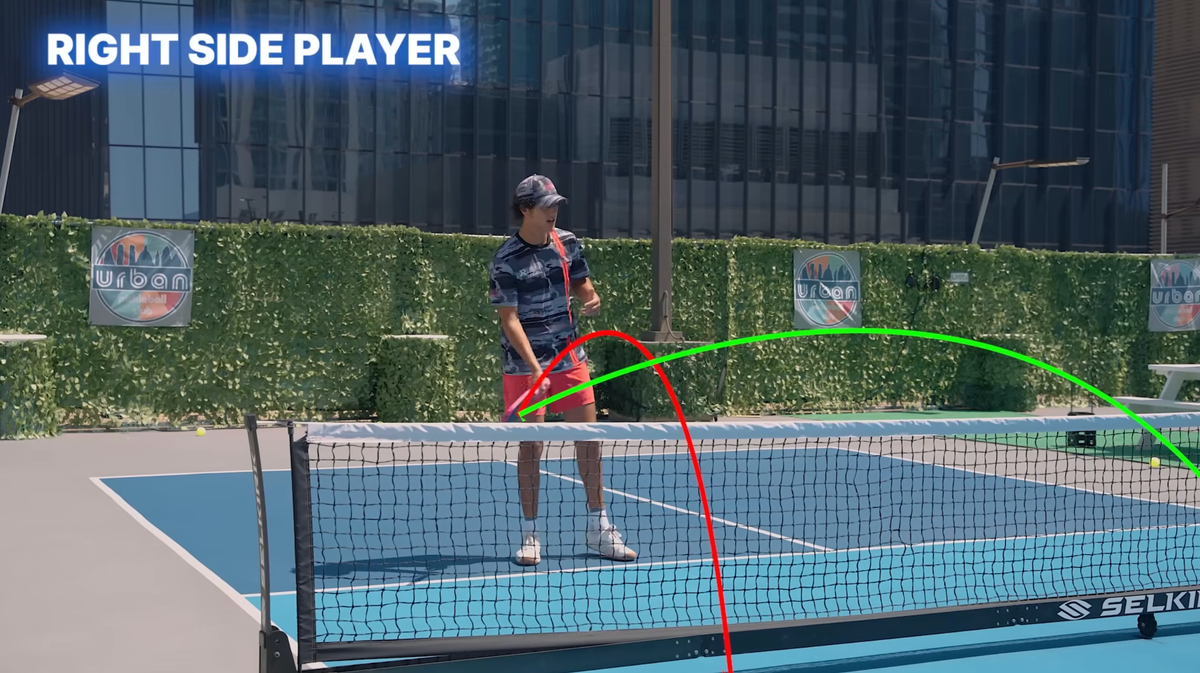
Why Do Players Ignore This Even When They Know It?
Awareness does not equal habit. Most intermediate players know they should get low in the transition zone.
They do not do it consistently because their brain is focused on where they are going, not what they are doing with their paddle on the way there.This is a movement pattern problem as much as it is a technique problem.
You need to build the habit of reading your opponent's paddle while you are still moving forward.
One of the best ways to build that habit is to create a specific cue. Every time you see your opponent's elbow rise, that is your trigger. Paddle down.
Body down. Every single time, whether or not the attack actually comes.This connects to a broader issue of how your habits signal your rating level on the court.
The article on habits that show your level instantly is worth reading if you want to understand which small patterns are broadcasting weaknesses to every opponent you face.
If you want a repeatable framework instead of a vague goal, this 4-step system to win more pickleball games in 2026 turns cues like this into actual match habits.
Win the Transition Zone: The Modern Pickleball Guide to Midcourt Aggression
While traditional coaching has long emphasized getting to the kitchen line as quickly as possible, modern pros are turning midcourt aggression into unexpected offensive opportunities
 The Dink PickleballThe Dink Media Team
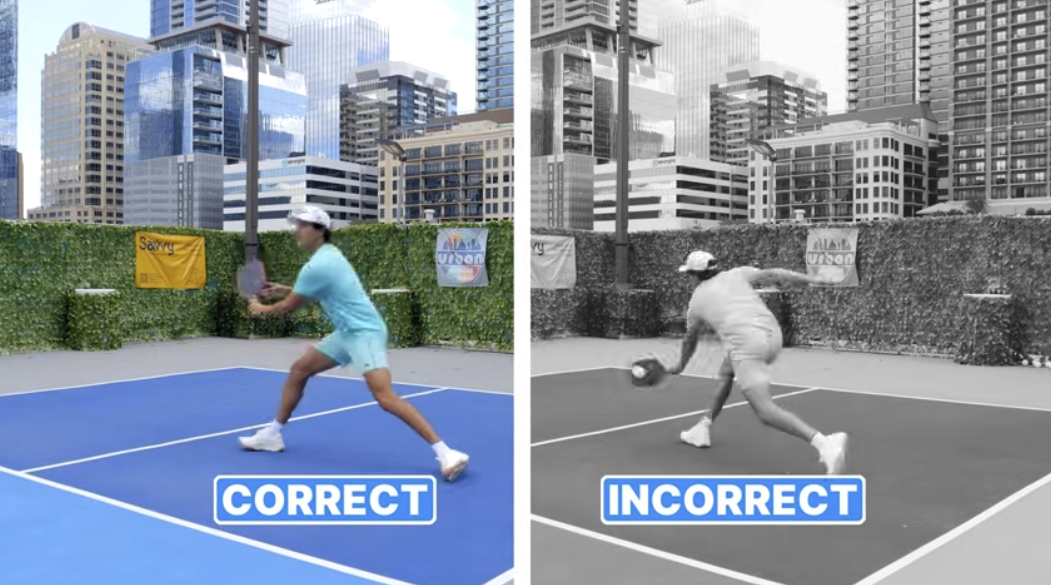
What Happens After the Reset?
Say you execute this perfectly. Paddle drops, body lowers, you read the attack early, and you push a soft reset back over the net.
What now?
You keep moving forward. The reset buys you time to advance toward the kitchen line. Do not stop and admire the shot.Every ball you reset in the transition zone is a chance to reclaim your position. If you reset and freeze, your opponents will attack you again before you get settled.
If you reset and move, you give yourself a chance to get into a position where you are not defending anymore.
This is the full picture of transition zone play, and it is one of the most important concepts separating 3.5 players from 4.0 and above.
For a full breakdown of what it actually takes to make that jump, read this piece on the three keys to going from 4.0 to 4.5.
If you are unclear on where your game actually sits, USA Pickleball's player skill rating definitions spell out what each level is expected to handle.
Pickleball Reset: Master the Transition Zone Shot
The reset isn’t about power—it’s touch, positioning, and angles. Master those, and you control where matches are won.
 The Dink PickleballThe Dink Media Team
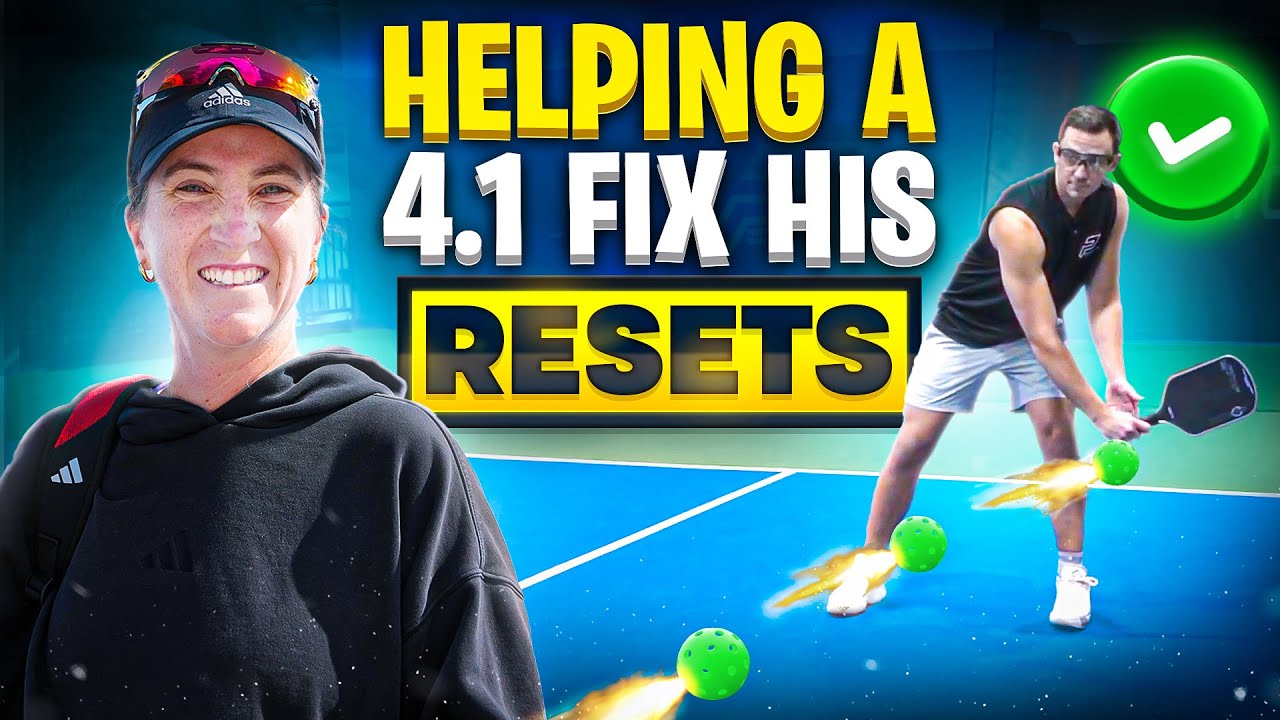
Can This Problem Hurt You at the Kitchen Line Too?
Yes, but it shows up differently. At the kitchen line, the danger is not a low ball at your feet but a fast ball at your body or a hard drive coming directly at you.
The same principle applies though. If your paddle is in the wrong position before the attack comes, you are already behind.Players who get tagged repeatedly at the chest usually have their paddle too low when they should have it up, while players getting jammed at their feet have it too high when they should have it down.
Both are position timing problems.For the chest-high version of this problem, this breakdown on how to stop getting tagged in the chest covers the defensive mechanics specifically.
It also helps to know what the rulebook actually allows, so check the 7 new USAP pickleball rules for 2026 and the pickleball rule changes for the 2025 USA Pickleball rule book before your next tournament.
The Critical Kitchen Line Skill Most Rec Pickleball Players Are Missing
By attacking the ball in the air, you’re stealing time from your opponents and shifting the dynamic of the rally in your favor
 The Dink PickleballThe Dink Media Team
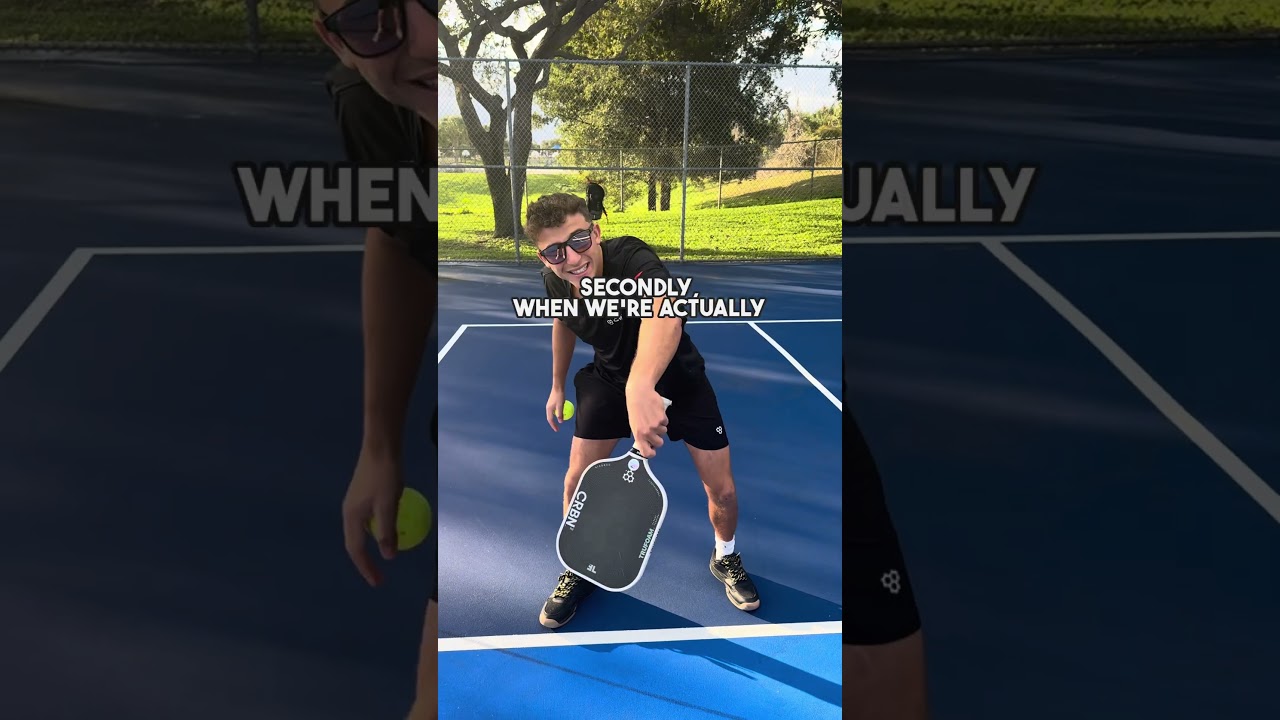
The Bigger Picture: Reading the Play Before It Happens
Everything in this article comes back to one skill: reading the play before the ball is hit.
The players who handle a pickleball shot at your feet well are not faster or more athletic than you. They are earlier.They have trained themselves to pick up cues from their opponent's body and paddle before the ball leaves the strings.
You can do the same thing. Start with the paddle cue.
Opponent's paddle goes above the net, your paddle comes down and your body follows. Build that reflex and the rest gets easier.Equipment plays a smaller role than technique, but it is not nothing.
If you are shopping, see what reviewers said in these 2026 paddle predictions before you spend money chasing control you can build for free.
If you want to take your defensive game further, this resource on pickleball defense mastery and this one covering how to handle hard shots in pickleball are both worth working through.
Also worth stacking on top: the 6 essential pickleball shots to master for 2026, because a clean pickleball reset is only useful if the rest of your shot library holds up.The transition zone does not have to be a liability.
With the right paddle position and the right timing, it becomes a place where you absorb pressure and keep rallies alive instead of handing opponents free points.
💡
Heads up: hundreds of thousands of pickleballers read our free newsletter.
Subscribe herefor cutting edge strategy, insider news, pro analysis, the latest product innovations and more.
Frequently Asked Questions
What is the transition zone in pickleball and why is it so dangerous?
The transition zone is the area between the baseline and the non-volley zone line. It is dangerous because you are moving, not settled, and opponents at the kitchen line can attack balls at your feet before you have time to react. Most points lost in this zone come from poor positioning, not bad technique.
Where should my paddle be when I am moving through the transition zone?
Your paddle should be down near your knees, not at your chest. Drop it early based on your opponent's paddle cue, not after the ball is already coming at you. This lower position lets you move laterally and reset without a second adjustment.
How do I reset a ball that is hit hard at my feet?
Get low with your knees, not your back, and keep your paddle face open under the ball. Push the ball back softly with minimal swing. The goal is to neutralize the attack, not counter it.
Why do shots at my feet feel impossible to handle on the backhand side?
The backhand side at your feet is harder because players tend to collapse their elbow into their body, which closes the paddle face and kills any chance of a clean reset. Stay extended through the shot, keep the face open, and accept that a soft return over the net is a win from this position.
What cue should I use to know when to drop my paddle in the transition zone?
Watch your opponent's paddle, specifically when it rises above net height. That is your signal to drop your paddle and bend your knees immediately. Building this as a reflex, even when the attack does not come, is what separates players who handle transition zone pressure from those who keep getting jammed.
Anuncie Aqui / Advertise Here
Sua marca para o mundo Pickleball! / Your brand for the Pickleball world!






 English (US) ·
  Portuguese (BR) ·