
 English
  Spanish
  Portuguese
  German
  Italian
  Japanese
  French
  Polish
  Russian
  Netherlands
  Hungarian
  Turkish
  Videos
  Thedink Pickleball

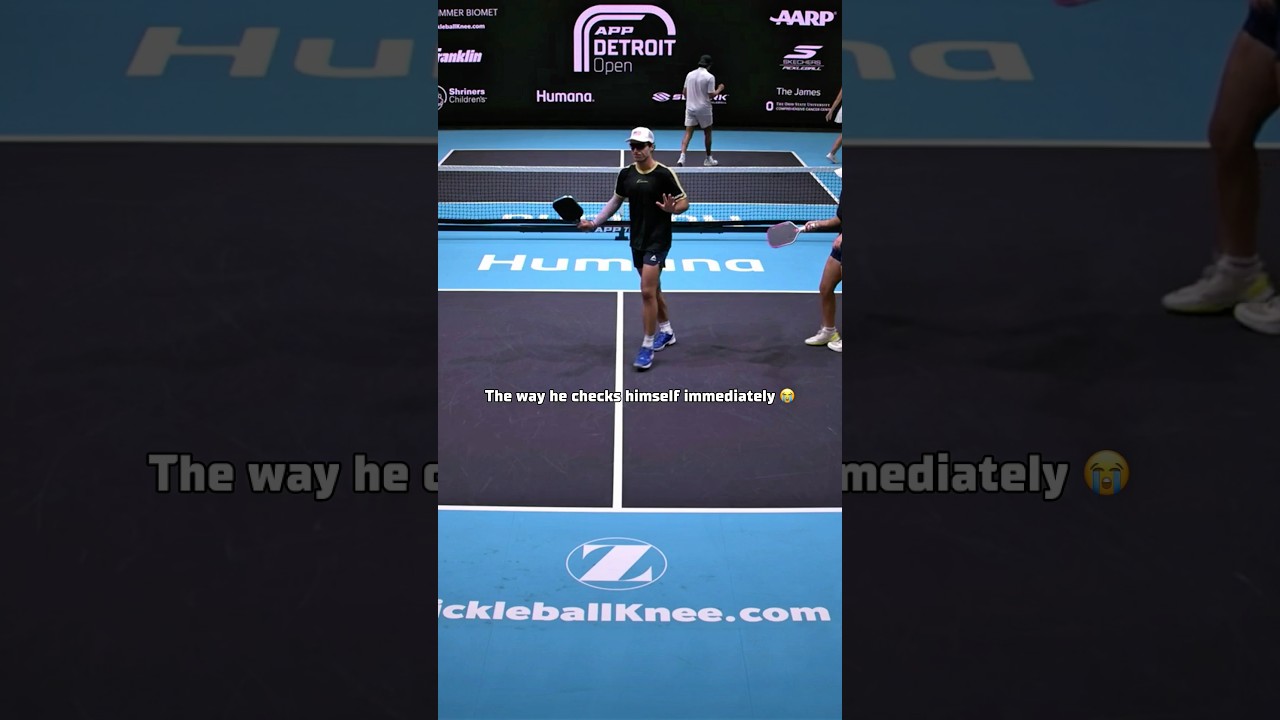
If you really need any further convincing at this point, let me direct your attention to Ben Johns.
When I first started playing pickleball almost six years ago, almost nobody had a two-handed backhand. The game was much slower then, and almost everyone used just their dominant hand on both wings.
Today, it seems like everyone has a two-handed backhand, even those without a tennis background. If you are a rec or amateur player, here’s why you need to develop a two-handed backhand, and soon, looking at each area of the court.
At the Kitchen
If you need a pro player to convince you that learning a two-handed backhand dink is valuable in today’s pickleball world, let me direct your attention to Ben Johns.
Ben, up until the last 6-8 months or so, utilized exclusively a one-handed backhand dink and counter. Today, you will see him go to the toey early and often.
The two-handed backhand provides more stability, especially given the increase in paddle power and the speed of gameplay.Firefights at the net are faster, dinks are more precise and aggressive, and off the bounce speedups are becoming harder to read and counter. As a result, the two-handed backhand has arrived and is crucial to controlling and countering the overall speed of the game at the kitchen.
Take the dink for example.
- If someone can roll the dink aggressively cross court to your backhand, having a two-handed backhand dink not only forces you to get closer to the ball with your feet, but it also gives you extra control and the ability to hit a topspin/aggressive dink back.
- Without adding the extra hand, it’s very difficult to hit anything but a neutral or defensive dink when your opponent is aggressively dinking to your backhand.
- Additionally, the twoey is crucial when countering, because speedups have never been faster.
If you are even a millisecond late on a one-handed backhand counter when someone speeds up your line, you can shank or pop up the counter. Adding the second hand adds support and helps you keep the paddle face stable in order to counter the ball down.
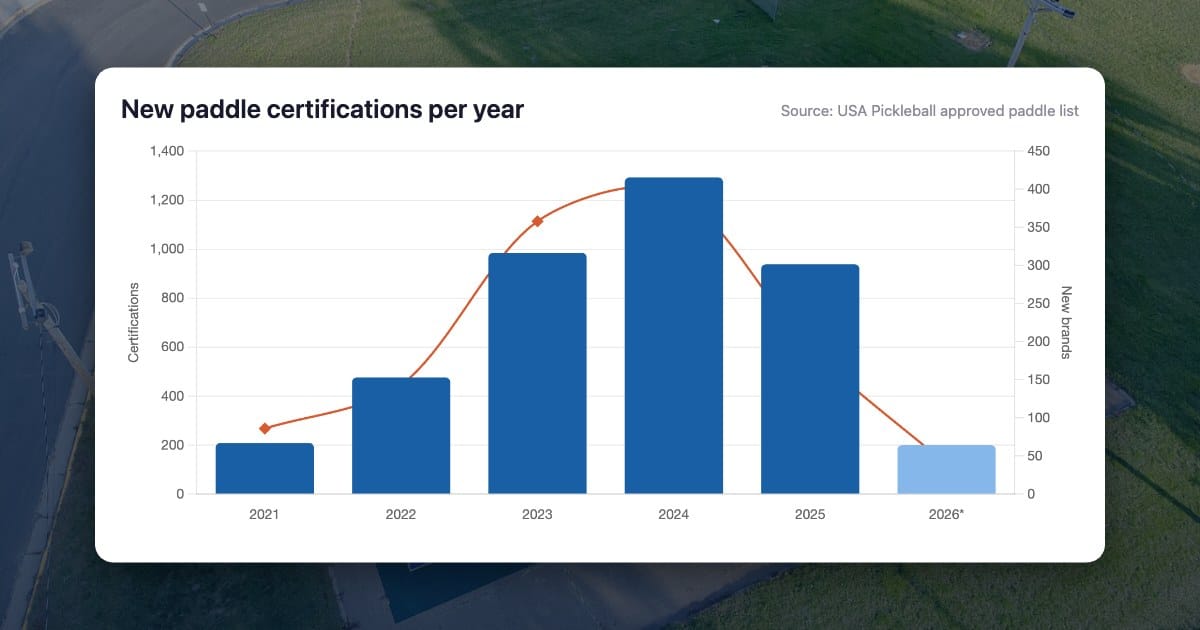
The Pickleball Paddle Boom Isn’t Over, but It Is Evolving
We analyzed more than 4,000 USAP-approved paddles over a five-year span. Here are five trends that point toward a maturing, more consumer-friendly market.
 The Dink PickleballAlex E. Weaver
Resets
Let me start this portion by saying this: You are not resetting enough (or good enough) from the transition zone.
I don’t need to watch you play to know that almost every single amateur player is still trying to play offense from the transition zone instead of hitting a reset and moving forward.
Developing a twoey backhand reset will improve your resets by doing two main things.
- First, it will force your paddle more in front, which will help you absorb pace and prevent the paddle from getting too far behind you, which more easily happens when you use one hand.
- Second, it should force you to get lower to the ground, which will help you get under the ball and use touch to place it just in front of your opponents, bouncing in the Kitchen across the net.
The two-handed backhand reset is more stable and provides more control to hit the soft, touchy shot needed get to the kitchen.
How to Become a 5.0 Pickleball Player: 7 Key Skills
Reaching 5.0 has nothing to do with being the fastest player on the court. These are the seven skills that move a 5.0 pickleball player up a level.
 The Dink PickleballThe Dink Media Team
From the Baseline
For the same reasons mentioned above, hitting a twoey drop (assuming you can execute) is better than hitting a one-handed backhand drop.
From the baseline, you should develop hitting a top spin two-handed backhand drop or drip (drop and drive hybrid). This will enable you to get the ball over the net and make it start dipping as it crosses the net before it reaches your opponent, causing them to have to hit up on the fourth shot volley.
This is almost impossible to do with a traditional one-handed backhand drop, which either needs to be totally flat or sliced.
From a drive standpoint, I coach my amateur students to almost never drive the backhand.
💡
Either move your feet better and run around and hit a forehand drive or hit a 75% backhand drive with the expectation that you will get an easier fifth shot to drop.
Unless your backhand is just significantly better (rare but not impossible), I would just develop a two-handed drop or drip.
Pickleball is fun because it is constantly evolving. The game is getting faster, more athletic, and more powerful with each passing month.
Players of all athletic backgrounds are starting to play, and to continue leveling up, you must be willing and able to adapt. Learning a two-handed backhand for all shots everywhere on the court is essential to improving your game.
Heads up: hundreds of thousands of pickleballers read our free newsletter. Subscribe here for cutting edge strategy, insider news, pro analysis, the latest product innovations and more.
I've teamed up with Jittery Joe’s to release a new pickleball coffee – The Kitchen Brew. Whether you are hitting dinks or chasing dreams in the Kitchen, our medium roast gives you the perfect boost to power through every game. Start your day right, both on the court and in your cup!
You can purchase The Kitchen Brew on the Jittery Joe’s website.
Anuncie Aqui / Advertise Here
Sua marca para o mundo Pickleball! / Your brand for the Pickleball world!



 English (US) ·
  Portuguese (BR) ·