
 English
  Spanish
  Portuguese
  German
  Italian
  Japanese
  French
  Polish
  Russian
  Netherlands
  Hungarian
  Turkish
  Videos
  Thedink Pickleball

If hard shots at the kitchen are beating you on the backhand side, the problem is almost never your paddle. These backhand volley fixes will help you block bangers cleanly and with confidence.
A hard shot aimed at your body is one of the most panic-inducing moments in pickleball, and the backhand volley is where most players fall apart fastest.
You flinch. You flip your wrist. You reach too early and lose all your power before the ball even arrives.
This article breaks down exactly what goes wrong and what to do instead, pulled directly from a coaching session with Cori Elliott on YouTube where she walks a student named Susie through every mechanical mistake players make on the backhand volley at the kitchen.
Love pickleball? Then you'll love our free newsletter. We send the latest news, tips, and highlights for free each week.
Why the Backhand Volley Feels So Uncomfortable
Most players instinctively want to swing the paddle across their body when a ball comes at them on the backhand side.
It feels natural because that motion mimics how you might protect yourself.
The problem is that motion gives you almost no control and no real power. You end up late, out of position, and popping the ball up right to your opponent.
The discomfort Susie described in the session is something almost every intermediate player recognizes.The backhand volley requires you to turn into the ball in a way that feels counterintuitive until you train it properly.
What Is a Backhand Volley at the Kitchen?
A backhand volley is any shot you hit before the ball bounces, on your non-dominant side, while you are at or near the non-volley zone line.
It is not a swing. It is a compact, controlled block or punch that uses your arm, shoulder, and body position to direct the ball.When someone fires a speed-up or hard drive at your body, the backhand volley is your first line of defense.
If you get it wrong, you give your opponent a free put-away. If you get it right, you neutralize their best shot.
Understanding the mechanics is not optional if you want to stop getting attacked at the kitchen.
💡
Need some new pickleball gear? Get 20% off select paddles, shoes, and more with code THEDINK at
Midwest Racquet SportsThe 5 Mechanical Fixes That Change Everything
1. Drop the Paddle Head Down First
Before you do anything else, drop your paddle tip slightly downward. This is the setup position that makes the entire shot work.
If your paddle is flat or high when the ball arrives, you have no room to get underneath it and generate any real contact.
Starting low gives you somewhere to go.Cori had Susie begin with the paddle already in that lower position during drilling so the mechanics could become automatic. The setup is the shot.
2. Extend Forward, Not Upward
This is the fix most players need the most. When a hard ball comes at your body, the instinct is to lift your paddle up and use it as a shield.
That direction is wrong. You want to extend forward through the ball, not upward.
Think about pushing your paddle out toward your opponent's side of the court, not toward the ceiling.Extending forward lets you put pace behind the shot and direct it intentionally.
Extending upward just pops the ball into the air and puts you on defense immediately.
If you want more detail on how to handle a hard hit ball at your body, the mechanics overlap directly with this fix.
5 Pickleball Mistakes Beginners Make (And How to Fix Them)
After coaching thousands of beginners, the same pickleball mistakes show up again and again. Here are the five that cost you the most, and how to fix each one today.
 The Dink PickleballThe Dink Media Team
3. Use Your Non-Dominant Arm for Balance
Your left arm (for right-handed players) is not just hanging there.
It is a counterbalance tool that helps you generate more extension without falling into the kitchen.
Cori pointed this out specifically: reaching your off-arm outward as you extend your paddle arm gives you more reach, more stability, and more power without crossing the non-volley zone line.
Most players let that arm go completely dead during volleys. Activating it is a small adjustment with a noticeable difference in how far and how firmly you can extend.
4. Stop Breaking the Wrist
Wrist movement is the single fastest way to lose control of a backhand volley. The wrist should stay locked and firm through contact.
When you break the wrist, you are essentially letting the ball do whatever it wants after it hits your paddle.
You lose direction, you lose pace, and you often pop the ball straight up.Think of your forearm and paddle as one unit. They move together. The wrist does not flex.
This is the same principle that makes consistent volleys at the kitchen possible.
5. Let the Ball Come to You
Patience is the word Cori kept coming back to, and it is not just motivational advice. It is a technical cue.
When you reach too early toward a fast-moving ball, you are contacting it before your body is ready.
You lose the stable platform that generates power and control.Waiting an extra fraction of a second lets the ball enter your strike zone so you can use your full arm and shoulder in the extension.
Reaching early kills the shot before it starts. This ties directly into why amateur volleys go wrong so consistently.
8 Essential Fixes to Win More in Pickleball Doubles
You can have the best strokes on the court, but if you and your partner aren’t moving as one unit and covering the right areas, you’ll get picked apart.
 The Dink PickleballThe Dink Media Team
Cori stopped Susie mid-drill because she was stepping into every single shot. The cue she gave was blunt: plant your feet and stay still.
Happy feet are a killer at the kitchen. When you shuffle around reactively, you are constantly rebuilding your base right when you need it most.
Stability creates power. When your feet are planted and your base is solid, your upper body can do its job.When your feet are dancing, you are bleeding energy before you even contact the ball.
Should You Step Into Backhand Volleys at the Kitchen?
No. Not as a default. At the kitchen line, you want minimal footwork and maximum upper body efficiency.
Stepping toward every ball makes sense at mid-court, where you have room and time. At the kitchen, that instinct backfires.
You either crowd the ball, fault into the zone, or destabilize your base right when you need it most.Set your feet early and let your arm do the work. That is the core principle of strong kitchen line positioning.
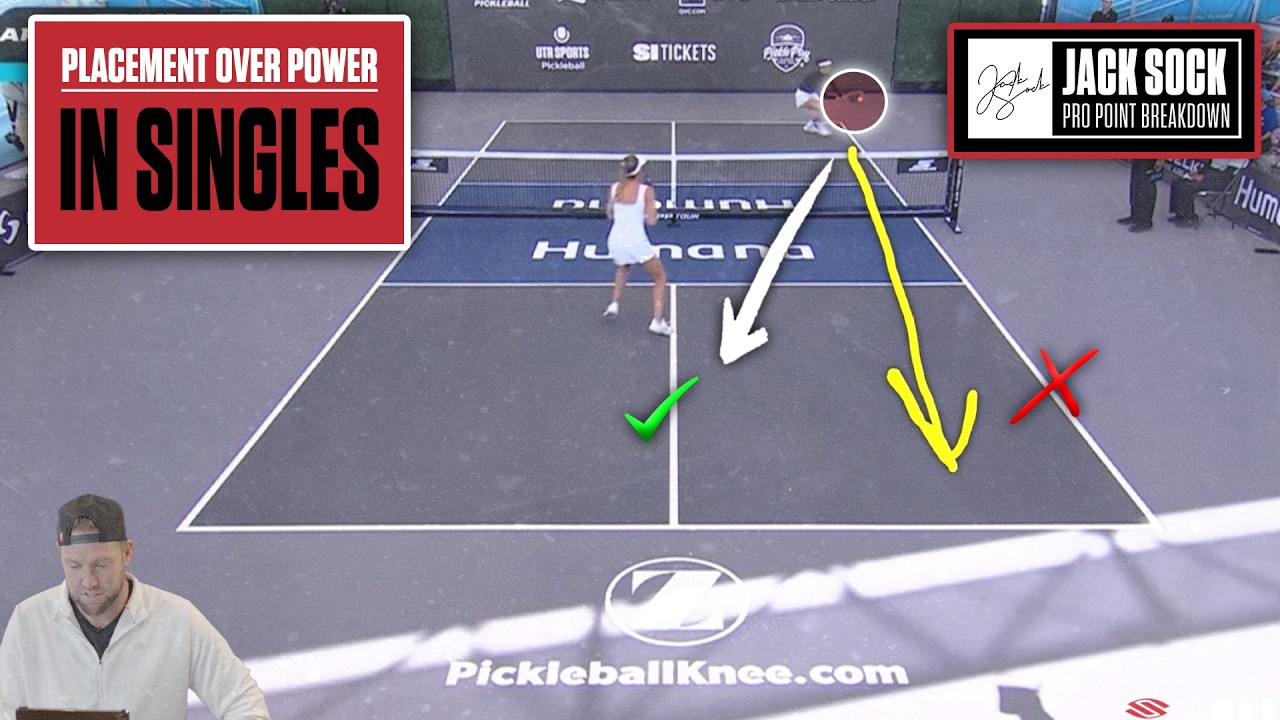
Finesse Shot in Pickleball: Jack Sock’s Strategy
In pickleball, a finesse shot often wins the point when power fails. Jack Sock analyzes a women’s singles rally to show why reading the court and choosing touch over aggression separates good players from great ones.
 The Dink PickleballThe Dink Media Team
The Body Position Details That Players Overlook
There are two small physical adjustments that compound everything above. They sound minor. They are not.
- Stick your hips back slightly. Pushing your butt out as you reach creates counterbalance and lets you extend your arm further forward without falling into the kitchen. It is the same athletic stance you would use in any sport that requires reach under control.
- Use your elbow and shoulder, not just your wrist. The power in a backhand volley comes from the elbow and shoulder working together to push the paddle forward. Players who rely on wrist snap end up with inconsistent results every time.
Even watching how players like Tyra Black manage their body at the kitchen line reveals how much control comes from posture and positioning before the arm ever moves.
Pickleball Shot Placement: Complete Winning Guide
Whether you’re serving, returning, dinking, or driving, knowing where to aim gives you control over the rally and keeps your opponent reacting instead of attacking.
 The Dink PickleballThe Dink Media Team
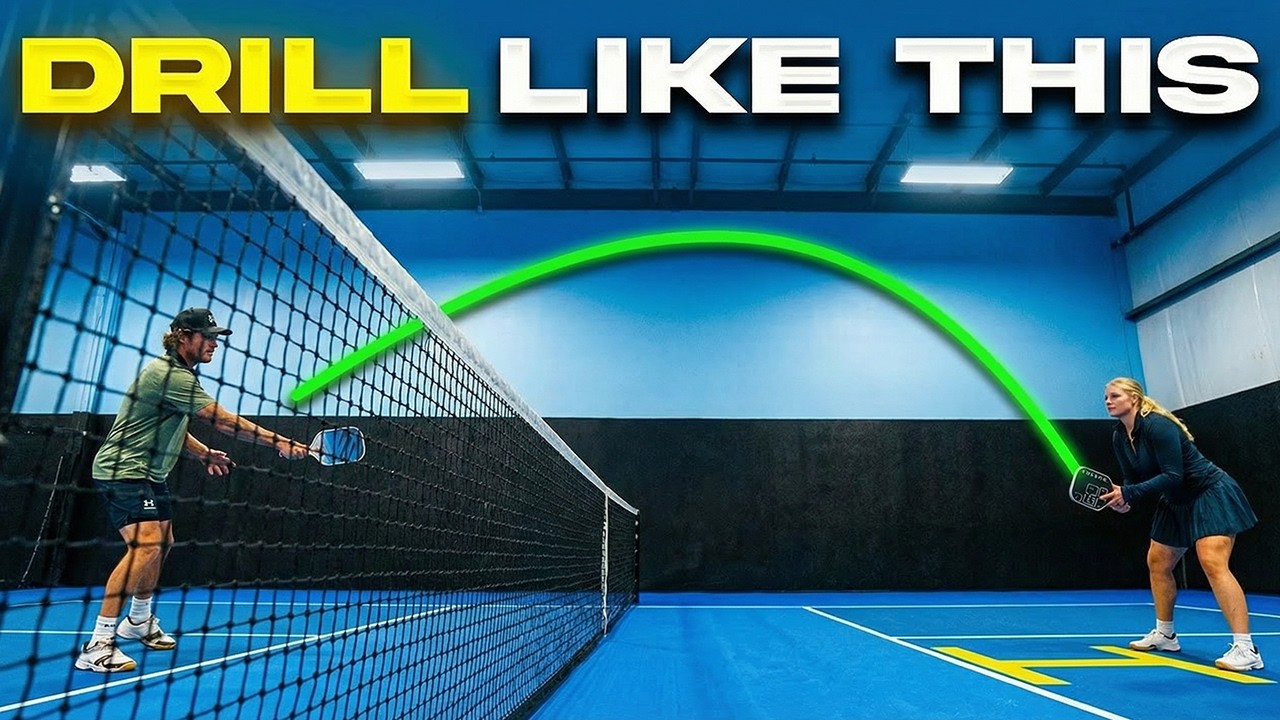
How to Drill This So It Actually Sticks
The session with Susie used a simple method: start with the paddle already in the correct position (slightly dropped), then practice extending forward from there repeatedly.
This removes one variable at a time.
Instead of trying to set up and execute simultaneously, you isolate the extension so your body learns that specific motion before adding the full sequence back in.Here is a simple drilling progression you can use:
- Static position practice: Stand at the kitchen, set your paddle in the dropped position, and have a partner feed you slow, firm balls directly at your body. Focus only on extending forward with a locked wrist.
- Feet-planted rally: Rally crosscourt backhands at medium pace with both players keeping their feet still. Force yourself to generate all movement from your upper body only.
- Live speed-up response: Have a partner randomly speed up from their kitchen position. Your only job is to stay calm, hold your position, and extend forward. No wrist. No stepping. Just extension.
If you want to build on this with more structured practice, look at how to maximize your court time so every session like this one has purpose and repetition built in.
7 Pickleball Drills That Work for Every Level
Pro player Michael Loyd shares 7 pickleball drills designed to build real consistency and fix the weaknesses keeping you stuck.
 The Dink PickleballThe Dink Media Team
Why This Matters More Than You Think
The backhand volley at the kitchen is targeted constantly at intermediate levels because most players handle it exactly the way Susie did before the coaching session.
Opponents know it.
Head hunters and bangers specifically aim at the backhand shoulder and hip because they know players will panic, break their wrist, and pop the ball up.
Fixing this shot removes a reliable weapon from your opponent's playbook.
It also affects your mental game. When you know you can handle a hard shot to your backhand, you stop fearing it.
That confidence changes how you position yourself, how aggressively you dink, and how willing you are to get into exchanges at the net.
This connects directly to managing nerves during pickleball games, where fear of a specific shot creates hesitation across your entire game.
Players who want to move up from the 3.5 or 4.0 range consistently struggle with body shots and fast exchanges at the net.
Locking in the backhand volley is one of the clearest paths forward.
Check what separates 4.0 from 5.0 players and you will see this kind of net control show up at the top of the list.
The fix is not complicated. Drop the paddle, extend forward, lock the wrist, plant your feet, and wait for the ball.
Do those five things and the backhand volley stops being a weakness.
Now get a partner and drill it. Susie figured it out in one session.
So can you. For more on handling specific attack patterns at the net, read through these backhand counter fixes that build on everything covered here.
💡
Heads up: hundreds of thousands of pickleballers read our free newsletter.
Subscribe herefor cutting edge strategy, insider news, pro analysis, the latest product innovations and more.
Frequently Asked Questions
What is the most common backhand volley mistake at the kitchen?
Breaking the wrist is the most common mistake, and it immediately kills your control and direction. When the wrist flips instead of staying locked, the paddle face opens randomly and the ball goes wherever it wants. Keep the wrist firm and treat your forearm and paddle as one unit through the shot.
Should I swing at a backhand volley or punch it?
Punch it, always. A swing at the kitchen gives you no control and takes too long to execute when a fast ball is coming at your body. The punch motion, driven by your elbow and shoulder extending forward, is compact, repeatable, and far more consistent under pressure.
How do I get more power on my backhand volley without losing control?
Power on a backhand volley comes from stability and full arm extension, not wrist action. Plant your feet, push your hips back slightly for balance, and extend your paddle arm forward through the ball while reaching your non-dominant arm outward as a counterbalance. That combination generates real force without sacrificing accuracy.
Why do I panic when a hard ball comes at my backhand?
Panic at the kitchen usually comes from not having a trained default response. When you have drilled the correct mechanics enough times, your body knows what to do and panic decreases significantly. Start with slow feeds in practice, build the motion into muscle memory, and the reaction becomes automatic.
How do I stop reaching too early on the backhand volley?
Train yourself to wait by focusing on letting the ball enter your strike zone before you move your arm. In drilling, have your partner feed the ball directly at your body and count one full beat before you extend. Over time, that pause becomes natural and your timing improves even against fast shots.
Anuncie Aqui / Advertise Here
Sua marca para o mundo Pickleball! / Your brand for the Pickleball world!






 English (US) ·
  Portuguese (BR) ·