
 English
  Spanish
  Portuguese
  German
  Italian
  Japanese
  French
  Polish
  Russian
  Netherlands
  Hungarian
  Turkish
  Videos
  Thedink Pickleball

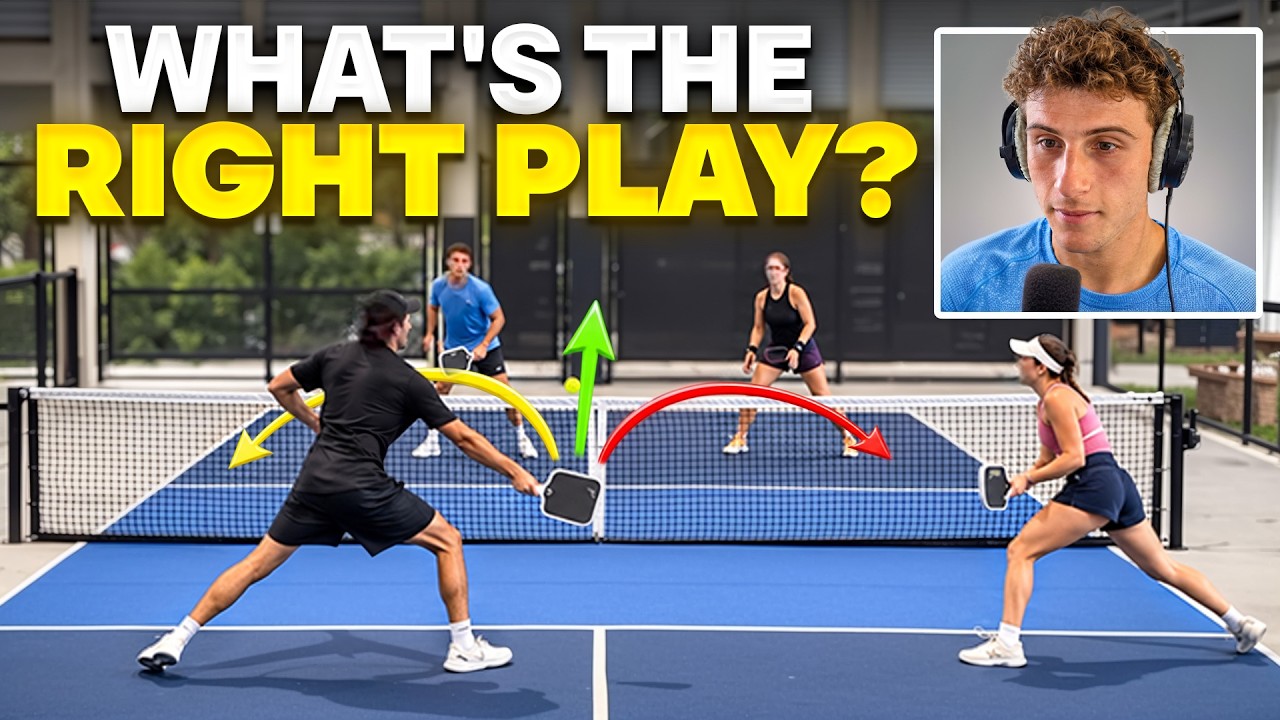
Most mixed doubles teams lose points not because of bad shots, but because of unclear roles and poor court positioning. Coach Tony Roig breaks down the mixed doubles strategy fixes that actually work.
Your mixed doubles strategy probably has a massive blind spot, and you don't even know it's there.
Most teams show up to play mixed doubles with zero clarity on who should take which ball, who should be attacking, and where each player should be standing when things speed up.That confusion turns into missed putaways, exposed feet, and points you should have won.
This breakdown pulls from a real pickup game analyzed by Tony Roig Pickleball on YouTube, working through actual rallies to show you exactly where positions break down and how to fix them.
Love pickleball? Then you'll love our free newsletter. We send the latest news, tips, and highlights for free each week.
The First Thing You Need to Settle Before the Match Starts
Before a single ball is served, you need role clarity. Every strong mixed doubles team has a setup player and a hammer.
The setup player keeps opponents back, works the dink exchanges, and creates the opportunity. The hammer attacks when the ball goes up and applies pressure.
Without that conversation, both players hesitate. And hesitation in pickleball turns into a ball sitting right in the middle of the court with nobody taking it.In mixed doubles specifically, the male player typically takes the hammer role: moving forward, taking court in the middle, and initiating attacks.
The female player works the setup, controls the dink battle, and feeds her partner the chance to put the ball away.
This is not a rigid rule.
But if you have never talked about it with your partner, you are leaving points on the court, because court coverage mistakes in doubles almost always trace back to undefined roles.
How Should the Man Position Himself at the Kitchen Line?
The answer is simple: straddle the center line and stay there.When you are the hammer, your job is to insert yourself into as many rallies as possible.
That means your default position at the kitchen line should be close to the middle of the court, not tucked to your side.
From there you can reach balls hit to the middle, pressure the opponents, and take finishing shots when your partner sets one up.
It is an aggressive posture, and that is exactly the point.The setup player, meanwhile, focuses on the cross-court dink battle against the opposing female player.
When you respect those lanes, the team operates like a system instead of two individuals guessing.
One finishing move comes up repeatedly: your partner dinks cross-court, the opponent pops it slightly, and you poke it right down the middle.Learning how to attack the middle gap is a direct result of where you stand before the shot even happens.
💡
Need some new pickleball gear? Get 20% off select paddles, shoes, and more with code THEDINK at
Midwest Racquet SportsWhat Is "Respecting the X" and Why Does It Matter?
Respecting the X means understanding the invisible crossing paths of the ball and your partner's movement, and not cutting across them.
Here is what it looks like when it goes wrong: the ball is coming from the right side of the court toward the left.One player reaches across their body to intercept it instead of letting their partner, who is in a better position, take the shot.
The reach creates a mechanical error because you are hitting away from your body with no real power or control.
The fix is to know who owns which ball based on court position and ball trajectory.
When the ball crosses the X pattern between players, the player it is moving toward takes it. The player it is moving away from gets out of the way.This concept is especially important in mixed doubles where the man is ranging to the middle.
If you are the man, you need to be disciplined about only taking balls that genuinely belong to you.
If you are the woman, you need to know when to trust your partner and when to go behind the man because constantly hitting toward him lets the opposing team ignore the rest of the court.
7 Mixed Doubles Pickleball Habits to Win More Points
Most mixed doubles pickleball points are lost before the ball is even served. Here are seven habits that turn a shaky pairing into a team nobody wants to draw.
 The Dink PickleballThe Dink Media Team

Keeping the Serve Team Back: The Return Side Game Plan
When you are on the return side, your single most important job in the first few shots is to prevent the serve team from getting comfortable at the kitchen line.
You do not need to win the point outright. You just need to make them hit another ball. And another.And another. Every ball you keep them from settling is a ball where they are vulnerable.
Here is a short list of tools that keep the serve team back effectively:
- The middle fourth shot: Hit the fourth ball into the middle of the court, making both opponents uncertain about who should take it.
- The center-line lob: When opponents crowd the line, a lob to the center is nearly impossible to overhead cleanly.
- Consistent depth: Simply keeping the ball deep forces them to deal with it on the move rather than from a planted, comfortable position.
- Pushing wide to force reach: A ball placed wide when the opponent is already at the line forces them to step back or stretch, disrupting their balance.
The lob to the center line is particularly underused.
When both opponents are crowding the kitchen, that spot creates maximum confusion. Neither player can take a clean overhead.It resets the entire point in your favor without requiring a high-difficulty shot.
For more on reading the lob situation correctly, check out how the lob catches aggressive players off guard.
5 Mixed Doubles Tips to Win More Pickleball Matches
Play to your team’s actual strengths, communicate constantly, and always remember to have fun and keep things lighthearted
 The Dink PickleballThe Dink Media Team
Why Cheating In on the Serve Side Kills Your Defense
This is one of the most common mistakes at the 3.5 to 4.0 level: you are on the serve side, the third shot looks decent, and you immediately follow it toward the net.The problem is that if the third shot was not actually good enough to advance behind, you have now exposed your feet.
The return team sees your momentum, attacks low at your feet, and you have a nearly impossible shot to make from a compromised position.
The rule is simple. If you are not sure whether you should move in, stay back.
Staying back means you can still defend a ball that comes in hot. It means you have time.
Moving in behind a ball that is attackable means the opponent decides when the point ends, not you.
Conceding the net in the right moments keeps you alive in rallies where you should not be winning anyway.More points are scored on the serve side by surviving than by charging.
The longer you stay in the rally, the more chances you create for the return team to make an error.
Mixed Doubles Strategy: 7 Pro Tips to Play Better Pickleball
Winning mixed doubles is not about hitting harder. A smart mixed doubles strategy means targeting smart, protecting your partner’s backhand, and serving with the depth that sets up easy attacks.
 The Dink PickleballThe Dink Media Team
Stacking in Mixed Doubles: What You Need to Know
Stacking is a powerful positioning technique where players cross to non-traditional sides after the serve or return.
It lets left-handed players keep their forehand in the middle, or helps a team get their stronger player into a preferred position.
But there is a specific mistake that neutralizes its value: serving from too far off the center line.If you plan to slide across after the serve, serve from as close to the center line as the rules allow.
Serving from the far outside edge means traveling a much greater distance, and that gap creates stress, late shots, and errors on the third ball.Here is a quick checklist for executing the stack correctly:
- Serve from as close to the center line as you can legally stand.
- Slide in the direction of the stack immediately after contact.
- Your partner moves in the opposite direction to open the court.
- The receiving player takes the third shot from the new position.
- Both players then advance toward the kitchen line together.
When this works, you get a clean third to the moving player, your partner applies immediate pressure, and the team finishes as a unit. That is coordinated offense.
Doubles strategy fixes that work almost always involve getting your stacking execution right first.
Doubles Stacking 101: The Fool-Proof Positioning Strategy That Wins Points
Stacking might be the single most underrated positional tool in doubles pickleball – and it’s way simpler than you think
 The Dink PickleballThe Dink Media Team
What Happens When You Miss a Shot You Should Have Made?
Every player misses a ball they should have put away. The issue is not the miss. The issue is what comes next.
If you let one error bleed into your next shot, and then the shot after that, you have turned a single mistake into a multi-point slide.
That is carryover error, and it is one of the most damaging patterns in recreational pickleball.
The fix is a short reset between points. Acknowledge the miss, then move on with zero carry.
On the technical side, missed putaways usually come from one thing: no clear target over the net. Swing at a high ball without knowing where it is going, and you are guessing.Shot selection clarity is the antidote to mechanical misfires under pressure, and it also keeps you from popping the ball up when the pace jumps.
Be intentional. Pick your spot before you swing.
Pickleball Psychology: Why You Miss Easy Shots
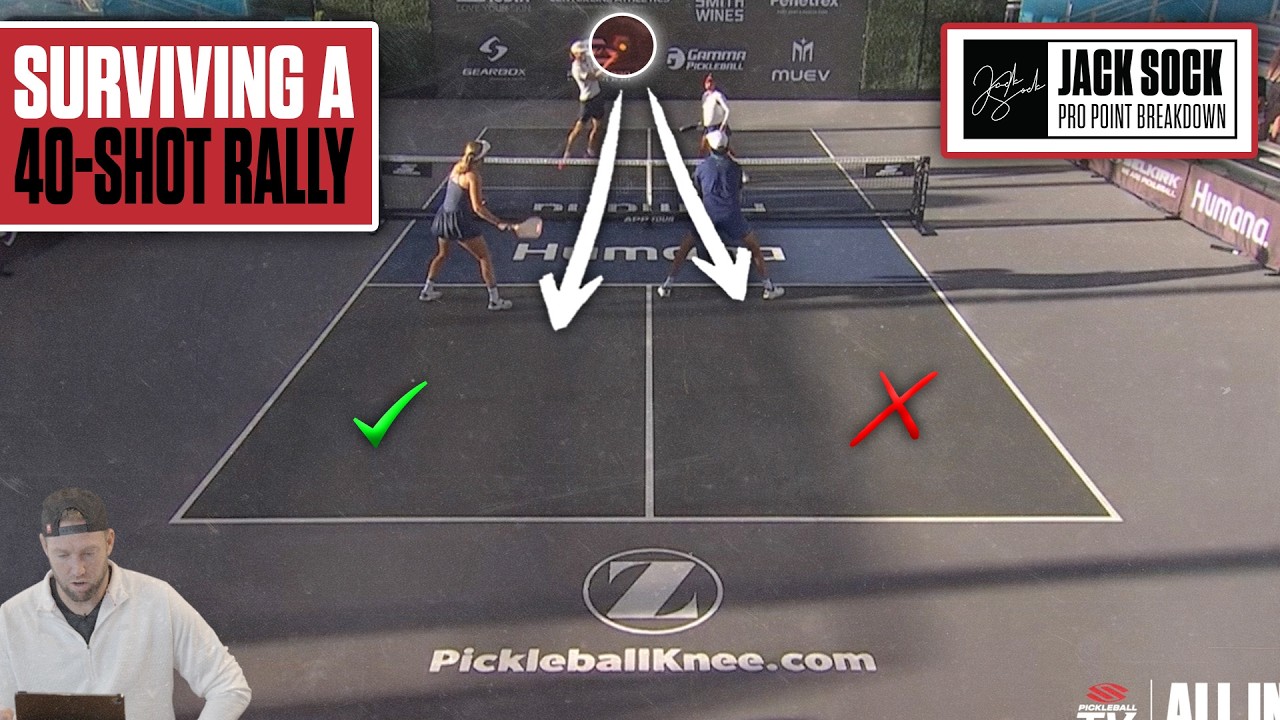
Pickleball psychology plays a massive role in match outcomes, especially during extended rallies. Jack Sock explains how relentless defense can break down even the best players mentally.
 The Dink PickleballThe Dink Media Team
Going Behind the Man: The Shot Women Players Must Master
If you are the female player in a mixed doubles team and you only ever hit straight ahead, the opposing male player will camp the middle all day.
He will take every ball he can reach and there is nothing you can do about it. The solution is going behind the man.
When the opposing male player slides toward the middle to poach, the space behind him opens up.
A well-placed ball to that vacated zone forces him to reverse his momentum and take a much harder shot.
It also disrupts his team's communication because now his partner has to cover for him.
This is not a low-percentage trick shot. It is a fundamental skill for playing effective mixed doubles.
Pair it with good cross-court dinking against the opposing female player and you create a constant decision problem for the man: do I stay or do I move?Either answer helps you. Learn to win the cross-court dink battle and this becomes even more effective.
Mixed doubles comes down to team coordination, clear roles, and disciplined shot selection. Get those three things right and the strategy almost runs itself.
For more on building the specific skills that make these concepts work, take a look at strategies pros use every game and why your fourth shot keeps popping up.
Both connect directly to what you just read.
💡
Heads up: hundreds of thousands of pickleballers read our free newsletter.
Subscribe herefor cutting edge strategy, insider news, pro analysis, the latest product innovations and more.
Frequently Asked Questions
What is the hammer and setup player in mixed doubles pickleball?
The hammer is the attacking player, usually the male, who moves forward, takes middle balls, and puts away high shots. The setup player, usually the female, controls dink exchanges and creates opportunities for the hammer to finish. Defining these roles before the match eliminates hesitation and court confusion.
Where should the man stand in mixed doubles pickleball?
The man should straddle the center line at the kitchen, positioning to take balls in the middle and initiate attacks. This central position lets him insert himself into more rallies and puts constant pressure on the opposing team. Tucking to one side and staying there is a passive choice that reduces your impact on the game.
When should you lob in mixed doubles pickleball?
The best time to lob is when both opponents are crowding the kitchen line and neither player has a clear overhead lane. A lob to the center line forces both players to compete for the same ball, which almost always results in confusion or a weak response. Aim for the center, not a corner, to make it as difficult to defend as possible.
What does stacking mean in pickleball?
Stacking is a positioning strategy where one or both players shift to non-traditional sides after the serve or return, usually to keep a left-handed player's forehand in the middle or to get the stronger player in a preferred court position. The key execution detail is serving from close to the center line so the sliding player does not have to travel too far. Serving from the outside edge while planning to stack creates unnecessary distance and leads to rushed, attackable thirds.
How do you stop carryover errors in pickleball?
Carryover errors happen when a missed shot affects your mental state and leads to more errors on subsequent points. The fix is a deliberate reset between points where you fully let go of the previous mistake. On the technical side, being intentional about your target over the net before you swing eliminates most unforced errors on putaway opportunities.
Anuncie Aqui / Advertise Here
Sua marca para o mundo Pickleball! / Your brand for the Pickleball world!





 English (US) ·
  Portuguese (BR) ·