
 English
  Spanish
  Portuguese
  German
  Italian
  Japanese
  French
  Polish
  Russian
  Netherlands
  Hungarian
  Turkish
  Videos
  Thedink Pickleball

A pickleball overswing is one of the most common mistakes players make at the kitchen line. This one drill will train compact contact and clean volleys fast.
A pickleball overswing is quietly costing you points every single session.
You step up to the kitchen line, the ball comes fast, and your arm pulls back like you are hitting a forehand drive.
The result is a pop-up, a missed volley, or worse, an unforced error you cannot explain.The problem is not your reaction time or your footwork.
It is your swing size. Big swings on volleys create timing problems, reduce control, and make your movement worse because your body is off balance after the shot.
This drill fix comes from Mari Humberg on YouTube, and it is one of the cleanest solutions to a problem that affects players at almost every level.
Here is everything you need to know about the drill, why it works, and how to build on it.
Love pickleball? Then you'll love our free newsletter. We send the latest news, tips, and highlights for free each week.
Why Big Swings Hurt Your Volley More Than You Think
Most players know they swing too big. What they do not know is how much a pickleball overswing damages everything that happens after contact.
A large backswing does two bad things at once.
It gives you less time to reach the ball because the paddle has farther to travel, and it pulls your weight backward, which kills your ability to move to the next shot.
Here is the core issue: volleys are not drives. They need a short, punchy motion that redirects pace, not one that generates it.The moment you treat a volley like a groundstroke, you are fighting the shot instead of working with it.
This shows up most on the forehand side, where players have more natural range of motion and let the arm go wide. The backhand side is not immune either.
A two-handed pull-back on a volley is just as destructive, which is why a harder backhand volley comes from contact point, not swing length.If you want the full picture on how a pickleball overswing connects to other net errors, this breakdown of the critical mistakes hurting your volley covers exactly what goes wrong at the kitchen line and why compact contact is the fix.
Per USA Pickleball's official rulebook, a volley is any ball struck out of the air before it bounces, which means you are working with the opponent's pace by definition. You do not need to add your own.
What Is the Ball in Armpit Drill?
The ball in armpit drill is exactly what it sounds like.
You place a second pickleball under your paddle arm's armpit and hold it there while you volley.
The rule is simple. If you swing too big on the backswing, the ball falls. If you keep your swing compact and make contact out in front, the ball stays put.It is a binary feedback system. You do not need a coach watching every rep.
That immediate feedback is what makes this drill work for players who have been told to fix a pickleball overswing but never knew when they had actually done it.Research on motor learning and augmented feedback consistently shows that immediate, self-detected error signals build motor patterns faster than delayed verbal correction.
💡
Need some new pickleball gear? Get 20% off select paddles, shoes, and more with code THEDINK at
Midwest Racquet SportsHow to Run the Drill Step by Step
Here is exactly how to set up and execute the drill:
- Grab a second ball. You need one ball to hit and one ball to hold under your armpit on your paddle arm side.
- Get a partner to volley with you. This drill works best in a volley-to-volley exchange, both players at the kitchen line.
- Start at a slow to medium pace. This is not a speed drill. You are training mechanics, so keep the ball moving at a controlled tempo.
- Place the ball under your armpit. Hold it there through the entire exchange. The key is that it must stay put during your backswing.
- Focus on contact out in front. The ball may fall slightly during your follow-through, and that is acceptable. What you cannot let happen is the ball falling during the windup.
- Alternate forehand and backhand. Run the drill on both sides. Most players will find one side is a bigger problem than the other.
The finish is where players get confused. If the ball drops on your follow-through, that is okay.
The drill is not trying to eliminate your finish. It is trying to eliminate the giant pull-back that happens before contact.For how this fits into a broader practice plan, these 12 drills you need to play your best pickleball in 2026 show where mechanics work sits alongside live-ball reps.
Stack it with a simple drill for lightning-fast hands and your practice sessions get sharper in a hurry.
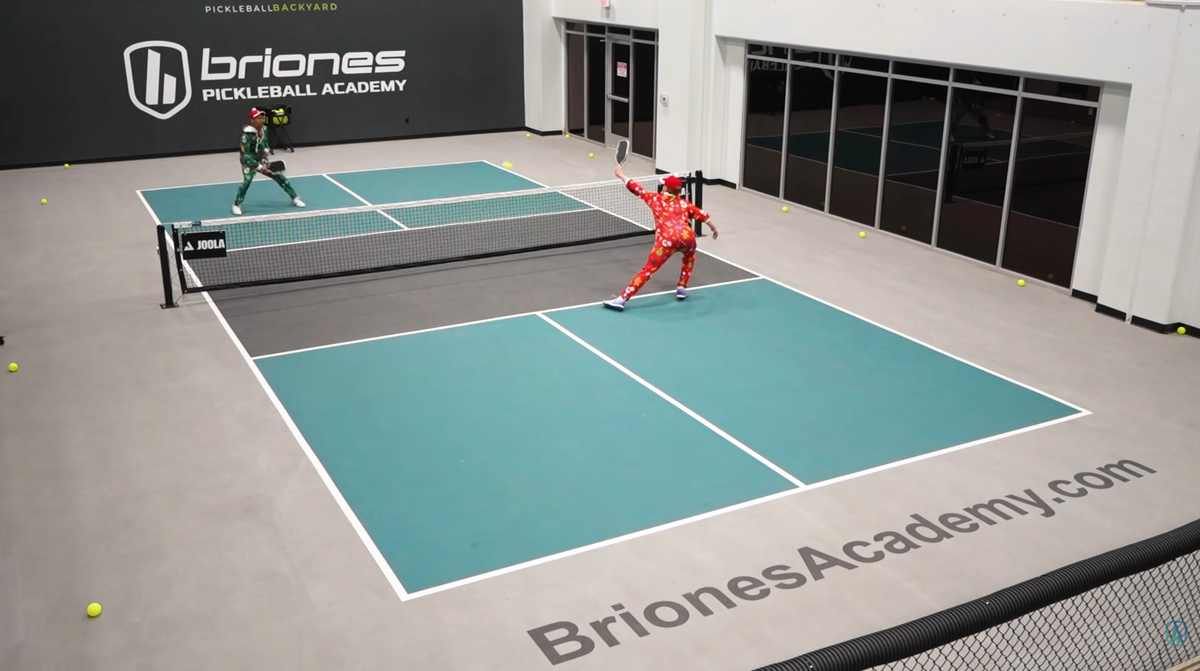
The 12 Pickleball Drills You Need for Your Best Game in 2026
You can’t just show up and hit balls – you need a plan, and that plan should build progressively from simple to complex
 The Dink PickleballThe Dink Media Team
What Should You Feel When the Drill Is Working?
When the drill clicks, contact starts to feel completely different.
You will notice the ball coming off your paddle with more consistency, not more power. That is the point.
Your body will also feel more stable after each shot. A compact swing keeps your weight forward and your feet ready to move.
A big swing pulls you off balance and puts you in recovery mode before the next ball even crosses the net.You should also feel the ball meeting the paddle out in front of your body, not next to your hip or behind your shoulder.
That contact point is everything in a volley. It is where you have the most control and the least chance of giving the ball a bad angle.For more on keeping the paddle face right and contact clean, this guide on fixing your paddle face on the backhand is worth reading alongside this drill.
Why Your Pickleball Drilling Isn’t Working (2-Step Fix)
Most pickleball drilling sessions don’t translate to games because players skip two critical steps. Here’s the progression and live ball method that fixes that fast.
 The Dink PickleballThe Dink Media Team
Why Does This Drill Improve Movement Too?
This is the part most players miss. The overswing does not just hurt the shot. It breaks your movement pattern after the shot.
When your arm swings wide, your whole upper body rotates too far.That rotation takes time to reverse, and while you are reversing it, your opponent is already hitting the next ball.
You are always one step behind because your finish puts you in a bad position to start moving.
Compact swings keep your center of gravity stable. You make contact, you recover, you move.
The sequence is clean. Big swings make that sequence choppy, and over the course of a rally, those fractions of a second stack up into lost points.This is also why players with consistent hands battles tend to win more rallies at the kitchen.
Their swings are short, their recovery is fast, and they are ready for the next shot before you have finished yours.
6 Progressive Pickleball Drills That Take You From 3.0 to 5.0
Most players want to jump straight to 5.0 skills before they have the fundamentals to support them. These six pickleball drills give you the exact progressions to build each part of your game in order.
 The Dink PickleballThe Dink Media Team

Is This Drill Only for Beginners?
Not even close. Intermediate and advanced players overswing too. It is just harder to spot because their timing is better and they bail themselves out.
At the 4.0 to 4.5 level, a pickleball overswing shows up most clearly in fast exchanges.When the ball comes quickly, muscle memory takes over, and if your muscle memory says big swing, that is what you get.
Running this drill regularly retrains the default. That matters if you want to break 5.0 and master the shots that get you there, because compact contact is non-negotiable at the top.
Watch this 4K slow-motion footage of expert swing mechanics and you will see how little the pros actually take the paddle back.
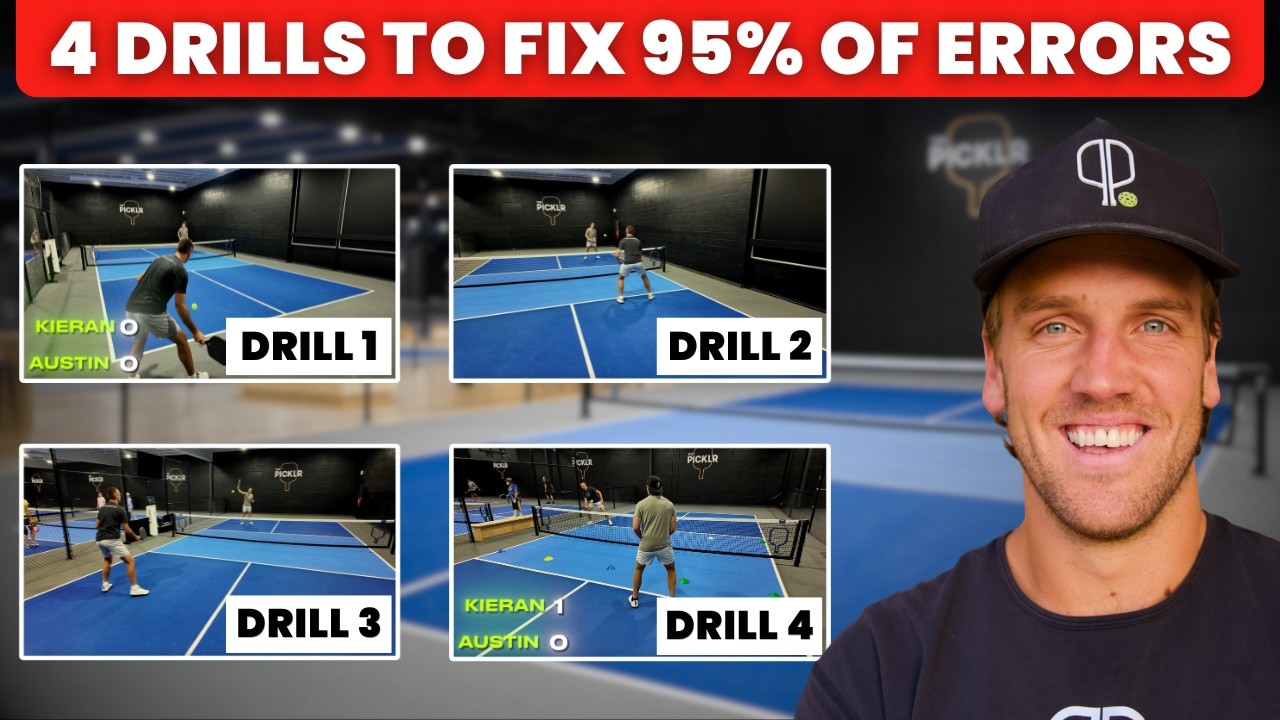
4 Pickleball Drills to Fix 95% of Unforced Errors
Consistency beats flashy shots every time in pickleball. These 4 pickleball drills from Pickleball Playbook’s Coach Austin Hardy target the fundamentals that separate champions from amateurs.
 The Dink PickleballThe Dink Media Team
How Do You Know When to Stop Using the Ball as a Guide?
Drop the armpit ball when your compact swing feels automatic, not just when you can do it in a controlled drill.
The real test is a live game exchange. If you volley at full speed in a rally and your swing stays short without thinking about it, the drill has done its job.If you still pull back the moment the ball comes fast, go back to the drill for another week.
A useful drill to layer in once the mechanics feel solid is the 6 two-person pickleball drills that build real skills.
Many of those partner drills will expose whether your compact swing holds up under more realistic pressure.
Pickleball Shot Selection: Ball Height & Court Positioning
Advanced pickleball means constantly analyzing the height of the ball and the court positioning off all four players in real time – and keeping this one rule sacred: just because you can hit a more aggressive shot doesn’t mean you should
 The Dink PickleballEric Roddy
Common Mistakes to Avoid During the Drill
Here are the errors players make when running this drill that reduce its effectiveness:
- Going too fast too early. Pace hides mechanical problems. Slow the exchange down until the ball stays put, then gradually add speed.
- Panicking when the ball drops. The ball dropping is information, not failure. Note when it happens (backswing or follow-through) and adjust accordingly.
- Only drilling one side. Players tend to skip the side that feels harder. That side is exactly where you need the most reps.
- Tensing the armpit to hold the ball. If you are squeezing the ball in place, your arm is too stiff. Hold it lightly and let your natural swing mechanics be what keeps it there.
- Skipping the drill after one good session. Muscle memory takes repetition. One clean session does not mean the fix is permanent.
Players who film themselves during this drill tend to improve faster.
Seeing your own backswing on video is often more convincing than any coach telling you it is too big.Here is a guide on filming yourself to fix mistakes fast that pairs perfectly with this drill.
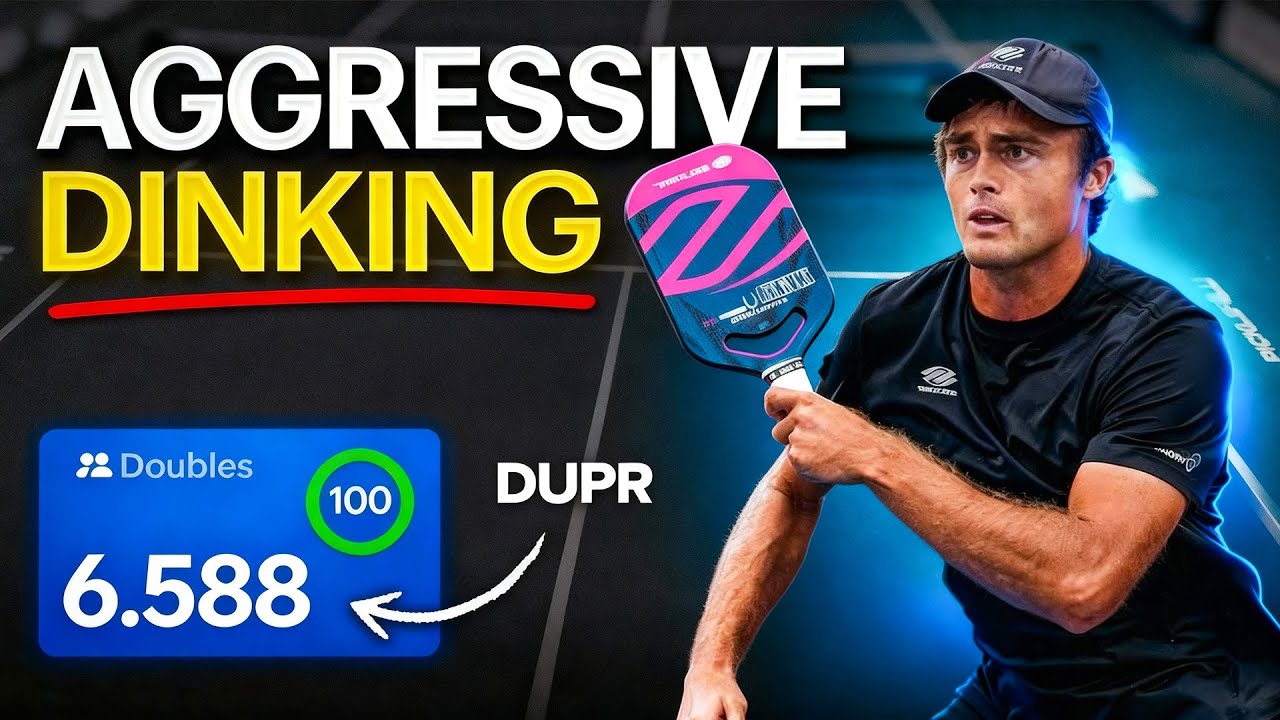
Avoid These 3 Deadly Mistakes to Master Aggressive Dinking
The aggressive dink isn’t about overpowering your opponent. It’s about creating pressure through placement, using deception to keep them guessing, and understanding when to attack versus when to reset
 The Dink PickleballAlex E. Weaver
How Often Should You Run This Drill?
Three to four times per week for two to three weeks is enough to start seeing real change in your volley mechanics.
Do not skip warm-up before running the drill, and do not run it when you are fatigued because tired mechanics ingrain the wrong habits.Keep your sessions to ten minutes of focused armpit drill work per practice. Beyond that, you are just going through the motions.
Quality reps matter more than volume here.
A strong warm-up routine before drilling will also make the reps cleaner from the start.
This 6-step pickleball warm-up from a top 10 pro is a good place to start before you pick up that second ball.
If you want to build beyond the armpit drill and develop a broader practice structure, the 90-minute pickleball drilling blueprint from a PPA pro gives you a full framework that includes mechanics work like this alongside live ball reps and strategy drilling.The overswing is a fixable problem. You do not need a major swing overhaul.
You need one ball, a willing partner, and enough reps to make the compact motion your default. Start there.
💡
Heads up: hundreds of thousands of pickleballers read our free newsletter.
Subscribe herefor cutting edge strategy, insider news, pro analysis, the latest product innovations and more.
Frequently Asked Questions
What is a pickleball overswing and why does it happen?
A pickleball overswing is when a player takes too large a backswing before making contact on a volley or dink. It usually happens because players are used to groundstroke mechanics from other racket sports or simply do not realize how little swing a volley actually needs. The result is inconsistent contact, pop-ups, and slower recovery for the next shot.
Does the ball in armpit drill work for both forehand and backhand volleys?
Yes, and you should run it on both sides every session. Most players find the forehand side is worse because the arm has more natural range of motion. The backhand can also be a problem, especially for players who use a two-handed backhand with a big pull-back before contact.
How fast should I volley when doing the armpit drill?
Keep the pace slow to moderate, especially in your first sessions. The goal is to train the correct mechanical pattern, not to test your reflexes. As the compact swing becomes more natural, you can gradually increase the pace while maintaining good form.
What if the ball keeps falling even when I think my swing is small?
If the ball drops consistently, your swing is still bigger than you think. Try slowing the exchange down even further and focus on keeping your elbow close to your body throughout the shot. Filming yourself during the drill will show you exactly where the swing is going wide.
Can this drill help with dinks, or is it only for volleys?
The drill is designed for volleys, but the principle of a compact, controlled swing applies to dinking as well. If you find yourself swinging too big on dinks, this 2-step dink fix addresses that specific problem with its own targeted approach.
Anuncie Aqui / Advertise Here
Sua marca para o mundo Pickleball! / Your brand for the Pickleball world!






 English (US) ·
  Portuguese (BR) ·