
 English
  Spanish
  Portuguese
  German
  Italian
  Japanese
  French
  Polish
  Russian
  Netherlands
  Hungarian
  Turkish
  Videos
  Thedink Pickleball

The pickleball reset is the one shot tennis never trained you to hit. Here is exactly how to build it from scratch and use it to get to the kitchen line.
If you are a tennis player picking up pickleball, the pickleball reset is probably the shot giving you the most trouble right now.
Not because it is complicated, but because everything your tennis game taught you works directly against it.Tennis trained you to turn sideways, load up, and swing through the ball.
The reset asks you to do the opposite: stay square, stay soft, and absorb the pace instead of adding to it.
This breakdown covers exactly how to build the reset from scratch, why the tennis instinct is the enemy here, and how to use this shot to stop getting stuck in no man's land.The coaching framework comes from Selkirk TV on YouTube, part of their 10-part series built specifically for tennis players making the transition to pickleball.
Love pickleball? Then you'll love our free newsletter. We send the latest news, tips, and highlights for free each week.
What Is the Pickleball Reset and Why Does It Exist?
The pickleball reset is a controlled, soft shot played from the transition zone that sends the ball high enough over the net to land softly in the kitchen.
Its entire purpose is to get you out of trouble and moving toward the non-volley zone.
In tennis, you never need this shot. The court is bigger, the net is lower on the sides, and the game rewards big swings from anywhere. Pickleball is different.
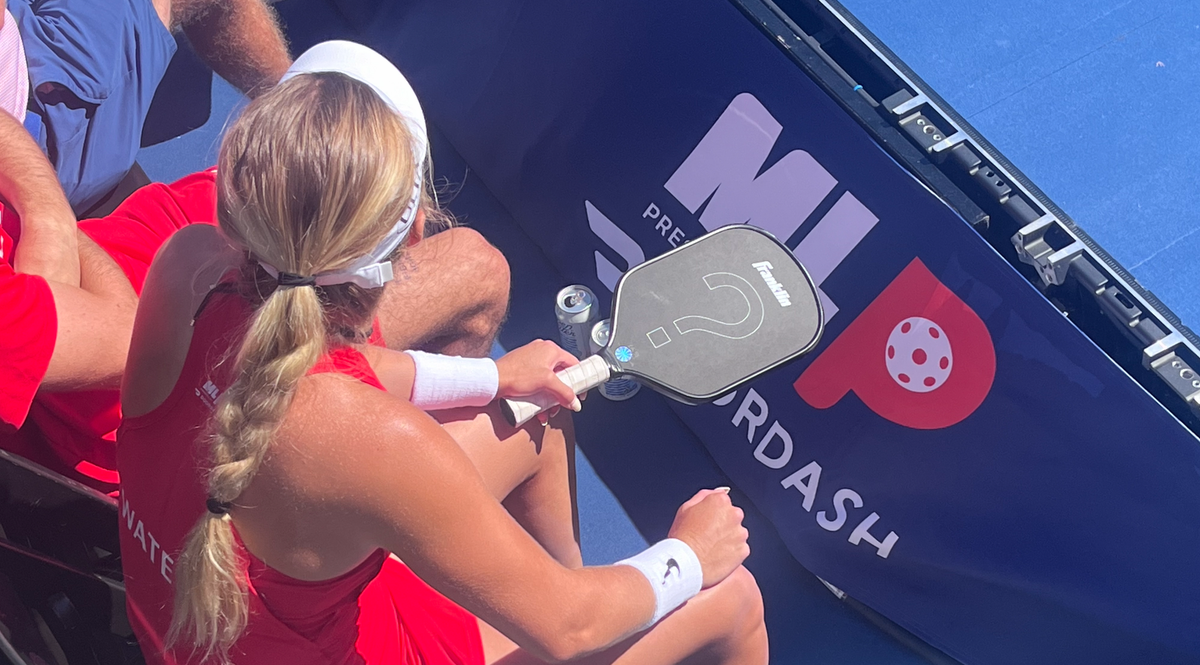
What We Know About Anna Leigh Waters’ Mysterious New Paddle
Spoiler alert: Not a whole lot. At least not yet.
 The Dink PickleballAlex E. Weaver
The transition zone, the area between the baseline and the kitchen line, is genuinely uncomfortable.
Balls come fast and low at your feet, and if you swing through them the way you would in tennis, you are sending pace right back to your opponent at an attackable height.The pickleball reset is not a defensive panic move.
It is a calculated shot that neutralizes pace and buys you time to advance to the kitchen line where you belong.
It is one of the shots you must master before 2026 if you want to climb past 4.0.If you want to understand how to handle the transition zone properly, the reset is the foundation of that skill set.
Why Does the Tennis Swing Fail Here?
Your tennis backswing is the problem.
When a ball comes hard and low at your feet in the transition zone, your instinct is to turn sideways, pull back, and swing through it.
That produces one of two results: the ball goes long, or it pops up and gets put away by your opponent.The tennis swing adds energy to the ball. The reset removes energy from it.
Those two goals are in direct conflict, and your muscle memory from years of tennis will fight you every single time until you consciously replace the habit.
There is also a positioning issue. Tennis habits that hurt your pickleball game almost always involve staying back and hitting from a comfortable distance.
Pickleball rewards forward movement, and the reset is the shot that earns you the right to advance.💡
Need some new pickleball gear? Get 20% off select paddles, shoes, and more with code THEDINK at
Midwest Racquet SportsHow Do You Set Up the Reset Correctly?
Start with your athletic stance. Think of a basketball defender: knees bent, eyes up, weight balanced, hands ready in front of you.
This is not a tennis ready position with the racquet back.The paddle stays low and in front.
Here is the specific setup that makes the shot work:
- Paddle head low, butt cap slightly higher. The ball is coming at your feet. Having the paddle low saves you a half-second of reaction time. Do not wait for the ball to bounce before you start moving the paddle down.
- Stay square to the net. No sideways turn. No shoulder rotation. Your chest faces the net the entire time, just like a volleyball player setting up to receive a hard spike.
- Soft grip pressure. A tight grip transfers pace back into the ball. A loose grip absorbs it. If you want a reference point for this, grip pressure is one of the most overlooked control fixes in the game.
- Contact point in front of your body. Not beside you, not behind you. Out in front, where you can see the ball make contact with the paddle face.
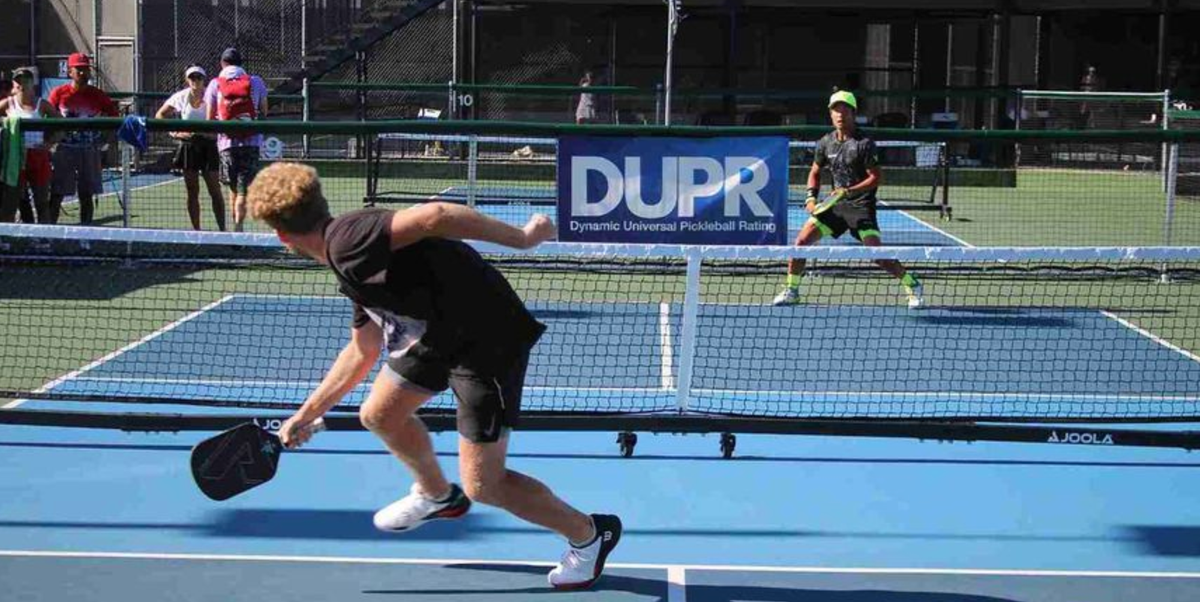
How to Reset When Attacked at the Kitchen in Pickleball
Knowing how to reset when attacked kitchen pickleball firefights erupt is what separates 4.0 players from 4.5s. Master these techniques and you’ll stop giving away free points under pressure.
 The Dink PickleballThe Dink Media Team
What Does the Actual Swing Motion Look Like?
There is almost no swing at all. That is the honest answer.
Think of it as a bump, not a stroke.
Like a volleyball player bumping a hard serve back up into the air, you are using the pace of the incoming ball and redirecting it with a slightly open paddle face.
You give it a small lift, not a swing through it.The finish position is important. After contact, your paddle should end up open and relatively high, not down at your side the way a tennis groundstroke finishes.
That upward finish is what produces the arc the shot needs.
Speaking of arc, the target height matters more than most players realize. Do not aim to just clear the net.Aim for what the coaching in this video describes as a net stacked on top of another net.
That higher target gives the ball enough arc to lose momentum before it lands, making it genuinely hard to attack.
If you want more detail on how apex placement changes everything on soft shots, the concept is identical here.
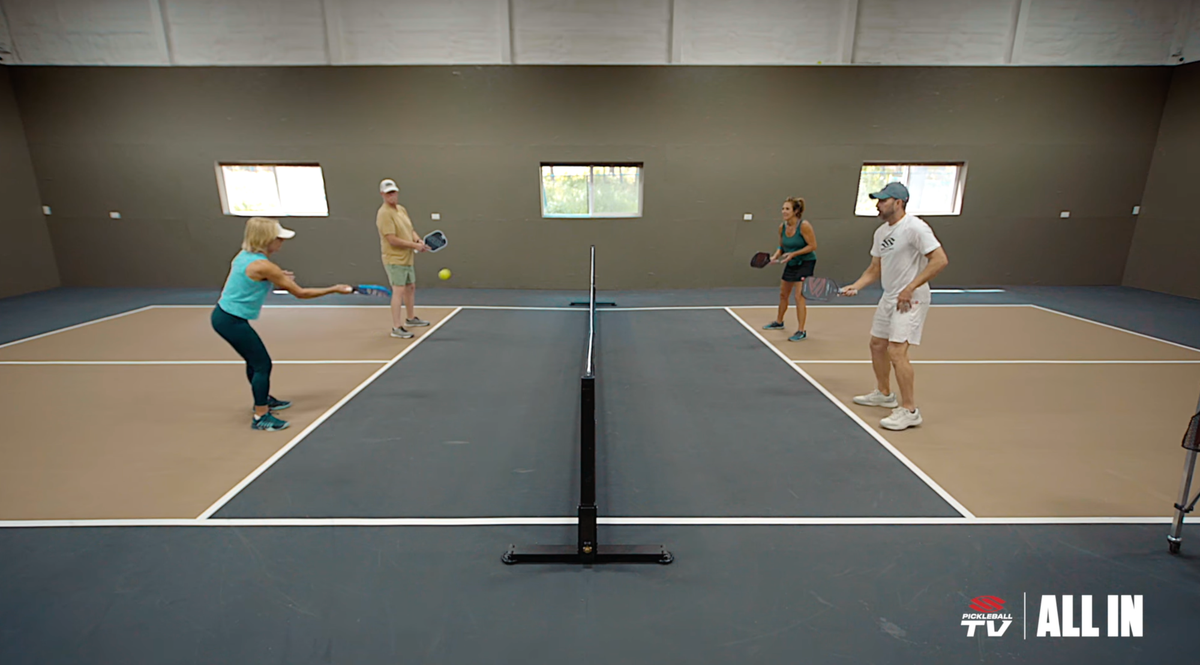
Pickleball Dinking 101: Small Swings, Big Results
You’re not trying to hit winners from the kitchen. You’re trying to create situations where your opponent makes a mistake or gives you a ball you can attack
 The Dink PickleballThe Dink Media Team
Where Should the Ball Land and Why Does It Matter?
The goal is to have the apex of the ball's arc occur on the opponent's side of the net, not yours.
When the ball peaks on their side and then drops into the kitchen, it arrives with very little remaining pace. That makes it nearly impossible to attack aggressively.
If the apex happens on your side of the net, the ball is still gaining or holding speed when it crosses.
That gives your opponent an attackable ball. You want the opposite: a ball that is decelerating as it lands.This is the same principle that makes the third shot drop effective.
Common reset failures almost always trace back to either the wrong apex location or too much paddle speed through contact.
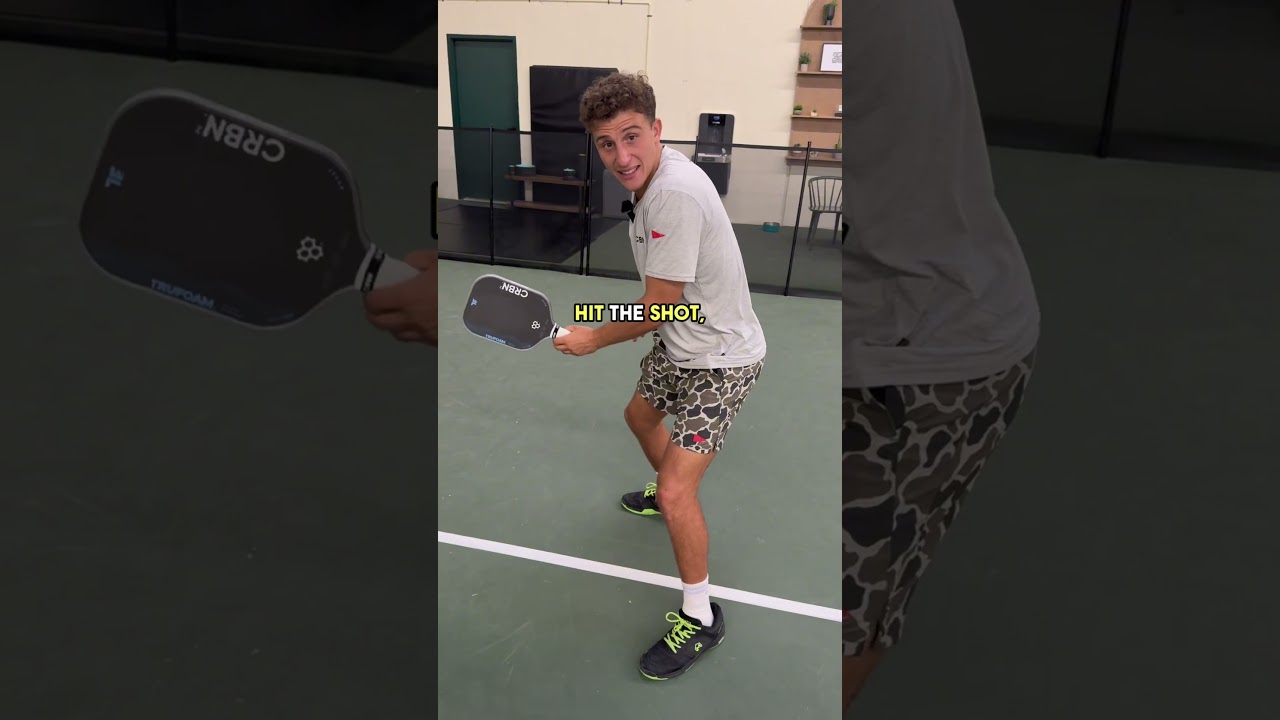
3 Keys to a Better Backhand Third Shot Drop
The backhand third shot drop frustrates more players than almost any other shot. These 3 keys will stop the ball from sailing and start putting it in the kitchen.
 The Dink PickleballThe Dink Media Team
How Do You Know When to Move Forward After the Reset?
This is where tennis players often stall. They hit the reset and then stand there watching instead of moving.
The rule is simple: if the ball is good, you move. Watch the ball after contact.If the arc looks right and the ball is tracking toward the kitchen, start moving toward the non-volley zone immediately. You do not wait for it to land.
You use the flight time to cover ground.
If the ball is not good, meaning it is sitting up or going long, stay back and prepare to reset again.The goal is to keep resetting until you get a ball good enough to advance on.
Kitchen arrival percentage is one of the stats that most clearly defines player level, and your reset is what gets you there.
Once you reach the kitchen line, you shift from defensive mode to offensive mode. Now you can look for a ball above the net to attack, put away, or speed up.
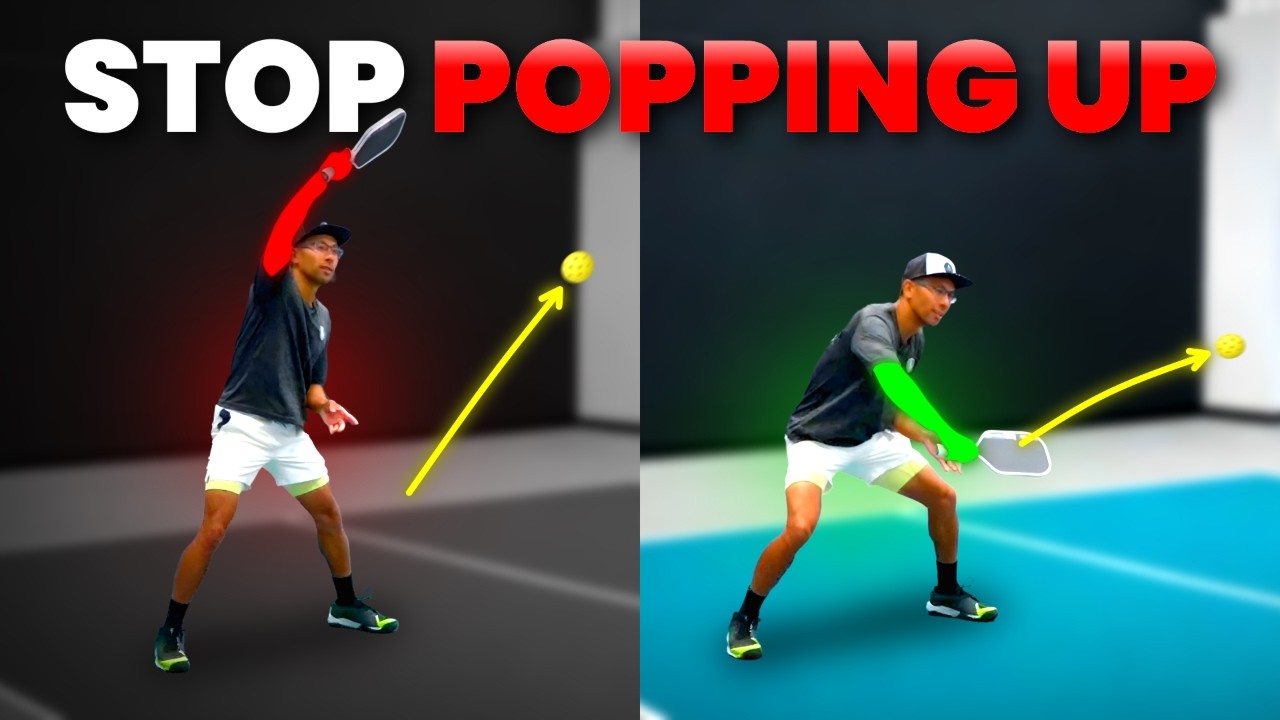
Why Your Pickleball Reset Keeps Popping Up
A popped-up pickleball reset hands your opponent an easy attack every single time. Here are 7 specific reasons it keeps happening and exactly what to do about each one.
 The Dink PickleballThe Dink Media Team
How Do You Practice This Shot Effectively?
Repetition with a partner feeding balls directly at your feet is the fastest way to build this skill. Here is a simple progression to follow:
- Phase 1: Static feeds. Have a partner feed you soft balls directly at your feet from the kitchen line. Focus only on paddle position and contact. No movement yet.
- Phase 2: Consecutive resets. Try to hit three in a row that land in the kitchen. This is the drill shown in the Selkirk TV video, and the competitive element (points for three in a row) adds useful pressure without being overwhelming.
- Phase 3: Reset and advance. After hitting a quality reset, move forward to the kitchen line and finish the point there. The reset is only successful if it earns you position.
- Phase 4: Live play from transition. Practice getting caught in the transition zone during points and using the reset to work your way in. This is where the skill becomes real.
If you want a specific drill to ingrain the reset under pressure, the rubber band drill is worth adding to your routine.
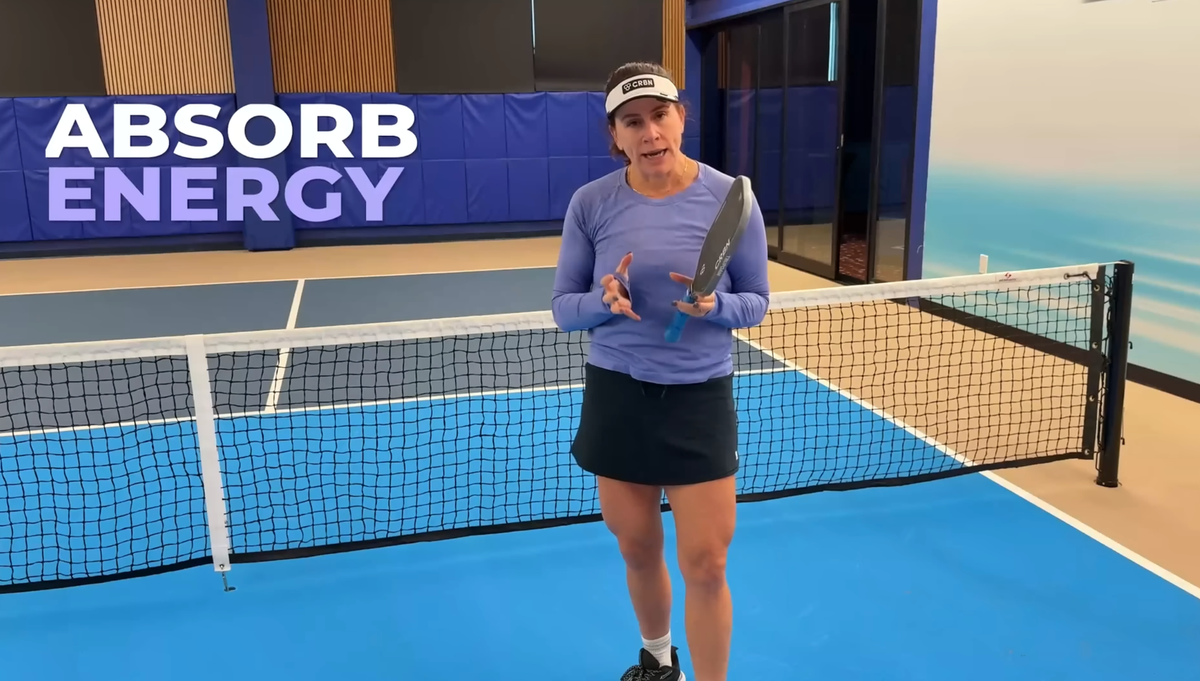
The Pickleball Reset: The One Skill That Takes You Beyond 3.5
By softening pace, controlling trajectory, and stabilizing through transition, players can use the reset to regain the kitchen and compete with stronger opponents
 The Dink PickleballThe Dink Media Team
What Happens When You Get This Wrong?
The two most common reset mistakes have very different causes. Knowing which one you are making helps you fix it faster.
- Mistake 1: Ball pops up. This happens when your grip is too tight or you add swing speed through contact. The fix is simpler grip pressure and thinking "absorb" instead of "hit."
- Mistake 2: Ball goes into the net. This usually means your paddle face is too closed at contact, or you are not giving the shot enough lift. Open the face slightly and aim higher than feels natural. Deadening pace at your feet is a specific skill that requires you to fight every instinct tennis gave you.
Both mistakes are rooted in the same tennis habit: trying to do too much with the shot.
The reset is not your winner. It is your ticket to get into position to hit a winner later.The 6-Second Mental Reset for Getting Past a Bad Pickleball Mistake
You miss a shot. You’re frustrated or angry. You’ve got about 6 to 8 seconds to assess what went wrong and get over it before the next point starts.
 The Dink PickleballThe Dink Media Team
Is the Reset the Same as the Third Shot Drop?
They are closely related but not identical.
The third shot drop is hit from the baseline after your opponent's return, while the reset is typically hit from the transition zone when you are under pressure mid-rally.
The mechanics are very similar: soft contact, open paddle face, high arc, apex on the opponent's side.
If you can master one, learning the other becomes significantly faster.Mastering the third shot drop in three steps builds directly on the same fundamentals you are working on with the reset.
The key difference is intent. The third shot drop is proactive, used to advance to the kitchen after your serve.
The reset is reactive, used to neutralize a tough ball and buy yourself time.
Both end with the same goal: getting to the non-volley zone.Tennis players often find the third shot drop easier to learn once they have the reset down, because the pressure is lower. You are initiating rather than reacting.
💡
Heads up: hundreds of thousands of pickleballers read our free newsletter.
Subscribe herefor cutting edge strategy, insider news, pro analysis, the latest product innovations and more.
Frequently Asked Questions
What is the pickleball reset shot?
The pickleball reset is a soft, controlled shot played from the transition zone that sends the ball in a high arc into the opponent's kitchen. It neutralizes pace and gives you time to move to the non-volley zone. It is not a winner; it is a positioning tool.
Why do tennis players struggle with the reset?
Tennis players struggle because the reset requires the opposite mechanics of a tennis groundstroke. Instead of turning sideways and swinging through the ball, you stay square and absorb the pace with minimal swing. That instinct to turn and load up is deeply ingrained and has to be consciously overridden.
How high should the reset go over the net?
Aim for roughly twice the height of the net, not just clearing it by a few inches. The apex of the arc should occur on your opponent's side so the ball decelerates before landing. A ball that peaks on your side is still carrying pace and is far easier to attack.
When should you reset instead of driving the ball?
Reset any time the ball is at or below your knees in the transition zone and coming at you with pace. If you try to drive a ball in that situation, you are almost certainly going to pop it up or send it long. Shot selection rules in pickleball are built around ball height, and low balls in the transition zone demand a soft response.
How do you know if your reset is good enough to advance on?
Watch the arc immediately after contact. If the ball is tracking toward the kitchen with a high arc and the trajectory looks soft, start moving to the non-volley zone right away. If it sits up or goes flat, hold your position and prepare to reset again.
The flight of the ball tells you everything you need to know about whether it is safe to move.
Anuncie Aqui / Advertise Here
Sua marca para o mundo Pickleball! / Your brand for the Pickleball world!







 English (US) ·
  Portuguese (BR) ·