
 English
  Spanish
  Portuguese
  German
  Italian
  Japanese
  French
  Polish
  Russian
  Netherlands
  Hungarian
  Turkish
  Videos
  Thedink Pickleball

Most players lose the third shot drive battle because they hit too high, not too soft. World-ranked pro Connor Garnett breaks down exactly how to keep your third shot drive low and dangerous.
The third shot drive has a reputation problem.
Most players treat it like a pure power play, wind up as hard as they can, and watch it sail high over the net where the opponent pounds it right back at their feet.
The real issue is not your swing speed. It is your ball height.These fixes come straight from Connor Garnett Pickleball on YouTube, where world-ranked pro Connor Garnett (currently ranked #13 in the world) breaks down a simple three-step system and a pair of drills to make your third shot drive a genuine weapon instead of a liability.
Love pickleball? Then you'll love our free newsletter. We send the latest news, tips, and highlights for free each week.
Why Ball Height Matters More Than Power
Here is the hard truth: a fast drive that sits high over the net is easier to handle than a slower drive that skims just above it.When you leave that ball up, your opponent can step into it and smack it back down at you.
When you keep it low, they are forced to hit upward and that immediately takes away their ability to attack.
Connor Garnett puts it plainly: "That height over the net is way more important than actually hitting it hard."If you hit it hard and high, the ball is either getting punished or going out. You need both pace and a low trajectory to make this shot work.
This is the mistake that separates recreational players from 4.5-plus players.
Advanced third shot drive placement is almost entirely about net clearance, not raw speed.
The 3-Step Mechanics of a Dangerous Third Shot Drive
Garnett breaks the shot down into three clean steps. Get these right and the low trajectory becomes a natural result, not something you have to consciously chase.
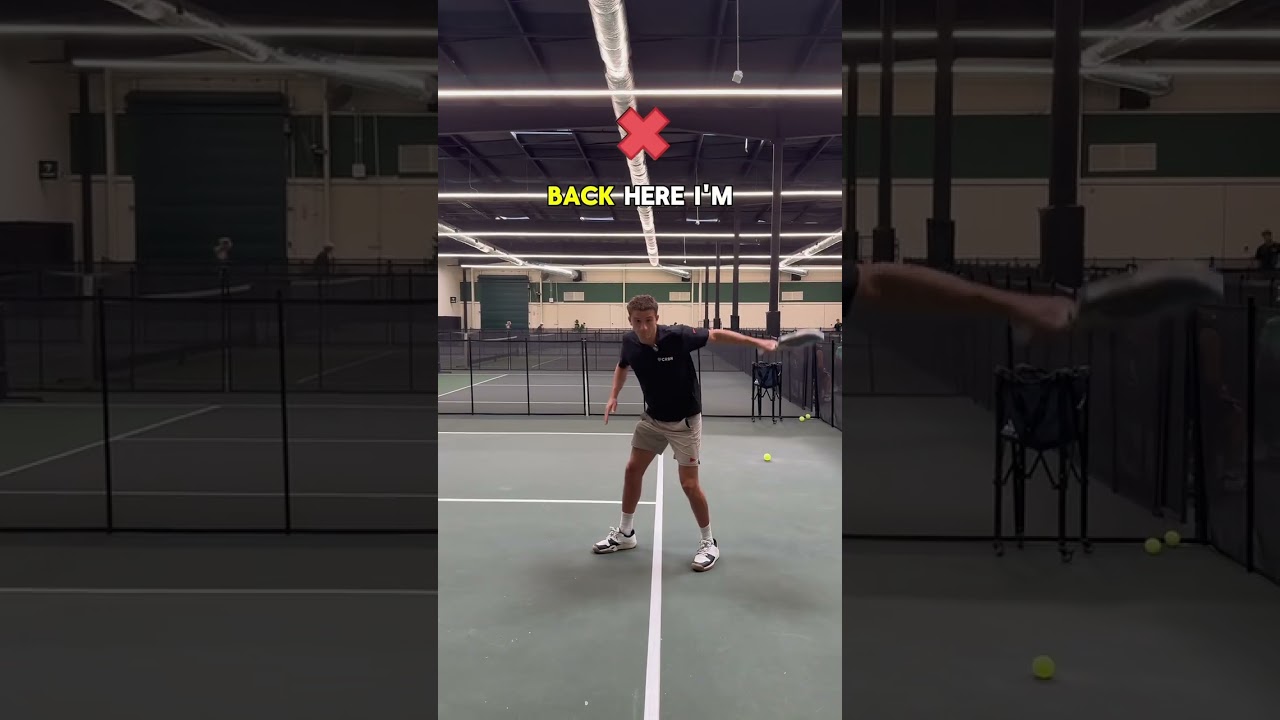
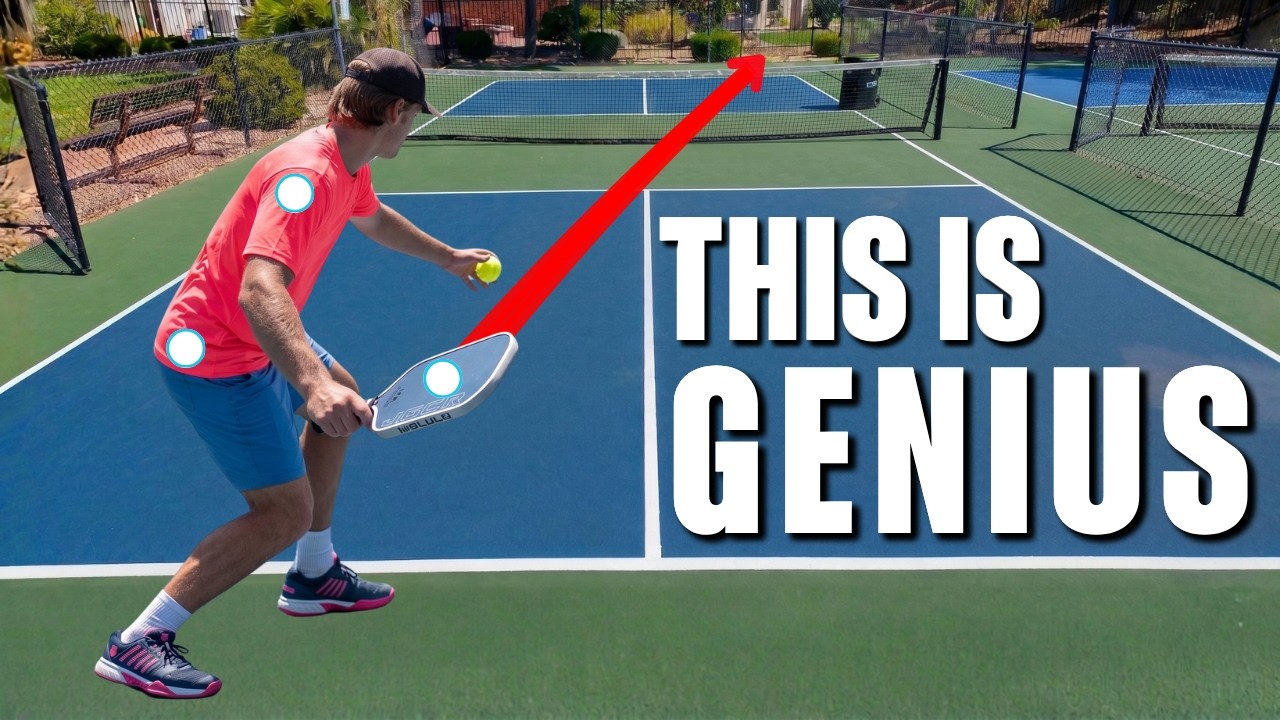
- Get below the ball with your paddle. Drop the paddle head below the contact point before you swing. This is what creates topspin as you swing through. Without it, you are pushing the ball flat and giving up control of trajectory.
- Drive the paddle out using your hips. The hips initiate the swing, not the arm, and your arm follows the rotation. Players who swing arm-first tend to get inconsistent contact and lose control of where the ball goes.
- Finish with the paddle touching your shoulder. Do not look up early. Keep your head down and drive through the ball completely before your eyes follow the shot. Early head lift is one of the most common reasons the ball pops up.
Each step feeds into the next. If you skip step one, your hips have nothing useful to drive.
If you skip the follow-through, you are essentially decelerating at contact and losing both spin and control.
💡
Need some new pickleball gear? Get 20% off select paddles, shoes, and more with code THEDINK at
Midwest Racquet SportsWhat Does "Keep Your Shoulders Down" Actually Mean?
Garnett uses a simple cue that makes a real difference: keep your shoulders down and through the shot.When your shoulders stay low and you push through contact, the ball naturally exits lower.
When you stand upright or lift your shoulders mid-swing, the ball floats. It is a direct mechanical relationship.
Watch yourself next time you mishit a drive high. Chances are you lifted your shoulders either at contact or just before it.That small rotation upward sends the ball on a rising trajectory instead of a flat or slightly descending one.
This is also why fixing your forehand drive often comes down to posture adjustments rather than swing changes.The swing can be technically correct and still produce bad results if your body position is off.
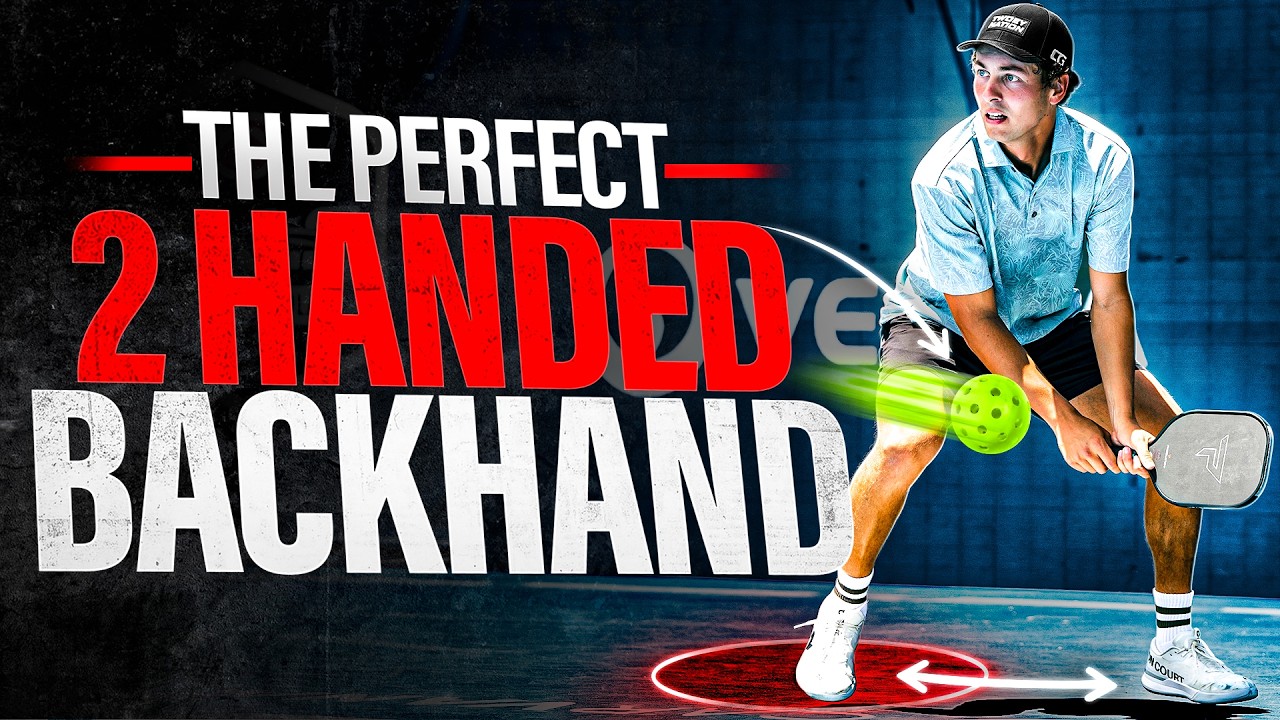
Pickleball Two-Handed Backhand: Connor Garnett’s Top Tips
The two-handed backhand pickleball shot gives you power and control when built correctly. Here is exactly how to stop leaving pace on the table every time you hit it.
 The Dink PickleballThe Dink Media Team
When Should You Drive Versus Drop?
This is where most players make the game harder than it needs to be. They either drive every third shot regardless of ball position, or they always drop because it feels safer. Neither approach is right.
Garnett's framework is straightforward:
- Drive when the return is high. A higher ball is easier to keep low over the net, which means your drive is more likely to be effective. Take advantage of that free opportunity.
- Drive when the returner is slow getting to the kitchen. Catching someone in motion is the whole point. If they are still transitioning to the kitchen line, your drive can catch them off-balance and force a weak first volley.
- Drop when the ball is low or you are off-balance. A third shot drop is the safer play. If you are moving awkwardly into the ball or the return is short and low, do not force the drive.
- Drop when you are moving forward and not set. Hitting a drive while moving toward the kitchen can pull you out of position. A drop gives you time to slow down, reset, and advance under control.
Your default should be the drop. Think of the drive as a weapon you pull out when the conditions are right, not the automatic response to every third shot.
Understanding which third shot situation calls for which shot is one of the fastest ways to stop giving away free points.
Master the Third Shot Decision in Pickleball
Pro coach Austin Hardy breaks down the exact framework pros use to choose between driving and dropping every single time.
 The Dink PickleballThe Dink Media Team
Where Should You Aim the Third Shot Drive?
Aim at the person who is coming in. That is Garnett's main targeting rule and it is simple for a reason.
A player moving toward the kitchen line is not fully set.
Their weight is shifting, their paddle position may be transitioning, and their reaction time to a ball at the body is slower than if they were stationary.A drive right at them forces a tough first volley. The goal is not necessarily to hit an outright winner.
It is to put your opponent in a difficult enough position that their response is weak, and then you can close behind your drive and take control at the net.
Garnett describes this in doubles: he drives at the incoming player, closes himself, and either gets a winner from that drive or an easy put-away on the next ball.
The third shot drive to fifth shot combination is one of the more reliable patterns in the game when executed with a low ball.If you aim at the open court instead of the body, you are giving a stationary or nearly stationary player time to step into a comfortable volley.
Do not make their job easier.
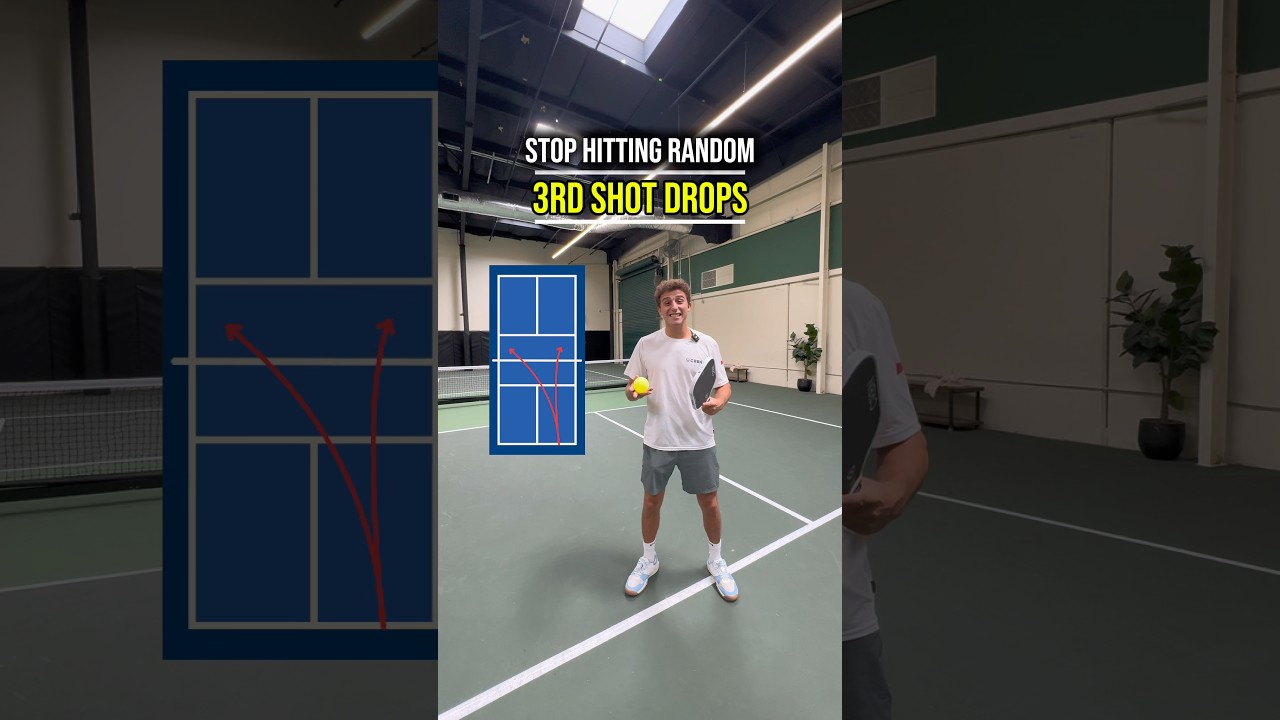
Third Shot Pickleball Placement: 3 Rules That Work Every Time
Third shot placement is not a guessing game. These 3 simple rules give you a specific target based on what the return looks like.
 The Dink PickleballThe Dink Media Team
Is Your Ball Height Where It Needs to Be?
Garnett gives a concrete target for this: can you hit 10 drives in a row within a tight window just above the net? That is the real standard for knowing your drive is match-ready.
Not nine. Not most of them. Ten in a row that clear the net by a small, controlled margin.
That is when the shot is ready to use in real play.
This is also a good competitive drill with a partner. Each person takes turns going for 10 and tracks how many land in the target height. Add some push-ups as stakes if you want the reps to feel like something.
For players working on why slowing down the drive actually wins more points, this drill is a good reality check. You will quickly find that chasing power makes the consistency fall apart.
Two Drills to Build a Reliable Third Shot Drive
Garnett demonstrates two drills that isolate the most important parts of this shot.
Drill 1: Crosscourt feed drill. One player feeds from the kitchen area, the other practices driving from the baseline. The goal is simple: hit 10 drives in a row that stay at the correct height. Track your percentage.
Aim for 90 percent or better before calling it match-ready. Keep your shoulders down on every single rep.
Drill 2: Live serve and return drill. One player serves, the partner returns, and the server practices hitting the third shot drive at a paddle-sized target in the kitchen area. This simulates real match conditions including the timing pressure of waiting for a return before deciding whether to drive or drop. The target keeps you honest about placement.
Both drills build the muscle memory for keeping the ball low under pressure. When the same mechanics feel natural in a drill, they show up more reliably in a match.
If you want to add more structure to your practice, target drills that fix accuracy fast apply to both the drop and the drive.
The Biggest Mindset Shift Most Players Need
Stop thinking about the third shot drive as a power move. Start thinking about it as a precision move that happens to have pace on it.
The players who use this shot most effectively at higher levels are not swinging out of their shoes every time. They are picking the right moment, keeping the ball just above the net tape, and putting the incoming player in a bad spot.
That is what creates free points, not raw speed. Hitting harder into a bad spot is just handing the point back. This connects directly to why hitting hard costs you points when you have not first controlled the trajectory.
If you have been struggling with consistency on this shot, the answer is almost always the same: slow down slightly, stay low through contact, keep the shoulders down, and stop lifting your head before the paddle finishes. Do those four things and the drive gets dangerous fast.
For more on reading the ball and choosing the right shot in real time, these three height targets for shot selection will help you make better decisions on every third shot, not just the drive.
Frequently Asked Questions
What is the third shot drive in pickleball?
The third shot drive is a fast, topspin shot hit from the baseline on the third shot of the rally, typically off the serve return. Unlike the third shot drop, which floats softly into the kitchen, the drive is hit with pace and aims to pressure the incoming player before they get set at the kitchen line. The goal is to keep it low enough over the net that the opponent is forced to volley upward.
When should I drive instead of drop on the third shot?
Drive when the return is high and your opponents are slow reaching the kitchen line. Drop when the return is low, you are off-balance, or you are moving forward and not in a controlled position to swing. Your default should be the drop, with the drive reserved for good opportunities.
Why does my third shot drive keep going too high?
The most common cause is lifting your shoulders during or just before contact. Staying low through the shot and keeping your shoulders down through the ball naturally produces a lower trajectory. Early head lift is the second biggest culprit because it causes you to stop driving through contact.
Where should I aim my third shot drive in doubles?
Aim directly at the opponent who is moving toward the kitchen line, not the open court. Catching a player in motion makes their first volley harder and increases your chances of getting a weak response or a pop-up on the next ball.
How do I practice the third shot drive to make it consistent?
Use the 10-in-a-row drill where you hit 10 consecutive drives that clear the net at a controlled, low height. Track your percentage and aim for 90 percent before using the shot in matches. Adding a target in the kitchen and practicing off a live serve-and-return sequence builds the timing needed for real match conditions.
Anuncie Aqui / Advertise Here
Sua marca para o mundo Pickleball! / Your brand for the Pickleball world!




 English (US) ·
  Portuguese (BR) ·