
 English
  Spanish
  Portuguese
  German
  Italian
  Japanese
  French
  Polish
  Russian
  Netherlands
  Hungarian
  Turkish
  Videos
  Thedink Pickleball

If your third shot drop keeps landing too high or sailing long, the problem is almost always a lack of targeted practice. This target drill builds the touch and accuracy you need to make it automatic.
If the third shot drop is giving you fits, you are not alone.
Most players understand what the shot is supposed to do, but they have no reliable way to practice it with intention.You go out and rally, hit a few drops that feel okay, and move on. Then in a real game, the pressure hits and the ball floats or goes into the net.
This drill changes that. It gives your practice a specific target, a clear technique focus, and a repeatable structure that builds real accuracy over time.
The setup and execution come from DUPR on YouTube, and it is one of the cleaner breakdowns of third shot drop training you will find.Love pickleball? Then you'll love our free newsletter. We send the latest news, tips, and highlights for free each week.
What Makes the Third Shot Drop So Hard to Repeat?
The third shot drop is not a power shot. It is a precision shot, and that is exactly why players struggle with it under pressure.
When you are standing at the baseline after your serve, your instinct is to drive the ball hard.
The drop asks you to do the opposite: produce a soft, arcing ball that clears the net by a small margin and dies in the kitchen.That combination of restraint, arc, and accuracy is genuinely difficult to train without a target.
Practice without one and the feedback is vague. The ball goes over, lands somewhere, and you move on.
You never really know if you hit a good drop or a lucky one.Most players miss the third shot drop for one of two reasons. They either hit it too hard and it sails, or they get tentative and dump it into the net.
Target training addresses both problems directly.
How Do You Set Up the Target Drill?
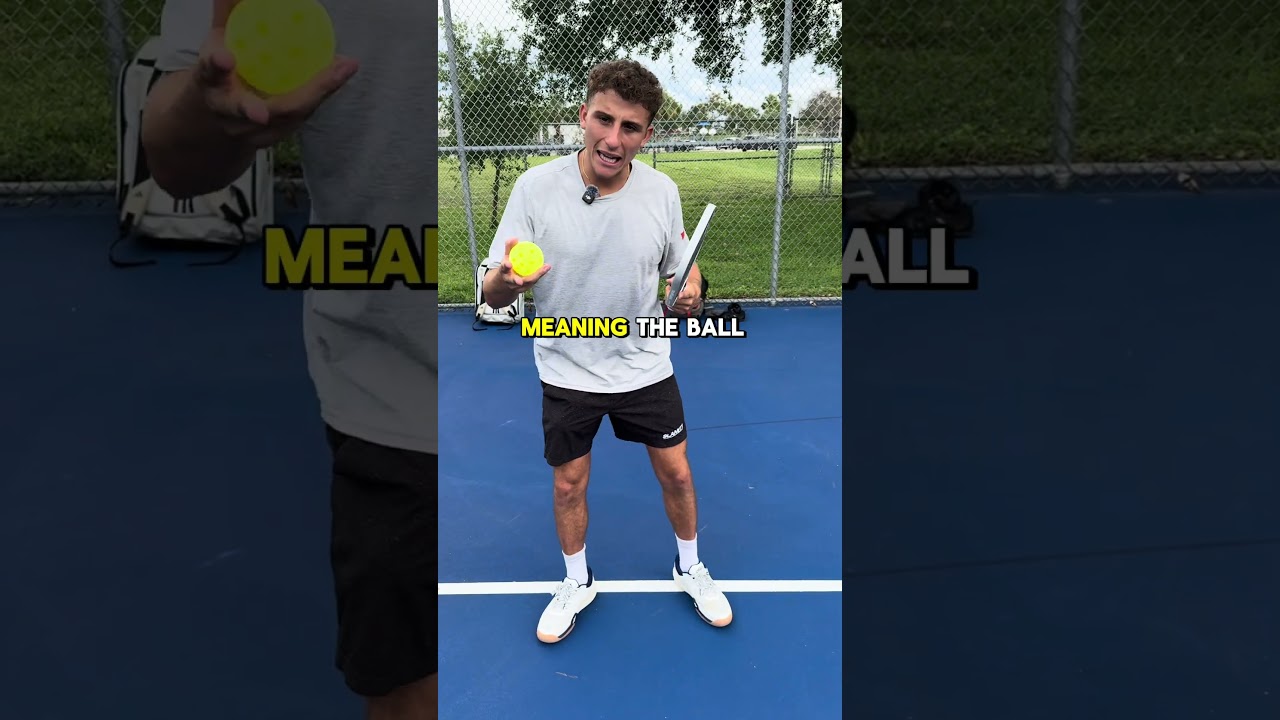
The setup is simple. Place target markers just over the net, positioned away from the sidelines.
You want them sitting in the kitchen area, not pressed against the edges of the court.
You start at the baseline, which is where you would actually be hitting a third shot in a real game.
That positional accuracy matters a lot. Practicing from halfway up the court does not build the right muscle memory for a shot you only hit from the back.The goal is to land every ball as close to those markers as possible. You are training both trajectory and placement at the same time.
💡
Need some new pickleball gear? Get 20% off select paddles, shoes, and more with code THEDINK at
Midwest Racquet SportsWhat Does Good Technique Actually Look Like?
The technique cues here are worth drilling into your brain. Get these right and the shot starts to feel repeatable.
- Stay balanced through contact. If your weight is shifting around as you swing, your contact point changes every single rep. Plant your feet before you swing, not during.
- Use a controlled and compact swing. A big backswing is the enemy of the third shot drop. You are not trying to generate power. You are trying to control arc and depth, and a shorter swing gives you far more consistency.
- Lift through your legs, not your arms. This is probably the most important cue. The upward energy in the shot should come from a slight knee bend and leg drive, not from flicking your wrist or raising your elbow. Your arms guide the ball, your legs provide the lift.
- Let the ball just clear the net. The margin should be small. You are not lobbing it high over the net. A tight clearance with soft pace forces the kitchen landing you need.
If you are chopping at the ball instead of lifting it, you are probably relying on your arm too much and not using your legs at all.
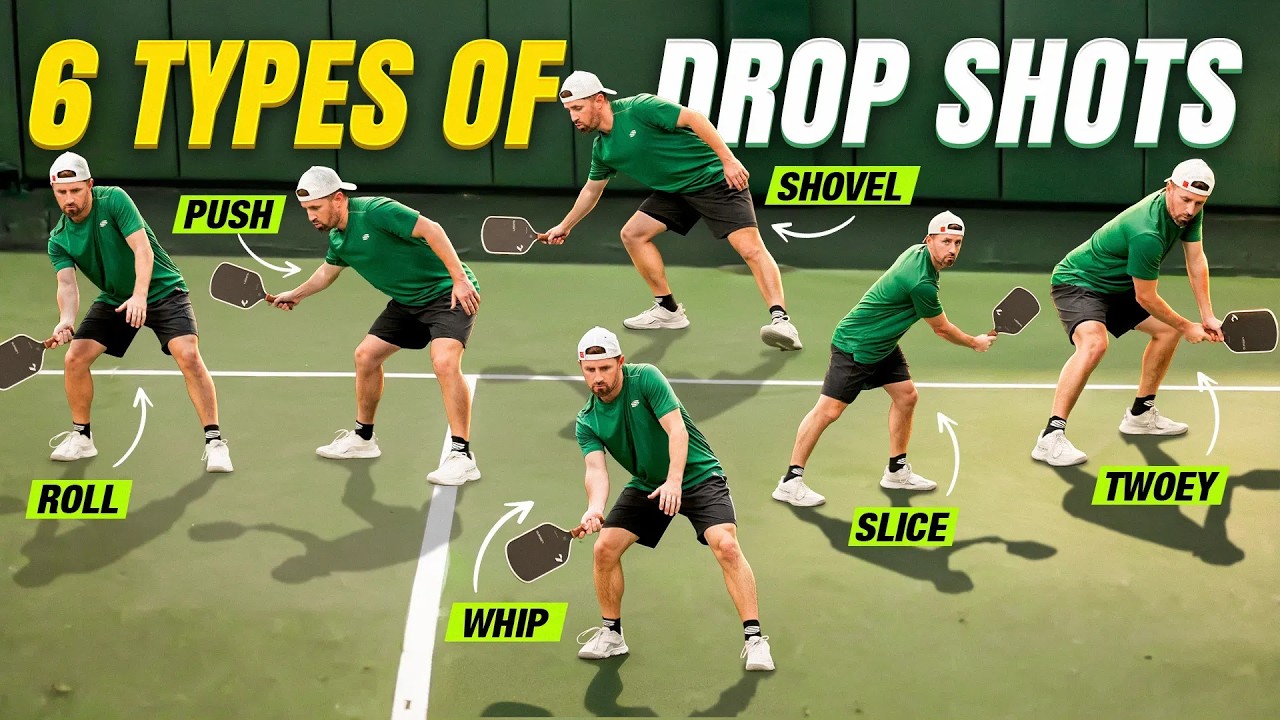
6 Third Shot Drop Techniques for Pickleball Players
The third shot drop is the shot that separates developing players from competitive ones. Here are 6 specific techniques to hit it better in every situation.
 The Dink PickleballThe Dink Media Team
Why Does the Target Change Everything?
Practicing without a target is like trying to get better at free throws by shooting at a hoop with no backboard and no sound feedback.
You are missing half the information.
When you place a physical marker in the kitchen, you suddenly have a concrete reference point for every single rep.You hit the drop, watch where it lands relative to the target, and immediately adjust. That feedback loop is what builds accuracy.
The third shot drop has to work across multiple situations, and target training helps you understand what a good drop actually feels like from start to finish.
The target also creates a pressure simulation. When you are aiming at something specific, your brain treats each rep with more weight.That mild focus pressure is closer to game conditions than casual drilling, which means your accuracy transfers better when you actually play.
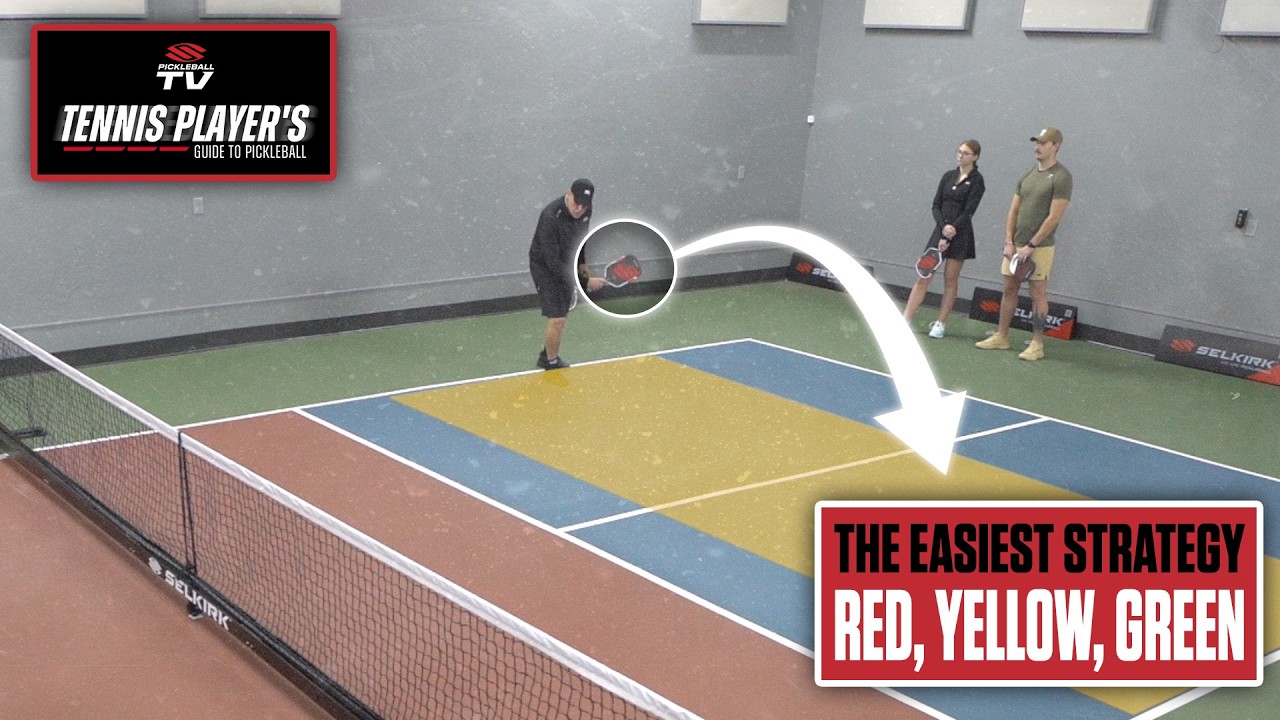
Pickleball Shot Selection: 3 Height Targets That Win
Most pickleball players think about where to aim but never think about how high to aim. This red, yellow, green height system fixes your pickleball shot selection instantly.
 The Dink PickleballThe Dink Media Team
How Should You Structure Your Reps?
Do not just walk out and hit 100 drops with no structure. That kind of mindless volume builds bad habits as fast as it builds good ones.
Here is a simple rep structure that works well with this drill:
- Warm up with 10 soft drops to find your feel. No pressure, no target focus yet. Just get the motion into your body and make sure your legs are engaged before you start counting reps.
- Run 3 sets of 15 intentional reps. For each rep, aim directly at the markers. Watch where the ball lands. If you miss by more than two feet, slow your swing down and check your balance before the next rep.
- Track your hits. Count how many times you land within one foot of the target per set. That number is your baseline. Your job each session is to beat it or hold it under fatigue.
- Add a movement component. After you can hit the target from a static position, start adding a shuffle step before each drop. You almost never hit a third shot standing completely still.
- Vary the target position. Move the markers to different areas of the kitchen across sessions. Crosscourt drops, middle drops, and drops aimed at the opponents' feet all require slightly different angles and adjustments.
Understanding the different types of drilling matters here. This is a skill-building drill, not a conditioned drill.
You are building a shot from the ground up, so give each rep your full attention.
PPA Pro Shares 90-Minute Pickleball Drilling Blueprint
Most players show up to drill without a real plan and wonder why their game doesn’t improve. Here’s exactly how a PPA Pro structures a 90-minute pickleball drilling session from start to finish.
 The Dink PickleballThe Dink Media Team
What Common Mistakes Will This Drill Expose?
The target makes your errors visible, and that is exactly the point.
Here is what you will likely discover in your first few sessions.
- Armsy swings that produce inconsistent height. When the ball keeps landing short or going into the net, your arm is doing too much work. Go back to the legs-as-lift cue and consciously quiet your arm through the swing.
- Balls landing too deep. If you are consistently overshooting the kitchen, your swing is too long or you are making contact with the ball too far in front of your body. Adjust your contact point slightly back and shorten the follow-through.
- Balls with too much pace. The third shot drop is not supposed to have zip on it. If yours does, slow everything down. A soft, deliberate swing is almost always better than a fast, controlled one for this shot.
Losing points right after the serve is one of the clearest signs your third shot is breaking down under pressure. This drill targets exactly that weakness.
Simplifying the Third Shot Drop: Fix These 5 Common Mistakes
The third shot drop becomes consistent when players stop overthinking mechanics and focus on smart positioning and progression
 The Dink PickleballThe Dink Media Team
How Does the Third Shot Drop Connect to Your Whole Game?
A reliable third shot drop is not just one nice shot to have. It is the foundation of your transition to the kitchen.
When your drop is working, you buy yourself time to move forward after the serve.
Your opponents are forced to hit up on the ball from the kitchen area, which keeps them from attacking immediately. That exchange sets up the rest of the point.Stop rushing the kitchen after a weak third shot.
A drop that lands shallow or high gives your opponents an easy attackable ball, and charging forward while they load up is a fast way to lose the point.
The drop also pairs directly with the drive-to-drop combo.Once your opponents expect you to drop every time, you can start mixing in drives to create doubt. But you need a reliable drop first before that combination has any teeth.
The kitchen line is your destination on every third shot.
Every drop that lands soft and forces your opponents to dink back puts you one step closer to controlling the rally.
Where you place the third shot matters as much as how you hit it.
Aim for the middle of the kitchen or toward the opponent's backhand side to create the most neutralizing effect.
Demystifying the Third Shot Drop: 3 Simple Tips from a Pro
A pro pickleball player reveals the three most common mistakes that are sabotaging your third shot drop. Here’s what you need to fix to improve consistency and control.
 The Dink PickleballThe Dink Media Team
How Often Should You Practice This Drill?
Twice a week of dedicated target work is enough to see measurable improvement within a month.
More than that is fine, but consistency over time beats volume in one session.
Pair this drill with your warm-up before open play. Even 10 focused reps before a session primes the motion in your muscle memory before the game starts.
If you only have 20 minutes to practice, spend 10 of them here.The third shot drop is one of the highest-leverage shots in all of pickleball, and time spent improving it pays dividends across every match you play.
Add the target, use your legs, shorten your swing, and track your progress rep by rep. That is the whole system.It is not complicated, but it works if you do the work.
💡
Heads up: hundreds of thousands of pickleballers read our free newsletter.
Subscribe herefor cutting edge strategy, insider news, pro analysis, the latest product innovations and more.
Frequently Asked Questions
What is the third shot drop in pickleball?
The third shot drop is a soft, arcing shot hit from the baseline after the serve (the third shot in the rally sequence) that lands in the opponent's kitchen. Its purpose is to neutralize the net advantage the returning team has by forcing them to hit upward, giving the serving team time to advance to the kitchen line. It is widely considered one of the most important shots in the game.
Why does my third shot drop keep going into the net?
The most common cause is relying on arm strength alone with no leg drive, which produces a flat, low-energy shot that dies before the net. Focus on bending your knees slightly before contact and letting that upward energy from your legs carry the ball over. A compact, lifting motion with your legs doing the work almost always solves this problem.
Where should the third shot drop land in the kitchen?
Aim for the middle of the kitchen or slightly toward your opponent's backhand side. Landing near the middle reduces the angle your opponent can attack from, while a backhand-side placement forces a weaker return from most players. Avoid aiming too close to the sidelines, where the risk of missing long or wide increases significantly.
How long does it take to develop a reliable third shot drop?
With intentional target-based practice two to three times per week, most players see noticeable improvement in four to six weeks. The key word is intentional. Casual rallying does not build the same accuracy as structured target drilling with tracked results.
Should I always hit a third shot drop or sometimes drive instead?
The drop should be your default until you have built a reliable one, because a consistent drop earns you time to advance to the kitchen on every rally. Once your drop is solid, mixing in a drive creates unpredictability that makes both shots harder for opponents to read. Without a dependable drop, driving too often just hands your opponents attackable balls from a strong net position.
Anuncie Aqui / Advertise Here
Sua marca para o mundo Pickleball! / Your brand for the Pickleball world!



 English (US) ·
  Portuguese (BR) ·