
 English
  Spanish
  Portuguese
  German
  Italian
  Japanese
  French
  Polish
  Russian
  Netherlands
  Hungarian
  Turkish
  Videos
  Thedink Pickleball

A weak return in pickleball is more than a missed opportunity. It hands your opponent time, position, and momentum before the rally even starts.
A weak return in pickleball does more damage than most players realize. It is not just a soft shot. It is a free gift of time, position, and confidence handed directly to your opponent.
Most players think the return of serve is a safe shot. Get it in, get deep, move forward. That is fine as a baseline habit.But when your return floats high and slow, you are giving the serving team an extra half second to set up a punishing third shot.
This tip comes from Tanner Tomassi on YouTube, and it targets one of the most overlooked inefficiencies in recreational pickleball.
Here is exactly what pros do differently on weak returns and how you can start doing the same.
Love pickleball? Then you'll love our free newsletter. We send the latest news, tips, and highlights for free each week.
The Real Problem With a Slow, High Return
When your return floats, the serving team gets to do two things at once.
They can watch the ball travel, read the situation, and still have time to set up their third shot exactly how they want it.
That extra time turns a neutral situation into an offensive one for them. A high, slow return is essentially a setup ball handed over for free.Pros do not give that time away. They treat a weak pickleball return of serve as a problem to fix immediately, not a shot to place deep and forget about.
The solution starts with taking the ball off the rise.
It is the same timing principle behind the modern strategies winning pickleball in 2026, where pressure is applied earlier in the point rather than saved for the kitchen line.
What Does Taking the Ball Off the Rise Actually Mean?
Taking the ball off the rise means making contact just as the ball comes up off the bounce, before it reaches the peak of its arc.
Most recreational players wait for the ball to reach its highest point or even let it fall before swinging.
That waiting habit gives opponents time. When you contact the ball early, you compress the timeline of the entire rally.Your opponent has to react faster and cannot settle into position for a controlled third shot. This is not about hitting harder. It is about hitting earlier.
The difference in timing is often less than half a second, but that half second is everything at the kitchen line.If you want to see how pros use this timing advantage to dominate entire rallies, look at how Anna Leigh Waters builds her shots.
Her ability to compress time on every ball is a core part of what makes her so difficult to play against.
💡
Need some new pickleball gear? Get 20% off select paddles, shoes, and more with code THEDINK at
Midwest Racquet SportsWhy Do Most Players Wait Too Long?
The biggest reason is comfort. Waiting for the ball to drop gives you more time to prepare and feels more controlled.
That feeling is real, but it costs you positional advantage on every return.
The second reason is habit from other racket sports.In tennis, you often have more time and more court to work with. Waiting for the ball to drop makes sense there.
In pickleball, that same habit slows down your entire game.
If you came from tennis, this is one of several mistakes tennis players make in pickleball that you need to consciously undo.
Padel vs. Pickleball: A Rivalry or a Rising Tide for Racket Sports?
As padel explodes globally with 30 million players and a projected $493 million market by 2032, pickleball remains the dominant force in the U.S.—raising the question: are they rivals, or can they thrive together?
 The Dink PickleballJason Flamm
How to Take the Ball Off the Rise Without Losing Control
Here are the four mechanics adjustments that make this work without sending returns into the net or long:
- Compact backswing: Shorten your preparation. A big backswing takes time you do not have when contacting the ball early. Keep the paddle close to your body and limit the take-back.
- Lead with your shoulder: Drive the shot with shoulder rotation, not wrist snap. The shoulder gives you power and direction without the unpredictability that wrist-heavy swings create under time pressure.
- Prioritize spin over power: Topspin pulls the ball down into the court, which means you can swing with more confidence without launching it long. Power without spin on a rising ball often results in errors.
- Aim at your opponent's feet: The target is not deep baseline. The target is low, at the feet of the player coming in. A ball at the feet is harder to attack and forces a defensive third shot.
The compact swing lets you contact the ball earlier.
The shoulder rotation gives you direction, the spin brings the ball down, and the foot target keeps your opponent uncomfortable.For a deeper look at how spin and power interact on groundstrokes, the breakdown on the forehand drive covers the same principles applied to drives.
These are also two of the six essential shots to master for 2026.
Pickleball Shot Selection: Ball Height & Court Positioning
Advanced pickleball means constantly analyzing the height of the ball and the court positioning off all four players in real time – and keeping this one rule sacred: just because you can hit a more aggressive shot doesn’t mean you should
 The Dink PickleballEric Roddy
Why Spin Matters More Than Power Here
Players who try to hit harder on weak returns usually make more errors, not fewer.
Power without spin gives you no margin. The ball travels flat and fast, and any slight mistiming sends it out.
Topspin changes the physics of the shot.It creates a downward curve on the ball's trajectory, which means you can swing aggressively while still keeping the ball inside the court.
That is how pros apply pressure without reckless risk.Spin also makes the bounce more difficult to handle. A ball with topspin kicks up and through at your opponent's feet in a way that a flat return simply does not.
You are creating a problem for them even before they make contact with the third shot.Understanding what wrist lag actually does to your swing can help you generate more spin without sacrificing control on shots like this.
Advanced Pickleball Strategy: Why Power Doesn’t Win at 4.0+
Once you stop thinking about power and start thinking about placement and control, your pickleball game will improve exponentially
 The Dink PickleballThe Dink Media Team
What Happens When You Get This Right?
When you take the ball off the rise and direct it at your opponent's feet with spin, several things shift in your favor.
- First, you arrive at the kitchen line faster because your contact point is earlier and closer to the net.
- Second, your opponent gets less time to read and set up their third shot.
- Third, and most importantly, you force a defensive third shot instead of a comfortable one.
A server who has to dig the ball up from their feet cannot execute a clean third shot drop or a powerful drive with the same confidence.
You are now dictating the terms of the rally.This is exactly what separates players who understand what 6.0 players see that 4.0 players miss.
The higher-level players are not just hitting better shots. They are compressing time and creating problems before the rally even develops.How to Aim Your Pickleball Serve Without Changing Your Swing
Your pickleball serve is the only shot where your opponent has zero influence over the outcome. Here is how to stop wasting it and start winning points from the very first ball.
 The Dink PickleballThe Dink Media Team
How to Drill This Into Your Game
This is one of those adjustments that feels awkward before it feels natural. Here is a simple progression for building the habit:
- Shadow practice at home: Work on the compact backswing alone. Get the feel of a short take-back with a shoulder-led swing before worrying about ball contact.
- Feed drill with a partner: Have a partner serve easy balls and focus only on contacting the ball before it peaks. Do not worry about placement yet.
- Add the target: Once the timing feels consistent, place a cone or paddle cover at the kitchen line and try to land your returns within one paddle length of it.
- Play points with one rule: During practice games, commit to always contacting the ball on the rise. That discomfort is how the timing recalibrates.
Wall work can also accelerate this. The wall does not give you time to wait, which naturally trains faster contact points.
These simple wall drills include several variations that reinforce early contact timing, and the 12 drills you need for 2026 build the same habit into a full practice block.
5 Pickleball Drills That Will Transform Your Game in 2026
Five simple yet powerful pickleball drills can completely reshape how you play. These mechanics focus on consistency, footwork, and positioning to help you see immediate results on the court.
 The Dink PickleballThe Dink Media Team
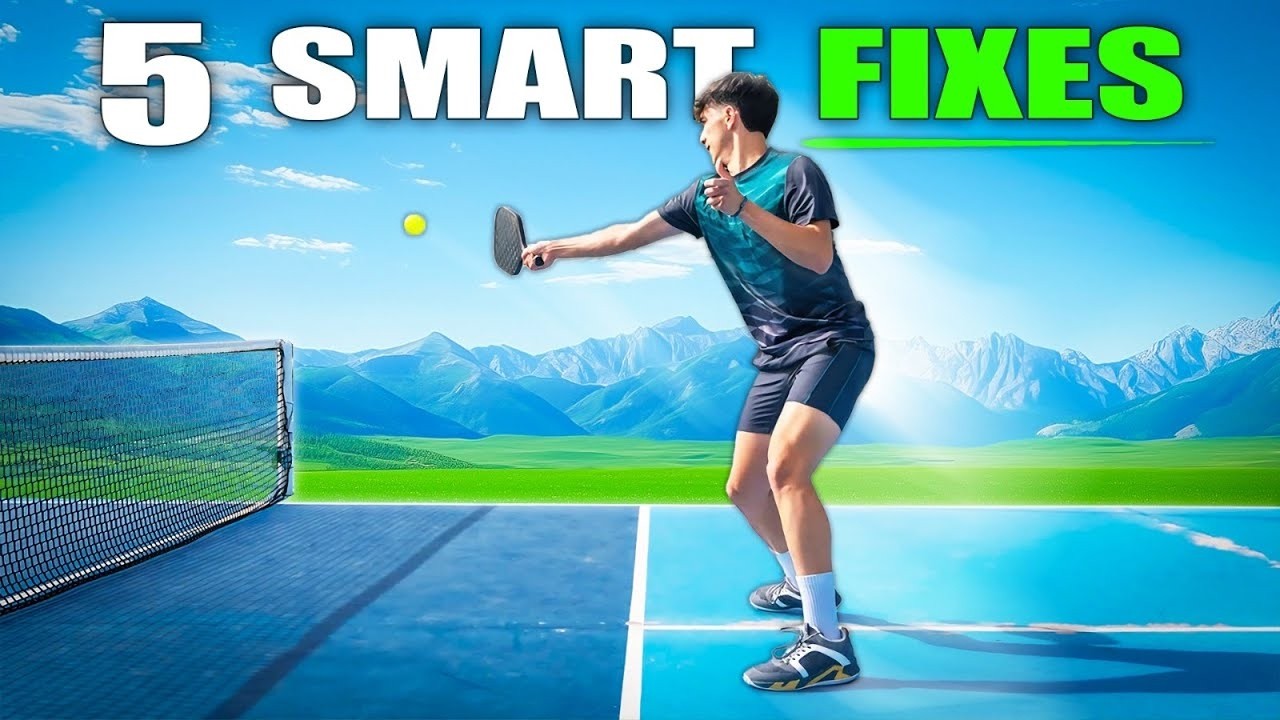
The Compact Swing Is Non-Negotiable
If there is one mechanical change to prioritize above everything else, it is the compact backswing.
You cannot take the ball off the rise with a big looping preparation. The timing simply does not work.Think of your backswing as a budget. The earlier you want to contact the ball, the less backswing you can spend.
This is why pros look so effortless on returns. They are not winding up. They are rotating and redirecting with minimal wasted motion.
More shoulder, less wrist. More spin, less power. Earlier contact, shorter prep.Once you start applying this, you will notice the difference in your opponent's third shot quality immediately.
They will rush more, miss more, and give you easier balls at the kitchen line.
Getting to the kitchen faster also requires smart transition movement.
The two-position reset strategy for the transition zone pairs directly with this approach, because you arrive at the line in a better position when you contact the ball earlier.
Pickleball Dinking 101: Small Swings, Big Results
You’re not trying to hit winners from the kitchen. You’re trying to create situations where your opponent makes a mistake or gives you a ball you can attack
 The Dink PickleballThe Dink Media Team
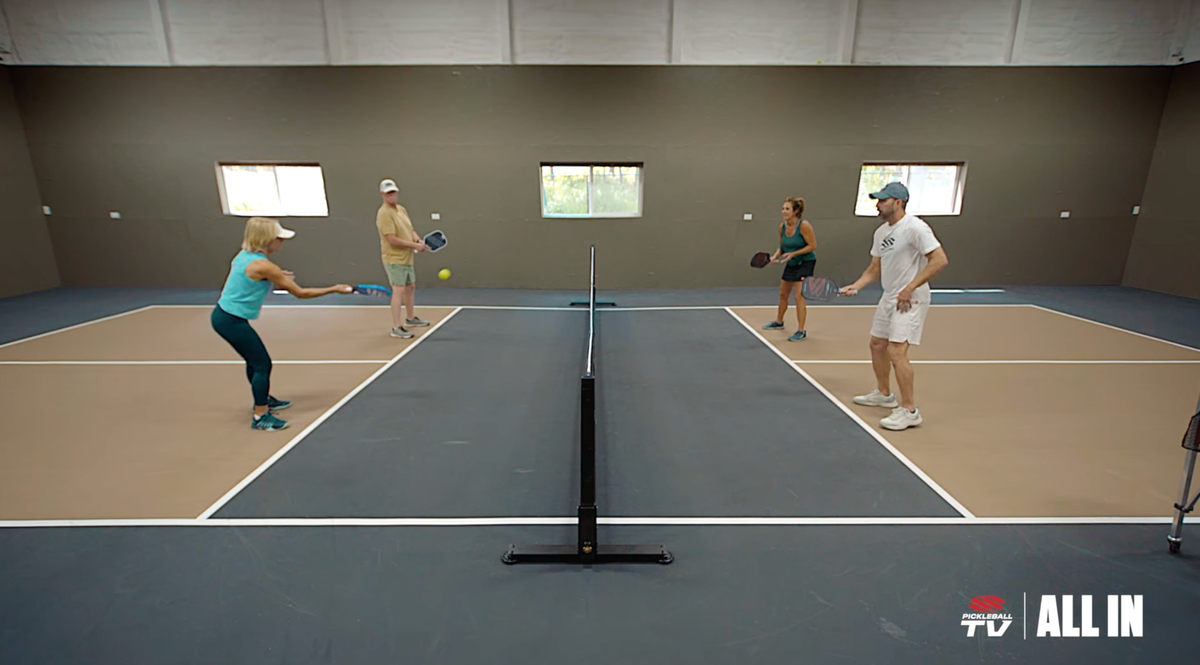
Shot Selection on the Return Matters Too
Not every return needs to be taken off the rise at maximum spin. There are situations where a slice or a deeper flatter ball makes sense.
The key is making a deliberate choice rather than defaulting to floating the ball back because it feels safe.
A slice return done correctly can stay low and create problems at the feet in its own way. The footwork, the contact point, and the intent all still apply.That said, there is a reason pros largely abandoned the slice shot in 2025 in favor of topspin off both wings.
Understanding ball height and court positioning helps you calibrate when to take risks versus when a simpler ball is smarter.
Not every return needs to be a weapon, but none of them should be a gift either.The pickleball return of serve is one of the highest-leverage shots in the game.
Under the two-bounce rule in the official USA Pickleball rulebook, the returning team must let the serve bounce, which means you hit this shot at least once in every single rally.
Its quality directly controls what kind of third shot your opponent gets to attempt. Stop treating it as a formality.Take it early. Add spin. Use your shoulder. Aim low.
Those four habits turn a passive return into a pressure shot, and they do not require more power or athleticism.
They just require better timing and a shorter backswing.
If you want to stop losing momentum right after the return, start here.
This is one of the fastest improvements you can make without changing your paddle, your serve, or anything else about your game, and it slots neatly into a 4-step system to win more games in 2026.
One last thing worth checking: the new USA Pickleball rules for 2026 include serve and service-motion updates that affect the ball you are returning in the first place.
💡
Heads up: hundreds of thousands of pickleballers read our free newsletter.
Subscribe herefor cutting edge strategy, insider news, pro analysis, the latest product innovations and more.
Frequently Asked Questions
What does it mean to take the ball off the rise in pickleball?
Taking the ball off the rise means contacting the ball just after it bounces and starts coming up, before it reaches the peak of its arc. This earlier contact point reduces the time your opponent has to prepare their next shot. It is a timing adjustment, not a power adjustment.
Why should I aim at my opponent's feet on a return?
A ball at the feet forces your opponent to hit up on the ball, which limits their attack options and usually results in a weaker third shot. It is harder to execute a clean drop or a controlled drive when the ball is below knee height. Targeting the feet consistently puts your opponent on defense from the start.
How do I add topspin to my pickleball return without losing control?
Use a compact backswing, lead with your shoulder, and brush up on the back of the ball through contact. The shoulder rotation generates power while the upward brush creates spin. Keep your wrist firm rather than flicking, which gives you more consistent direction.
Is it risky to take the ball off the rise during a match?
There is some added risk because the timing window is tighter than waiting for the ball to drop. Drilling the timing in practice before using it in matches reduces that risk significantly. Once the timing becomes natural, early contact actually improves consistency because you are hitting the ball when it is moving most predictably.
What is the biggest mistake players make on the return of serve?
The biggest mistake is treating the return as a neutral shot and simply trying to get it in deep. A high, slow return gives the serving team too much time and lets them execute a comfortable third shot. The return should create pressure on your opponent, not give them a setup ball.
Anuncie Aqui / Advertise Here
Sua marca para o mundo Pickleball! / Your brand for the Pickleball world!





 English (US) ·
  Portuguese (BR) ·