 English
 Spanish
 Portuguese
 German
 Italian
 Japanese
 French
 Polish
 Russian
 Netherlands
 Hungarian
 Turkish
 Videos
 Thedink Pickleball


The best pickleball leg exercise is one you do on your feet, not seated on a machine. These four moves build the strength, stability, and power your court game demands.
The best pickleball leg exercise is one you do standing on the ground, not one you do lying back with your feet pressing into a wall.
If your lower body routine starts and ends with the leg press, you are building muscle that barely shows up on the court.You know the routine. Leg press, leg extensions, hamstring curls, maybe the adductor machine, and your legs are burning by the end.
These four moves come from That Pickleball Trainer - Connor Derrickson on YouTube, who trains adult pickleball players on fitness, footwork, and lower body strength.We will cover why machines fall short, the three qualities your legs need, and the exact sets and reps for each exercise.
Love pickleball? Then you'll love our free newsletter. We send the latest news, tips, and highlights for free each week.
Why Is the Leg Press a Poor Fit for Pickleball?
The leg press is a poor fit because it trains your legs in a position you never use on the court.
You are seated with your back close to parallel to the ground, pressing weight up into the air with your knees coming toward your chest.
Pickleball is played on your feet, on a solid base, often on one leg at a time. You shift 80% of your weight to one side, then 20%, then change direction again.On the press, your core and upper body do almost nothing. You are challenging one thing: your legs pushing in one direction.
That does not mean machines are useless. They build muscle well, and a bigger, stronger muscle helps your game.But strength built that way does not always transfer. The goal is movements that look like the sport, not machines that isolate a single muscle.
What Does "Specific Enough" Training Actually Mean?
Training is specific enough when the movement resembles pickleball without copying it exactly.
There are three zones: not specific, similar to the sport, and hyper specific.The hyper specific zone is the no-go area, and it is where a lot of flashy social media content lives.
Think band resisted shadow swings or footwork drills while holding a weighted paddle.
Connor calls this eyewash, because you are adding resistance to a movement that is supposed to be fast.A drive is a full body, multi-plane motion, and a band just slows it down while you start pulling with your arm instead of hitting through your body.
You want to live in the middle. Train on your feet, challenge your core, and work multiple joints at once.
If you want more on separating useful habits from noise, check out 15 pickleball myths that are hurting your game.
💡
Need some new pickleball gear? Get up to 15% off select paddles, shoes, and more with code THEDINK at
Midwest Racquet Sports.
What Three Qualities Should Your Legs Build?
Your lower body needs strength, stability, and power to hold up on the court. Every exercise below hits at least one of them.
- Strength. The foundation. Strong legs let you move fast for a long time, last through tournaments, and keep your joints healthy.
- Stability: Balance and coordination, plus the ability to move right, recover, and move left without falling out of control.
- Power: Speed, agility, and quickness. How fast and explosive is your first step, and can you generate force for hard drives?
Stability matters more than most players realize.
At higher levels, getting to a ball slightly off balance costs you a little power, and that small dip can lose the hands battle.If you get there stable and balanced, you can put real weight behind the shot. That is the difference between hitting a ball and controlling a point.
For more on moving well, see the 3 pickleball footwork mistakes that are losing you points.
8 Lower Body Exercises for Explosive Pickleball Legs — No Gym Required
Pickleball is a game of quick lateral movements, explosive pushes, and stable positioning – your legs are doing most of the heavy lifting
 The Dink PickleballThe Dink Media Team
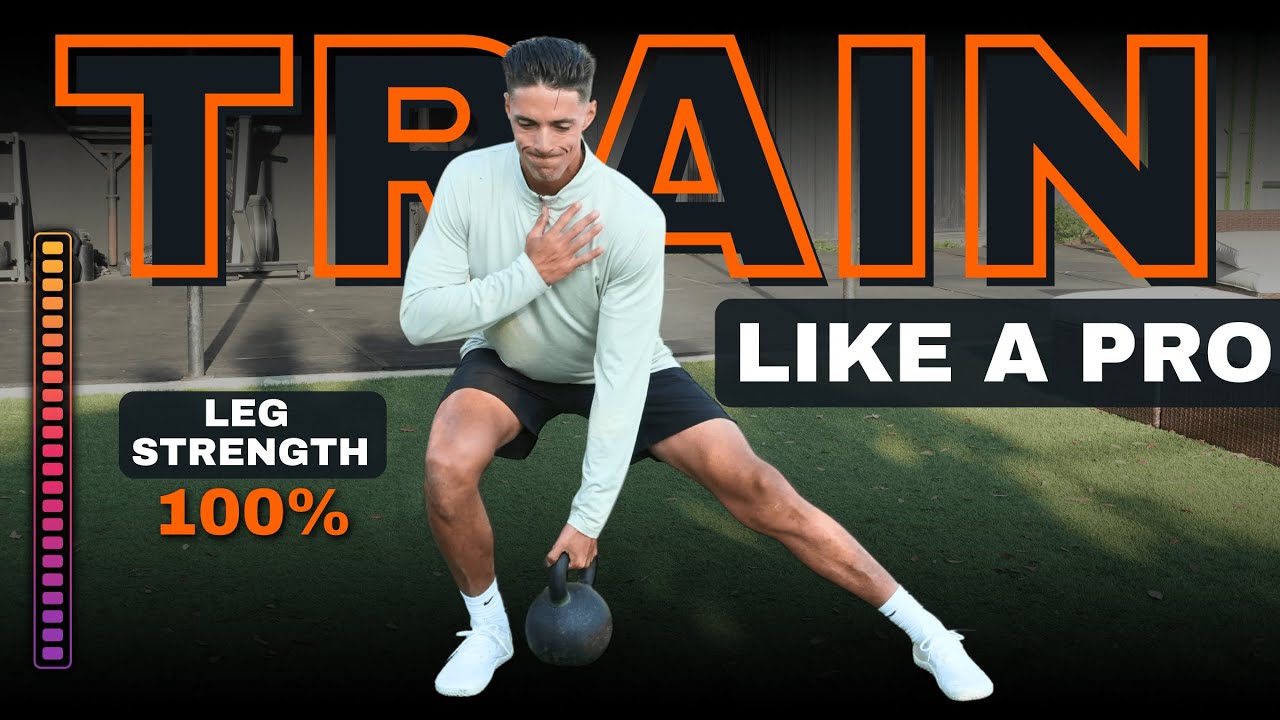
This is the best all-around strength builder of the four. Some people call it a Bulgarian split squat, and yes, it burns.
Hold one dumbbell in the hand opposite your working leg. Elevate your back foot on a low surface.
Most players go wrong by using a standard gym bench.
That height is too much for many people, and if your hip flexor mobility is limited, you will feel it in the front of your hip instead of your glutes.Start with a 12 to 18 inch elevation. It feels low, but the experience is much better.
Here is how to find your foot placement:
- Start in the bottom position, back knee touching the ground with your back foot propped up.
- Bend your front leg to roughly 90 degrees, adjusting your foot if the angle is tighter than that.
- Put about 80% of your weight on the front leg and stand up.
- Place a marker, like a mini band, in front of your foot so you can find the spot again.
- Grab your weight and perform the rep.
Do three sets of 10 reps in week one. Drop two reps each week (10, 8, 6), then move to four sets.
It builds strength mainly, with stability and glute work along for the ride. Power pulls from strength, so you get a little of all three.
How to Improve Footwork Off Court for Pickleball
If you want to improve footwork off court for pickleball, the gym and your living room are more useful than you think. Off-court agility and speed training builds the lateral quickness and explosive first-step that wins rallies before you even swing.
 The Dink PickleballThe Dink Media Team
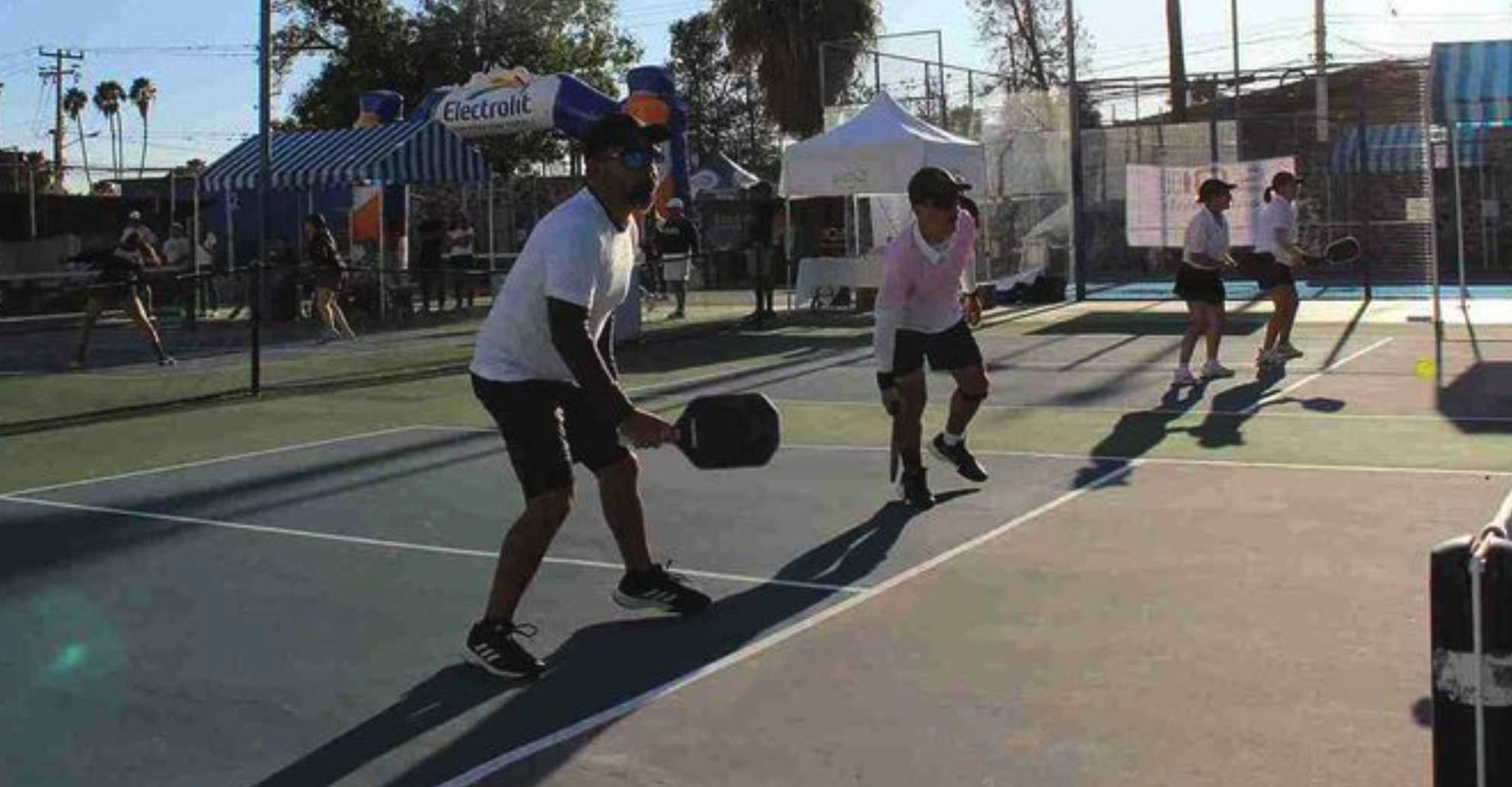
Exercise 2: Lateral Lunge
This pickleball leg exercise trains the side to side plane where pickleball is really played. Too many programs stay in the forward and backward plane with squats, deadlifts, and straight sprints.
Hold one dumbbell in the hand opposite the working leg. Stand tall, then step out wide to the side and sink into your hip.
Keep your foot, knee, and hip in one straight line. Do not let the knee bow out past the foot.Push off the inside of your foot and return to the top. You do not need to go deep, just above parallel is plenty.
The sport is not played super low, and depth can limit you if your adductor mobility is tight. You want to be powerful getting in and out of the movement.
Run the same 10, 8, 6 progression for three sets. Go lighter and faster and it leans toward power, while the semi single leg setup adds balance work.
Roll, Lunge, Jump: The Anna Bright Method for Warming Up Right
Take a page out of the pro book. Move your spine, lunge deep, and jump a little. Your knees and your win-loss record will thank you.
 The Dink PickleballThe Dink Media Team
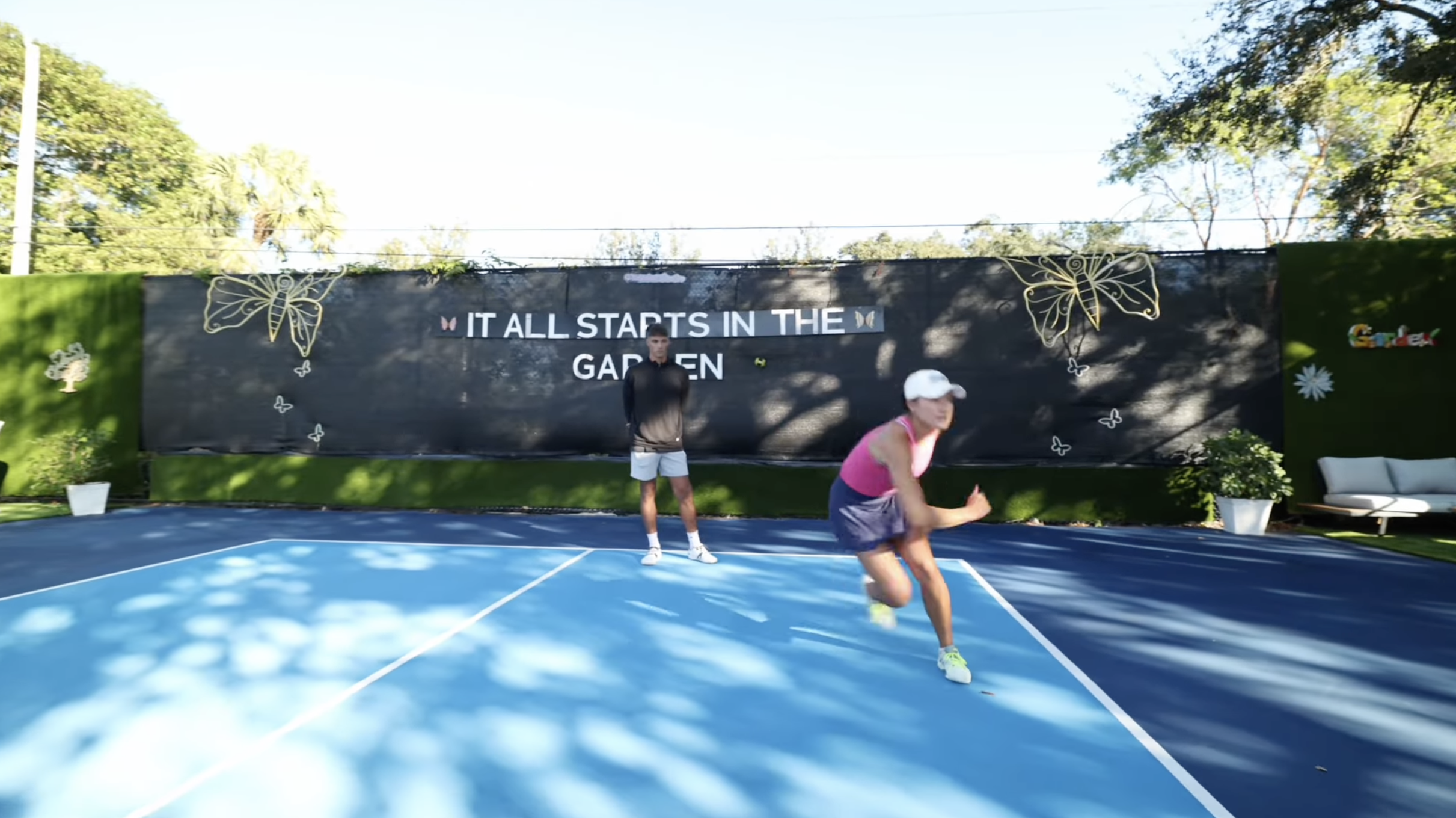
Exercise 3: Trap Bar Jump
The trap bar jump is the one pure power exercise in the group, and it uses far less weight than you would guess.
Research points to around 30% of your estimated max as the sweet spot for power output.
If you think you could trap bar deadlift 100 pounds, load 30 pounds. Then perform three to five max effort jumps.Get into the bottom position and build tension in your lats so you do not curl over as you jump.
Drive your feet through the floor as fast as you can, then absorb the force on the way down.
Start with three sets of three reps. Next week do three sets of four, then three sets of five.
Reps stay low because every one must be max effort. Ten reps just trains fatigue, not power.No trap bar? Hold a dumbbell at your chest or at your sides at the same 30% load and jump the same way.
Should You Jump Into Your Pickleball Serve: 5 Keys to Know
Almost every pro jumps on their pickleball serve, and it is not for show. Here is how jumping into contact adds power, plus the rules you need to know.
 The Dink PickleballThe Dink Media Team
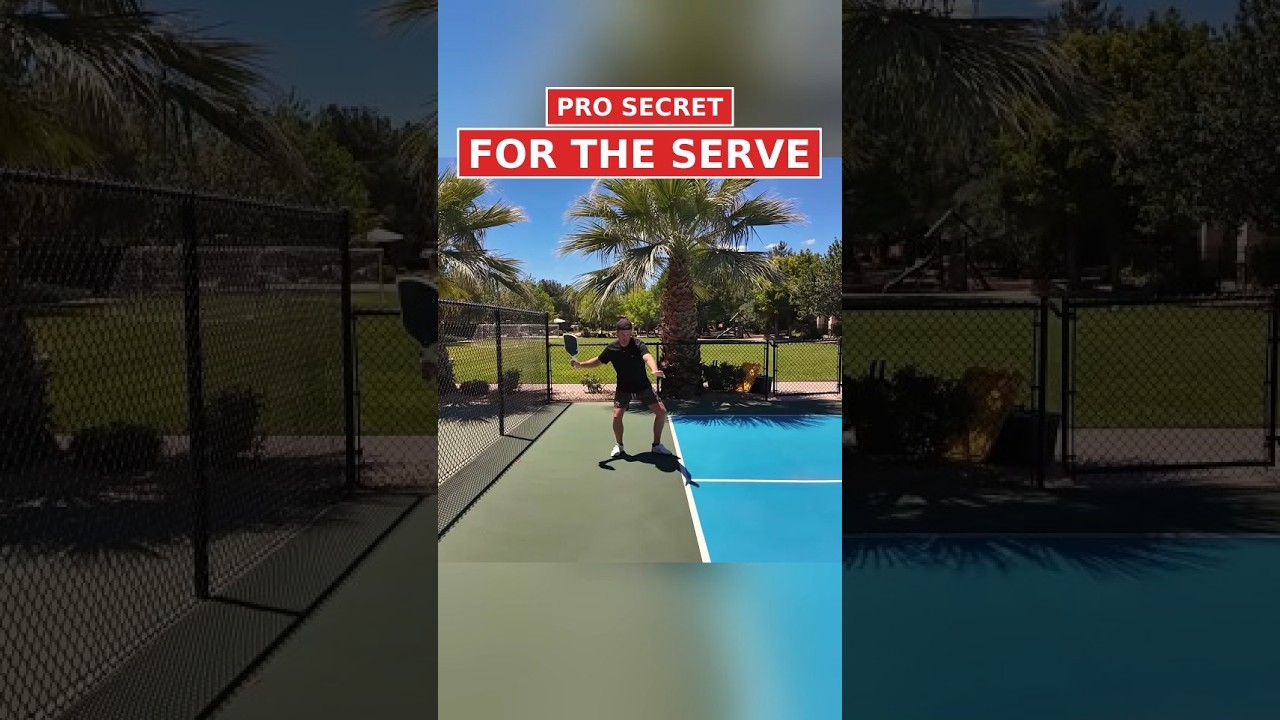
Exercise 4: Skater or Lateral High Kick
The skater jump is the best stability and landing drill of the four, with plyometric power built in.
You load one leg, jump laterally as far as possible, and land on the opposite leg.
Stick the landing first. Absorb the force softly and quickly, then jump back.Use your arms and momentum, and rotate around the loaded leg to drive the jump. Here are the progressions in order:
- Stick the landing with no weight.
- Stick the landing while holding a med ball.
- Continuous jumps back and forth with no weight, limiting time on the ground.
- Continuous jumps while holding a med ball.
On the continuous versions, focus on quick ground contact before distance. Add distance as you improve.
Whichever progression you choose, do three sets of five reps per side.It trains single leg stability in the lateral plane, which is exactly where your court movement lives.
Pair this with a smart warm up using the pickleball warm up routine that preps you to compete.
Pickleball Lateral Movement Training That's Easy on Knees
Pickleball lateral movement training is less about strength than about where your body sits when the load arrives. Here's what cutting-mechanics research says about plant width, trunk lean, and why your hips matter more than your quads.
 The Dink PickleballThe Dink Media Team
How Do You Fit These Into Your Week?
Do these four exercises twice a week for four weeks and your lower body will feel noticeably better.
You do not need to do all four in one session, but each one covers a different piece of what the sport demands.
A simple split works well. Pair the split squat and lateral lunge on one day for strength, then the trap bar jump and skater on another for power and stability.Keep machines as accessory work. They can show up at the end of a session or on a rare occasion, but they should not be the focus.
Better legs also help you survive long days of play. For that angle, read tournament day stamina: how to stay sharp from start to end.
How to Build Stamina for Pickleball (4-Week Plan)
Building stamina for pickleball requires more than just logging extra court hours, it takes a structured cardio and movement plan. This 4-week guide gives you the exact training framework to outlast your opponents and play stronger in every game.
 The Dink PickleballThe Dink Media Team
Will Stronger Legs Help You Beat Younger, Faster Players?
Stronger, more stable legs absolutely help you compete against faster opponents.
You may not out-sprint them, but you can recover quicker, stay balanced, and keep power behind your shots late in a match.
Strategy still matters too.
See playing against younger, faster opponents for the tactical side, and build your week around a smarter senior training plan if longevity is the goal.And if you are still wondering whether court time alone is enough, is pickleball enough exercise explains why gym work earns its place.
💡
Heads up: hundreds of thousands of pickleballers read our free newsletter.
Subscribe herefor cutting edge strategy, insider news, pro analysis, the latest product innovations and more.
Frequently Asked Questions
What is the best leg exercise for pickleball?
The rear foot elevated split squat is a top choice because it builds strength and single leg stability together. Pair it with lateral lunges and jump work to cover side to side movement and power.
Is the leg press bad for pickleball players?
It is not harmful, but it transfers poorly because you train seated with your legs in the air. Pickleball is played on your feet, so standing, multi-joint movements carry over better.
How often should pickleball players train legs?
Twice a week is a solid starting point. Spread the four exercises across two sessions so you can recover and still play.
How much weight should I use for jump exercises?
Use roughly 30% of your estimated max for power work. Keep reps to three to five, and make each one max effort.
Do I need a trap bar for the trap bar jump?
No. You can hold a dumbbell at your chest or at your sides at the same light load and jump the same way. The stimulus changes slightly but still builds power.
Anuncie Aqui / Advertise Here
Sua marca para o mundo Pickleball! / Your brand for the Pickleball world!






 English (US) ·
 Portuguese (BR) ·