
 English
  Spanish
  Portuguese
  German
  Italian
  Japanese
  French
  Polish
  Russian
  Netherlands
  Hungarian
  Turkish
  Videos
  Thedink Pickleball

Elite pickleball players win by staying patient, respecting the net, and using high-percentage shots instead of forcing aggression
You've probably heard it a thousand times: rush to the net, hit harder, play more aggressively. But what if some of the most common pickleball advice is actually holding you back?
In a recent breakdown, Tony Roig from Better Pickleball analyzed real pro match footage to reveal five critical mistakes that separate amateurs from the elite players dominating the PPA.
The good news? These aren't complicated fixes. They're habits you can start building today.
Love pickleball? Then you'll love our free newsletter. We send the latest news, tips, and highlights for free each week.
1. Stop Rushing the Transition Zone
One of the most limiting pieces of advice given to new players is simple: rush to the net. Third shot gets hit, you're on the serve team, just run up and don't worry about anything. Nothing could be further from the truth.
Watch Anna Leigh Waters or Anna Bright on the women's side, or Christian Alshon and Hayden Patriquin on the men's side. They don't sprint forward at the first sign of a third shot. Instead, they move in nice and relaxed, taking their time to read what's happening.
The pros navigate the transition zone by staying calm and making a read before committing. They wait to see what their opponent is doing. Only then do they move in to attack. This defensive positioning allows them to dig out of tough situations and ultimately earn the point.
2. Ditch the Hard Serve in Doubles
Here's a shocker: you don't need a hard serve to dominate doubles pickleball. If you're playing singles, sure, rip it. But in doubles? An effective, deep serve beats a cannon every time.
Christian Alshon is a perfect example. He can absolutely smoke the ball when he wants to, but in doubles, he doesn't serve nearly as hard as he does in singles. Anna Bright, the number two player on the planet, even uses a lob serve.
The pros understand that consistency and placement matter way more than raw power in doubles.
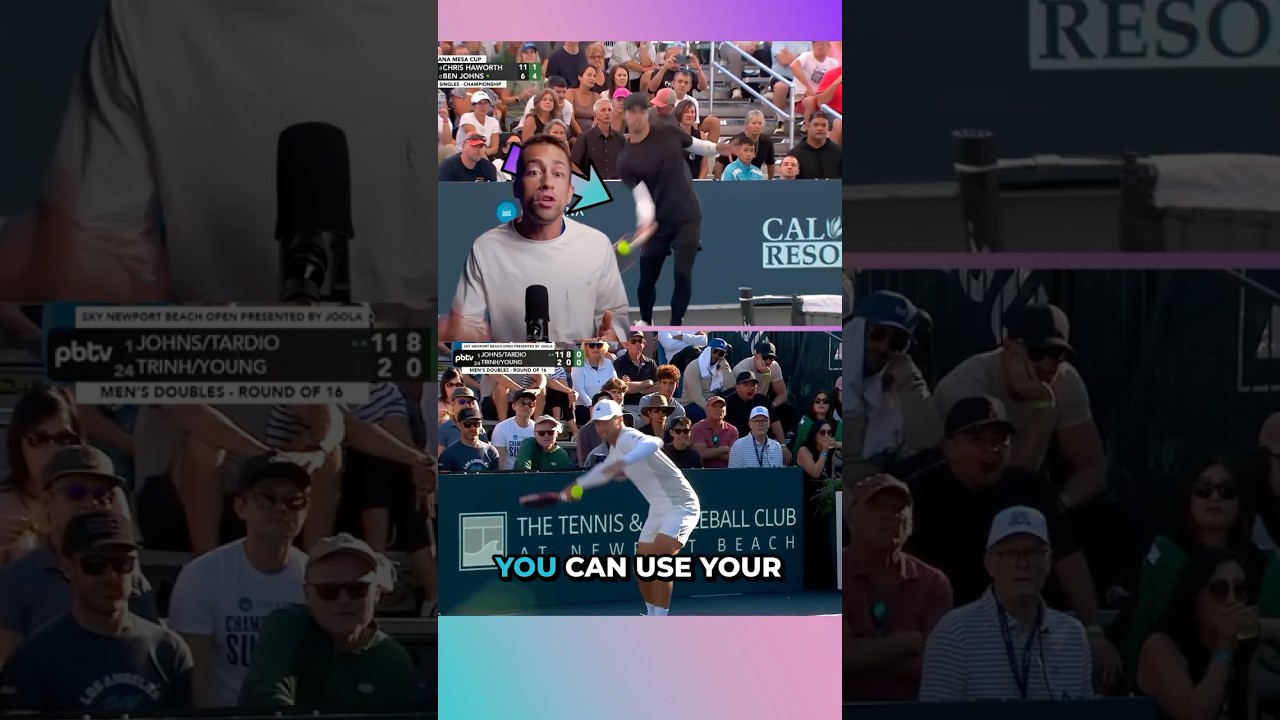
Ben Johns Just Changed His Pickleball Serve — Maybe You Should Too
Whether you’re a beginner or an intermediate player, the principle is the same: small, intentional changes can have a huge impact on your performance. Ben Johns just proved it.
 The Dink PickleballThe Dink Media Team
3. Give the Net the Respect It Deserves
Amateur players love playing around with the net. They aim super low, trying to barely clear it, and end up hitting it constantly. Pro players? They give the net serious respect.
Watch a pro rally and you'll notice something immediately: the balls are flying high over the net. Really high. On dinks, third shots, fifth shots, all of it. The only time you'll see a pro player genuinely upset is when they hit the net. It's the one opponent they can't beat.
The beautiful part is you have complete control over this. You can pick exactly where you aim over the net. If you want to play better, stop aiming low and start giving that net the clearance it deserves.
💡
Need some new pickleball gear? Get 20% off select paddles, shoes, and more with code THEDINK at Midwest Racquet Sports
4. Master the Non-Volley Zone as a Weapon
Pickleball is built around the non-volley zone, yet most amateurs treat it like a rule to avoid rather than a tool to dominate. The pros know better.
Even shots that land behind the non-volley zone are actually using it strategically. The ball has to travel over the kitchen without getting volleyed, which is what allows it to drop in perfectly. Ben Johns uses the non-volley zone both defensively, dropping balls behind the net, and offensively, hitting winners right inside the zone.
The better you get at using the non-volley zone as these pros do, the better your overall game becomes. It's not just about the rule; it's about the strategy.
The Pickleball Facility Boom Is Here, But a Shakeout Looms
First movers have rushed in to secure prime locations, sign leases, and build out clubs. But speed can come at a cost.
 The Dink PickleballAlex E. Weaver
5. The Dead Dink Isn't Your Enemy
Some coaches tell you to avoid the dead dink at all costs. Some players think it's a sign of weakness. The pros at the PPA? They use it constantly.
A dead dink is a perfectly fine shot when you need to extend the rally. You're not trying to do too much with it. You're just trying to keep the ball alive. Anna Bright, Hayden Patriquin, Gabe Tardio, and Ben Johns all use dead dinks strategically when they're in deep trouble or need to reset the point.
The key is that the dead dink allows you to extend the rally without risking the net and without risking an attack. It combines two powerful concepts: net clearance and smart use of the non-volley zone.
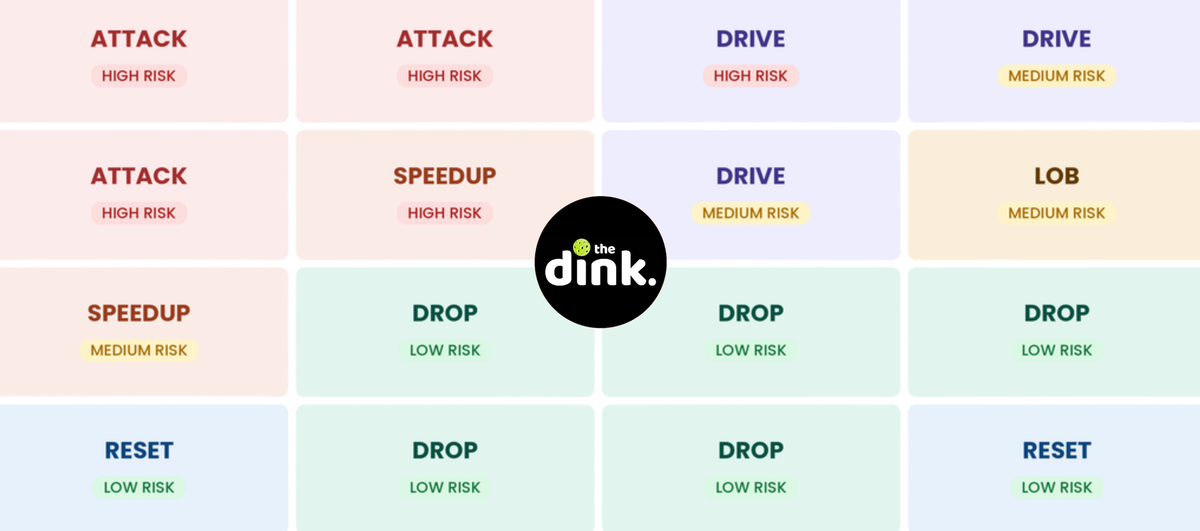
Decision Matrix: When to Attack or Reset in Pickleball
Pickleball is really all about two key factors: your court positioning and the height of the ball. This matrix decodes the game for you.
 The Dink PickleballThe Dink Media Team
Pick One and Start Today
You don't need to overhaul your entire game overnight. Pick one of these five habits and focus on it. Stop rushing the transition zone. Serve smarter in doubles. Give the net more clearance. Use the kitchen strategically. Trust the dead dink when you need it.
The pros make it look easy because they've built these habits into their game. You can too. Start with one, add it to your toolkit, and watch your results improve.
Anuncie Aqui / Advertise Here
Sua marca para o mundo Pickleball! / Your brand for the Pickleball world!



 English (US) ·
  Portuguese (BR) ·