
 English
  Spanish
  Portuguese
  German
  Italian
  Japanese
  French
  Polish
  Russian
  Netherlands
  Hungarian
  Turkish
  Videos
  Thedink Pickleball

A backhand flick that keeps hitting the net almost always comes down to one paddle prep mistake. Fix these five things and your flick turns into a topspin weapon.
If your backhand flick keeps dumping into the net, the problem is almost never your effort. It is your setup.
You see a ball you want to attack, you swing hard, and the ball sails low and dies on the tape. It feels like you did everything right. You did not.
Coach Cori Elliott broke this down in a recent lesson with a student named Dave, and the fix is simpler than you think.
Get five things right and the same swing that buried the ball starts producing the topspin that drops shots at your opponent's feet.
Love pickleball? Then you'll love our free newsletter. We send the latest news, tips, and highlights for free each week.
What Actually Sends Your Backhand Flick Into the Net?
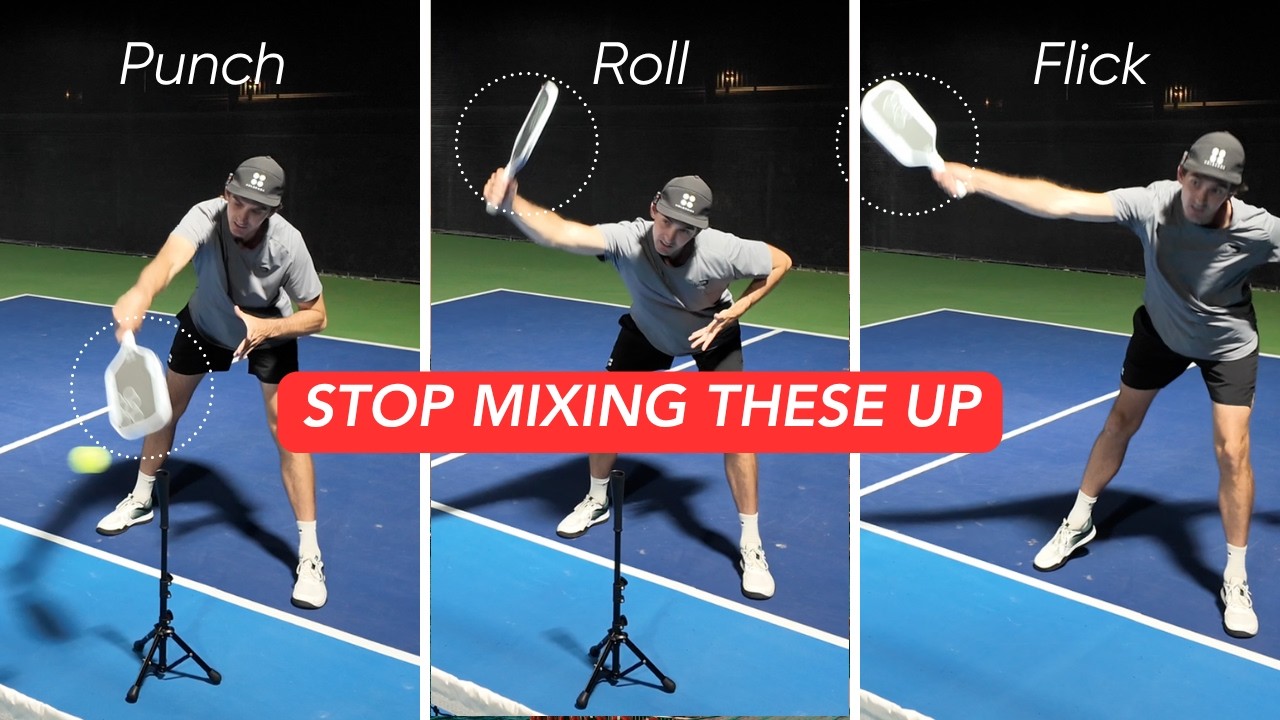
The number one reason your backhand flick hits the net is paddle prep that sits too parallel to the net, which turns the shot into a flat punch instead of a flick.
That was Cori's exact read on Dave: "His paddle prep was not correct. He was basically a little bit too parallel to the net. He was hitting more of like a punch shot."
A punch has no spin.
Without topspin, a ball you hit hard from below net height has nothing pulling it back down into the court, so it either clips the tape or flies long.
The flick fixes that. Here is how the two shots actually differ before we get into the fixes.
A flick is a fast, wristy attack you take on a ball that is roughly chest high or lower, using topspin to bring it down.
A roll is the lower, more controlled cousin of the same motion.
If you want the full breakdown of how these fit alongside the volley family, The Dink's punch, flick, and roll guide lays out when to reach for each one.
Coach Mary Barsaleau makes the same point in her piece on the backhand flick: it is a power shot driven by an extended forearm and a popping wrist, not a placement shot.Understanding this distinction is exactly what separates players who attack with intent from players who just swing hard and hope.
Fix 1: Drop Your Paddle Tip Below the Net to Build a Real Backhand Flick
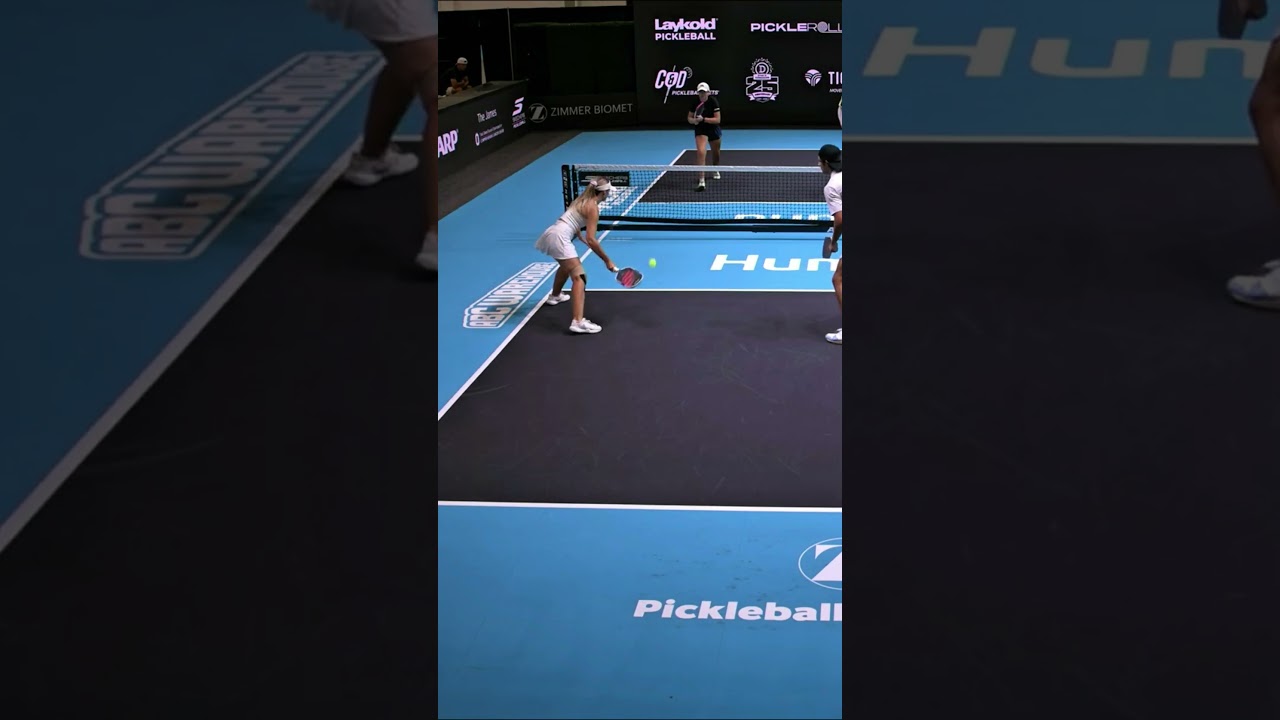
The single biggest backhand flick fix is dropping your paddle tip below the level of the ball before you swing.
Cori had Dave move his tip lower so the paddle face could travel up and through the ball, and the difference was immediate.
When your tip points out toward the net, you can only push the ball forward. When it drops down, you can brush up the back of the ball and create spin.
Think of it the way a forehand attack works: if the ball goes low, the paddle has to go lower. The contact has to start underneath.
- Set your ready position with shoulders stacked over your knees.
- Drop the paddle head down, tip angled toward the ground.
- Keep that tip below the ball, not level with it.
Mastering this single adjustment alone will fix most errant backhand flicks.
You can see this exact tip sequence applied in The Dink's complete guide to mastering topspin in pickleball, which walks through the same low-to-high progression in detail.
💡
Need some new pickleball gear? Get 20% off select paddles, shoes, and more with code THEDINK at
Midwest Racquet SportsFix 2: Throw the Paddle, Then Stop It Cold
The motion that creates a clean backhand flick is a throw and a hard stop, which Cori described as "throwing your paddle, and then stopping it like you're chucking a deck of cards."
That image does a lot of work.
You are not muscling the ball. You are releasing a loose wrist toward the contact point and then braking the paddle with velocity right out in front of you.
That sudden stop is what snaps topspin onto the ball.A tight wrist kills this. So does a long, sweeping follow through.
- Keep a loose wrist so the paddle head can accelerate.
- Snap to contact and stop the paddle in front of you, not across your body.
- Let the tilt in the paddle tip do the spinning.
If the wrist piece sounds familiar, it should.
The same mistake wrecks plenty of speedups, which is why The Dink's breakdown of why your pickleball speedups fail goes deep on exactly this problem.
The backhand flick lives or dies on that loose, snapping wrist.
Pros like Mari Humberg build their entire backhand attack around it, as you can see in her complete guide to the backhand flick.
Why Wrist Tension Is the Silent Killer of the Backhand Flick
Most players grip tighter the harder they want to hit.
That instinct works in some sports, but in pickleball it is the fastest way to flatten your backhand flick and lose all your topspin.The paddle head needs freedom to whip through contact, and a tight grip robs it of exactly that.
A loose grip is not sloppy technique. It is the technique. Think of it less like squeezing a handle and more like holding a loose leash.
The paddle should feel like it could slip away at contact, even though it never will.
Understanding when to use your wrist in pickleball separates players who generate easy power from players who muscle every shot.
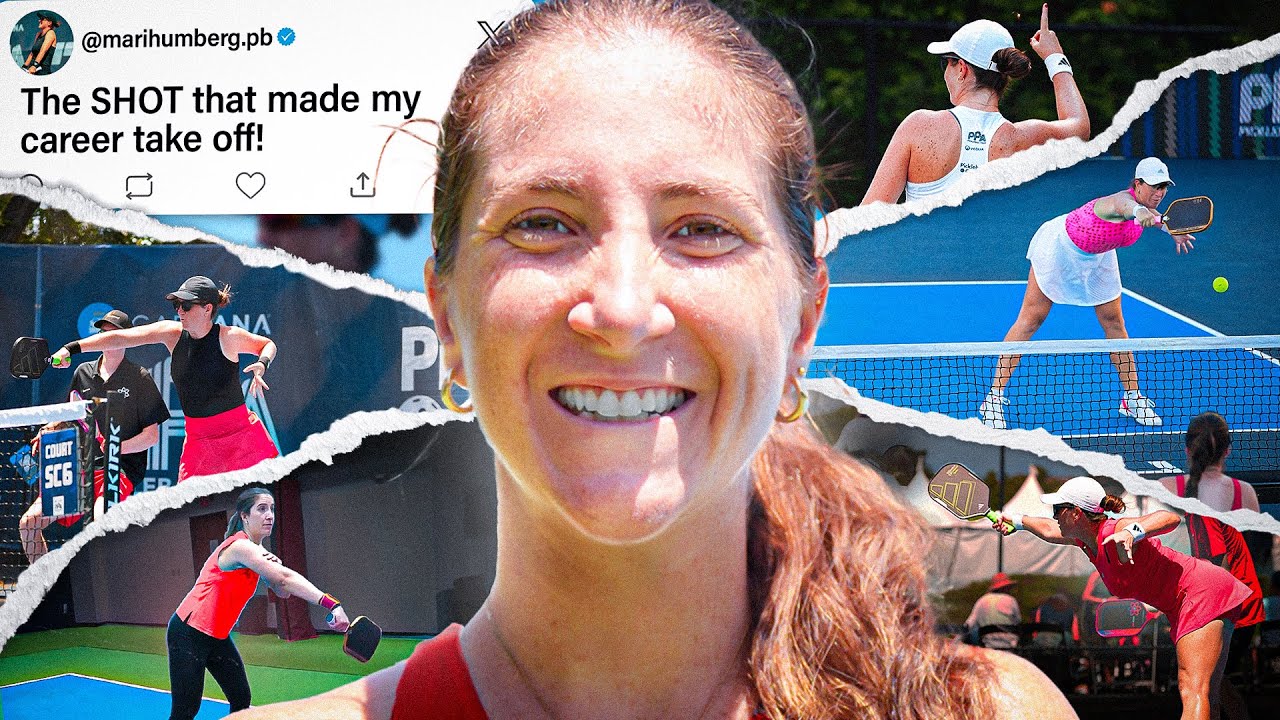
Mari Humberg’s Complete Guide to the Backhand Flick
Mari Humberg finally breaks down her signature backhand flick in a comprehensive video guide. Learn the grip, movement, positioning, and four key shot placements to master this finesse attack.
 The Dink PickleballThe Dink Media Team
Fix 3: Let the Ball Drop So You Can Get Under It
Patience is a technique, not just a mindset, and on the backhand flick it means letting the ball dip slightly so you can come underneath it.
Cori was blunt with Dave here: "let it come down so you can generate the pace.
If you meet it a little too high, it's going to be hard to get the angle that you want and the spin."
Most players in a hurry to attack reach out and catch the ball too early, up near the top of its arc.
From there your paddle cannot get below it, so you flatten the shot and send it into the net.
Wait the extra beat. Let the ball come into a window where your dropped paddle tip can brush up the back of it.
This is the same patience that elite players bring to their kitchen line attack strategy, where timing the right ball is more important than reacting to every ball.
How Ball Height Determines Your Backhand Flick Window
Chest height or slightly below is the ideal window for the backhand flick.
Go much higher and you lose the low-to-high angle that generates topspin. Go much lower and you are better off rolling the ball than flicking it.
This window is smaller than most players think, which is why so many backhand flicks get rushed.Training yourself to recognize the right ball before you swing is half the battle.
You can develop this feel by working through the 12 drills you need to play your best pickleball in 2026, several of which specifically target contact-point recognition under pressure.
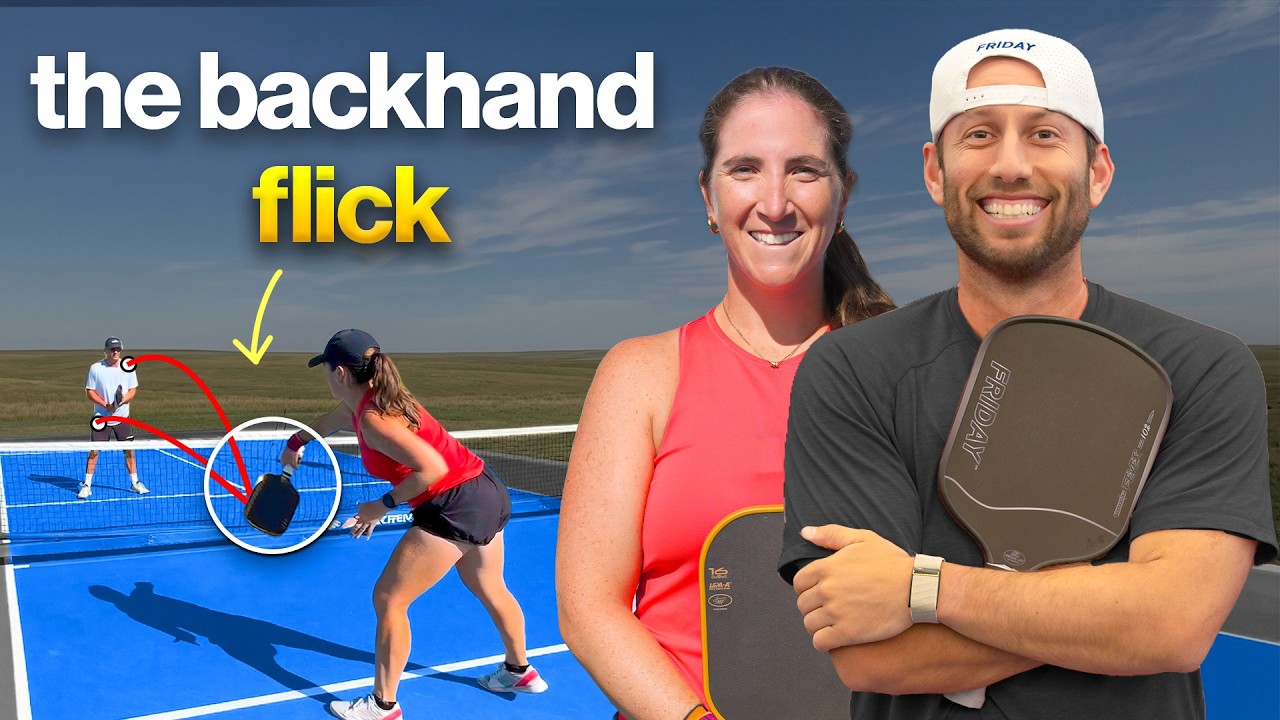
How to Hit a Backhand Flick in Pickleball
The backhand flick is one of pickleball’s most dangerous offensive weapons, but most players never master it. Mari Humberg breaks down exactly how to hit a backhand flick with proper technique, grip selection, and court positioning.
 The Dink PickleballThe Dink Media Team
Fix 4: Stay Low and Keep Your Feet Quiet During Your Backhand Flick
Your backhand flick gets more consistent the moment you stop moving your feet during the swing.
Cori's cue to Dave was to hit the flick first and step afterward: "try not to move your feet as you're hitting the ball.
You can hit the flick and then step after to finish the shot."
When your feet drift mid-swing, your contact point moves with them and your spin becomes a guess.
A stable base lets you repeat the same brush up the ball every time.
Staying low through contact is the other half of this. If you stand up as you swing, your paddle rises off the ball too soon and the topspin disappears.
- Set your feet before the swing, not during it.
- Stay low through contact so the paddle finishes up, not out.
- Take your recovery step after the ball is gone.
The footwork and low-body discipline involved mirrors what 2 essential pickleball techniques you're missing at the kitchen line covers for players who want to stop giving away easy points near the net.
The Connection Between Footwork and Backhand Flick Consistency
A moving base turns a repeatable swing into a one-time guess.
Your contact point shifts, your angle shifts, and you lose the ability to predict where the ball goes.
This is one of the reasons recreational players struggle to replicate a good backhand flick after hitting one by accident.Drilling a quiet base is not glamorous, but it compounds fast.
Players who commit to body stability find that their kitchen speed-up drills become dramatically more effective, because the mechanics stay locked in regardless of ball speed or pressure.
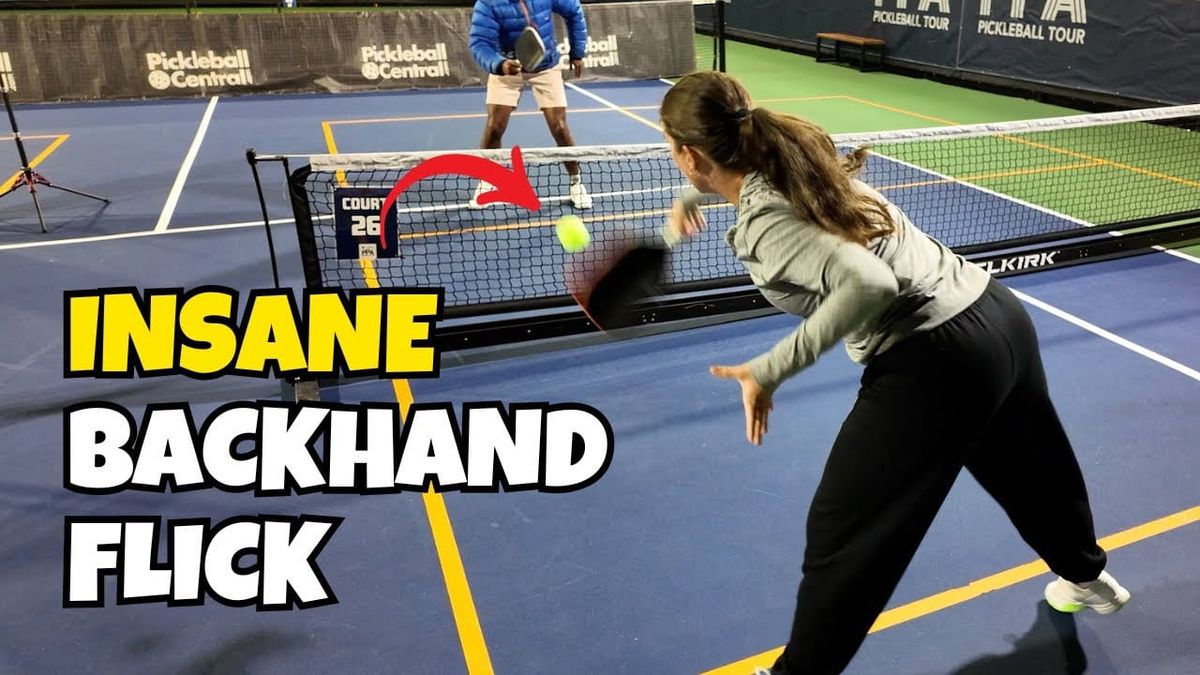
Dominate Your Friends with This Backhand Flick
Mari Humberg’s backhand flick is a precise, spin-focused shot that relies on controlled wrist motion and strategic placement to catch opponents off guard and set up winning plays.
 The Dink PickleballJason Flamm
Fix 5: Hunt the Pop-Up Out of the Air With Your Backhand Flick
The best backhand flick is often a surprise attack on a ball you take out of the air before it bounces.
Cori had Dave practice reading a floated dink and jumping on it early: a quick flick out of the air gives your opponent almost no time to react.
The catch is that you still have to get under it. Even on a ball out of the air, if your paddle is not low enough, you will pop it up or net it.
This is where the backhand flick stops being a defensive reflex and becomes offense. You are not waiting for the perfect attackable ball.
You are creating pressure off a slightly loose dink, the same way good players learn to attack dead dinks instead of just resetting them.According to analysis published by NBC Sports on evolving pickleball strategy in 2025, pro players are increasingly using the out-of-the-air flick to neutralize passive dinking games at the kitchen.
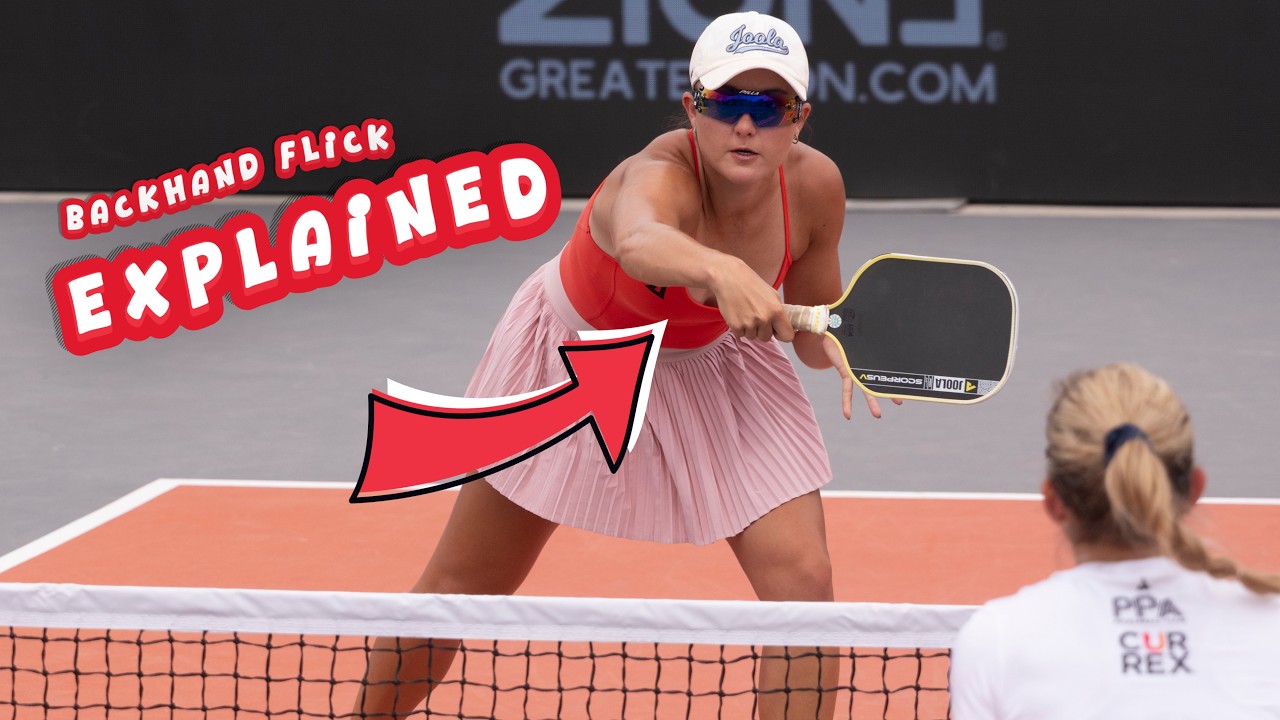
How to Develop a Backhand Flick in Pickleball
Anna Bright went from zero one-handed ability to developing one of the best backhand flicks in women’s pickleball. Here’s exactly how she did it and how you can too.
 The Dink PickleballThe Dink Media Team
Flick or Roll: Which Backhand Flick Variation Should You Hit?
If you only have time to react, flick. If you have time to shape the shot, roll.
The backhand flick is the faster, higher-contact attack, while the roll stays lower and trades some pace for control.
Beginners often try to do both at once and end up with neither.
Pick based on the height of the ball: chest high or a touch lower, flick it; down near the net cord, roll it.
The Dink's breakdown of the backhand roll dink is the cleanest place to see that lower, controlled version, and the set and snap technique ties the timing of both together.
Either way, the engine is the same: a dropped paddle tip, a loose wrist, and topspin.
Build that two-handed motion well and it also feeds your two-handed backhand volley, so the work compounds.
Attacking shots all share this snap-and-stop DNA.You will even see it in the wrist snap on the overhead shots Coach Mary covers in her piece on two overhead smashes.
Punch, Flick & Roll: A Complete Pickleball Volley Guide
The backhand volley is actually three distinct shots, each with different setups, mechanics, and strategic applications
 The Dink PickleballThe Dink Media Team
How the Backhand Flick Fits Into Your Bigger Shot Arsenal
The backhand flick does not exist in isolation.
It connects directly to your 5 essential pickleball shots to master for 2026, and players who develop it alongside their dink game and reset game are the ones who become genuinely hard to beat.
Think of the flick as the punctuation mark at the end of a well-built rally.
You build patience with your dinks, you identify the loose ball, and then the backhand flick closes the sentence.
Without it, you are writing paragraphs with no period.For players looking to put it all together, the 4-step system to win more pickleball games in 2026 shows how offensive weapons like this fit into a broader tactical framework.
💡
Heads up: hundreds of thousands of pickleballers read our free newsletter.
Subscribe herefor cutting edge strategy, insider news, pro analysis, the latest product innovations and more.
Frequently Asked Questions
Why does my backhand flick keep going into the net?
Your backhand flick goes into the net because your paddle prep is too parallel to the net, so you punch the ball flat with no topspin. Drop your paddle tip below the ball and brush up through contact so the spin pulls the ball down into the court instead of letting it die on the tape.
What is the difference between a backhand flick and a backhand roll?
A backhand flick is a faster, wristier attack you take on a ball around chest height or lower, while a backhand roll is the slower, lower, more controlled version of the same topspin motion. The flick prioritizes surprise and pace; the roll prioritizes placement and consistency.
How do I add topspin to my backhand flick?
Add topspin by starting with your paddle tip below the ball, keeping a loose wrist, and stopping the paddle with velocity out in front of you like chucking a deck of cards. That sudden stop snaps the face up the back of the ball and creates the spin that brings it down.
Should I take the backhand flick out of the air?
Yes, when you can. Taking the backhand flick out of the air on a floated dink steals reaction time from your opponent and turns a neutral rally into offense. Just make sure your paddle still drops below the ball so you get under it instead of popping it up.
Why does my backhand flick feel powerless even when I swing hard?
A backhand flick that feels powerless usually comes from a tight wrist and feet that move during the swing. Loosen the wrist so the paddle head can accelerate, set your base before you hit, and let the ball drop slightly so you can get under it and generate pace.
Anuncie Aqui / Advertise Here
Sua marca para o mundo Pickleball! / Your brand for the Pickleball world!





 English (US) ·
  Portuguese (BR) ·