
 English
  Spanish
  Portuguese
  German
  Italian
  Japanese
  French
  Polish
  Russian
  Netherlands
  Hungarian
  Turkish
  Videos
  Thedink Pickleball

The pickleball reset is one of the most important shots in doubles play. Jack Sock explains exactly how to stop giving away free points in the transition zone.
The pickleball reset is the shot that separates players who stay stuck in no man's land from players who consistently make it back to the kitchen.
Most recreational players treat it as a survival shot they just hope lands in. That mindset is exactly why the ball keeps popping up and getting attacked.This breakdown comes from Selkirk TV on YouTube, where Jack Sock walks through the reset in detail, covering everything from paddle position to reading your opponent's contact point before you even swing.
Love pickleball? Then you'll love our free newsletter. We send the latest news, tips, and highlights for free each week.
What Is the Transition Zone and Why Does It Matter?
The transition zone, sometimes called no man's land, is the area between the baseline and the kitchen line.
You end up there working your way forward after a serve, return, or third shot.
Opponents at the kitchen line have every angle on you. They can attack your feet, drive the ball through you, or drop it short to freeze your forward progress.
The kitchen itself is the seven foot non volley zone defined in the official USA Pickleball rulebook, which is exactly why a soft ball landing in that box is so hard to punish.Fail the reset from there and you're either giving up free points or retreating to the baseline to start the sequence over.
Knowing when to play safe vs when to attack is what turns that stretch of court from a liability into neutral ground.
Why Most Players Fail the Reset Before They Even Swing
The most common mistake is waiting too long to read the shot. By the time the ball is at your feet, your options have already narrowed.
Sock makes this clear: the pickleball reset starts with reading the opponent's paddle at contact.
You need to know whether they're sending pace, topspin, or a flat drive before the ball crosses the net.
If you're watching the ball instead of the paddle, you're always a step behind. That delay causes the pop-up, not a bad swing.There's also a posture problem at every level.
Players stay upright and reach down to a ball that should be at knee height, and that reaching motion kills your feel while adding unnecessary swing.
💡
Need some new pickleball gear? Get 20% off select paddles, shoes, and more with code THEDINK at
Midwest Racquet SportsThe Core Mechanics of a Reliable Reset
Sock is direct about this: get as low as possible. Bend your knees, drop your hips, and get your paddle below the ball early.
This applies whether the ball is at your shoelaces or waist height.Here's what the fundamentals look like broken down:
- Paddle position: Keep it low and angled forward. Don't bring it back like you're hitting a drive. The goal is absorption, not power.
- Grip pressure: Stay loose. A tight grip turns pace into a pop-up. A relaxed grip lets the ball die on contact.
- Body position: Bend at the knees, not the waist. Your back stays relatively upright while your legs do the work of getting you down to the ball.
- Contact point: Try to contact the ball in front of your body, not beside or behind you. This gives you control over where the ball goes.
- Follow through: Keep it minimal. The reset is not a swing. It's a redirect.
If you want a deeper look at how knee bend affects your ability to get low without hurting yourself, this breakdown on proper knee bend covers exactly that.
3 Core Pickleball Skills to Master First
Forget fancy shots. The best pickleball skill to develop is knowing when not to attack. Master these three core pickleball skills and watch your game transform faster than you thought possible.
 The Dink PickleballThe Dink Media Team
How Do You Use Pace and Spin Instead of Fighting It?
This is the part most players skip. Using the opponent's pace is a specific technique, not a slogan.
When a hard ball hits a loose paddle face, the energy dissipates. When it hits a tight grip, it bounces straight back with force.
Your first job is to let the ball compress into the paddle and absorb the speed before it leaves the face.For topspin, angle your paddle face slightly open to counteract the forward rotation and keep the ball from skipping through.
For backspin or slice at your feet, open the face a little more and lift slightly to clear the net without adding pace.
Reading spin off the paddle takes repetition.
These counters for returning topspin are worth working through if heavy spin keeps jamming you, and it helps to know why the pros walked away from the slice as their primary transition ball.
Sock's point is simple: use their pace and spin to get a soft ball back into the kitchen. You're not generating energy, you're redirecting it.Two-Handed Backhand Counter in Pickleball
The two-handed backhand counter is one of the most reliable weapons at the kitchen line in pickleball. Pro player Ava Ignatowich breaks down the exact grip, footwork, and stroke mechanics you need to master this shot.
 The Dink PickleballThe Dink Media Team
The Three Reset Scenarios You'll Face in a Real Match
Not every reset looks the same. Sock outlines a few different situations, and your mechanics need to adjust for each one.
- The out-of-the-air reset: When the ball is coming fast and low and you don't have time to let it bounce, you have to take it as a volley with feel. Keep the paddle face open, stay relaxed, and use the incoming pace to guide the ball back down into the kitchen. There's no swing here. It's pure redirection.
- The shoelace pickup: This is the most uncomfortable reset because you're reaching down to a ball at your feet after the bounce. Get low before the ball arrives, not after. Your paddle should be at shoelace height before contact, not racing down to meet it.
- The mid-transition reset: This is the one where the ball is right in front of you at a manageable height. It feels like you have more options here, which is actually dangerous. Stick to the same soft, controlled approach. Don't get aggressive just because the ball is easier to reach.
If you're struggling specifically with balls jammed at your feet, this guide on handling shots at your feet gives you a clean framework for each scenario.
3 Pickleball Reset Fixes That Stop the Pop-Up
A clean pickleball reset takes pace off the ball and drops it back into the kitchen so nobody can attack it. Here are three habits and three drills that make it repeatable under pressure.
 The Dink PickleballThe Dink Media Team

What Should You Do After the Reset?
The reset is not the point. It's a bridge to the kitchen line. Once you've put the ball back in the kitchen, your job is to keep moving forward.
Sock describes this as hit and move. You reset, you read that it's going back soft, and you take a step or two toward the kitchen while the ball is in the air.
Don't stand and watch it land.This forward movement is what separates players who use the reset as a true neutralizer from players who reset and then stand around waiting to defend again.
Kitchen arrival percentage is one of the stats that most directly defines your playing level, and the reset is a core part of improving it.
Sometimes you won't make it all the way to the kitchen on one shot. That's fine. Reset again if you have to.The goal is to keep the ball low and keep moving. Don't force a forward finish when the situation doesn't allow it.
How to Master the Reset Shot in Pickleball
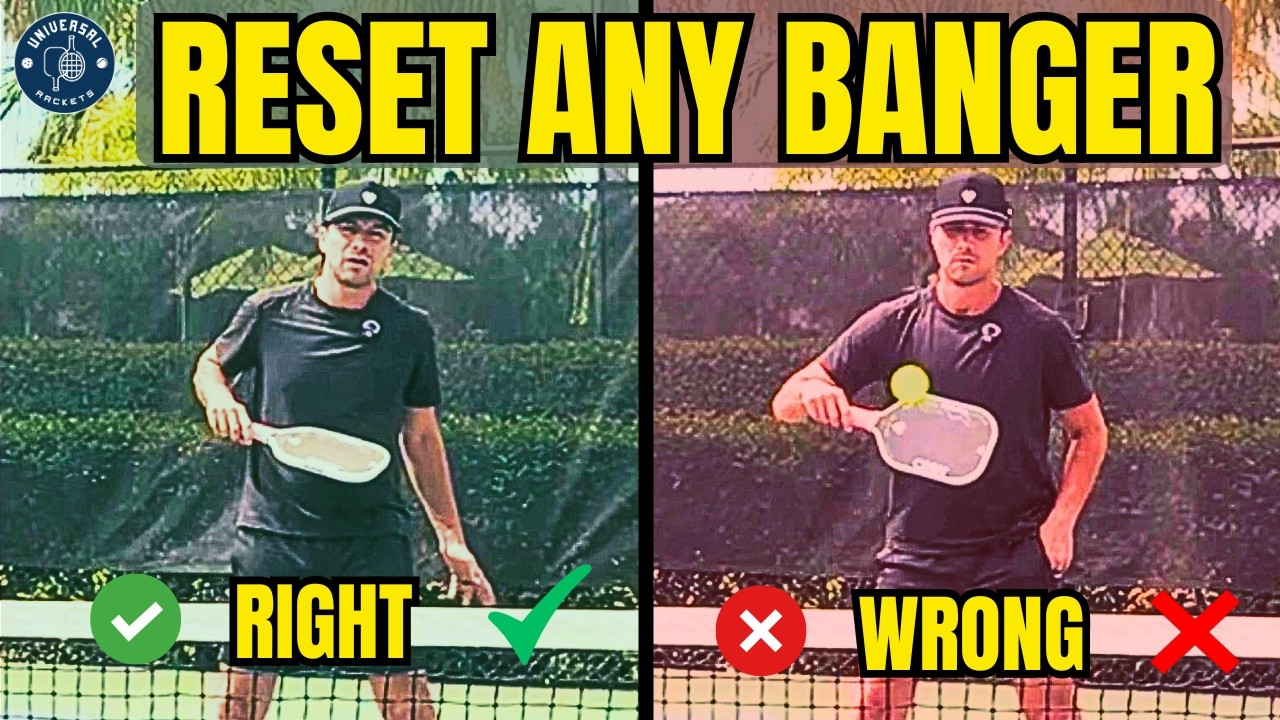
The reset shot is one of the most critical defensive skills in pickleball, yet most players struggle with it. Universal Rackets breaks down the exact mechanics and drills you need to stop popping up hard shots and start controlling the rally.
 The Dink PickleballThe Dink Media Team
Common Reset Mistakes and How to Stop Making Them
Here's what consistently breaks down for players working on this shot:
- Adding pace: Trying to reset with any real swing speed sends the ball up. Less is more here.
- Standing too tall: If you're reaching down instead of bending down, the shot has no consistency. Get low first.
- Watching the ball instead of the paddle: You can't read spin or pace if you're only tracking the ball in flight. Watch your opponent's contact point.
- Retreating instead of resetting: Some players back up to give themselves more time. This is usually wrong. It takes you further from the kitchen and gives your opponent more angles.
- Tightening the grip under pressure: This is the most automatic mistake. When a hard ball comes at you, your hand instinctively squeezes. That squeeze kills the soft shot. Practice staying loose even when the pace is high.
If you want to understand why the reset keeps breaking down mid-point, this article on reset failures walks through the patterns in more detail.
You can also pair the reset with a better understanding of how to reset against speed-ups specifically, since those are the most common situation where you'll need this shot in a real game.
The 6-Second Mental Reset for Getting Past a Bad Pickleball Mistake
You miss a shot. You’re frustrated or angry. You’ve got about 6 to 8 seconds to assess what went wrong and get over it before the next point starts.
 The Dink PickleballThe Dink Media Team
How to Practice the Reset So It Holds Up in Matches
The reset is one of those shots that feels fine in warmups and falls apart in live play. That gap usually comes from practicing without pressure.
The best drill is simple. Have a partner stand at the kitchen line and feed you hard, low balls at your feet while you stand in the transition zone.
Your only job is to get the ball back into the kitchen softly.No winners, no pace, just placement.
Once that feels stable, add movement. Step in after each reset and reset again from a slightly different position.
This simulates the actual rhythm of a real point where you're resetting while moving, not standing still.
For more structured drill progressions that build this kind of in-game feel, these progressive drills from 3.0 to 5.0 will give you a full practice framework.
If you prefer working without a court, these at-home drills can help you build the feel and hand softness that the reset demands.
There's also a specific rubber band drill worth knowing.This rubber band drill for mastering resets trains your hand to stay soft under pace, which is exactly the sensation you need to own this shot.
Learn the One Shot Top Pros Practice Most: the Reset
It is much better to hit the world’s highest, worst reset that still makes it over the net and forces your opponent to put the ball away than it is to miss the ball in the net.
 The Dink PickleballEric Roddy
The Reset as a Competitive Weapon
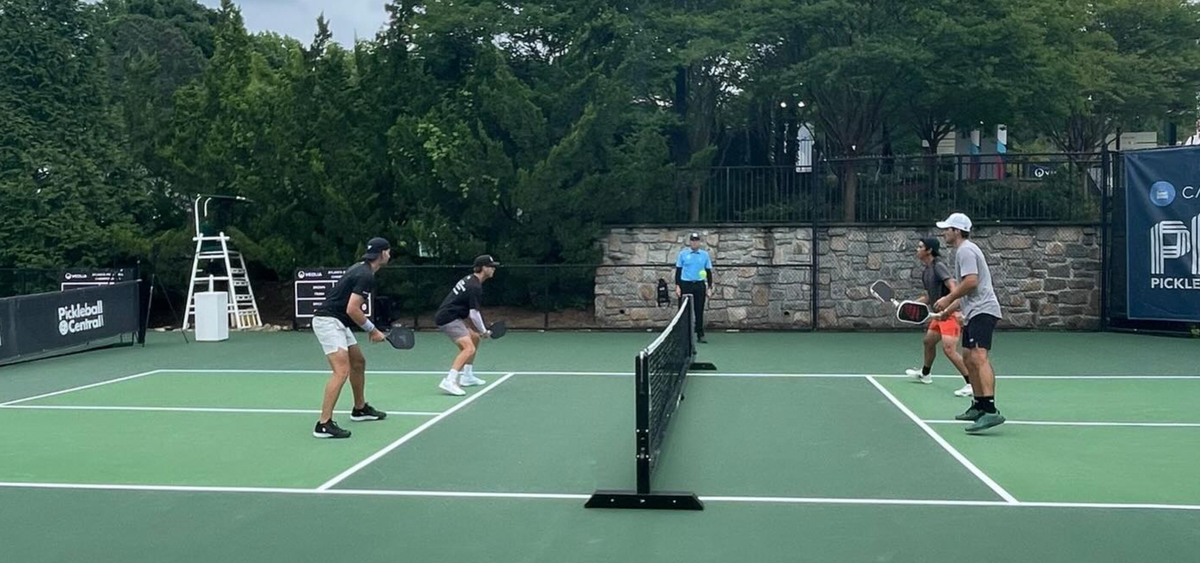
Sock puts it plainly: players who are really good at the reset have a huge advantage. That's not an exaggeration.When your opponents know you can reset reliably, they can't just hammer the ball at your feet and expect a pop-up.
They have to think more carefully about their attack selection, which creates hesitation and opens up other parts of the court for you.
The reset also keeps you in rallies you should be losing.That psychological pressure, surviving what looked like a winning shot, tends to shift momentum in your direction over the course of a match.
Combining a strong reset with smart court movement, like what you'd find in these tips for fixing your dink, drop, and reset together, is one of the fastest ways to raise your level without adding any offensive firepower.Defense wins points too, and the reset is your most important defensive tool from the transition zone.
💡
Heads up: hundreds of thousands of pickleballers read our free newsletter.
Subscribe herefor cutting edge strategy, insider news, pro analysis, the latest product innovations and more.
Frequently Asked Questions
What is a pickleball reset?
A pickleball reset is a soft, controlled shot hit from the transition zone that redirects a hard or low ball back into the kitchen without adding pace. The goal is to neutralize the opponent's attack and give yourself time to reach the kitchen line.
Why does my reset keep popping up?
The most common cause is a tight grip or too much swing. When you add force to a shot that's already coming at you with pace, the ball pops up instead of dying softly. Loosen your grip and focus on absorbing the ball rather than hitting it.
Should I take the reset out of the air or let it bounce?
It depends on the situation. If the ball is coming fast and low, taking it out of the air often gives you more control because you can redirect the pace. If you have time to let it bounce and set your position, that can also work.
Read the shot early and commit to one approach.
How do I handle topspin at my feet during a reset?
Open your paddle face slightly to counteract the forward rotation and angle the ball upward just enough to clear the net. Don't try to drive through topspin during a reset. Use the incoming spin to guide the ball back soft and low.
How long does it take to develop a reliable reset?
Most players see real improvement within a few weeks of focused drilling, specifically practicing resets against hard, low feeds from a partner at the kitchen. The key is repetition under realistic pressure, not just slow warmup feeds.
Anuncie Aqui / Advertise Here
Sua marca para o mundo Pickleball! / Your brand for the Pickleball world!





 English (US) ·
  Portuguese (BR) ·