
 English
  Spanish
  Portuguese
  German
  Italian
  Japanese
  French
  Polish
  Russian
  Netherlands
  Hungarian
  Turkish
  Videos
  Thedink Pickleball

"If you start out with the mentality of slowing down the banger, you've already lost to the banger."
Allow us to set a familiar scene.
You're at the kitchen line, minding your own business, and suddenly your opponent winds up like it's Wimbledon '92. The ball comes screaming at you at what feels like 80 miles per hour, and your instinct is to just... survive.
Get it back somehow. Slow it down. Make them play your game.
Here's the problem: that strategy is already losing.
In a new video, Zane Navratil dismantles the conventional wisdom about dealing with bangers that's been holding recreational players back for years. And honestly, it's refreshing to hear a pro say what a lot of us have been thinking: the whole "slow them down" approach is backwards.
Love pickleball? Then you'll love our free newsletter. We send the latest news, tips, and highlights for free each week.
First, You Need a Shift in Mindset
Let's start with the elephant in the room. Traditional pickleball wisdom says your best defense against a banger is to reset the ball, keep it low, and force them into a dinking battle. Navratil's response?
"If you start out with the mentality of slowing down the banger, you've already lost to the banger."That's not just a hot take. It's backed by logic. When you're trying to reset a hard-hit ball, you're working with maybe three or four feet of court to land in. Your opponent? They've got 22 feet of margin.
Even if you're the world's best resetter, you're playing a losing game because the difficulty ratio is completely skewed. You have to be perfect. They just have to be decent.
The real move is counterattacking.
When you start punishing their aggressive shots with your own pace, suddenly they have to think twice about winding up. They can't just mindlessly bomb balls at you anymore. The dynamic shifts.
Get Your Ready Position Right
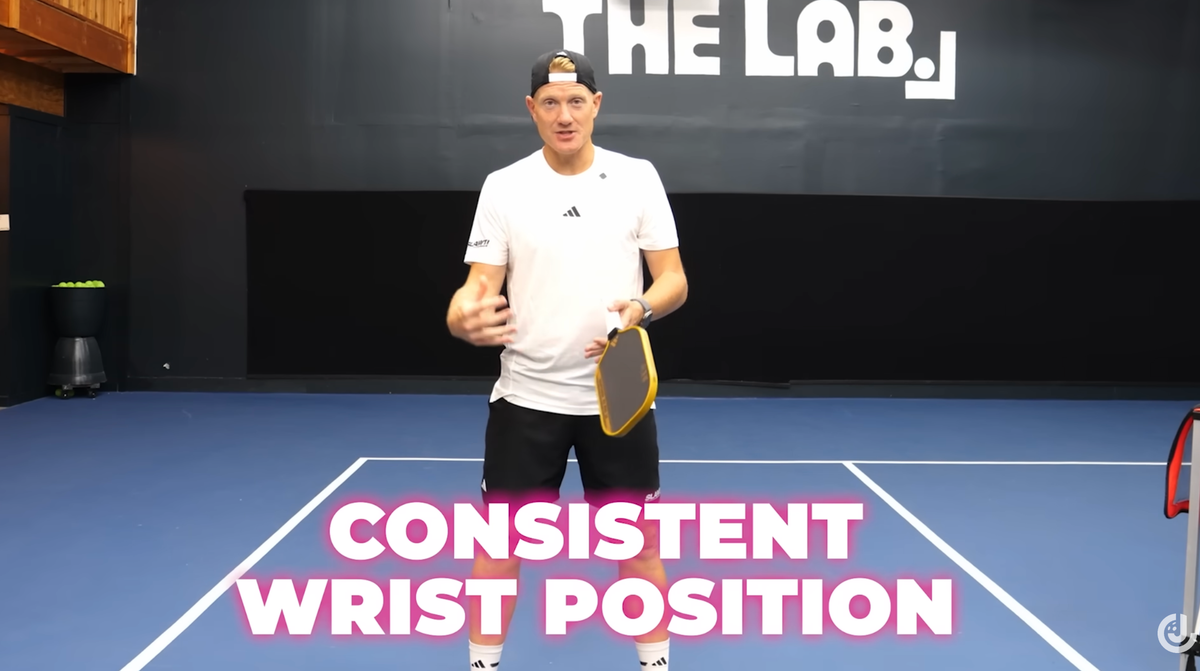
Before you can counterattack anything, you need to be in position to actually hit the ball. And here's where a lot of players mess up: their paddle is too low.
If your paddle is hanging down by your waist, you're forced to swing upward on hard shots. That's a recipe for disaster. You're hitting up on a ball that's already coming at you with pace. You're basically handing your opponent an easy put-away.
Navratil's rule of thumb is simple: keep your paddle above the net line.
- From that position, you can swing forward instead of upward
- You've got more options for placement
- You can punch through the ball instead of just trying to block it back
The ready position looks slightly different depending on your skill level, but the principle stays the same. Get that paddle up, get your feet set, and you're already halfway to a successful counterattack.
5 Simple Pickleball Tips That Actually Work (No Drilling Required)
You don’t need to spend eight hours a week on the court to see improvement. Sometimes a mindset shift or a focus on one specific element is enough to move the needle.
 The Dink PickleballThe Dink Media Team
Keep Your Paddle in Your Vision
Here's something that separates the pros from everyone else: they don't take big swings at bangers.
When someone crushes a ball at you, your natural instinct should be to crush it back. But know this:
- Counterattacking doesn't require you to generate pace
- Your opponent already did that for you
- All you need to do is redirect it
If your paddle leaves your field of vision during your swing, you've already taken too big of a backswing. A big swing takes too much time to execute, generates more pace than you need, and is nearly impossible to control. You're fighting against yourself.
Keep that paddle where you can see it. Both on the backswing and the follow-through. Think compact. Think quick hands.
You're not trying to hit a winner. You're trying to use their pace against them and get the ball down by their feet.Stop Hitting Stupid Shots: Why Balance Changes Everything in Pickleball
It’s not about being passive. It’s about being strategic. You’re not giving up the point; you’re buying yourself the chance to win it on your terms, not theirs.
 The Dink PickleballThe Dink Media Team
Think About Your Elbows
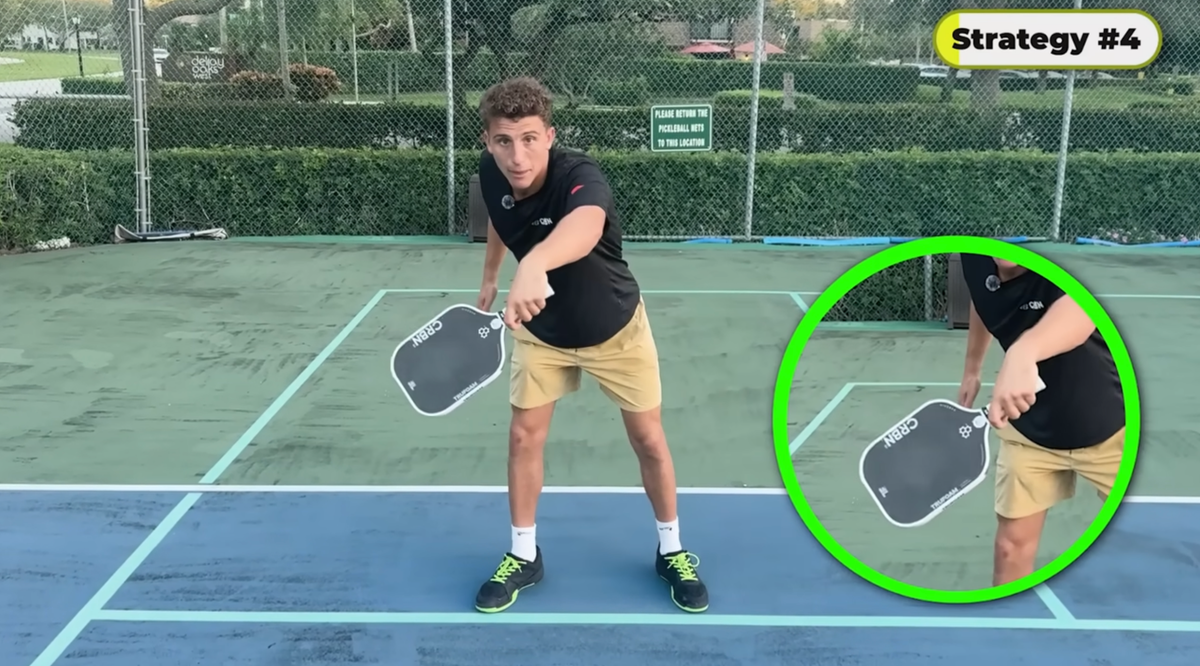
This one's interesting because it reveals how much pickleball borrows from other sports. Navratil actually brings up boxing as an example, and it makes sense. Boxers keep their elbows tight so they can both defend and throw punches quickly. They stay compact because another punch is always coming.
The same principle applies at the net. If you're keeping your paddle too far out in front of you, your paddle naturally drifts downward.
- You lose power
- You lose control
- You're stuck
Instead, keep your elbows in. Stay compact. Assume the ball is coming back at you immediately, because it probably is. This positioning lets you stay ready for the next shot instead of overextending yourself and getting caught out of position.
The Dink Holiday Gift Guide is now live. All the best paddles, bags, shoes, and gear, all in one place.
Build Your Ready Position Into Your Follow-Through
This is the part that separates good counterattackers from great ones. After you hit your shot, where does your paddle end up?
If you're following through all the way across your body, you're out of position for the next ball.
Instead, think about finishing your swing right back where it started, at your ready position.Your next swing should start where your previous swing ended.
It sounds simple, but it requires practice. You can work on this with a quick hands drill at the net. Start slowly. Focus on finishing your swing right back where it began. Once you build this into your muscle memory, you'll notice you're recovering faster and staying in control of rallies.
How to Break 5.0: The 5 Pickleball Shots You Must Master Before 2026
The game is faster, more aggressive, and more competitive than it was even a year ago. If you’re looking to level up in 2026, these five shots are non-negotiable.
 The Dink PickleballThe Dink Media Team
Know the Court and the Percentages
Pickleball is a percentage game. You don't need to win every point. You just need to win slightly more than 50%.
That means you need to develop a mental model of what your opponents can and can't do from different positions. Before they even hit the ball, you should have a sense of their highest percentage play.
- If the ball is very low and they take a huge swing, they're probably going to miss or hit it out. You can let it go.
- If the ball is higher and they're speeding up, take away their easiest shot, which is usually through the middle. Force them to hit winners down the sidelines, where the margin for error is smaller.
Sometimes they're going to execute a low percentage shot and hit a winner anyway. That happens. You didn't do anything wrong. You just lost that point. The key is making decisions that give you the best odds over time.
3 Patterns Top Pros Use to Plan Multiple Shots Ahead
Anticipation is everything in pickleball. Use these three pro-proven scenarios to read your opponents and put yourself in a position to make a high percentage, winning play.
 The Dink PickleballEric Roddy
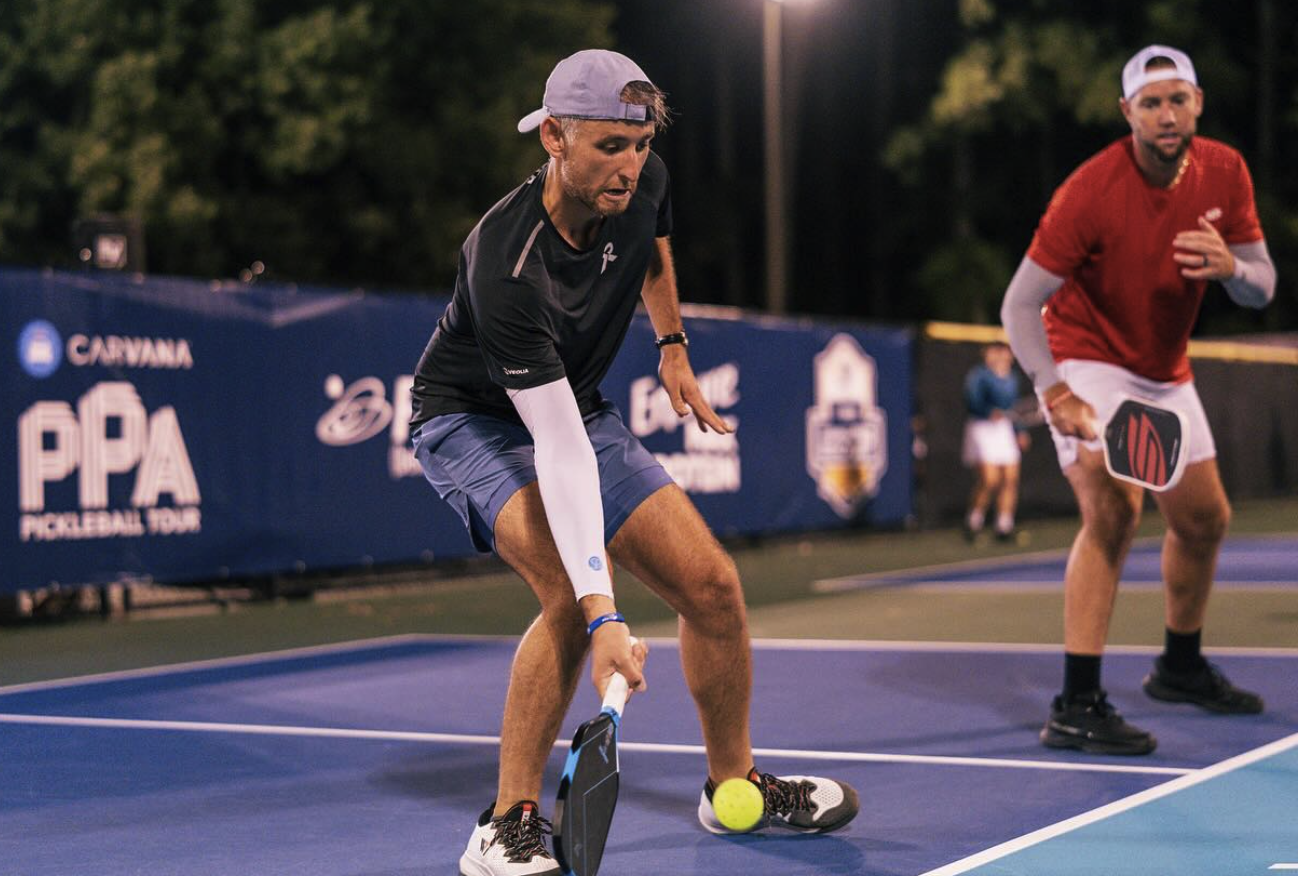
The Bigger Picture
What Navratil is really talking about here goes beyond just countering bangers.
It's about shifting from a reactive, defensive mindset to a proactive, offensive one. It's about understanding that in pickleball, like in a lot of things, playing scared is the fastest way to lose.
The bangers of the world are counting on you to be intimidated. They're counting on you to retreat into your shell and try to outlast them with perfect resets. The moment you start punishing their aggression, the whole dynamic changes.
So stop thinking about how to survive the banger and start thinking about how to make them regret hitting it at you in the first place.
Anuncie Aqui / Advertise Here
Sua marca para o mundo Pickleball! / Your brand for the Pickleball world!




 English (US) ·
  Portuguese (BR) ·