
 English
  Spanish
  Portuguese
  German
  Italian
  Japanese
  French
  Polish
  Russian
  Netherlands
  Hungarian
  Turkish
  Videos
  Thedink Pickleball

Five pickleball tips that intermediate players miss, from the split step to the middle shot. Each one fixes a specific habit that hands your opponent free points.
Most pickleball tips tell you what to do. Very few tell you the small, unglamorous habits that quietly hand your opponent free points every single game.
That is what this list fixes.
These are five things a coach would teach themselves if they could go back to the start. They are not just for beginners.
Intermediate players miss most of them too, which is exactly why they stall around 3.5 and cannot figure out why.
Work through them in order. Each one targets a specific moment where good players pull ahead and everyone else loses the point without realizing how.
Love pickleball? Then you'll love our free newsletter. We send the latest news, tips, and highlights for free each week.
Pickleball Tips Start With the Split Step
The single biggest control problem in amateur pickleball is running through your shots, and the fix is the split step.
Here is what most players do wrong.
They jog from the baseline toward the kitchen and try to hit on the move, which leaves them out of control and unable to do anything offensive with a ball that sits up.
Instead, split step right when your opponent strikes the ball.
That tiny hop drops you into an athletic stance, balanced and ready, so you can attack anything high instead of flailing at it.
The timing is the secret. Watch your opponent's paddle and split step as they make contact, wherever you happen to be on the court.
Split too late and you have no time to adjust to an angle, which is one of the most common footwork mistakes losing you points.
A bonus version applies to the returning team.
After you hit your return and sprint toward the kitchen, do not arrive and swing at the same moment your opponent drives.
Hit the return, run, then split step the instant they load up, even if you are still mid-court.
It is the ready position most players skip, and it turns a panicked block into a controlled, placed ball.
This one habit alone is worth a half-rating bump for most 3.5 players who have never been taught it explicitly.Tip 2: Pivot Back When You Dink Off the Bounce
Great dinkers do not just hug the kitchen line and slide side to side. They create space and time by pivoting backward when they take a dink off the bounce.
The goal is to catch the ball at the apex, or even let it fall slightly into your paddle, rather than rushing a short hop.
So you shuffle back a step and let the ball descend into your strike zone.
For a complete breakdown of this technique, mastering dink placement is the next read after this.
Why does that one adjustment matter so much? Because space buys you options.
With time to spare, you can hold the paddle and disguise your intentions, push deep, or speed it up.
Catch everything cramped on the line and you can barely do anything with it.
There is a footwork detail inside this too. When you take a ball off the bounce, your feet should not be square to the net.
Square up only when you reach to take a dink out of the air.
Off the bounce, you want rotation, because that is what lets you dictate the point and own your control at the kitchen line.
If you have ever wondered whether to take it early or let it drop, the answer lives in the apex dink versus short hop debate. Most of the time, the apex wins.
The players who dink the best rarely look rushed. That is not a coincidence.💡
Need some new pickleball gear? Get 20% off select paddles, shoes, and more with code THEDINK at
Midwest Racquet SportsTip 3: How Do You Counter a Banger Without Popping It Up?
To counter a hard speed-up, stop trying to swing hard and start trying to make clean contact, because a good counter is about contact, not a big swing.
Picture both teams at the kitchen and your opponent fires a ball at you.
There is almost no space here, so the player who moves their head and feet during contact loses. You want a quiet head and quiet feet at the moment the ball arrives.
Most players believe a strong counter needs a big backswing. It does not.
A big swing pulls you out of position because you are standing only a few feet from your opponent. Keep it compact.
The last piece is the one that saves the most points: hinge slightly at the hips.
When a fast ball jams you, your chest tends to angle up, which puts you on defense and pops the ball into the air.
A small hinge lets you meet the ball out in front and stay aggressive.
Fast hands feel like a gift some players are born with, but they are a skill you can build.
Simple wall drills sharpen your reaction time without a partner.
Drill the compact motion until it is automatic, whether you favor a forehand counter or a two-handed backhand counter.
The second scenario is different. Now you are at the kitchen and your opponent drives from the baseline. Here the priority is active feet, not reactive feet.
Read where the drive is most likely to go and get there early, set in an athletic stance, then stay still through contact so you are countering from balance rather than reacting late.
The same logic carries over when you need to attack drives and beat bangers for good.
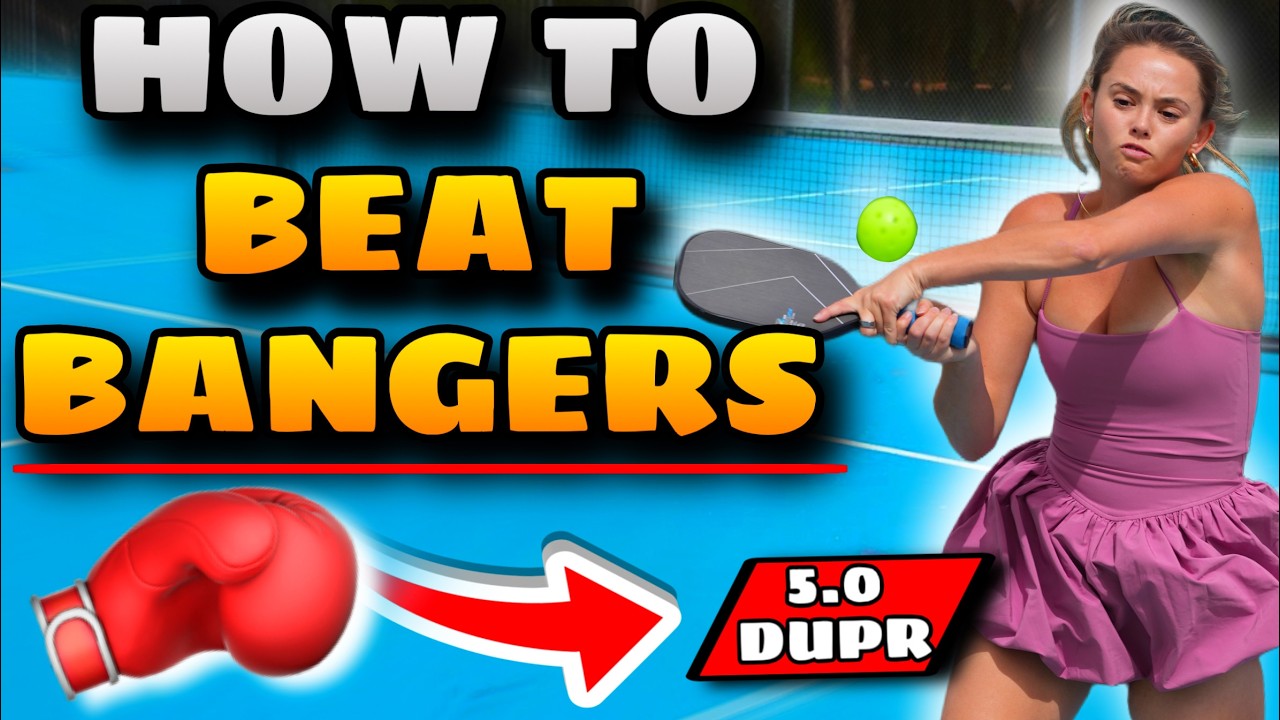
How to Beat a Banger Strategy in Picklebal
Power hitters can be frustrating, but a solid banger strategy doesn’t have to derail your game. Pro player Ava Ignatowich breaks down five tactical approaches to neutralize aggressive opponents and take control of the court.
 The Dink PickleballThe Dink Media Team
Tip 4: Turn Your Return Into an Actual Weapon
Your return of serve is probably costing you points, because a deep, penetrating return makes it far harder for the serving team to reach the net comfortably.
The return does not get talked about enough.
The most advantageous shot in pickleball is a good third shot, so anything that makes your opponent's third shot harder is worth real attention.
So how do you hit a return that actually pressures them?
Get your feet involved and contact the ball while moving forward, since you are running to the kitchen anyway.
That forward momentum is the biggest difference between a weak return and a heavy one.
Players who master this pickleball tip are measurably harder to get to the net against.Do not confuse it with a drive. On a drive you create topspin by dropping under the ball and brushing up with some wrist lag.
On a return you want a more neutral wrist and a flatter swing, because you are not trying to dip the ball over the net, you are trying to push it deep.
That small change, neutral wrist and a flatter path powered by your legs, is one of those pickleball tips that pays off immediately.
For more on shot selection and depth, study a smart return strategy and a reminder of why this is your most important shot.
You can also dive into three ways to improve your pickleball return of serve to drill the depth and forward movement.
Reps build the feel.
The 12 drills you need to play your best pickleball in 2026 leans on resets and targeted drilling to groove return depth and forward movement.
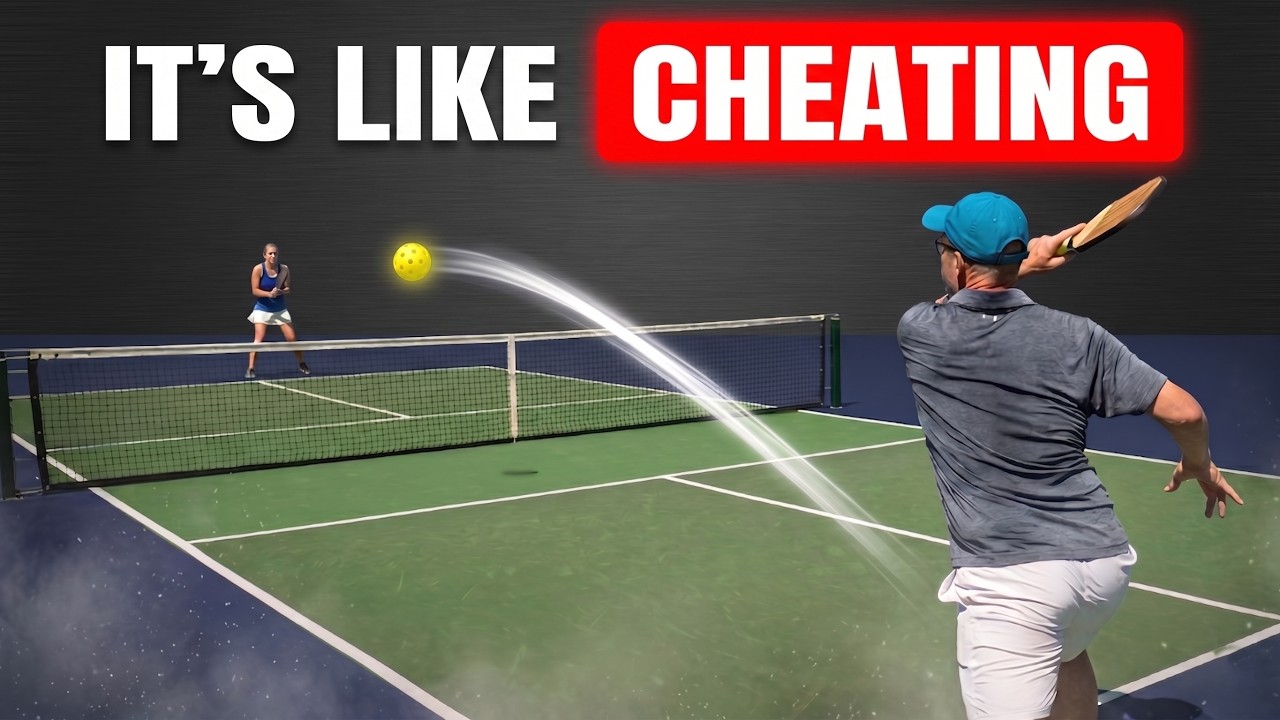
Pickleball Return Strategy: How Pros Control Every Rally
Professional pickleball players treat the return of serve as a strategic weapon, not just a way to get the ball back in play. Understanding the pickleball return strategy that separates elite players from the rest can transform your game.
 The Dink PickleballThe Dink Media Team
Middle Court Pickleball Tips That Take Away Angles
The last fix is a secret higher level players know and most intermediates do not: hitting the middle takes away your opponent's angles.
Start with dinking. If a team keeps hammering you with a sharp angle dink, redirect into the middle.
Now they have no angle to attack, and if they force one it usually sails out. The case for the middle dink lays this out in detail and is worth bookmarking.
The same idea governs speed-ups. A ball hit to the sideline gives your opponent a wide range of angles to fire back.
A ball hit middle erases most of those options, and you can anticipate that any speed-up is coming back through the middle.
Watch how Ben Johns works the middle to erase angles and dictate the rally, then crashes into the gap because he already knows a wild cross-court answer is off the table.
It is reading the court, not raw speed.
This is one of the most underrated pickleball strategy concepts in the intermediate game.It carries to your drops too. Dropping at a sharp angle hands your opponent angles in return.
Drop middle and you take those away, which lets you crash forward with confidence and decide who covers the middle on your terms.
One more reason this works: the lowest part of the net is the middle.
That gives you the most margin on dinks, drops, and drives, so the highest percentage target is also the safest one.
This is a core principle inside modern pickleball strategy for 2026 that more players need to internalize.
💡
Heads up: hundreds of thousands of pickleballers read our free newsletter.
Subscribe herefor cutting edge strategy, insider news, pro analysis, the latest product innovations and more.
Frequently Asked Questions
What are the best pickleball tips for intermediate players?
The most useful pickleball tips for intermediate players target control rather than power: split step the instant your opponent hits, pivot back to take dinks at the apex, counter with a compact swing instead of a big one, drive your return deep with forward momentum, and aim middle to remove angles. These habits separate steady 4.0 players from 3.5 players who stall.
Which pickleball tips help the most against bangers?
Against bangers, keep a quiet head and quiet feet at contact, shorten your swing so you stay in front of the ball, and hinge slightly at the hips so a fast ball does not jam your chest upward and pop up. When the banger drives from the baseline, use active feet to get set early rather than reacting late.
What is a split step in pickleball?
A split step is a small hop that lands you in a balanced, athletic stance just as your opponent strikes the ball. It stops you from running through your shots and gives you time to react to angles, which makes everything from returns to counters more controlled.
Why should you hit to the middle in pickleball?
Hitting middle takes away your opponent's angles on dinks, speed-ups, and drives, and it forces lower-percentage replies. The middle is also the lowest point of the net, so you get extra margin on every shot you send there.
Should your return of serve be flat or have topspin?
A return should be flatter than a drive. Use a more neutral wrist and let your legs and forward momentum carry the ball deep, rather than brushing up for topspin, which is better saved for your third shot drive.
Anuncie Aqui / Advertise Here
Sua marca para o mundo Pickleball! / Your brand for the Pickleball world!





 English (US) ·
  Portuguese (BR) ·