
 English
  Spanish
  Portuguese
  German
  Italian
  Japanese
  French
  Polish
  Russian
  Netherlands
  Hungarian
  Turkish
  Videos
  Thedink Pickleball

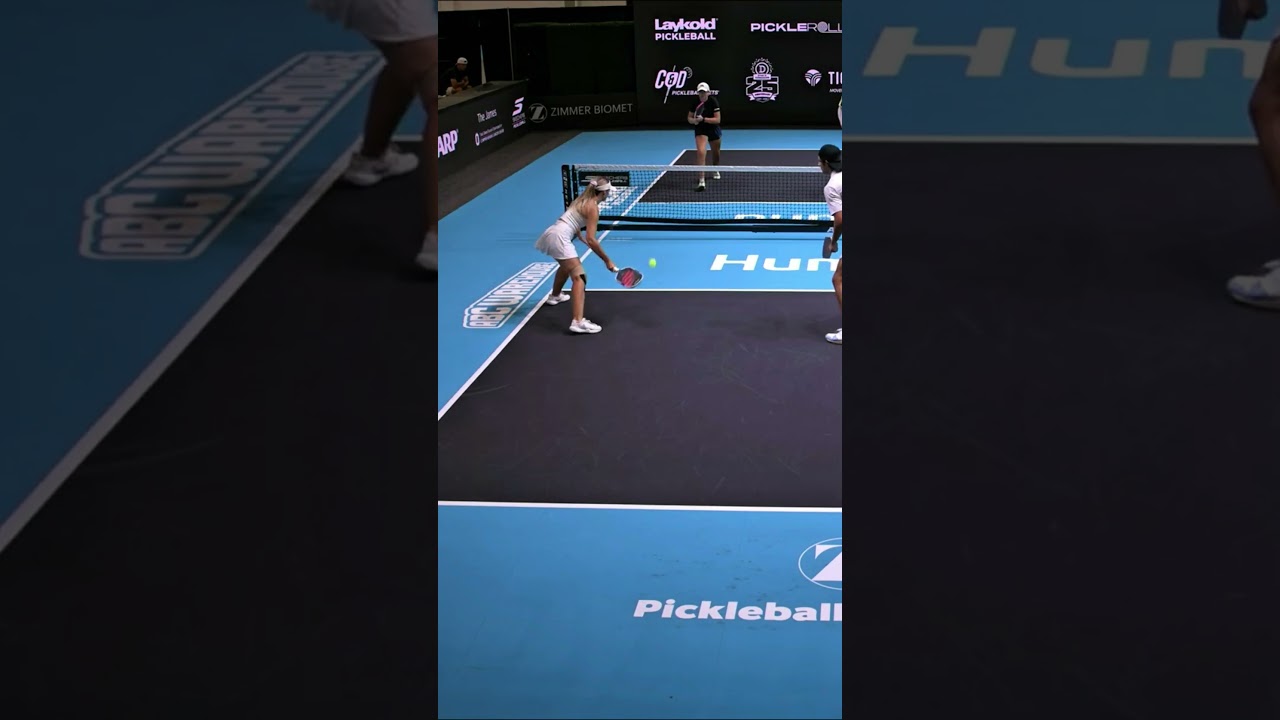
Most players think the forehand always takes the middle, but that is costing them points. Here is the real system for covering the middle in pickleball.
Covering the middle in pickleball is where more points die than almost anywhere else on the court.
Two paddles reach for the same ball. Or worse, neither does, and it splits you clean down the seam.
You have probably heard the fix a hundred times: the forehand always takes the middle.
It sounds clean. It feels official. And it is wrong often enough to lose you games.
Here is the truth a sharp coaching clip lays out, and the simple system that replaces the myth.
Love pickleball? Then you'll love our free newsletter. We send the latest news, tips, and highlights for free each week.
So Who Actually Covers the Middle in Pickleball?
The player the ball is traveling toward covers the middle, not whoever happens to have a forehand there.
As the video puts it, "the biggest misconception in all of pickleball is that the forehand takes priority covering the middle. That's completely wrong."
The reason is time, or the lack of it.
"Pickleball is so fast, especially at the kitchen line, you're only 14 feet away from each other."That is roughly the distance from you to your partner once you both pinch the middle. Understanding good kitchen positioning is what makes this split-second read possible in the first place.
At that range a speedup arrives before your brain can run a rule.
Asking one player to swing across and cover the middle with a forehand on every ball is asking them to be late on everything else.
If you want to understand how quickly those exchanges escalate, pro speed-up strategy at the kitchen line breaks down exactly why position matters more than hand speed.
So the default is not the forehand. The default is the diagonal.
What Does "Play the Diagonal" Mean?
Playing the diagonal means you take the ball that comes from the opponent directly across from you, on the diagonal line, and that responsibility decides who covers the middle.
If the ball is in the corner in front of you, you step in and cover the middle whether it lands on your forehand or your backhand.
In the clip the coach says it plainly: "if the ball is in that corner, I step over and cover middle, no matter if it's my forehand or backhand."This is a definition worth burning in. The diagonal is the invisible string connecting you to the opponent across from you.
The ball on your string is your ball.
That single idea clears up most of the chaos around covering the middle in pickleball, and it travels with you no matter which side you start on.
Good kitchen positioning is what makes the diagonal readable in the first place. If you are floating off the line, the angles lie to you.
If you want a deeper look at how side selection affects your diagonal read, right side vs. left side doubles positioning is worth a full read.
💡
Need some new pickleball gear? Get 20% off select paddles, shoes, and more with code THEDINK at
Midwest Racquet SportsThe 4 Rules for Covering the Middle in Pickleball
Here is the full system, in the order your brain should run it.
Rule 1: On Fast Balls, Play the Diagonal
Speedups, drives, and hard rolls give you no reaction window. Take the ball on your diagonal and trust your partner to take theirs. No stepping across, no hero reaches. This is the core of covering the middle in pickleball under pressure, and it is the rule most rec players skip entirely.
Rule 2: On Slow Balls, the Forehand in the Middle Takes Priority
A floaty dink or a slow roll through the center gives you time. Now the player whose forehand sits in the middle can step over and take it. This is the only time the old rule is true. If you want to sharpen that specific shot, your forehand dink needs work is a fast fix.
Rule 3: Talk Before the Ball Splits You
A quick "me" or "you" settles ownership faster than any rule. Partners who call the middle out loud almost never double-pull off it. This is the simplest upgrade in doubles pickleball strategy and the most ignored one at the recreational level.
Rule 4: Reset to the Diagonal After Every Shot
The middle reopens the instant someone drifts. Recover your spacing so the seam stays narrow and the diagonal stays honest. If your positioning keeps breaking down mid-rally, these essential doubles fixes target exactly that habit.
Notice that three of the four rules have nothing to do with your forehand.
They are about reading speed and holding position, which is exactly why strong off-ball positioning wins firefights that better hands alone never could.
For a broader view of how to build that winning pickleball strategy in doubles, modern pickleball's four key strategies for 2026 is worth bookmarking.
Who Covers the Middle Ball at the Pickleball Kitchen?
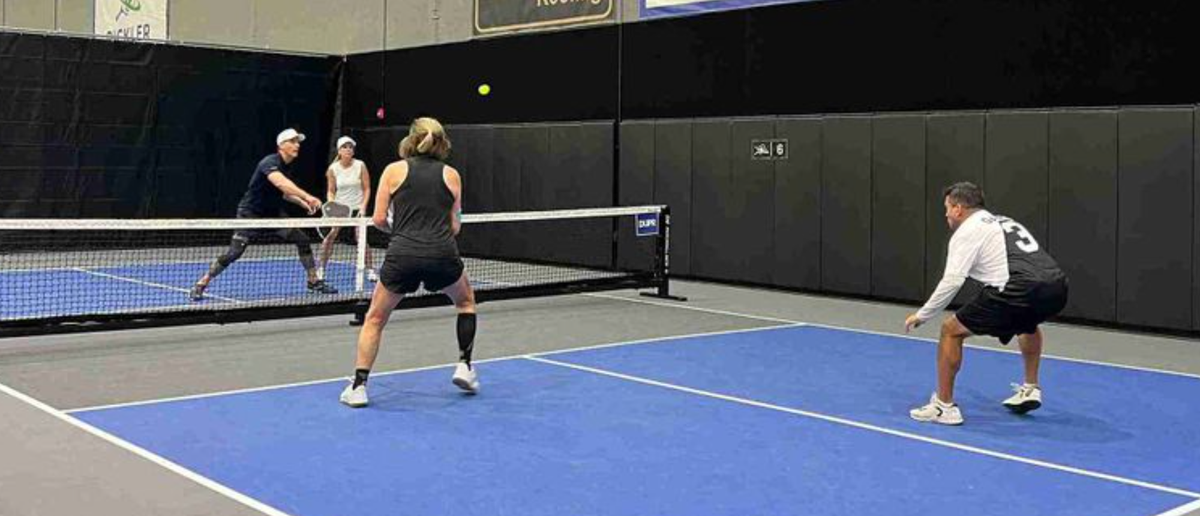
Knowing who covers middle kitchen pickleball is one of the most decisive tactical questions in doubles. This guide breaks down the rules of thumb, situational exceptions, and how the best players settle it automatically, no guesswork required.
 The Dink PickleballThe Dink Media Team
Why the Forehand Myth Costs You So Many Points
When both players believe the forehand owns the middle, two failures show up on repeat.
- The first is the double pull. Your partner reaches across for a ball on your diagonal because they have the forehand, you also move because it is in front of you, and now both of you are out of position with the middle wide open behind you.
- The second is the freeze. Each of you assumes the other has it because of the forehand rule, and the ball drops untouched between you. That seam ball is one of the cheapest points you can hand away, and it is a big reason players keep getting attacked at the kitchen.
Speed is the real boss here. On a hard speedup you are reacting, not deciding, so the only workable answer is to defend what is in front of you.
That is the same instinct behind raw reaction time, where the players who win are the ones who already know their job before the ball moves.According to NBC Sports' 2025 coverage of professional pickleball, the fastest hands battles at the kitchen line now clock speeds that leave almost no margin for reactive decision-making, reinforcing why pre-assigned coverage is the only reliable system.
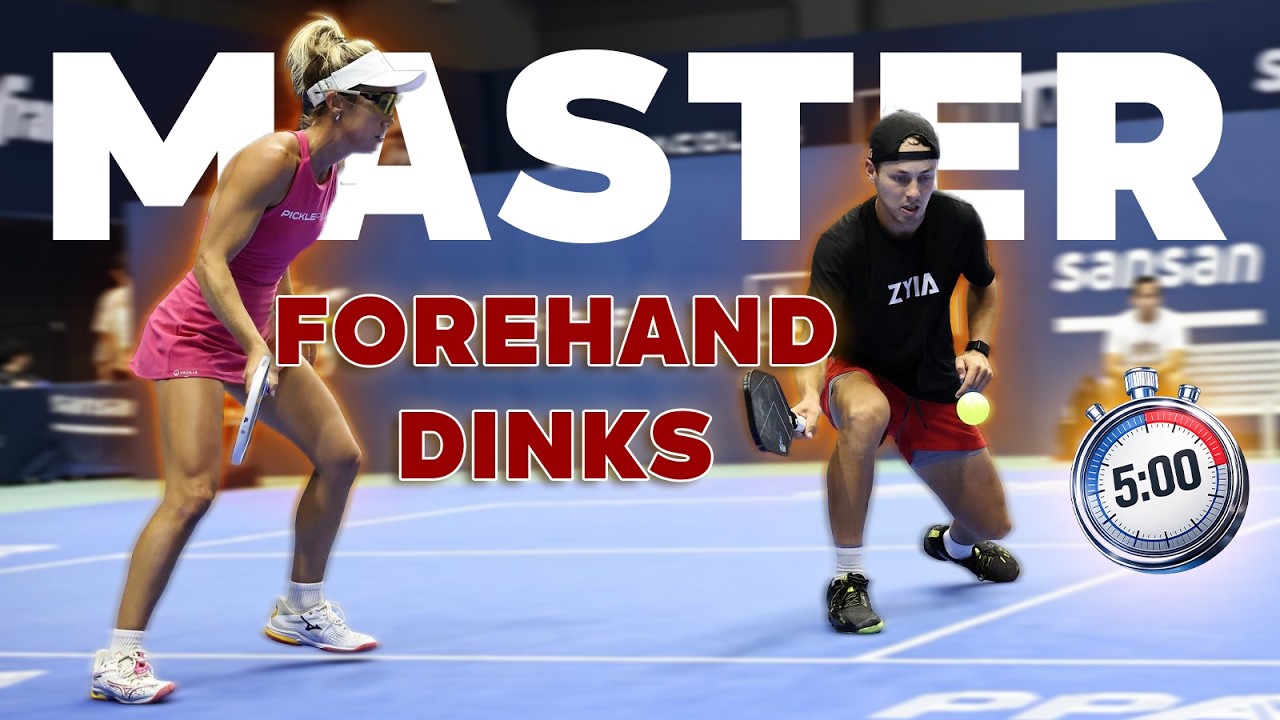
Your Forehand Dink Needs Work: Here’s a 5-Minute Fix from a Pickleball Pro
Sometimes the biggest pickleball improvements come from small, focused adjustments rather than a complete overhaul
 The Dink PickleballThe Dink Media Team
How Do You Cover the Middle in Pickleball During Fast Hands Battles?
In a hands battle, you cover the middle by holding the diagonal and keeping a compact, ready paddle out front, never by lunging across for your partner's ball.
The exchange is too fast for anything else.
Set your paddle high and slightly to your backhand side, because most middle speedups arrive there and the backhand block is faster to fire.
That ready posture is the same foundation coaches stress when they teach you to absorb and defend an attackable ball instead of swinging at it.
You can build that posture faster with a dedicated hand speed framework.
Then trust the split.
If the ball is on your diagonal, it is yours, full stop.Winning these exchanges is less about hand speed and more about both players knowing their lane, which is why a dedicated hand speed drill pays off only after the coverage map is locked in.
The 12 drills to play your best pickleball in 2026 include specific firefight reps you can run with a partner.
This is also where a good partner earns their keep.
Owning your diagonal without poaching your partner's is the heart of being a better doubles partner, and it removes the guesswork that sinks most rec teams.
For a deeper breakdown of the habits that define high-level doubles, 8 doubles strategies nobody talks about is exactly what you need next.
Who Covers the Middle in Pickleball Doubles?
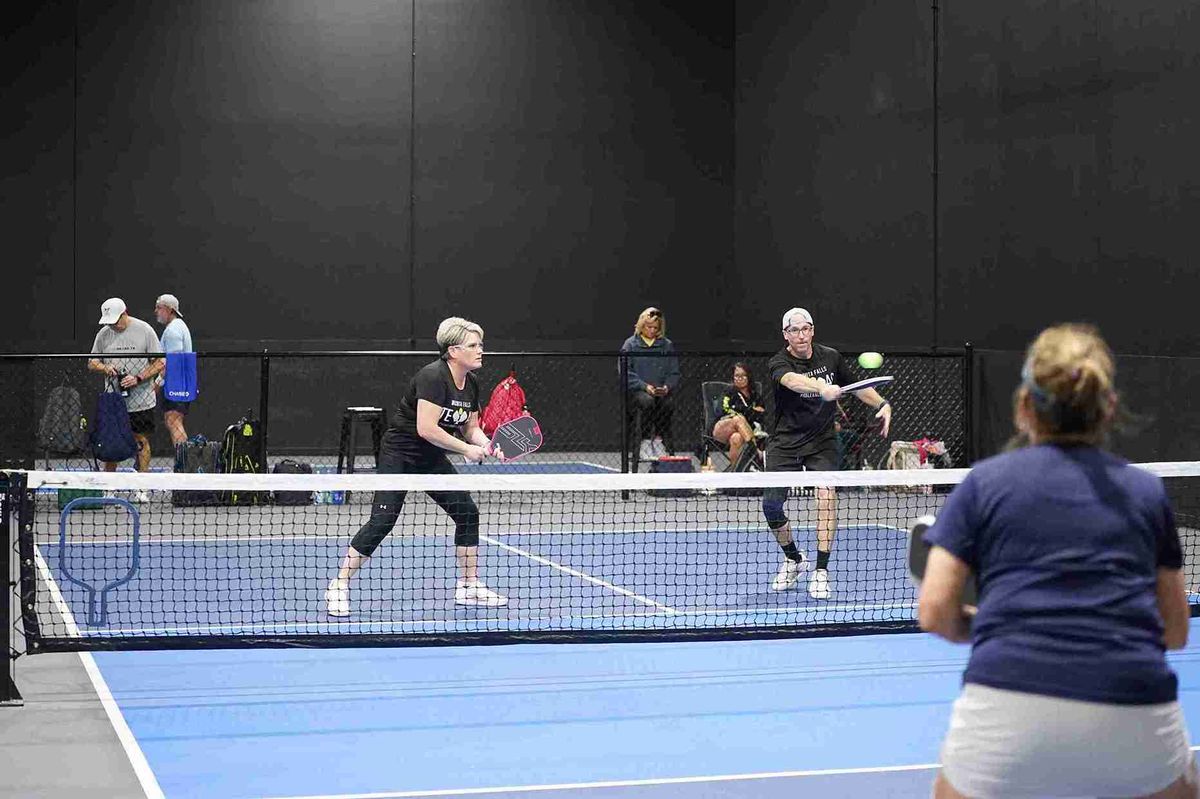
In pickleball doubles, who covers the middle is one of the most debated questions on the court. The short answer: the player with the forehand, but the full answer is a lot more nuanced than that.
 The Dink PickleballThe Dink Media Team
When the Forehand Rule Actually Wins in Doubles Pickleball Strategy
The forehand priority is not useless. It is a slow-ball tool, and on slow balls it is excellent.
When a dink floats up through the center with no pace, the player whose forehand is in the middle should step over, push gently into their partner's space, and take it.
The video describes exactly that: when you can clearly see it coming, you step over, move your partner out of the way, and use the forehand.This is also the logic behind stacking.
Teams stack so a specific forehand lives in the middle on purpose, which only matters on the slower balls where there is time to use it.
If that idea is new, doubles stacking 101 shows why opponents bother setting it up, and how covering the middle in pickleball changes once a team stacks.
A clean step-across also depends on reading the ball early.
The earlier you recognize a slow floater, the calmer your move, which is the whole point of training anticipation so you stop reacting late.
Players chasing the 5.0 level can find a direct roadmap in how to break 5.0 with the shots you must master before 2026.
Master the Forehand Dink: The Complete Technique Guide for Pickleball Players
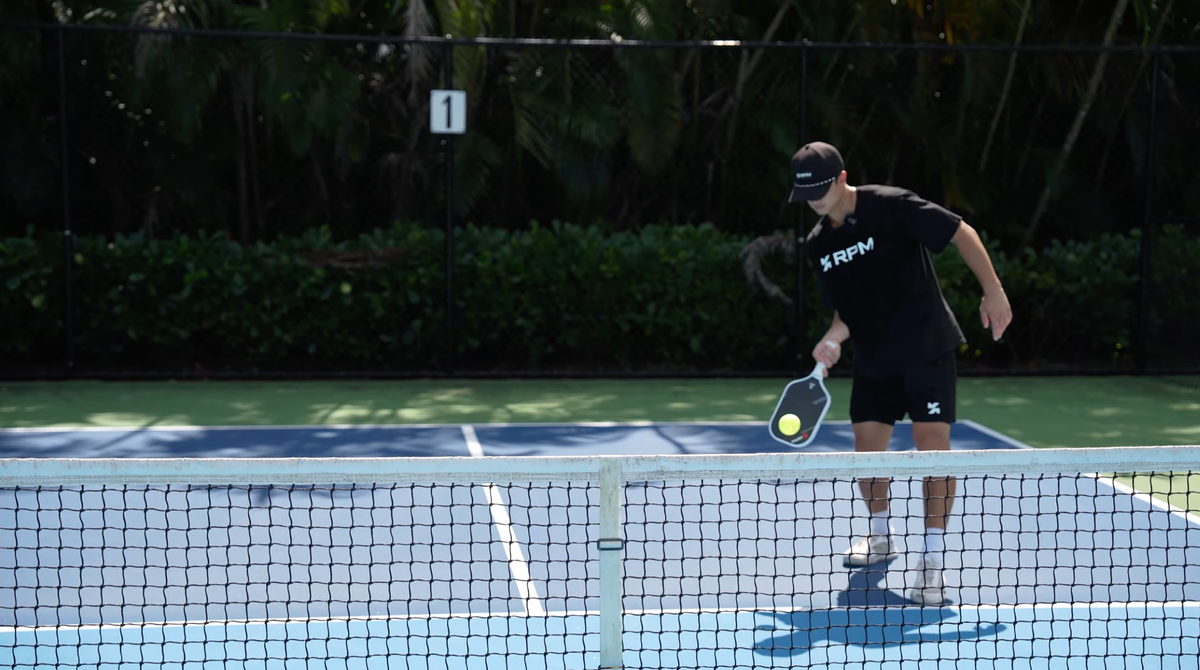
Pro Ryan Fu walks through the mechanics, positioning, and strategic timing of one of pickleball’s most underrated weapons.
 The Dink PickleballThe Dink Media Team
Watch a Pro Do It: Ben Johns and the Middle Coverage Blueprint
Ben Johns is the clearest model for this. Watch Ben Johns on the left side and you will see he does not chase every middle ball with his forehand.
On hard exchanges he holds his diagonal and lets the geometry do the work, then steps in to take slow balls with that forehand when the pace finally allows it.
Right-side specialists like Gabe Tardio show the mirror image.
Their job is to protect the middle on the diagonal during firefights, then unload the forehand the moment the ball slows down.The pattern is identical on both sides: diagonal first, forehand second.
None of this works if your feet quit. After you stretch for a middle ball you have to recover, and that drop step and reset is its own skill.
ESPN's 2025 pickleball analysis has highlighted how court footwork separates recreational players from competitive ones at every rating level, a pattern you can see clearly when watching pros reset after middle-ball exchanges.
The kind of court footwork keeps you from getting stranded out of position.
Master Middle Coverage: 3 Pro Tips for Pickleball
Tanner Tomassi explains why mastering footwork, paddle control, and anticipation are the keys to dominating the middle in pickleball
 The Dink PickleballThe Dink Media Team
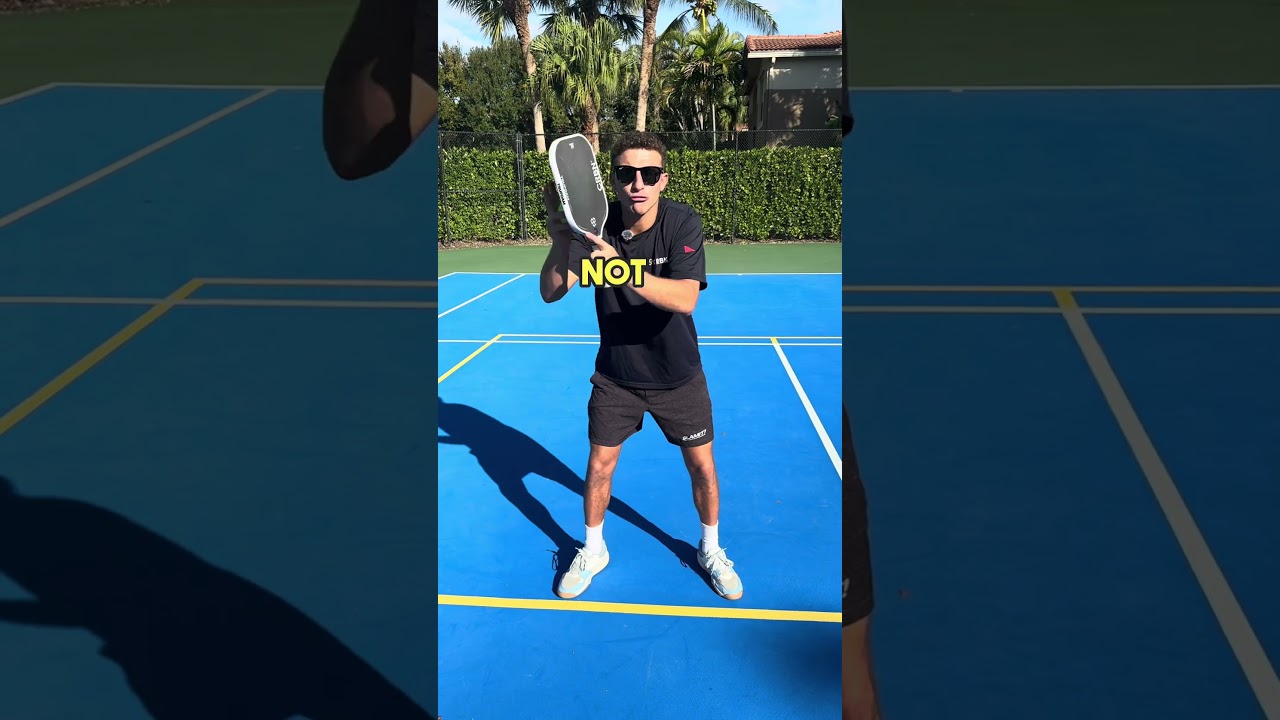
Putting It Into Your Next Game
Start with one cue: diagonal first. Before each rally, glance across and find the opponent on your string. That ball is yours.
Save the forehand step-over for the slow stuff, call the close ones out loud, and reset to your spot after every shot.That is the entire system for covering the middle in pickleball, and it scales straight into sharper 4.0 doubles patterns as you climb.
The 4-step system to win more pickleball games in 2026 builds directly on this foundation.
Drill it once with a partner and the collisions stop almost immediately.
The middle stops feeling like a coin flip and starts feeling like the easiest part of the court.
💡
Heads up: hundreds of thousands of pickleballers read our free newsletter.
Subscribe herefor cutting edge strategy, insider news, pro analysis, the latest product innovations and more.
Frequently Asked Questions
Who covers the middle in pickleball doubles?
The player the ball is traveling toward covers the middle, based on the diagonal, not whoever has a forehand in the center. On fast balls you take whatever is on your diagonal, and the forehand only takes priority on slow balls you have time to reach.
Does the forehand always take the middle in pickleball?
No. The forehand takes the middle only on slow balls where you have time to step over and use it. On speedups and drives there is no time to swing across, so you defend your diagonal instead.
How do I stop colliding with my partner when covering the middle?
Assign the middle by diagonal and call the close ones out loud with a quick "me" or "you." Most collisions come from both players chasing the same ball under the old forehand rule, which disappears once you default to the diagonal as your baseline doubles pickleball strategy.
Why do so many balls split me and my partner down the middle?
Seam balls usually mean both players froze, each assuming the other had it, or your spacing drifted and the middle opened up. Reset to the diagonal after every shot and pre-assign the middle so neither player hesitates when covering the middle in pickleball.
How does stacking change middle coverage in doubles?
Stacking lets a team keep a chosen forehand in the middle on purpose, which helps on slow balls where there is time to use it. On fast exchanges the diagonal rule still governs, so stacking mainly buys you a better slow-ball option without changing your core pickleball middle coverage system.
Anuncie Aqui / Advertise Here
Sua marca para o mundo Pickleball! / Your brand for the Pickleball world!





 English (US) ·
  Portuguese (BR) ·