
 English
  Spanish
  Portuguese
  German
  Italian
  Japanese
  French
  Polish
  Russian
  Netherlands
  Hungarian
  Turkish
  Videos
  Thedink Pickleball

Most players want to jump straight to 5.0 skills before they have the fundamentals to support them. These six pickleball drills give you the exact progressions to build each part of your game in order.
Every pickleball drills you skip at a lower level eventually shows up as a hole in your game at a higher one.
You can not fast-track your way past the fundamentals, no matter how competitive you are.This is a full breakdown of the drills that actually move the needle, organized by skill level so you know exactly what to work on right now.
The progressions here come from Cori Elliott, who walked through each stage alongside coach Mike in a detailed on-court session covering everything from the serve and return to two-handed backhand speed-ups at the 5.0 level.
Whether you are grinding to reach 3.5 or trying to crack 4.5, there is a drill in here that targets your current ceiling.Love pickleball? Then you'll love our free newsletter. We send the latest news, tips, and highlights for free each week.
The 3.0 Drill: Serve, Stay Back, and Return Deep
Most 3.0 players are not ready to dink.
The real problem at this level is serve mechanics and return placement, and those two things deserve your full attention before anything else.
The drill is simple. One player serves with a topspin motion, contacting the ball out in front of the body and following through upward.The returner focuses on one thing: hitting the ball deep, ideally at a target placed near the baseline.
Here is what makes this drill more valuable than it looks:
- The serve motion is the same basic movement as your drive and your volley. Grooving it early builds a foundation for every other shot.
- Hitting a deep return forces your opponent back and buys you time to get to the kitchen.
- Practicing staying back after your serve teaches you to wait for the ball to come to you instead of rushing forward and getting caught off balance.
A huge mistake at this level is creeping toward the kitchen right after serving.
If you drift up and have to let the third shot bounce behind you, you are stuck.Stay behind the baseline until you can step into the ball comfortably.
On the return side, keep your elbow in and avoid pulling the paddle back too far.
A compact swing gives you control. A big backswing sends the ball anywhere.
If you want to sharpen your serve mechanics specifically, these six fixes for your serve and return are worth working through alongside this drill.
The 3.5 Drill: Zone Reset Progression
Getting from 3.5 to 4.0 depends heavily on your ability to reset the ball under pressure and get from the baseline to the kitchen without falling apart in the transition zone.
The zone reset drill works like this. Start close to the kitchen, roughly at the transition zone. Your partner feeds or rallies from the other side.
You must land three consecutive balls in the kitchen before stepping back to the next zone.Work your way back to the baseline, hitting three in a row from each position before moving.
Key technique points to lock in while doing this drill:
- Shoulders over knees over ankles. Your balance determines the quality of every reset.
- Paddle out in front, absorbing pace rather than swinging through it.
- Grip pressure adjusts with ball speed. Faster incoming ball means a looser grip. Off-speed ball means slightly more squeeze.
The reset is not a power shot. It is a feel shot.
And feel comes from understanding how grip pressure controls pace. This breakdown of grip pressure goes deeper on exactly how to calibrate it in real time.
Mix up the feed between hand feeds at different speeds and bounced balls to simulate actual game pressure.That variance is what makes the drill translate to matches.
💡
Need some new pickleball gear? Get 20% off select paddles, shoes, and more with code THEDINK at
Midwest Racquet SportsWhat Is the Slinky Drill and Why Does It Matter?
The slinky drill is a warm-up tool that doubles as a drop shot builder.
Here is how it works: both players start at the kitchen and dink twice, then each takes two steps back simultaneously.Continue dinking and stepping back until you both reach the baseline, then reverse the process and work your way back in.
That back-and-forth motion is why it is called the slinky.
The goal is not to overpower the shot from distance.You are pushing the ball into the kitchen with a short, compact motion, no big backswing, just a feel for how much pace you need from each position on the court.
By the time you reach the baseline, you are essentially hitting third shot drops without thinking of them that way.This is one of the best drills to run before a tournament or a competitive match because it warms up the exact feel you need for drops and resets without burning your arm out.
How to Improve Third Shot Drop Consistency
If you want to improve third shot drop consistency, the answer isn’t more court time, it’s structured, intentional repetition. This guide breaks down the exact drill protocol that builds a reliable drop you can trust under pressure.
 The Dink PickleballThe Dink Media Team
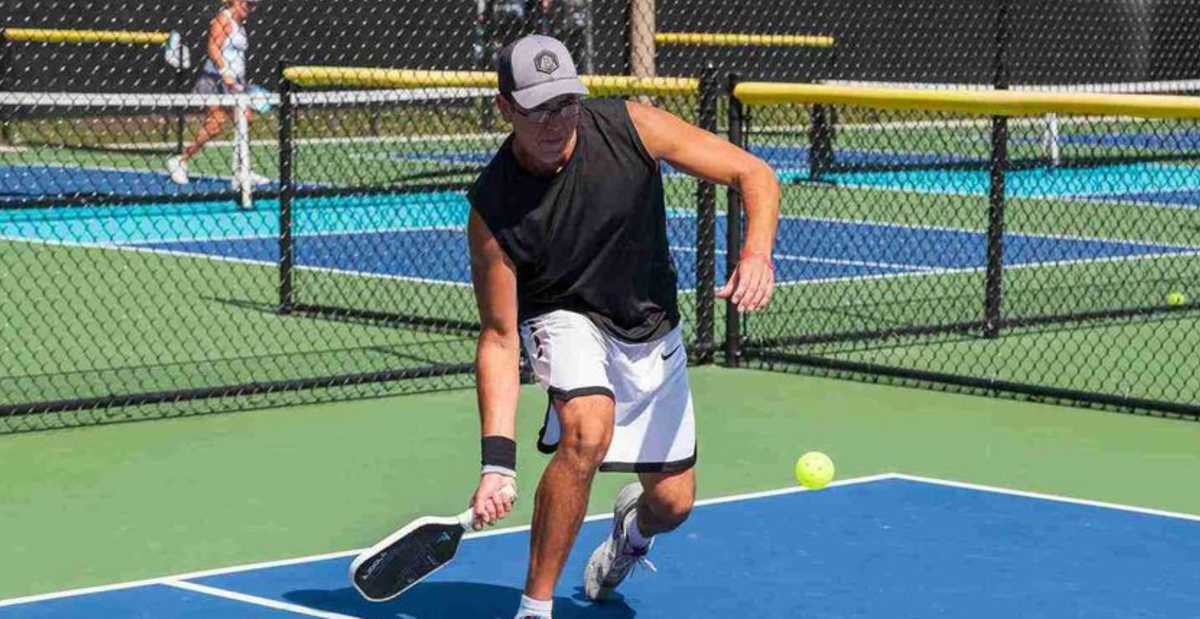
At 4.0, the game slows down enough that you can dink, but most players still have two major problems: they cross-step during lateral movement, and they speed up at the wrong times out of impatience.
This pickleball drill has one player working at the kitchen while a partner controls the feed, moving them around with dinks in different directions.
The working player focuses on two things only: side stepping instead of cross stepping, and reading when to take the ball out of the air versus letting it bounce.Cross-stepping feels fast, but it costs you time because it throws off your balance and leaves you unable to adjust if the ball changes direction.
Side stepping keeps you square and ready.Stable lateral movement is also the one place where your gear genuinely affects your footwork.
Watch how compact every motion stays during this drill. No big backswing on dinks. Take the ball out of the air when you can.
Attack when the ball sits up. These habits, along with disciplined shot selection, are what separate 4.0 from 4.5.
For a deeper look at what keeps players stuck right at this level, this breakdown of common 3.5 and 4.0 mistakes covers the patterns coaches see most often.
Pickleball Third Shot Drop by Skill Levels: 3.0 to 4.0 Guide
Third shot drop skill levels pickleball players need to master vary dramatically between 3.0 and 4.0 rated competitors. This guide breaks down exactly what to focus on, fix, and refine at each rating so you stop training the wrong things.
 The Dink PickleballThe Dink Media Team
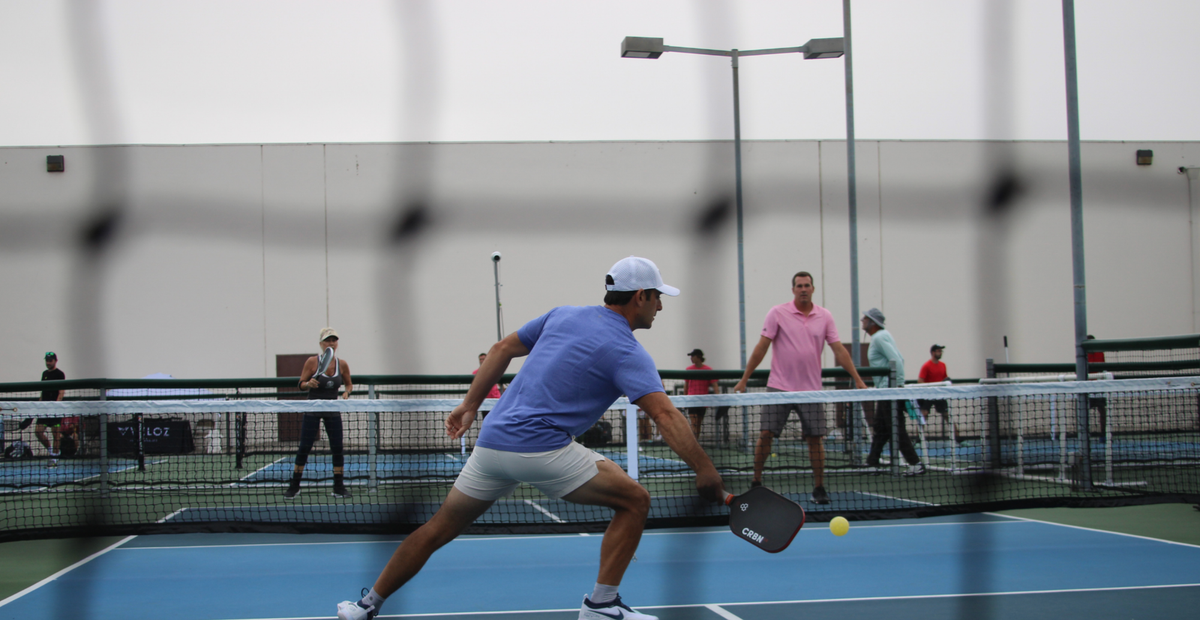
The 4.0 to 4.5 Drill: Dink, Speed Up, Block
This drill forces you to understand what a speed-up is actually for. Most players treat it like a finishing move.
It is not. The speed-up is a setup shot. You speed it up to create pressure, then clean up the next ball.The structure is simple. Dink once, then speed up, then block. Then your partner dinks, speeds up, and you block, swapping roles on each exchange.
When you block a speed-up, the paddle barely moves.
A loose grip absorbs the pace and drops it back into the kitchen. Think of it less as a swing and more as a redirect.When you speed up, think about where your opponent is holding their paddle. Are they in a neutral position? Attack the body.
Are they leaning one direction? Go the other way. You are reading the person across from you, not hitting random targets.
The scale analogy is useful here.
When you have a low dink, the advantage tips slightly toward your opponent, and a well-placed speed-up resets that balance or tips it your way.
But an impatient speed-up from a bad position just hands them the point.These three fixes for resetting speed-ups will help you get comfortable on both sides of this exchange.
5 Shots Every 4.0 Pickleball Player Needs to Reach 4.5
If you’re stuck at 4.0 pickleball, the problem probably isn’t your technique. These five shots close the gap between 4.0 and 4.5 faster than any drill you’re currently running.
 The Dink PickleballThe Dink Media Team
Does the Type of Speed-Up You Choose Actually Matter?
Yes, and significantly. At 4.5, you need to be deliberate about the patterns you practice, not just randomly speeding up and hoping something works.
In the video, Cori and Mike isolate a specific pattern: a speed-up down the line followed by sitting on the forehand counter.By knowing where the ball is going, both players train real anticipation and positioning rather than just reacting to chaos.
Here are two patterns worth drilling specifically:
- Down the line speed-up, forehand counter: Speed cross-court, sit on the forehand side expecting a counter down your line.
- Cross-body to backhand combo: Hit to the right hip, then follow with a shot to the opponent's backhand side before they reset.
When you practice patterns, your muscle memory builds around specific scenarios rather than vague concepts. That is what makes the difference at 4.5 and above.
Getting into these habits also connects directly to your kitchen arrival percentage, which is one of the clearest indicators of where your game actually sits.
How to Speed Up From the Kitchen in Pickleball
Knowing when to speed up from the kitchen in pickleball is the difference between earning a point and handing one away. This guide breaks down the exact timing triggers, target zones, and attack patterns 3.5–4.0 players need to start winning more exchanges at the net.
 The Dink PickleballThe Dink Media Team
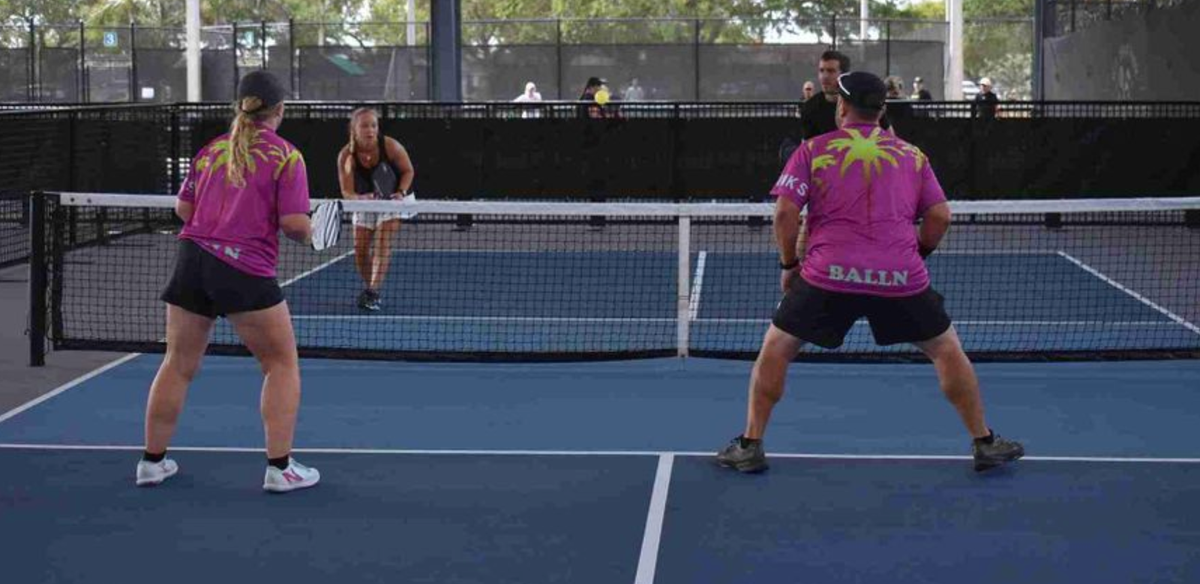
The 5.0 Drill: Two-Handed Backhand Speed-Up with Disguise
The two-handed backhand speed-up is one of the most effective weapons at the 5.0 level, specifically because of how much it hides your intention from the opponent.
With a one-handed backhand speed-up in an open stance, your opponent can read the direction before you contact the ball.The two-handed version lets you step your right foot across and disguise whether you are going down the line, at the body, or to the middle.
Here is why the disguise creates a real advantage. If you beat someone down the line once, that moment stays in their head.
The next time you bring that right foot across, they are already leaning toward the line.Now you go middle or at the body and they have no time to adjust.
This is not just technique. It is pattern manipulation, which is where the mental side of the game really begins.
For a full breakdown of building this shot properly, Connor Garnett's two-handed backhand tips are some of the most specific instruction available.
And if you want to understand what separates 5.0 habits from 4.5 habits overall, this piece on 5.0 habits is worth reading alongside this drill work.
At 5.0, you are also constantly reading the opponent's grip and body position before you commit to a shot.Understanding shot selection rules like the low forehand, high backhand principle gives you a framework for making those reads faster under pressure.
One more thing worth emphasizing: at every level from 3.0 to 5.0, the moment after you hit the ball matters as much as the shot itself.
Get back to your ready position immediately. Do not watch your shot land.
Reset your stance, get on your toes, and be ready for whatever comes back.That habit alone will separate you from players at the same skill level who are still watching the ball.
If you want to know whether you are actually ready to move up a rating, these five signs you are ready to move up give you a clear checklist to measure against.
💡
Heads up: hundreds of thousands of pickleballers read our free newsletter.
Subscribe herefor cutting edge strategy, insider news, pro analysis, the latest product innovations and more.
Frequently Asked Questions
What pickleball drills should a 3.0 player focus on first?
Start with the serve and return drill before anything else. Topspin serve mechanics, keeping the elbow in on returns, and hitting deep returns are the three fundamentals that immediately move a 3.0 toward 3.5. Everything else builds on those skills.
What is the slinky drill in pickleball?
The slinky drill has both players start at the kitchen, dink twice, then take two steps back simultaneously. They continue this pattern until both reach the baseline, then reverse direction and work back in. It builds feel for drop shots from every distance on the court.
How do I stop cross-stepping at the kitchen line?
Train yourself to side step laterally instead of crossing your feet. Cross-stepping feels faster but destroys your balance and leaves you square to nothing. Drill lateral movement at the kitchen with a partner moving you around until side stepping becomes automatic.
When should I speed up the ball instead of dinking?
Speed up when you have a ball sitting above the net and your paddle is positioned in front of your body. A speed-up from behind your body with no balance will get attacked every time. Think of the speed-up as a setup shot that creates the next opportunity, not a winner on its own.
What makes the two-handed backhand speed-up better than the one-handed version?
The two-handed version lets you step your dominant foot across and hide your target direction until the last moment. With a one-handed open stance speed-up, experienced opponents can read where it is going before you contact the ball. The extra hand and footwork create real disguise at the 4.5 and 5.0 level.
Anuncie Aqui / Advertise Here
Sua marca para o mundo Pickleball! / Your brand for the Pickleball world!




 English (US) ·
  Portuguese (BR) ·