
 English
  Spanish
  Portuguese
  German
  Italian
  Japanese
  French
  Polish
  Russian
  Netherlands
  Hungarian
  Turkish
  Videos
  Thedink Pickleball

Every pickleball opponent shows you their weak spot before the first point, if you know where to look. Here is how pros read ready position, grip, and shot selection to build a winning game plan.
Every pickleball opponent hands you their weak spot before the first serve, if you know where to look.
Most players never look.
They walk on court, start banging balls, and hope their game is better than the other team's.
Zane Navratil, a former world number one singles player and a repeat PPA, MLP, and APB champion, does the opposite.
He reads opponents like a book: their ready position, their grip, their dinks, their hands, their third shots, and their transition zone game.
By the time the first point starts, he already has a plan. This is how you build the same habit, so you can find any opponent's weak spot and take it apart.
Love pickleball? Then you'll love our free newsletter. We send the latest news, tips, and highlights for free each week.
Their Ready Position Reveals the First Weak Spot
The paddle tells you what your opponent wants, so read it before you read anything else.
Navratil calls a player's ready position worth its weight in gold, because every player signals their preferred shot through where they hold the paddle.
Paddle sitting on the backhand side means they want backhands.
Paddle floating toward the forehand means they are hunting forehands, the Riley Newman pancake style.
A low paddle usually belongs to someone looking to reach in and hit flicks, and a high paddle belongs to someone who defends off-speed balls well.
Body position matters just as much. Players who stand wide and low tend to take balls out of the air.
Players who stand tall usually prefer to back off the line and dink, though they often have quick lateral movement.
Study both the paddle and the body during warmups, before a point ever counts, and you will already know where the first weak spot might live.
If you have never thought about your own stance, our guide on why your ready position costs you points is a good mirror.
What Their Grip Tells You
Grip choice locks a player into strengths and weaknesses they cannot easily hide.
There are four common options: semi-western, eastern, continental, and eastern backhand, and each one trades one wing for the other.
An eastern backhand grip makes flicks easy but forehands awkward. A semi-western grip flips that: a strong forehand and a vulnerable backhand.
When you spot the grip, you already know which side is built to break down.
Watch whether they need a two-handed backhand to feel comfortable, and notice how they hold the handle under pressure.
If you want the full breakdown of trade-offs, our piece on why pros choke up on the grip covers it in depth.
💡
Need some new pickleball gear? Get 20% off select paddles, shoes, and more with code THEDINK at
Midwest Racquet SportsWhat Does Their Dinking Give Away?
A dink rally is the cheapest scouting report in pickleball, so pay attention while you trade soft balls.
Navratil watches for one thing above all: does the same ball come back the same way twice, or does the height, depth, and pace wander?
Inconsistent dinks point straight at a weak spot you can pressure.Here is his checklist while the ball is soft:
- One hand or two: a one-handed backhand dink is usually more passive than a two-handed one that can speed up off the bounce.
- Shot variance: if the same ball produces a popup one time and a net ball the next, that inconsistency is a target.
- Bailing out: a player who is not confident in a backhand rally will change the pattern early, often speeding up a ball they should not.
- Hiding a shot: if they run around a backhand to hit a forehand every time, they are protecting a secret. Go find it.
- Hold or retreat: a player who holds the line and reaches in is dangerous with flicks; a player who backs up is not much of a speed-up threat.
Against the player who backs off the line, lean on push dinks and force them into a shot they dislike.
The simple dink pattern pros use to create offense is built for exactly this kind of pressure.
Pickleball Dinking 101: What It Is and Why It Matters
Learn what a dink is, why dinking wins points, and how dinking in the kitchen transforms your game in 2026 and beyond
 The Dink PickleballThe Dink Media Team
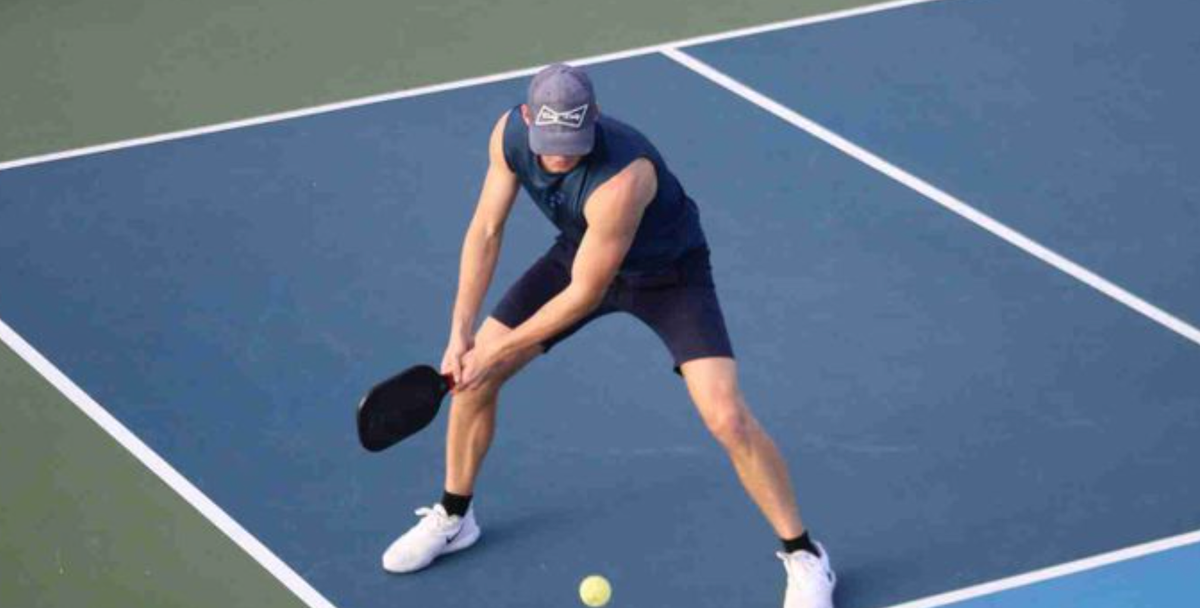
Test Their Hands in a Quick Exchange
Fast hands hide in plain sight, so you have to poke at them to know what you are dealing with.
Compact, quiet volleys usually belong to a confident counterpuncher, while big swings signal someone who can be rushed.
Pull a few balls at your opponent early and watch closely. Do they get jammed? Do their volleys look loose and slow?
Slow reaction time means they cannot punch the ball back in time, and if that is the case, go after those hands battles relentlessly.
Then look for guessers.
Players who lean on flashy behind-the-back or tweener shots are often guessing, and guessing right in a fast exchange is hard to do repeatedly.
Keep attacking a guesser, because the odds catch up to them. Knowing exactly when to speed up turns that read into free points.
6 Pickleball Hands Battle Habits That Win Exchanges
Most rec players lose the hands battle before it even starts. A touring pro shared the six habits that keep him calm, compact, and in control at the kitchen line.
 The Dink PickleballThe Dink Media Team
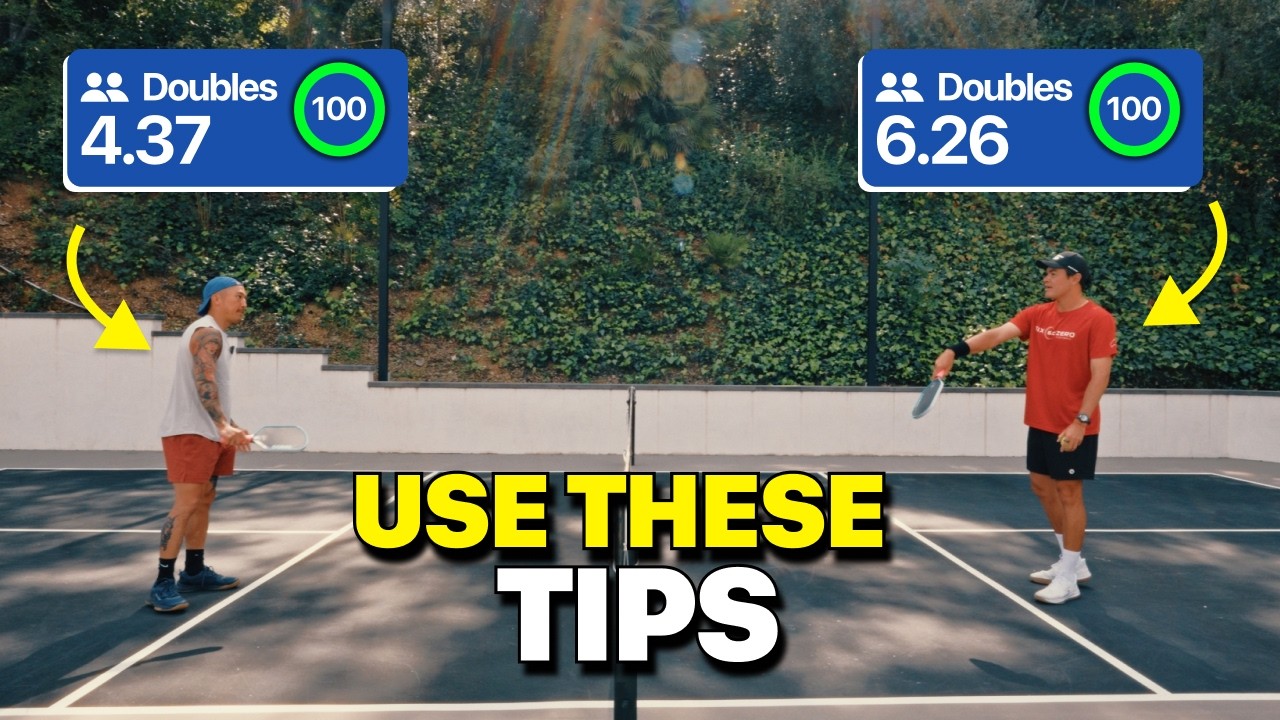
Where the Third Shot Weak Spot Hides
Return down the middle on the first few points and watch who moves for the ball.
Whoever takes that third shot decisively is the player who wants it and trusts it, which tells you who to avoid and who to target.
Next, judge whether their third shots are flashy or effective.
A player can drop a pretty ball and still miss six or seven a game, while a scrappy looking player quietly gets every third shot drop into the kitchen and moves the team forward.
Elite middle control, the kind Ben Johns shows comes from choosing the effective ball over the pretty one every single time.
Identify which opponent is the better poacher too.
If one player owns a strong drop but is also a dangerous poacher, it can pay to return to that player and keep them pinned back.
Pickleball Third Shot Drop by Skill Levels: 3.0 to 4.0 Guide
Third shot drop skill levels pickleball players need to master vary dramatically between 3.0 and 4.0 rated competitors. This guide breaks down exactly what to focus on, fix, and refine at each rating so you stop training the wrong things.
 The Dink PickleballThe Dink Media Team
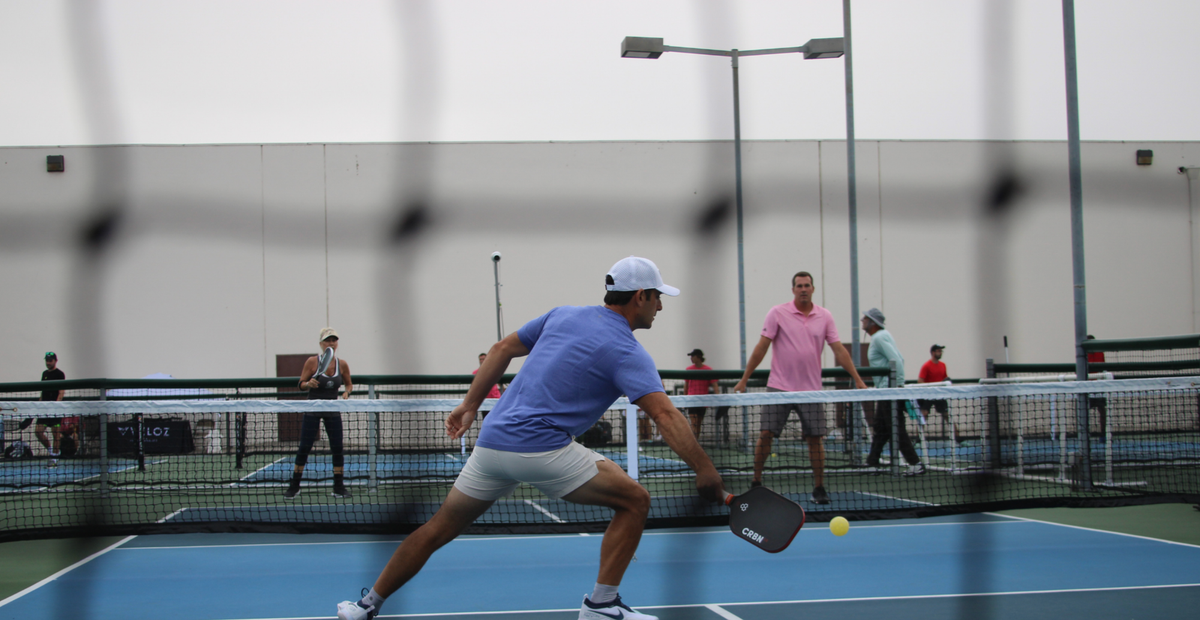
Can You Catch Them in the Transition Zone?
The transition zone is the stretch of court between the baseline and the kitchen line, and it is where matches quietly get decided.
How your opponent moves through it exposes another weak spot.
A player who moves slow and methodical through the zone is usually comfortable there.
A player who charges through like a bull in a china shop is often hiding a shaky reset game, and will swing for winners rather than absorb pace.
Those players hit the occasional highlight past you, but the percentages favor attacking them anyway.
Watch for the opposite problem too: a player who hits a clean reset but is slow to follow it forward.
Push that player back and make them prove the reset twice, because most cannot. If your own resets crumble under fire, our guide on resets under pressure will help.
Master the Pickleball Transition Zone: Attack or Reset
The best players in the world aren’t just comfortable in the transition zone – they actively use it to their advantage
 The Dink PickleballThe Dink Media Team
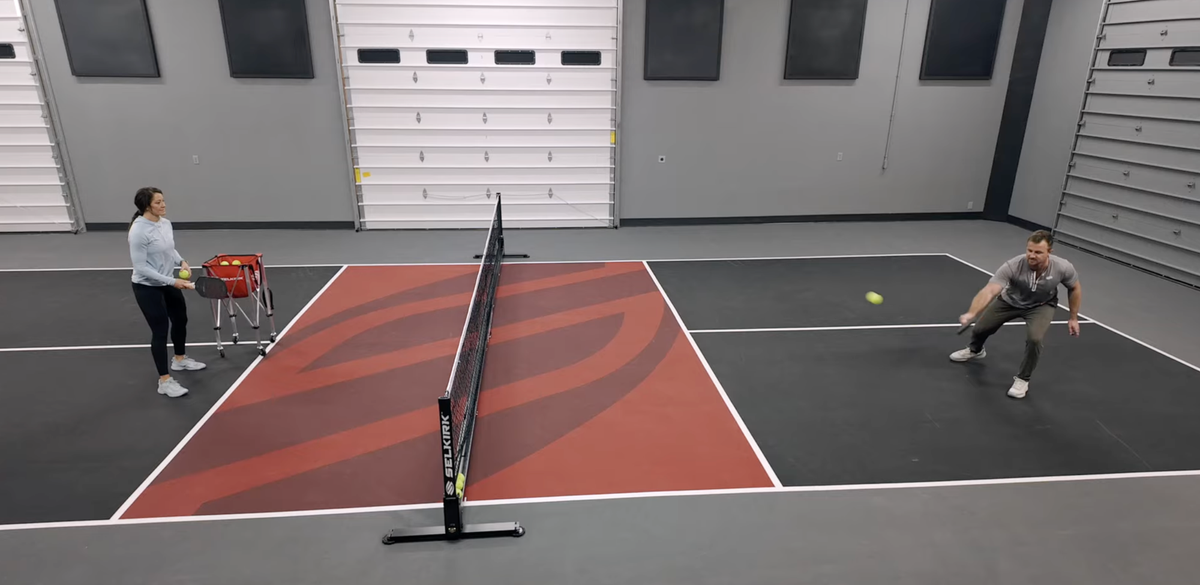
Two Ways to Exploit a Weak Spot Once You Find It
Finding the flaw is half the job; making it crack is the other half. Navratil uses two methods, and the one you choose depends on how the player responds.
- Constant pressure. Hit the same spot 20 or 30 times in a row. Some players fade after being forced to make the same shot over and over, and simply break down.
- Open the spot up. Most shots will not crack under repetition alone. If a backhand is weak but the player is always in perfect position, stretch them wide to the forehand first, then make them hit that backhand on the move. That is when the popup comes.
Stay alert for strategic adjustments.
A smart opponent who keeps losing backhand to backhand will start stepping around to hit forehands, and the moment they do, you adjust with them.
Reading opponents is exactly the edge that separates pros on the Major League Pickleball roster shuffle from weekend players, and the same scouting mindset shows up when top pros break down each other's games in the Partners pickleball documentary.
💡
Heads up: hundreds of thousands of pickleballers read our free newsletter.
Subscribe herefor cutting edge strategy, insider news, pro analysis, the latest product innovations and more.
Frequently Asked Questions
How do I find my opponent's weak spot in pickleball?
Start before the first point by reading their ready position and grip, then test their dinks, hands, third shots, and transition zone movement during the early rallies. Look for inconsistency, bailing out of rallies, and shots they run around to avoid, since those patterns point straight at the weak spot.
What is the fastest way to exploit a weak spot?
Apply constant pressure by hitting the same spot repeatedly and see if the player fades. If they hold up, open the spot instead by moving them to their strong side first, then forcing the weak shot on the move.
Should I attack a weak spot on every single shot?
Not blindly. Some players break under relentless repetition, but many only crack when they are stretched out of position first. Mix constant pressure with patterns that pull them off balance, and watch how they adjust.
How do I hide my own weak spot from good opponents?
Keep a neutral ready position that does not favor one wing, vary your dinks so your height and depth stay unpredictable, and avoid running around the same shot every time. The less your paddle and footwork telegraph, the harder your weak spot is to find.
Does reading an opponent's weak spot work at the 3.5 level?
Yes, and it often works even faster there. Lower level players telegraph their grip, ready position, and shot preferences more obviously, so a little scouting early in the match gives you a clear game plan.
Anuncie Aqui / Advertise Here
Sua marca para o mundo Pickleball! / Your brand for the Pickleball world!





 English (US) ·
  Portuguese (BR) ·