
 English
  Spanish
  Portuguese
  German
  Italian
  Japanese
  French
  Polish
  Russian
  Netherlands
  Hungarian
  Turkish
  Videos
  Thedink Pickleball

Your volley technique might be costing you more points than you realize. Ashley Griffith, a PPA pro, breaks down the 3 simple volley technique adjustments that will transform your net game instantly.
The volley is supposed to be your weapon at the net. It's where you take control of the point, where you finish rallies, where you dominate.
But here's the thing: most players are doing it all wrong, and they have no idea.
Ashley Griffith, a professional PPA player and coach at The Dink Pickleball, recently broke down the exact volley technique mistakes that are costing recreational players points every single match.
The good news? These fixes are simple, and you can implement them immediately.
Love pickleball? Then you'll love our free newsletter. We send the latest news, tips, and highlights for free each week.
What's Actually Wrong With Your Volley Technique?
Most recreational players approach the volley like they're swinging a baseball bat.
They load up, they take a big backswing, and they try to crush the ball. That's the problem right there.
The volley technique isn't about power. It's about control, positioning, and precision.When you're at the net, you're already in a dominant position. You don't need to generate power from your arm.
You need to be quick, compact, and decisive.
Griffith explains that the mistakes players make with their volley technique stem from a fundamental misunderstanding of what the volley is supposed to do.
It's not a finishing stroke in the traditional sense. It's a tactical tool that sets up your next opportunity or ends the point cleanly without unnecessary risk.
Fix #1: Keep Your Paddle Out in Front
The first and most critical adjustment to your volley technique is paddle positioning.
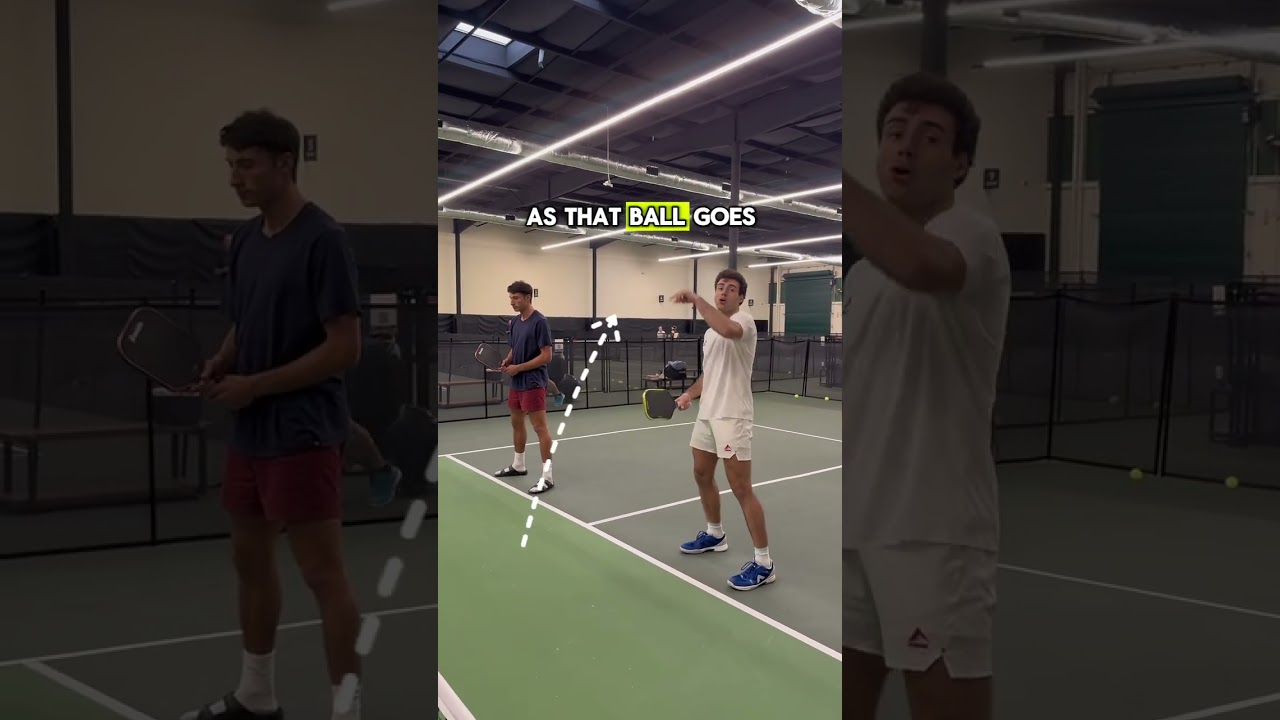
Your paddle needs to be out in front of your body at all times.Think of it this way: if your paddle is behind you, you're already late. You're reacting instead of being proactive.
When your paddle is out in front, you can see the ball, you can react faster, and you have more control over where the ball goes.
This is one of those volley technique fundamentals that separates pros from recreational players.
💡
Need some new pickleball gear? Get 20% off select paddles, shoes, and more with code THEDINK at
Midwest Racquet SportsGriffith emphasizes that keeping your paddle up and forward isn't just about mechanics. It's about court positioning and confidence.
When your paddle is out front, you're signaling to your opponent that you're ready. You're in control.
The practical application is straightforward: as you move toward the net, your paddle should be at chest height or slightly higher, with your hands in front of your body.
This ready position allows you to react to any ball coming your way without wasting time bringing your paddle into position.
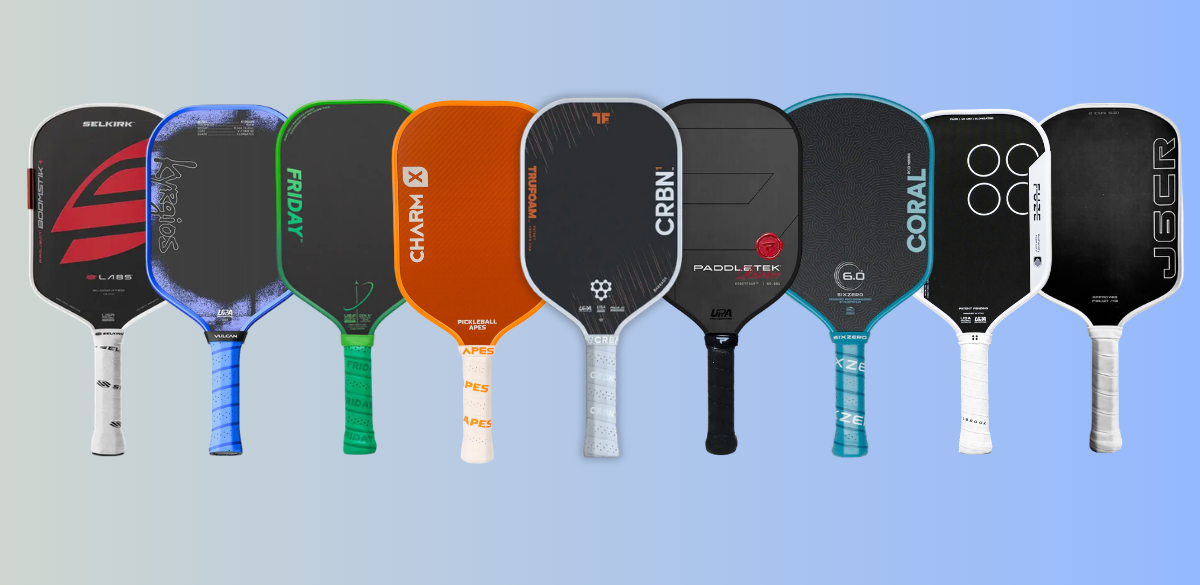
9 Power Paddles that Are Excellent at Dinking
Based on a unique blend of lab-tested power and consistency metrics, these paddles are proven to give you an edge in all three zones of the court.
 The Dink PickleballAlex E. Weaver
Fix #2: Use a Short Punch Instead of a Big Swing
Here's where most recreational players go wrong with their volley technique: they swing. They actually swing at the ball like they're hitting a groundstroke.
The volley isn't a swing. It's a punch.It's a compact, controlled motion that transfers your body weight into the ball without any unnecessary movement.
Griffith calls this the "short punch," and it's the foundation of elite-level volley technique.
When you punch the volley, you're using your shoulders and your core, not your arm. Your arm is just an extension of your body.
The motion is quick, it's efficient, and it's repeatable. You can do it from any position at the net because you're not relying on a full swing.
The difference in results is dramatic.
A short punch volley is faster, more accurate, and harder to read.Your opponent has less time to react. You have more control over depth and placement.
And honestly, it's less tiring because you're not expending energy on a big swing.
To practice this, Griffith recommends working on your volley technique with a partner at the net.
Start close, maybe 10 feet apart, and focus on the punch motion.
Feel how your shoulders rotate, how your core engages, and how your arm stays relatively straight.
Once you groove that motion, you can move back and add more distance.
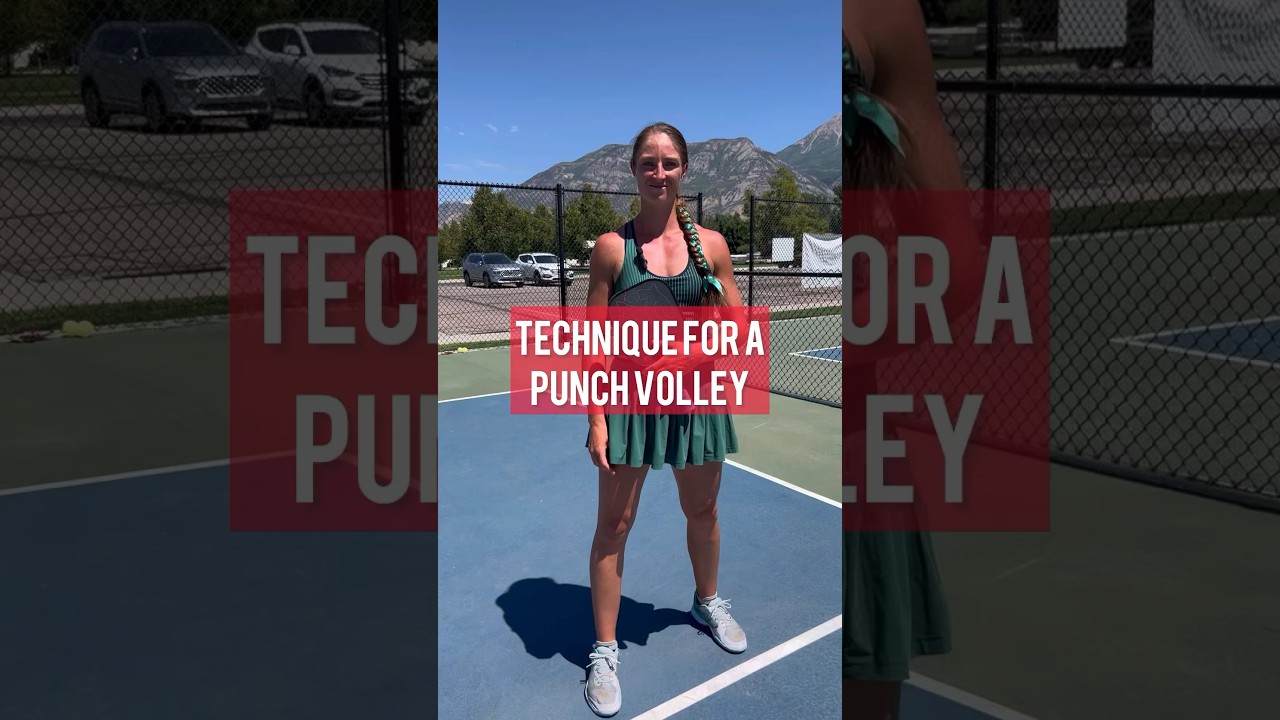
Knock Out Your Opponent With This Punch Volley Pickleball Technique
The punch volley is your secret weapon for dominating at the net and finishing points decisively. Nail the technique, and you’ll see the difference in your game. Fast.
The Dink PickleballThe Dink Media Team
Fix #3: Aim Through Bigger Targets Instead of Forcing Winners
This is the mental shift that changes everything about your volley technique and your overall net game.
Most recreational players try to hit winners on every volley. They see an opening and they go for it.
They aim for the sideline, they aim for the corner, they aim for the line. And they miss. A lot.
Ashley Griffith advocates for a completely different approach: aim through bigger targets.
Instead of trying to hit a winner, focus on hitting a solid volley that puts your opponent in a difficult position.
- Aim for the middle of the court
- Aim for depth
- Aim for consistency
Here's the counterintuitive part: when you stop trying to hit winners and start focusing on solid volley technique, you actually hit more winners.
Why? Because your opponent is forced to hit a difficult ball, and they make the error. You're not forcing the issue. You're letting the point develop naturally.
This approach also builds confidence in your volley technique.
When you're aiming for a bigger target, you're more relaxed. You're not tense. You're not overthinking.
You're just executing a simple, repeatable motion and letting the point play out.
The practical application is simple: on your next volley, instead of aiming for the line, aim for a target that's three feet inside the line.
Instead of trying to hit a winner, focus on hitting a volley that's deep and difficult to attack.
You'll be surprised how many points you win without even trying to hit a winner.
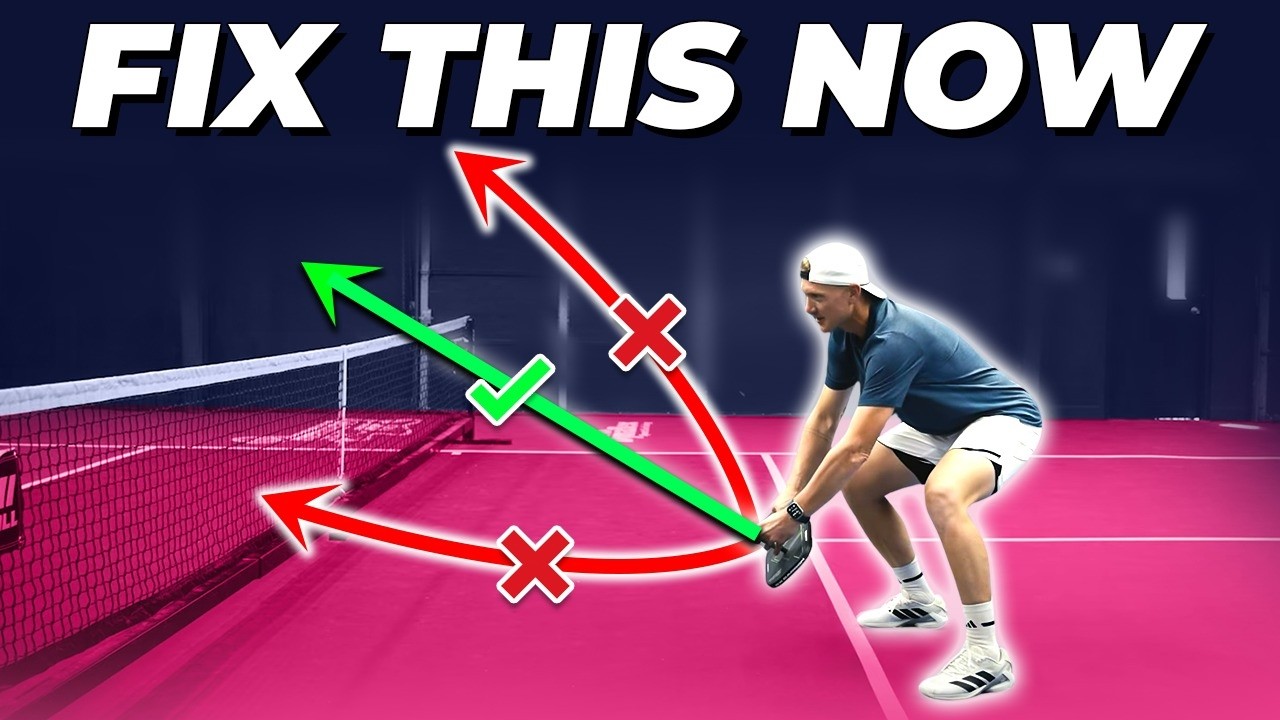
Understand Pickleball Volley Control: Physics & Technique
Pickleball volley control isn’t about luck or natural talent—it’s about understanding two fundamental principles: paddle angle and energy.
The Dink PickleballThe Dink Media Team
Why These Three Changes Matter
The reason these three adjustments to your volley technique are so effective is that they address the root causes of poor net play.
They're not complicated. They're not flashy. They're just fundamentally sound.
- When you keep your paddle out in front, you're in control.
- When you use a short punch, you're efficient and quick.
- When you aim through bigger targets, you're playing smart pickleball.
Together, these three elements create a volley technique that's reliable, repeatable, and effective at every level of play.
Griffith's approach to volley technique is grounded in what actually works at the professional level.
She's not theorizing. She's sharing what she does every single day on the PPA tour.
And the beauty of these fixes is that they work for everyone, from beginners to advanced players.
What Is the Bump Dink: The Shot Changing Pickleball
The bump dink is rapidly becoming one of the most important shots in modern pickleball. This aggressive technique allows players to create pressure without speeding up the point.
The Dink PickleballThe Dink Media Team

The Bigger Picture: Net Dominance
Your volley technique is the foundation of net dominance in pickleball. If you can't volley consistently and effectively, you can't control the net.
And if you can't control the net, you can't win matches.
The three fixes Griffith outlines are the starting point. Once you've grooved these fundamentals, you can start adding complexity.
You can work on different types of volleys. You can practice volleys from different positions. You can develop touch and feel around the net.
But first, you need to get the basics right. You need to fix your volley technique so that it's solid, repeatable, and reliable.
That's where these three adjustments come in.
💡
Heads up: hundreds of thousands of pickleballers read our free newsletter.
Subscribe herefor cutting edge strategy, insider news, pro analysis, the latest product innovations and more.
Frequently Asked Questions
What's the difference between a volley and a groundstroke?
A volley is hit before the ball bounces on the court, while a groundstroke is hit after the bounce. Volleys require a compact, punching motion because you have less time to prepare. Groundstrokes allow for a full swing because you have more time to set up.
How long does it take to improve your volley technique?
You can see immediate improvement by implementing these three fixes. However, developing consistency and confidence in your volley technique takes practice. Most players see significant improvement within 2-3 weeks of focused practice.
Should I practice volleys alone or with a partner?
Both are valuable. Solo practice helps you groove the motion and build muscle memory. Partner practice helps you develop reaction time and learn to volley from different positions and angles.
Is volley technique different in doubles versus singles?
In pickleball, most play is doubles, so the volley technique remains largely the same. However, in doubles, you're often closer to the net and have less time to react, so the compact punch motion becomes even more critical.
Can I use these volley technique tips in competitive matches right away?
Yes. These are fundamental adjustments that will help you immediately. However, under pressure, you might revert to old habits. Stay focused on the three fixes during matches, and they'll become automatic over time.
Anuncie Aqui / Advertise Here
Sua marca para o mundo Pickleball! / Your brand for the Pickleball world!





 English (US) ·
  Portuguese (BR) ·