
 English
  Spanish
  Portuguese
  German
  Italian
  Japanese
  French
  Polish
  Russian
  Netherlands
  Hungarian
  Turkish
  Videos
  Thedink Pickleball

You can improve pickleball without a coach by following a structured self-teaching system built around deliberate practice, video analysis, and targeted solo drills. This guide breaks down exactly how to build real skills on your own, without spending a dollar on lessons.
You can absolutely improve pickleball without a coach, and frankly, most recreational players who plateau never actually need one.
What they need is a system. The difference between players who stagnate at 3.0 and those who break through to 3.5 or 4.0 isn't access to expensive private lessons.
It's intentional repetition, honest self-assessment, and knowing exactly which skills move the needle.
Here's the thing: a coach is helpful, but they're not magic. T
he players who improve the fastest are the ones who study their own game, target their specific weaknesses, and put in reps with purpose, not just showing up and hoping rally experience translates to improvement.
Love pickleball? Then you'll love our free newsletter. We send the latest news, tips, and highlights for free each week.
Why Most Players Stop Getting Better (And How to Fix It)
Most players plateau because open play doesn't force skill development. You default to what's comfortable. You avoid your backhand.
You drive instead of drop because the drop still fails 60% of the time. And nothing changes.
Improving without a coach means replacing that comfort loop with deliberate repetition.
According to research published in Frontiers in Psychology in 2025 on deliberate practice and skill acquisition, focused practice with specific goals produces significantly greater skill gains than equivalent time spent in unstructured play.
The principle holds for racket sports directly.
The 3 skill investments that will elevate your game come down to: reducing errors, improving court positioning, and developing shot consistency under pressure.
All three are self-teachable.
How to Improve Pickleball Without a Coach: Start With Film
Film yourself. Seriously. This is the single most impactful thing you can do to improve pickleball without a coach, and almost nobody does it.
A phone propped on a water bottle at courtside tells you more in 10 minutes than a year of "feeling" like you're improving.
What to look for when reviewing your footage:
- Footwork: Are you set when you contact the ball, or are you reaching off-balance?
- Paddle position: Is your paddle up and ready between shots, or dropping to your hip?
- Court positioning: Are you camping at the transition zone when you should be at the NVZ?
- Shot selection: Are you going for winners at moments when a reset was the right call?
After your session, pick one pattern, just one, and build your next practice around fixing it.
This is exactly the kind of training routine that separates recreational players from competitive ones.
A 2025 study from the Journal of Sports Sciences on motor learning through video feedback confirmed that athletes who reviewed video of their own performance between sessions made measurable technical corrections faster than those who relied on internal feedback alone.
You're not just watching yourself. You're training your brain to see errors before they happen.💡
Need some new pickleball gear? Get 20% off select paddles, shoes, and more with code THEDINK at
Midwest Racquet SportsThe Two Skills That Actually Move Your Rating
Here's the brutal truth: most recreational players spend time on the wrong skills.
They work on their drives. They work on their overhead. They ignore the shots that actually win and lose points at the 3.0 to 4.0 level.The two skills worth obsessing over are the third shot drop and dinking consistency. Everything else is secondary.
Why Is the Third Shot Drop the Most Important Shot to Master?
The third shot drop is the shot that gets you from the baseline to the kitchen. Without it, you're stuck defending drives from the back court indefinitely. Master it, and you win the transition game. That's pickleball in a sentence.
To practice it without a partner, use a ball machine or a practice board and feed yourself balls from the transition zone. Aim for a landing target in the opponent's NVZ. Work on making your third shot drop consistently effective before you try to add spin or angle. Consistency before creativity, always.
What Makes Dinking the Skill That Separates Good Players From Great Ones?
Dinking isn't passive. Done right, it's a tool for creating pressure and engineering errors. The players who can keep a dink rally going indefinitely while subtly speeding up at the right moment are the ones who win at every rating level.
Study JW Johnson's unusual dinking technique and you'll notice one thing immediately: he never dinks the same ball twice. Every dink has a purpose. That's the standard to build toward.
For solo work, the figure-8 drill is one of the best you can run to build dink control, paddle angles, and touch simultaneously.
If you have a partner, pickleball's hardest dinking drill is worth adding once you're consistent in the straight-ahead rallies.
And when you're ready to put pressure on your opponents, this guide on turning mediocre dinks into winners is required reading.
8 Easy Tips to Play More Consistent Pickleball
Maintain complete visual focus on the ball through contact, hit unattackable shots, and always recover back to neutral.
 The Dink PickleballThe Dink Media Team
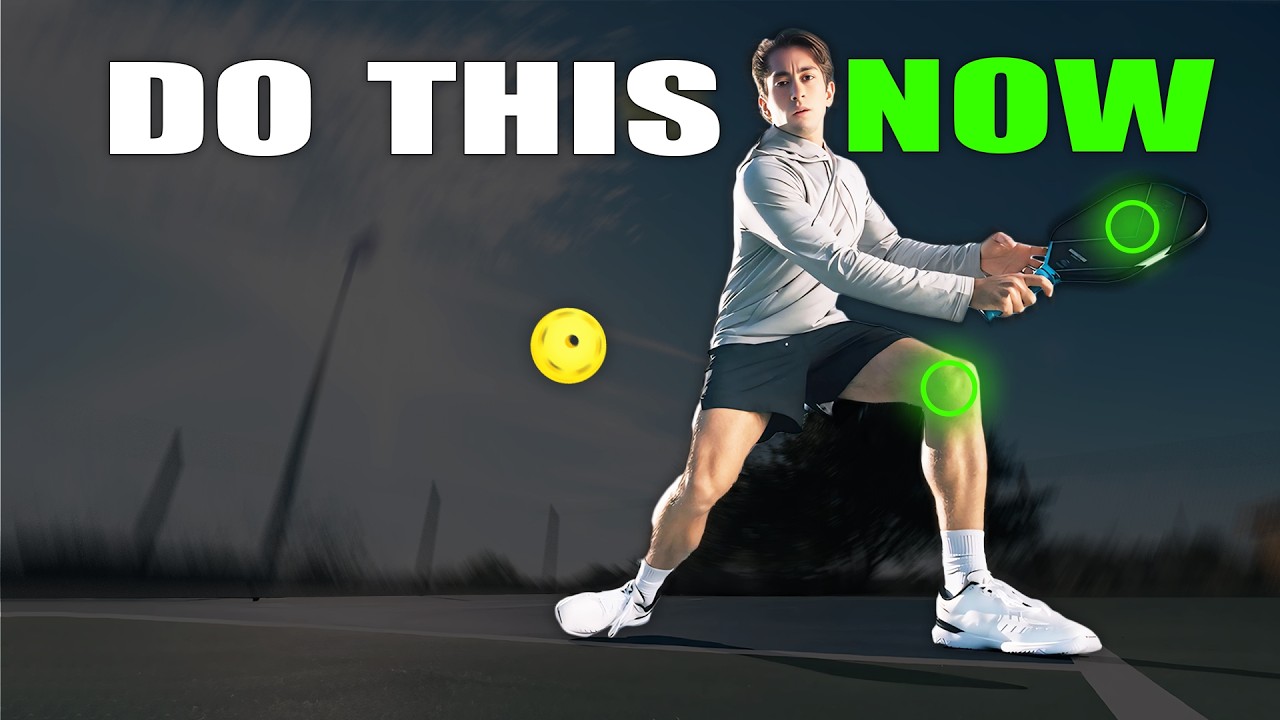
Solo Drills That Actually Build Skill
You don't need a partner to improve pickleball without a coach. You need a wall, a ball, and a plan.
Wall drilling is massively underrated. Set a target zone at net height, stand at kitchen distance, and dink into the wall continuously.
Focus on soft hands, a loose grip pressure, and resetting the paddle quickly after each contact. Increase speed only when your contact point stays consistent.
The solo pickleball drills you can run by yourself cover everything from serve repetition to backhand punch volleys.
Run these before open play, not after. Your nervous system retains technical work better when it's fresh.
Beyond wall work, here's a focused structure that fits a 30-minute session:
- Serve practice (5 min): Target placement, not power. Work both sides of the box.
- Third shot drop feeds (10 min): Drop and transition. Simulate full point setup.
- Wall dinking (10 min): Continuous contact, reset after any pop-up, count consecutive good dinks.
- Figure-8 drill (5 min): Finish with touch.
Research from the NSCA on blocked versus random practice shows that mixing shot types in a session (random practice) builds retention better than drilling one shot repeatedly (blocked practice).
So don't spend 30 full minutes on just one shot. Rotate, and your brain locks in the patterns faster.
How to Practice Pickleball Alone: 7 Solo Drills
Learning how to practice pickleball alone is one of the fastest ways to close the gap between where your game is and where you want it to be. These 7 solo drills target the shots and movement patterns that actually matter during live play.
 The Dink PickleballThe Dink Media Team
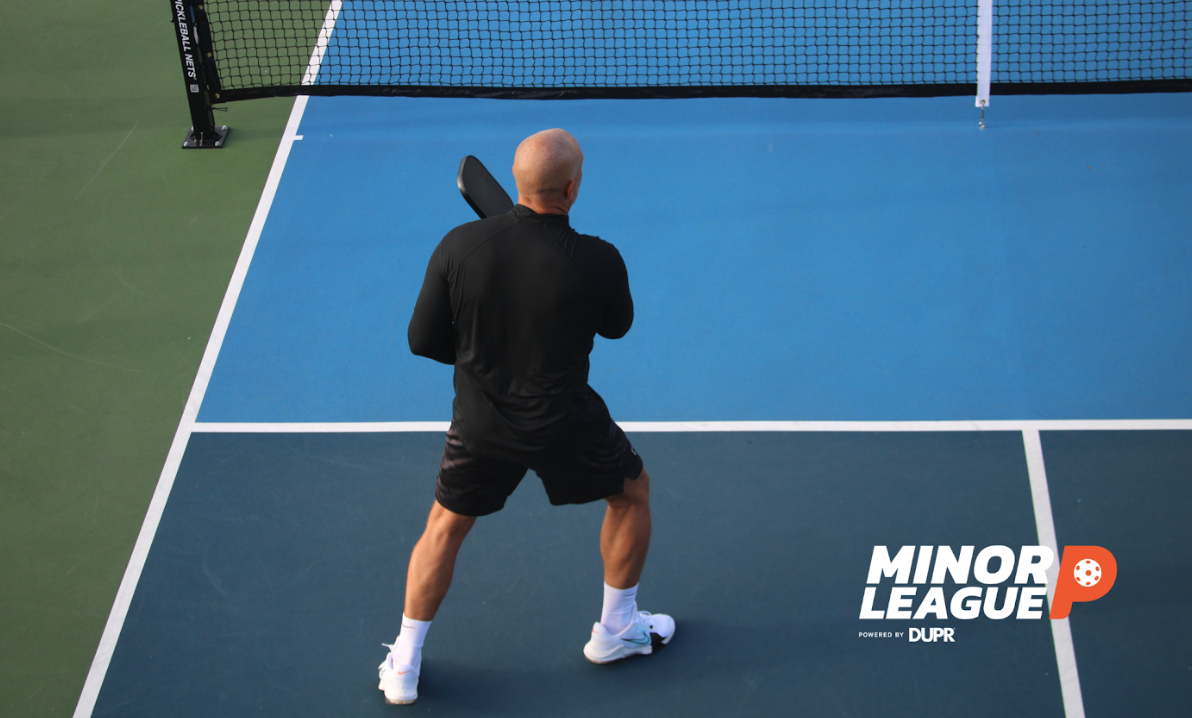
How to Use Open Play as a Learning Lab
Open play isn't practice. But it can be a testing ground, if you treat it that way.
Before each session, pick one technical thing to test. Not "play better."
Something specific: keep my paddle up on every reset attempt or take one more ball at the kitchen before rolling it over.That kind of intention turns casual games into structured feedback loops.
Review the things amateur pickleball players should avoid and you'll notice most of the list comes down to pattern recognition: players make the same mistakes because they don't notice them in real time.
Fixing that is the entire point of the film-first approach described above.
Also: play up when you can.
Positioning yourself at the kitchen against better players accelerates your learning curve faster than dominating a round-robin with players below your level.
The return of serve is another area where open play gives instant feedback.
A deep, aggressive return that lands at the opponent's feet is one of the easiest free points in pickleball, and most players at the 3.0 to 3.5 level are leaving it on the table.
Work on knowing exactly where to return serve so that your return immediately puts you in a winning position before you even get to the kitchen.
Pickleball Open Play: A Beginner’s Complete Guide
Walking into pickleball open play for the first time can feel intimidating, but it doesn’t have to be. Here’s exactly what you need to know to show up confident and fit right in.
 The Dink PickleballThe Dink Media Team
Track Your Progress Without a Coach
DUPR is your scoreboard. If you want to improve pickleball without a coach, you need an objective measure of progress.
DUPR is the most accurate rating system in the sport.
According to DUPR's methodology documentation, the algorithm factors in margin of victory, opponent rating, and match recency, giving you a real-time picture of where you stand.
Log every match. Watch your DUPR move. If it's flat despite regular play, something in your game isn't translating.
That's your signal to revisit your film and your drills.
Set 90-day targets. A realistic goal for a committed self-teacher is a 0.2 to 0.3 DUPR improvement per quarter.
That's measurable, achievable, and completely coachless. The tips and tricks that took one player from 3.0 to 3.5 are a solid reference for what that progression actually looks like in practice.
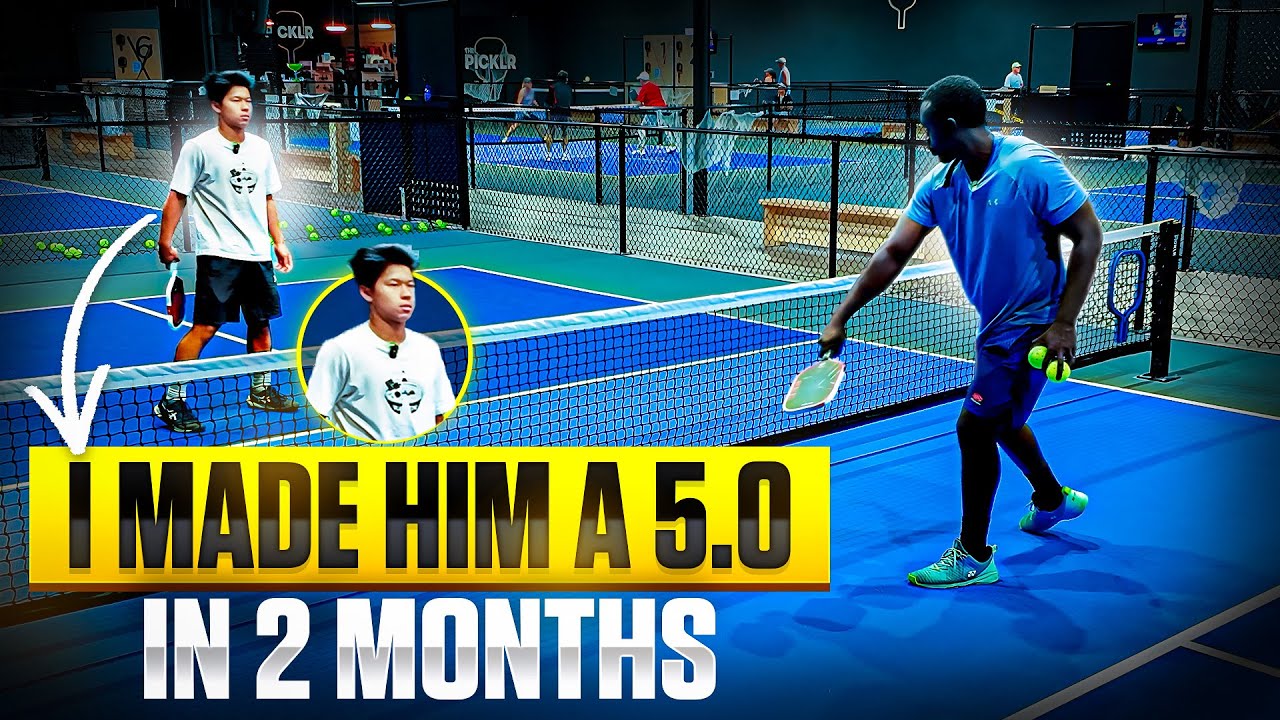
The Skills Progression That Transformed This Tennis Player into a Pickleball 5.0
Some skills definitely translate, but a tennis background can be a liability without proper training and techniques
 The Dink PickleballThe Dink Media Team
Key Takeaways
- You can improve pickleball without a coach by using deliberate, structured solo and partner drills
- Video self-analysis is the most underused free tool available to recreational players
- The third shot drop and kitchen dinking are the two highest-leverage skills to target first
- Focused 30-minute practice sessions outperform two hours of unstructured open play
- Tracking your DUPR rating gives you objective feedback that replaces a coach's eye
💡
Heads up: hundreds of thousands of pickleballers read our free newsletter.
Subscribe herefor cutting edge strategy, insider news, pro analysis, the latest product innovations and more.
Frequently Asked Questions
Can I Improve Pickleball Without a Coach as a Beginner?
Yes, beginners can improve pickleball without a coach by focusing on the fundamentals first: legal serve mechanics, scoring rules, and basic kitchen positioning. The 3 tips every beginner needs to know are a good starting point. From there, structured solo drilling and watching instructional video content will close most of the technical gap that a first lesson would address.
What Are the Best Solo Drills to Improve Without a Coach?
The most effective solo drills for self-coaching are wall dinking (for touch and reset), serve placement practice (for accuracy), and the figure-8 drill for paddle control. Running a compact 30-minute session with three to four rotating drill types, rather than one long blocked session, produces faster skill retention according to motor learning research.
How Often Should I Practice to See Real Improvement?
Three focused 30-minute practice sessions per week will outperform five casual open play days. Consistency and intentionality matter more than total court hours. If you can only play twice a week, supplement with wall drilling at home and film review between sessions to maintain the learning loop.
What Is the Third Shot Drop and Why Does It Matter?
The third shot drop is a soft, arcing shot hit from the baseline after the return of serve lands. The goal is to land the ball in the opponent's kitchen, forcing a dink and allowing the serving team to advance to the NVZ. It's the single most important transition shot in the game because it's the primary way you neutralize an opponent's offensive position. Without a reliable third shot drop, you're stuck playing defense from the back third of the court indefinitely.
How Do I Know If I'm Actually Getting Better Without a Coach?
Track your DUPR rating over time, which reflects real match performance against rated opponents. Beyond that, use film review to spot the same errors appearing less frequently. You can also self-assess by measuring drill consistency, such as how many consecutive dinks you can land in the kitchen, and watching that number climb over weeks of practice.
Anuncie Aqui / Advertise Here
Sua marca para o mundo Pickleball! / Your brand for the Pickleball world!




 English (US) ·
  Portuguese (BR) ·