
 English
  Spanish
  Portuguese
  German
  Italian
  Japanese
  French
  Polish
  Russian
  Netherlands
  Hungarian
  Turkish
  Videos
  Thedink Pickleball

Learning how to play doubles with a beginner partner comes down to three things: who talks, who covers the court, and who takes the harder shot. This guide breaks each one down so the skill gap stops showing up on the scoreboard.
Here's the thing about playing doubles with a beginner partner: the strategy that wins isn't more aggression, it's more structure.
You're not carrying dead weight out there. You're running a two-person system, and one person just needs a clearer job description than the other.This is the exact adjustment good partners make without even thinking about it. The bad ones just yell "yours" and hope for the best.
If your partner is brand new to the sport entirely, 3 Tips Every Beginner Needs to Know is worth sending them before their first match, since it covers the fundamentals this piece assumes they already have.
Love pickleball? Then you'll love our free newsletter. We send the latest news, tips, and highlights for free each week.
How to Play Doubles With a Beginner Partner: What Actually Changes
Playing doubles with a new partner changes exactly three things:
- Who talks
- Who covers what
- Who takes the riskier shot
Nail those three and the skill gap barely matters.
Most 4.0 players think the fix is playing bigger. It's the opposite. The fix is playing smaller and smarter.
Three Advantages to Playing Both Sides of the Court breaks down why rotating sides with a newer partner actually accelerates their court awareness faster than staying locked into one spot.
The Simple Truth About How to Play Doubles With a Beginner Partner in Rec Play
Here's a quick definition before we go further, because it matters.
A beginner partner, for this piece, means someone newer to pickleball doubles specifically, likely somewhere in the 2.5 to 3.0 range on DUPR or a comparable rating scale.
They might have solid hand eye coordination from tennis or another racquet sport.
Where to Return Serve in Pickleball is a good gauge of where that gap usually shows up first.
What they usually lack is court feel: knowing where to stand, when to move, and when to just let a ball go.
That distinction matters.
Change the Way You Think About Doubles Pickleball makes the case that doubles is a spacing sport before it's a shot making sport, and that's exactly why a less experienced doubles partner can still win plenty of points if the spacing is right.
💡
Need some new pickleball gear? Get 20% off select paddles, shoes, and more with code THEDINK at
Midwest Racquet SportsCommunication Fixes Everything, Even When Your Partner Freezes
What's the single most important thing you can do with a new partner? Talk before the point, not during it.
A quick "middle's mine" or "I've got anything up" removes the split second hesitation that turns easy putaways into unforced errors.Simple tips to improve teamwork apply directly here, and Simple Tips to Improve Teamwork covers pre-point calls that work at every level, not just for beginner pairings.
Honestly, the biggest communication mistake experienced players make with a new partner isn't silence. It's over-coaching mid-rally.
Barking instructions while the ball is live adds noise at the exact moment your partner needs quiet focus. Save the coaching for between points.
Best on Your Team Practice digs into how top pairings structure that between-point communication so it builds confidence instead of chipping away at it.
Why Court Position Talks Get Easier With Reps
Court position calls get sharper with reps, and the fastest way to build them is short, specific point drills rather than long matches.
Solo Pickleball Drills You Can Run by Yourself has a few your partner can run solo between sessions to speed up that internal clock.
Pickleball Doubles Communication: Calls Every Team Needs
Pickleball doubles communication is the hidden variable that separates teams that grind out wins from teams that implode on big points. Learn the exact calls, signals, and habits that keep you and your partner moving as one unit on the court.
 The Dink PickleballThe Dink Media Team
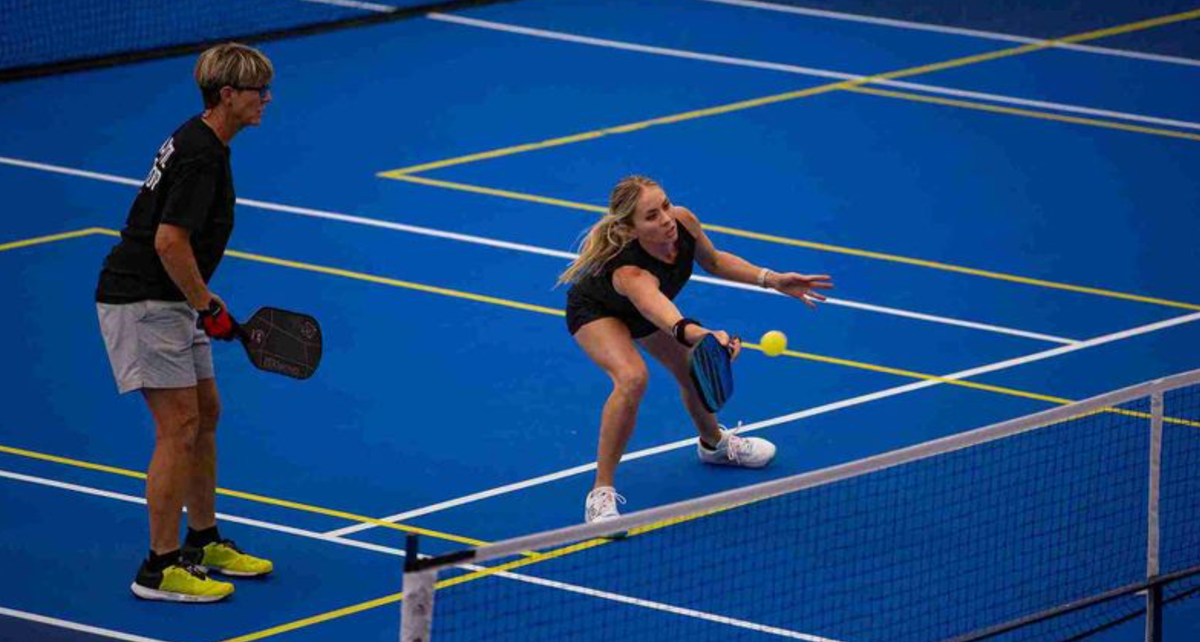
Court Coverage: The Real Key to How to Play Doubles With a Beginner Partner
The direct answer here is simple: cover more of the middle and the deep court yourself early on, and let your partner own the net.
That's the fastest way to stop the skill gap from turning into a scoreboard gap.
4th Shot Tips for Court Coverage in Doubles lays out exactly how the transition zone should be split when one player is still building consistency, and it's the single most useful read for anyone stacking with a newer partner.
Stacking is where this gets tactical.
If your partner struggles with backhand volleys or forehand dinks from a specific side, stack to keep them on their stronger wing all match.
Doubles Strategy: T and Sideline Placement is the clearest breakdown of how positioning at the T changes based on who's standing where, and it applies directly to lopsided skill pairings.
Stacking Smart: How to Play Doubles With a Beginner Partner on Both Sides
Don't overcomplicate the stack. Keep the call simple, keep the movement minimal, and repeat it every single service game until it's automatic.
How to Position Yourself at the Kitchen explains the footwork that makes kitchen line positioning intuitive, which is exactly what a newer partner needs most.
Good positioning also fixes the biggest complaint experienced players have about pairing with beginners: getting caught out of position after a poach.
Good Shot or Bad Positioning? is worth sending your partner directly. It reframes a lot of "unlucky" points as predictable positioning errors instead.
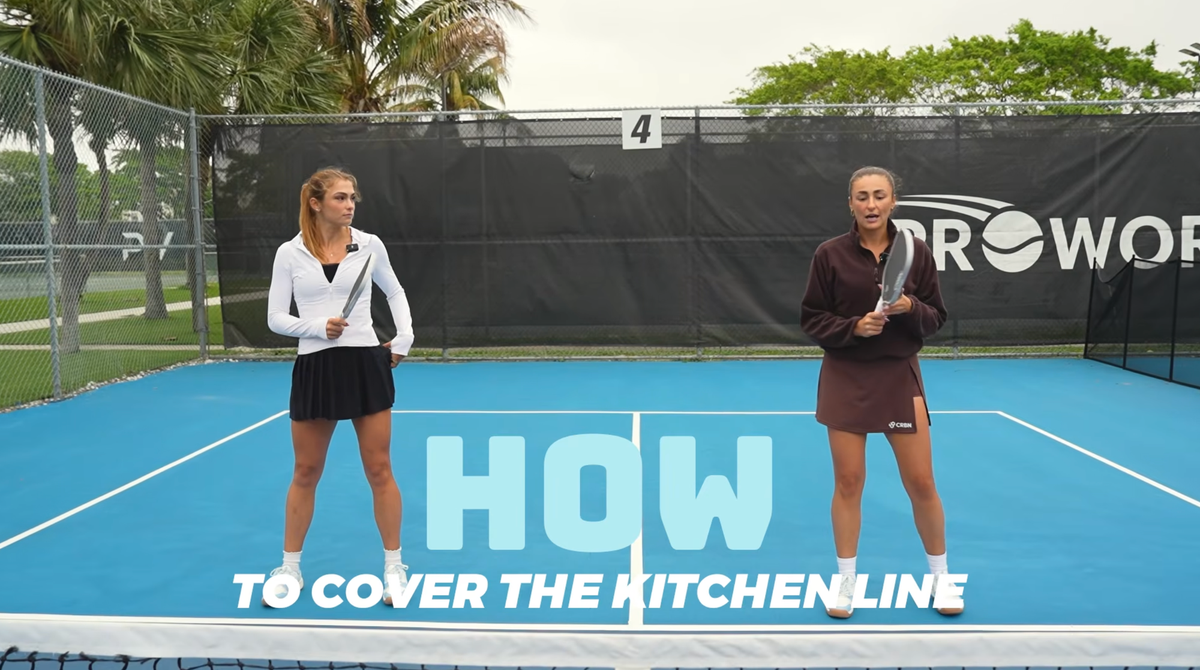
Master Court Coverage in Pickleball Doubles
Court coverage is one of the most misunderstood aspects of pickleball doubles, but the Walker Sisters break down exactly how to fix your positioning at every level of the court. From the baseline to the kitchen line, here’s what you need to know about court coverage to instantly level up your game.
 The Dink PickleballThe Dink Media Team
What's the Best Shot Selection Strategy With a New Partner?
Take the harder shot yourself. That's the direct answer, and it's not close.
Anyone figuring out how to play doubles with a beginner partner eventually runs into this exact decision: when you're playing pickleball doubles with a new partner, the math changes, and you want the ball in your hands on anything remotely difficult, even if it means poaching more than usual.
How to Make Your Opponents Hit the More Difficult Shots is built for singles and doubles alike, and the shot selection principles transfer directly to managing a skill gap on your own side of the net.
Third shot drops deserve their own mention here.
Drive vs. Drop on the Fifth Shot covers a decision point that trips up a beginner partner constantly: whether to drive or drop once the rally extends.
Take that decision off their plate early and make the call yourself until they've built the reps to make it on instinct.
Dinking patience matters just as much. Pickleball's Hardest Dinking Drill is a genuinely useful shared drill for two players at different levels, since the drill rewards control over power, which levels the field fast.
How Do You Respond When Your Partner Gets Attacked?
This happens constantly. Your beginner partner gets isolated at the net and the other team hunts that spot relentlessly.
How to Respond to the Perfect Drop and How to Become Unattackable in Pickleball both address the mechanics of getting out of trouble, and running through them together before a match builds the shared vocabulary you need mid-point.
Resets matter here too.
Reset Better is a short, specific read on the single skill that saves more points for a struggling partner than any single power shot ever will.
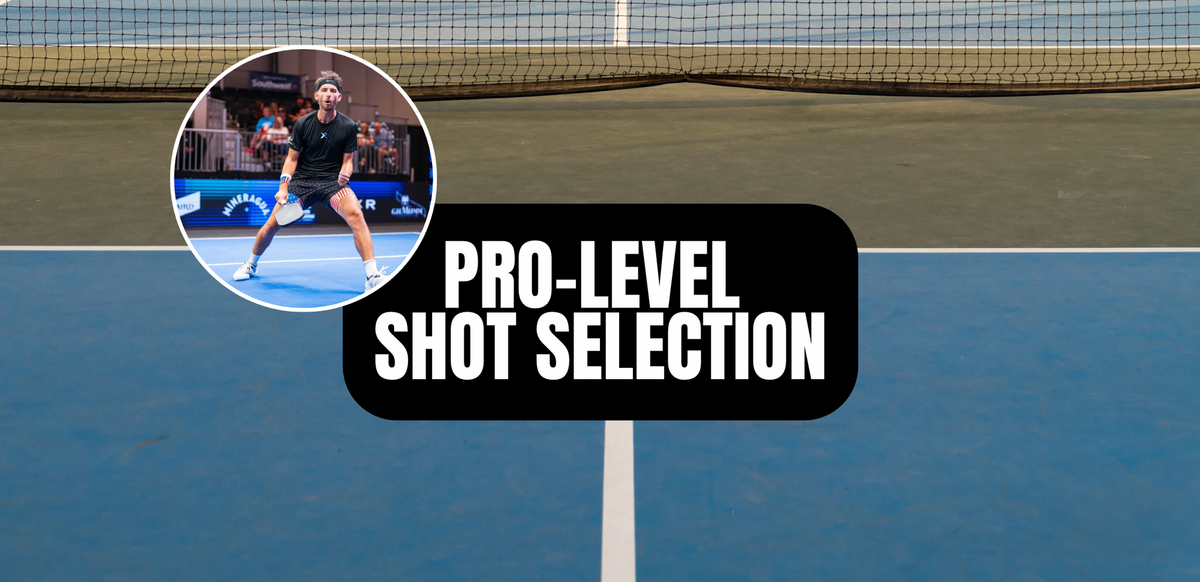
Pickleball Shot Selection: Ball Height & Court Positioning
Advanced pickleball means constantly analyzing the height of the ball and the court positioning off all four players in real time – and keeping this one rule sacred: just because you can hit a more aggressive shot doesn’t mean you should
 The Dink PickleballEric Roddy
Building Chemistry: The Drills That Actually Help
Skip the scrimmage and drill points instead.
Playing doubles with a less experienced partner improves fastest through short, repeatable reps rather than full games where mistakes compound and confidence drops.
Start every practice with return of serve.
How to Make the Most of Your Return of Serve and Advanced Pickleball: Serve Side Near the Kitchen both give a newer partner a fixed target instead of a guess, which removes one of the biggest sources of early rally errors.
Shot creation drills round out the picture.
Advanced Pickleball Drill: Shot Selection and Creation is more advanced than most beginner pairs need on day one, but it's a great next step once the fundamentals click, and it keeps your partner's growth curve pointed the right direction instead of plateauing.
💡
Heads up: hundreds of thousands of pickleballers read our free newsletter.
Subscribe herefor cutting edge strategy, insider news, pro analysis, the latest product innovations and more.
Key Takeaways
- Learning how to play doubles with a beginner partner comes down to three levers: communication, court coverage, and shot selection, not raw skill matching.
- Talk before the point starts, never during it, and save coaching for the gap between rallies. Duprs New Ratings is a useful reference if you're still figuring out where your partner's skill actually sits.
- Stack to protect your partner's weaker wing and take the harder ball yourself early on, and Figure 8 Drill is a shared drill that builds that instinct fast.
- Drill points instead of scrimmaging full games to build chemistry faster with a less experienced partner.
- A partner who's new to pickleball needs fewer decisions, not fewer reps. Drop It is a good reminder that the smallest skill often saves the most points. Simplify the calls and let the reps build the instincts.
Frequently Asked Questions
How do you play doubles with a beginner partner without losing rec league matches?
Cover more court yourself, especially the middle and deep zones, and let your partner anchor a fixed spot at the net. That's the core of how to play doubles with a beginner partner without handing away easy points. How the Fridge and Toaster Drill Can Improve Your Game breaks down a fun shared drill for exactly this. Keep pre-point calls short and consistent so your partner always knows their one job on that point.
Where should a beginner partner stand in pickleball doubles?
Generally at the non volley zone line, since that position rewards patience and reaction time over power. Back Off on Backspin: How To covers a related mechanic worth learning once positioning clicks. It also limits how much ground they need to cover compared to the deep court.
What's the biggest mistake experienced players make pairing with a beginner?
Over-coaching during live points. Instructions shouted mid-rally add pressure at the worst possible moment. Save feedback for between points, when your partner can actually process it.
Should you stack when playing with a less experienced partner?
Yes, if your partner has a clear weaker wing. Stacking keeps them on that stronger side the whole match. Backhand Volley Indicator shows what tends to go wrong when that weaker wing gets exposed, and why the reduction in unforced errors is worth the adjustment.
How long does it take a beginner partner to feel comfortable in doubles?
It varies, but consistent short drill sessions, especially on return of serve and kitchen positioning, tend to build real comfort within four to six weeks of regular play. The Hardest You Have Ever Hit a Pickleball: The Swing Volley is a good next step once the basics feel automatic. Full scrimmages alone tend to take much longer to produce the same result.
Anuncie Aqui / Advertise Here
Sua marca para o mundo Pickleball! / Your brand for the Pickleball world!




 English (US) ·
  Portuguese (BR) ·