
 English
  Spanish
  Portuguese
  German
  Italian
  Japanese
  French
  Polish
  Russian
  Netherlands
  Hungarian
  Turkish
  Videos
  Thedink Pickleball

This guide breaks down the breathing cues, focus tricks, and partner communication that keep your hands doing what you trained them to do when the score gets tight.
If you want to stop being nervous during pickleball games, start by admitting the obvious: your body doesn't know the difference between a rec-league Tuesday and match point at nationals.
It just knows your heart rate spiked.
Think of it less like a different kind of reset button and more like biology doing what it's designed to do, at exactly the wrong moment.
Here's the thing. Every player who has ever tightened up on a game-point dink has felt this. The nerves aren't the problem. Not knowing what to do with them is.
Love pickleball? Then you'll love our free newsletter. We send the latest news, tips, and highlights for free each week.
How to Stop Being Nervous During Pickleball Games: The Short Answer
You stop being nervous during pickleball games by giving your brain a job to focus on that isn't the scoreboard.
Pick one physical cue, your breath, your paddle grip, your split step, and make that your anchor.
Nerves feed on uncertainty. Give your brain a task and the spiral loses its fuel.That sounds simple because it is. Simple isn't the same as easy.
It's the same lesson behind the seven tips that took one player from a 3.0 to a 3.5, small, repeatable habits beat big one-time fixes.
What Is Performance Anxiety, Really?
Performance anxiety is your body's stress response firing off in a situation where the stakes feel high, even if they objectively aren't.
Adrenaline floods your system. Your muscles tighten. Your vision narrows.
It's the same chemical cocktail that helped your ancestors outrun something with teeth, except now it's triggered by a third shot drop with your buddy's twenty bucks on the line.
Sports psychologists call this the arousal curve. Too little and you're flat and sluggish. Too much and you're gripping your paddle like it owes you money.
The goal isn't zero nerves. The goal is landing in the middle of that curve, alert but loose.
A recent overview from the American Psychological Association breaks down how this stress response gets triggered by perceived pressure rather than actual danger, which tracks with what most competitive players feel before a big match.
Why Does Adrenaline Make Pickleball Feel Faster Than It Is?
Adrenaline speeds up your perception of time. The ball that normally takes half a second to cross the net suddenly feels twice as fast.
This is why nervous players rush their return of serve and swing wildly at balls they'd normally let bounce.
Slow your feet down on purpose. It resets the clock in your head even when the ball hasn't slowed down at all.
💡
Need some new pickleball gear? Get 20% off select paddles, shoes, and more with code THEDINK at
Midwest Racquet SportsBuild a Pre-Match Routine That Keeps Nerves Out of Your Head
A routine beats willpower every single time. The players who look calm on a stacked court aren't calmer people.
They just built habits that do the calming for them before the first serve ever goes up.
How Do You Stay Calm During a Pickleball Tournament Before You Even Step on the Court?
You stay calm during a pickleball tournament by treating warm-up as mental prep, not just physical prep.
Arrive early. Hit dinks with a partner for ten minutes before you touch a drive, or add a warm-up routine with mini pickleballs if you want something structured.
Run through your pre-match training routine the same way every time so your brain recognizes the pattern and settles into it.
Consistency is the whole trick. Your nervous system likes familiar sequences. Give it one.
Building actual pickleball confidence doesn't happen in the ten minutes before you check in for your match.
It happens over weeks of solo drilling and repetition until your shots stop requiring conscious thought.
Confidence is a byproduct of reps, not a mood you talk yourself into.
What Breathing Pattern Actually Slows Your Heart Rate Courtside?
A slow exhale longer than your inhale flips on your parasympathetic nervous system, the one responsible for calming you back down.
Try inhaling for four counts and exhaling for six, right before you step up to serve. Do it between points too, not just before the match starts.
This isn't a gimmick.
It's the same technique competitive shooters and free-throw specialists use, and pickleball puts you in nearly identical high-pressure, single-moment situations dozens of times a match.
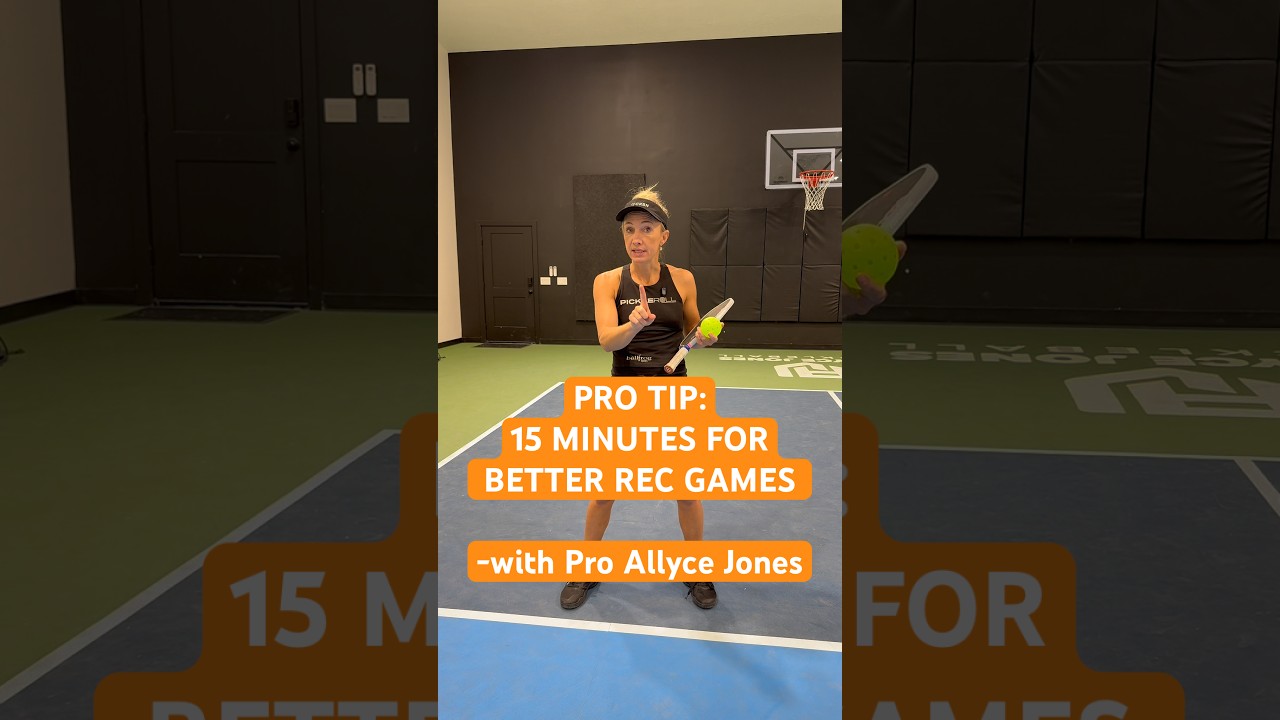
Pre-Game Drill: Transform Your Rec Game in 15 Minutes
An intentional pre-game drill focused on one skill can transform your performance and help you win more points.
 The Dink PickleballThe Dink Media Team
How to Stop Being Nervous During Pickleball Games Once the Score Gets Close
Pre-match prep only gets you so far. Real pressure shows up at 9-8, and that's where most of this actually gets tested.
Doing well here is a big reason being your team's best practice partner translates to matches, drilling under simulated pressure builds the same response you need on match point.
The score doesn't create the nerves. Your relationship with the score does.How to Stop Being Nervous During Pickleball Games Mid-Rally
You stop being nervous during pickleball games mid-rally by narrowing your focus to the next single shot, not the next three.
Nervous players start playing the whole rally in their head before it happens. Locked-in players play one ball at a time.
Try this: between points, look at your paddle face, not the scoreboard, not your opponent.
It's a small physical anchor that pulls your attention back into the present.
Players who position themselves well at the kitchen under pressure usually got there by trusting footwork they've drilled a hundred times, not by thinking harder in the moment.
Honestly, overthinking is the enemy here, not the nerves themselves. The nerves are just noise. Overthinking is what turns the noise into a spiral.
Why Talking to Your Partner Between Points Rebuilds Pickleball Confidence
A short, specific exchange with your partner between points resets both of you faster than silence ever will.
"Same play, next time" does more work than you'd think.This is doubly true in doubles, where simple tips to improve teamwork translate directly into fewer unforced errors under pressure.
Partners who talk through tight games recover pickleball confidence faster than partners who go quiet and start pointing fingers.
A 2025 breakdown on competitive anxiety in racket sports found that brief verbal check-ins between points measurably lowered self-reported stress in competitive players.
5 Mental Game Habits That Beat Pickleball Pressure
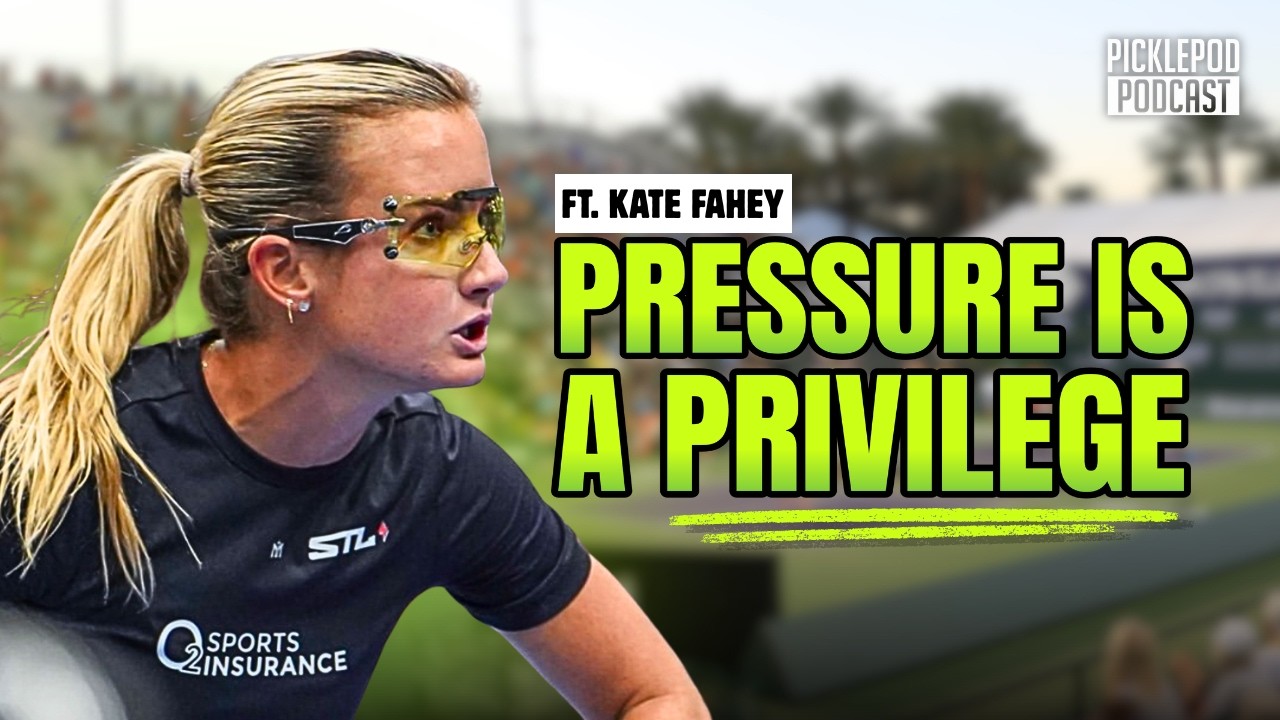
Kate Fahey of the St. Louis Shock breaks down the mental game habits that keep top pros loose when the pressure peaks. Here is how to copy them and stop plateauing.
 The Dink PickleballThe Dink Media Team
Does Your Pickleball Mental Game Actually Improve With Practice?
Yes, and it improves the same way your dinks and drives do: through repetition under pressure, not through reading about it once and hoping it sticks.
Your pickleball mental game is a trainable skill, not a fixed trait you either have or don't.
Play tournaments on purpose, even ones slightly above your level.
Zane Navratil has talked about why average players benefit from playing tournaments, and the exposure therapy angle is real.
The more times your body experiences competitive pressure and survives it, the less foreign that feeling becomes.
Focus on strengths during matches instead of cataloging weaknesses in real time.
There's a reason players who focus on strengths instead of weaknesses tend to play looser in big moments.
Confidence compounds when you remind yourself what you're good at instead of auditing everything you're afraid of missing.
Champion-level mental toughness isn't a personality trait either.
It's a built habit players develop over time, and it keeps developing well past the beginner stage.
Nobody arrives on the pickleball court immune to nerves. They just logged more reps managing them.
Pickleball Mental Game: Stay Calm Under Pressure and Win
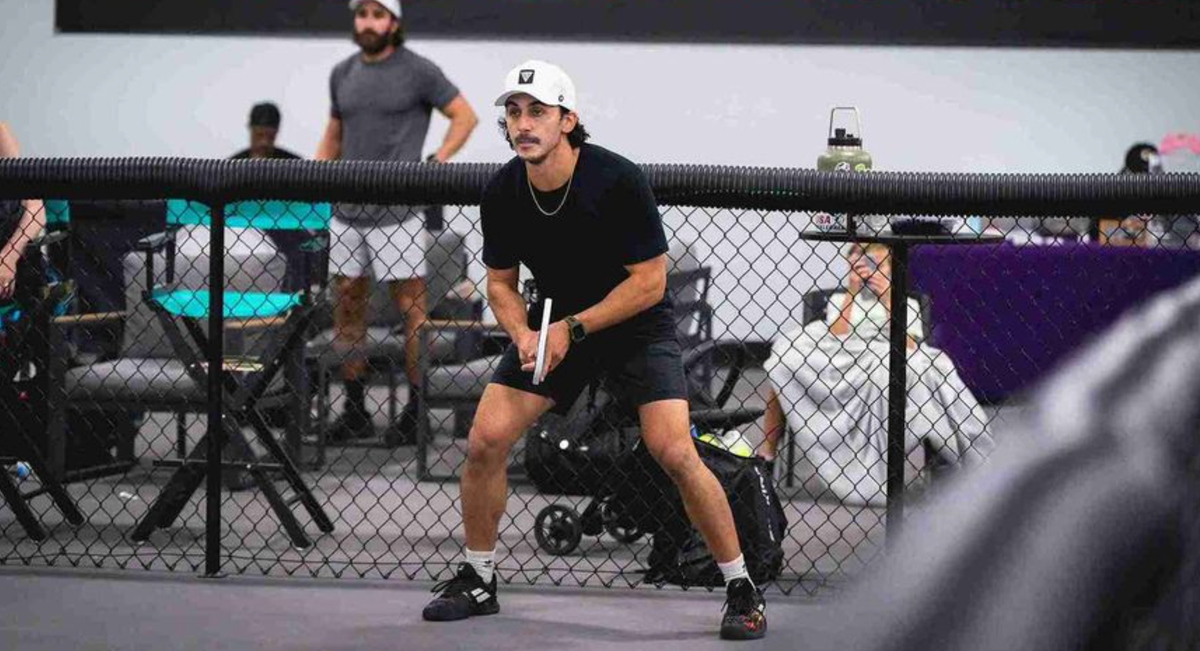
The mental game competitive pickleball demands is just as important as your backhand or your third shot drop. Learn how top players stay calm under pressure, reset after errors, and build the focus that wins matches.
 The Dink PickleballThe Dink Media Team
How to Stop Being Nervous During Pickleball Games for Good, Not Just for One Match
You stop being nervous during pickleball games for good by treating nerve management as a skill you drill, the same way you'd drill a third shot drop or a serve grip.
One good breathing exercise before one match won't fix it permanently. A routine you run every single time will.
Beginners especially benefit from locking in fundamentals early. Solid basics for newer players remove a layer of uncertainty, and uncertainty is nerve fuel.
The pressure zone every player faces late in games gets smaller the more prepared you walk in.
Even something as simple as knowing where to return serve or working to become unattackable in pickleball removes decision fatigue in the exact moments nerves like to strike.
Fewer live decisions under pressure means fewer chances for panic to take the wheel.
Players who've drilled their return block and smash options in practice aren't guessing mid-rally, they're just executing.
None of this makes nerves disappear completely. Nobody who's ever played a real match point has felt zero nerves.
The goal is managing it well enough that your hands still do what you trained them to do.
Pickleball Mental Game: 7 Strategies Pros Use Under Pressure
Choking, the yips, and tournament nerves are not about talent. A mental performance coach who trains tour pros shares the pickleball mental game habits that keep you steady when it counts.
 The Dink PickleballThe Dink Media Team

Key Takeaways
- Nerves during pickleball games come from adrenaline and perceived pressure, not weakness. The chemical response is normal.
- A consistent pre-match warm-up and breathing routine, drilled with the same discipline as a figure-8 drill, trains your nervous system to settle faster.
- Slow exhales longer than your inhale activate your parasympathetic nervous system between points.
- Narrowing focus to one shot at a time, and talking to your partner between points, interrupts the nerve spiral mid-match.
- Pickleball confidence and mental toughness are trainable skills built through reps and tournament exposure, not fixed traits.
💡
Heads up: hundreds of thousands of pickleballers read our free newsletter.
Subscribe herefor cutting edge strategy, insider news, pro analysis, the latest product innovations and more.
Frequently Asked Questions
Why do I get more nervous in pickleball tournaments than in casual games?
Tournaments raise the stakes your brain perceives, even if nothing physically dangerous is happening. That perceived pressure triggers the same adrenaline response as any high-stakes moment, which is why your heart rate climbs the second you check into a bracket.
Is it normal to feel shaky or short of breath before a big pickleball match?
Yes. Shakiness and shallow breathing are classic signs of an adrenaline response, and nearly every competitive player experiences them at some level. Even players working on power shots feel it. The players who look calm have simply built routines that manage the response, not eliminated it.
How long does it take to stop being nervous during pickleball games?
There's no fixed timeline, but most players notice real improvement after a few months of playing matches on purpose and drilling a consistent pre-match routine. Nerves don't vanish. They become manageable faster with repetition.
Can breathing exercises actually help with pickleball nerves?
Yes. A slow exhale that's longer than your inhale activates your parasympathetic nervous system, which lowers heart rate and calms your body's stress response. Pair it with sound footwork, like the setup behind a good backspin return, and you're training your body to reset on two fronts at once.
Does having a strong partner relationship reduce nerves in doubles pickleball?
Yes. Brief, specific communication between points reduces the isolation that lets nerves compound during a match. Partners who talk through tight games and stay sharp on mid-court positioning tend to recover their composure faster than pairs who go silent under pressure.
Anuncie Aqui / Advertise Here
Sua marca para o mundo Pickleball! / Your brand for the Pickleball world!






 English (US) ·
  Portuguese (BR) ·