
 English
  Spanish
  Portuguese
  German
  Italian
  Japanese
  French
  Polish
  Russian
  Netherlands
  Hungarian
  Turkish
  Videos
  Thedink Pickleball

If you want to stop popping the ball up at the kitchen, the problem almost always starts before you even swing. This guide breaks down the root causes and gives you the exact mechanical fixes to keep your dinks low and your opponents off-balance
If you want to stop popping the ball up at the kitchen, you need to know one thing first: it's almost never about your swing.
It's about everything that happens before your paddle moves.
You've played that point a hundred times.
You're at the NVZ, you're patient, you're in the rally, and then you float one up right at chest height and watch your opponent unload on it. Game, set, frustration.
Here's the good news. Popping the ball up at the kitchen is a mechanical problem. And mechanical problems have mechanical fixes.
Love pickleball? Then you'll love our free newsletter. We send the latest news, tips, and highlights for free each week.
Why You Keep Popping the Ball Up at the Kitchen
The instinct is to blame the swing. You think you hit it too hard, or your wrist flicked, or your arm swung up.
All of that is true, but those are symptoms. The actual cause is almost always one of three things.
1. Your contact point is too low, too late
When the ball drops below your knees before you hit it, physics takes over.
The only way to get it back over the net from that position is to angle your paddle face upward, and an upward paddle face means an upward ball.
You're not popping it up on purpose, you're just reacting to the fact that you let the ball fall too far.
2. You're swinging, not blocking
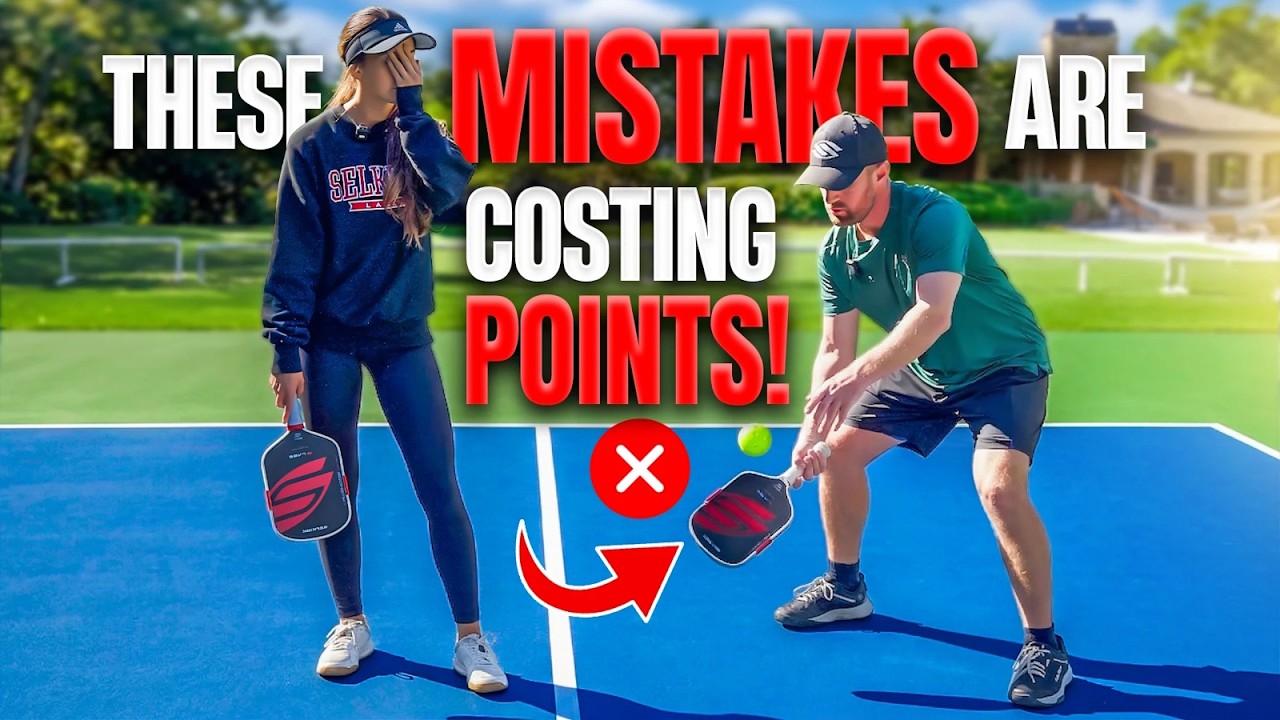
Most players who stop popping the ball up at the kitchen are surprised to find out they were using too much arm. Dinking is not a swing.
It's closer to a guided placement. When you add arm swing to a low, slow ball near the net, all that extra energy has to go somewhere, and it usually goes up.
3. Your paddle face is open
This one is sneaky. An open face (angled upward at address) is the fastest route to a floated dink.
Most players open their face trying to get "under" the ball, when what they actually need is a neutral or slightly closed face with a controlled, upward arc.
There's a difference between lifting the ball over the net and scooping it up toward your opponent's shoulder.
How to Practice Pickleball Alone: 7 Solo Drills
Learning how to practice pickleball alone is one of the fastest ways to close the gap between where your game is and where you want it to be. These 7 solo drills target the shots and movement patterns that actually matter during live play.
 The Dink PickleballThe Dink Media Team
What "Soft Hands" Actually Means (And Why It Matters Here)
You've heard coaches say it. "Soft hands." It sounds like vague advice, but there's real mechanics behind it.
Soft hands means your grip pressure is loose at the moment of contact, typically around a 3 or 4 on a scale of 10.
When your grip is tight, the ball pops off your paddle face. You lose feel, you lose touch, and the ball goes where physics says it goes, not where you want it to go.
Research on grip pressure in racket sports shows that excessive grip tension reduces tactile feedback and fine motor control, which is exactly why tight-handed players keep floating dinks.
Love pickleball? Then you'll love our free newsletter. We send the latest news, tips, and highlights for free each week.
Here's how to feel the difference: squeeze your paddle as hard as you can and try to dink a ball against a wall.
Now loosen your grip to the point where someone could pull the paddle out of your hand with mild effort.
The ball behaves completely differently. That's soft hands. That's what the pros are doing at the NVZ.
This is also why the pickleball reset uses the same principle. Absorbing pace requires loose hands. Fighting pace with a tight grip amplifies it.
2 Essential Pickleball Techniques You’re Missing at the Kitchen Line
“You are not going to be able to hit good dinks if you don’t move your feet.”
The Dink PickleballThe Dink Media Team
How to Stop Popping the Ball Up at the Kitchen: The Exact Fix
Let's get specific.
Fix 1: Contact the Ball Higher
The single fastest improvement most players can make is moving their contact point up. Don't wait for the ball to drop to ankle height. Step in.
Meet it at or above the net tape if you can. The higher your contact, the less upward angle you need, and the easier it is to keep your shot flat and controlled.
This requires more aggressive footwork than most rec players use. You have to be willing to step toward the ball, not wait for it to come to you.
Advanced Pickleball Attacking Strategy at the Kitchen Line
There are only three ways to attack at the kitchen line in pickleball. From speed ups off the bounce to reaching in for air attacks, here’s what separates the winners from the rest.
The Dink PickleballThe Dink Media Team

Fix 2: Use a Pendulum Motion, Not a Scoop
Think of your arm as a pendulum. Your shoulder is the pivot. Your motion should be a small, controlled arc, not a scooping flick of the wrist.
The wrist stays relatively quiet. The elbow stays close to your body. The shoulder initiates and guides.
If you feel your wrist engaging aggressively, you're scooping. That's almost always going to produce an upward trajectory.
Your forehand dink needs a cleaner motion than most players are using.
Kitchen Line Dominance: 5 Secrets From Pro Tyra Black
Tyra’s approach combines footwork, positioning, tactical dinking, and elite hand skills into a system that’s incredibly hard for opponents to break down.
The Dink PickleballThe Dink Media Team

Fix 3: Close Your Paddle Face Slightly at Address
Before you even move, check where your paddle face is pointing. If it's tilted backward and pointing toward the sky, you've already set yourself up to pop one.
Neutral or very slightly closed is the correct starting position for a dink.
Yes, the ball needs to go up to clear the net. But the net is only 34 inches in the middle per USA Pickleball's official rules.
You don't need as much upward angle as your instincts tell you. Trust the arc. Trust the arc with a neutral face.
Master the Pickleball Dink: 5 Essential Shots
Your pickleball dink game is either winning you points or gifting them away. Master these 5 essential pickleball dink shots and learn exactly when to deploy each one based on the ball you receive.
The Dink PickleballThe Dink Media Team
Fix 4: Stop Popping the Ball Up at the Kitchen by Slowing Everything Down
This sounds obvious, but it's the one players skip most. The kitchen is not a sprint.
Players who consistently stop popping the ball up at the kitchen are players who play slower at the NVZ than anywhere else on the court.
Slow your swing. Slow your footwork. Slow your breathing. Speed at the kitchen is your opponent's friend, not yours.
The soft game skills you're missing are almost all rooted in learning to slow down intentionally.
4 Pickleball Offensive Strategy Tactics You Need Now
Advanced pickleball isn’t about hitting the same shot over and over. It’s about reading your opponents in real-time and adjusting offensive and defensive strategy accordingly.
The Dink PickleballThe Dink Media Team
Is Your Grip Costing You at the Kitchen?
Almost certainly, yes. And not just grip pressure, but grip type.
A continental grip gives you the most natural dink mechanics. Your paddle face sits in a neutral position at rest, which means less compensation required at contact.
Players who use a strong Western grip often fight their grip on every dink because the natural paddle face angle at rest is closed, and they overcorrect into an open face when they try to get the ball over the net.
If you're popping the ball up regularly and you play with a Western grip, that's your first experiment.
Shift toward continental for a week. See what happens to your kitchen game.
💡
Need some new pickleball gear? Get 20% off select paddles, shoes, and more with code THEDINK at
Midwest Racquet SportsWhy Does the Third Shot Drop Also Pop Up?
Same problem, bigger stage.
The third shot drop and the dink share the same core mechanics.
When you're learning the third shot drop and keep floating it high, it's the same culprits: late contact, open paddle face, too much arm.
The difference is the distance and the pressure.
Heads up: hundreds of thousands of pickleballers read our free newsletter. Subscribe here for cutting edge strategy, insider news, pro analysis, the latest product innovations and more.
You're hitting from the baseline, which gives you more time, but more players tighten up on the third shot because they know it's a crucial moment in the rally.
That tension goes straight into grip pressure, and grip pressure produces pop-ups.
Sports psychology research confirms that performance anxiety increases muscle tension and degrades fine motor control, which is exactly what happens to your grip at high-stakes moments.
The fix is identical: higher contact point (relative to your body), neutral face, soft hands, pendulum swing.
The science-backed approach to drops confirms what the best players have known for years. Tension is the enemy of touch.
Science-Backed Method to Hit the Perfect Third Shot Drop
The third shot drop isn’t magic; it’s mechanics. Get the science right, and suddenly that impossible shot becomes far more manageable.
The Dink PickleballThe Dink Media Team
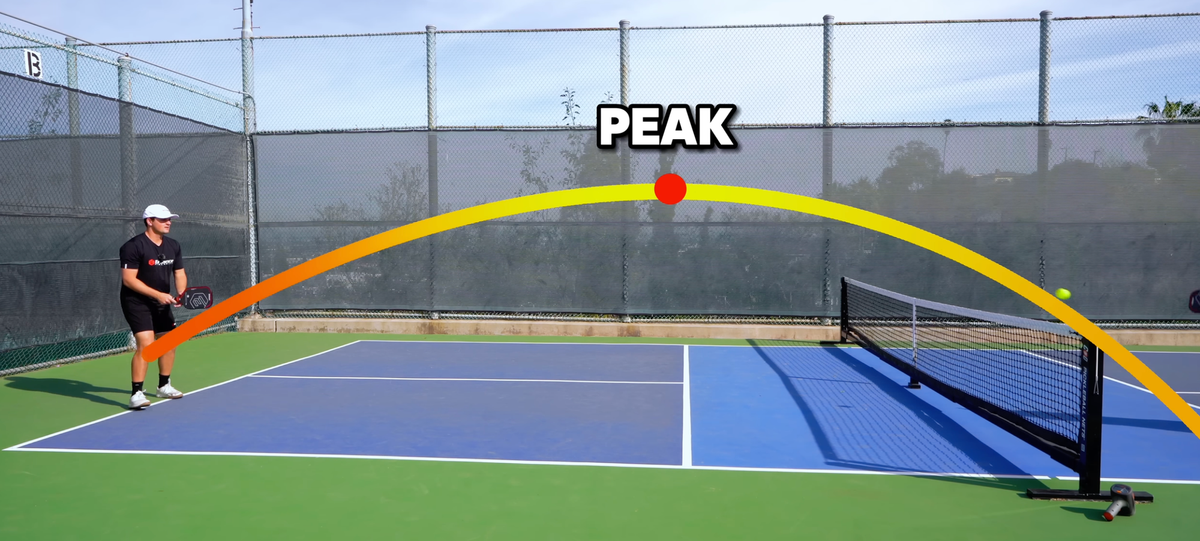
The Drill That Actually Changes Your Habits
Reading about mechanics is useful. But muscle memory only changes with repetition.
Deliberate practice research consistently shows that targeted, feedback-driven repetition is far more effective than general play for fixing specific movement errors.
Here's a simple drill that addresses every root cause of the kitchen pop-up at once.
The Wall Dink Drill:
- Stand 7-10 feet from a wall
- Mark a horizontal line at net height (34 inches)
- Dink against the wall, aiming to land every shot between 34 and 42 inches on the wall
- Use a loose grip. Use a pendulum arm. Contact the ball high.
- Do 50 reps with your forehand. 50 with your backhand.
The wall gives you immediate feedback. If the ball hits above the target zone, you popped it up. The constraint forces you to solve the problem in real time.
Simple wall drills are one of the highest-return-on-time training tools in pickleball, and this one specifically targets the kitchen pop-up.
Do this 10 minutes before you play. Do it three times a week. Give it 30 days. The results will show up in your game before you realize you've fixed anything.
7 Pickleball Drills That Actually Work for Every Level
Pro player Michael Loyd shares 7 pickleball drills designed to build real consistency and fix the weaknesses keeping you stuck.
The Dink PickleballThe Dink Media Team

Key Takeaways
- Late contact is the most common cause of popping the ball up at the kitchen
- A tight grip amplifies the ball off your paddle face and sends it up
- Use a pendulum motion, not a scooping swing, for dinks and reset volleys
- Neutral or slightly closed paddle face at address keeps the ball on a controlled arc
- The wall dink drill builds the right habits fast, with real-time feedback
💡
Heads up: hundreds of thousands of pickleballers read our free newsletter.
Subscribe herefor cutting edge strategy, insider news, pro analysis, the latest product innovations and more.
Frequently Asked Questions
Why do I keep popping the ball up when I dink?
The most common reason is late contact. When the ball drops below your knees before you hit it, your paddle has to angle upward sharply to clear the net, which sends the ball high. Focus on meeting the ball earlier and higher, with a neutral paddle face and loose grip.
How do I stop popping the ball up at the kitchen in a real match?
Slow everything down at the NVZ. Tighten your grip check, step in to contact the ball sooner, and use a shorter, more controlled arm motion. Match pressure makes most players grip tighter and swing harder, both of which cause pop-ups. Practicing the wall dink drill before a match can help reset your muscle memory.
What grip is best for avoiding pop-ups at the kitchen?
A continental grip gives you the most neutral paddle face at rest, which reduces the corrections needed during a dink. Players using a strong Western grip often fight their natural face angle and overcorrect into an open face, which lifts the ball. If pop-ups are a recurring problem, experimenting with a continental grip is worth the adjustment period.
Does paddle angle really cause kitchen pop-ups?
Yes, and it's one of the most underestimated causes. An open paddle face (tilted backward at address) sets a upward trajectory before you've even swung. Check your paddle face position before every dink, not just when something goes wrong. Neutral or very slightly closed is the target.
How long does it take to fix popping the ball up at the kitchen?
With deliberate practice (specifically the wall dink drill), most players notice improvement within two to three weeks. Full habit change, where the fix becomes automatic under match pressure, typically takes 30 to 66 days of consistent repetition according to motor learning research, far longer than the "21 days" myth that gets repeated everywhere. The mechanical changes themselves are simple. The challenge is overwriting the old pattern with a new one.
Anuncie Aqui / Advertise Here
Sua marca para o mundo Pickleball! / Your brand for the Pickleball world!






 English (US) ·
  Portuguese (BR) ·