
 English
  Spanish
  Portuguese
  German
  Italian
  Japanese
  French
  Polish
  Russian
  Netherlands
  Hungarian
  Turkish
  Videos
  Thedink Pickleball

The apex dink and short hop dink are two fundamental techniques in pickleball, each with distinct advantages and disadvantages. Understanding when to use an apex dink versus a short hop can transform your kitchen game and help you avoid costly errors.
There's a moment in every pickleball rally when you face a choice that most players don't even realize they're making.
Your opponent has just hit a soft dink toward you, and now you need to decide: should you wait for the ball to reach its peak and hit an apex dink, or take it early off the short hop?
This decision, more than most players realize, can be the difference between controlling the kitchen and handing your opponent an easy put-away.
According to Tony Roig of In2Pickleball, a coaching resource with over 60,000 subscribers, the answer isn't as simple as "always do this."
Both techniques show up at every level of play, from recreational courts to the professional PPA Tour.
But understanding the mechanics behind each one transforms how you approach the soft game.
Love pickleball? Then you'll love our free newsletter. We send the latest news, tips, and highlights for free each week.
What's the Difference Between These Two Dinking Techniques?
Let's start with the basics.
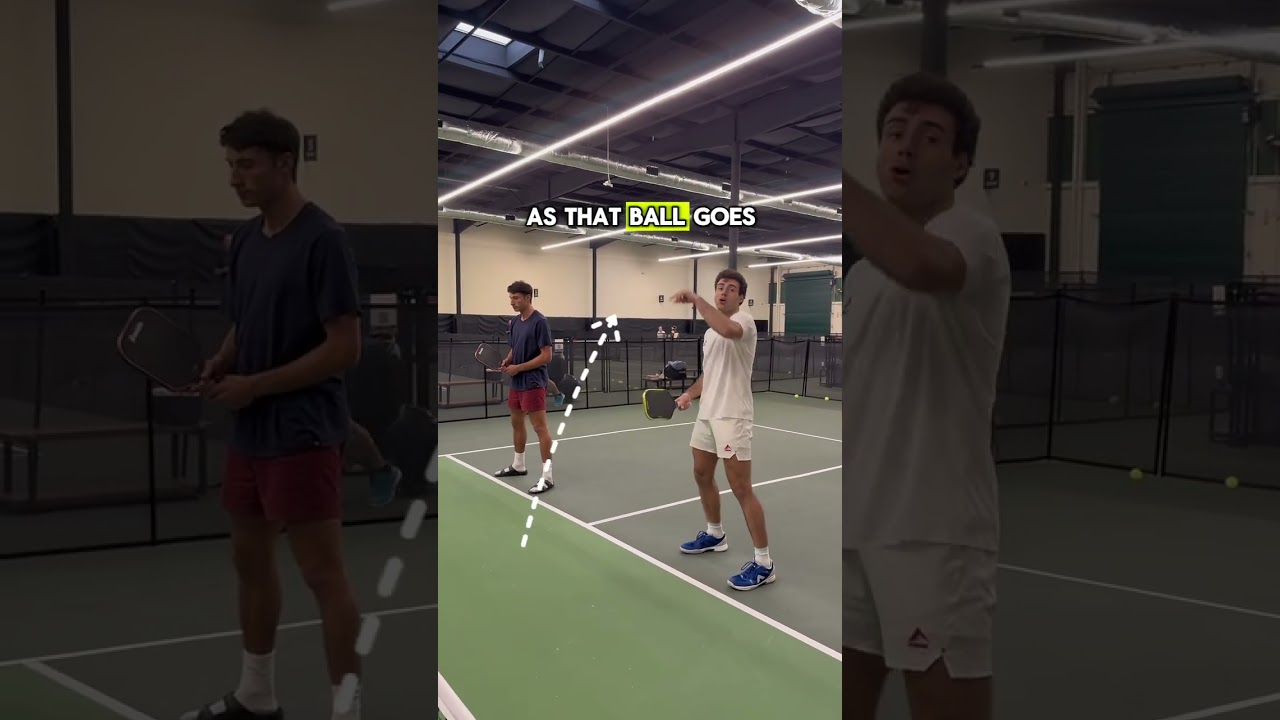
An apex dink is hit when the ball reaches the peak of its trajectory, that sweet spot where it has zero or neutral energy.
Think of it as a transition point: your opponent's shot has lost all its momentum, and you're about to create your own.
A short hop dink, by contrast, is taken immediately after the ball bounces off the court.
You're hitting it while it still carries energy from your opponent's paddle. The ball has barely left the ground, and you're already attacking it.
The physics matter here. When a ball travels toward you, it has maximum energy the moment it leaves your opponent's paddle.
As it rises toward the apex, it loses energy. At the apex, that energy is neutral. Then it accelerates downward again.
Understanding this energy transfer is crucial to understanding why one technique might work better than the other in different situations.
Why the Apex Dink Gives You More Control
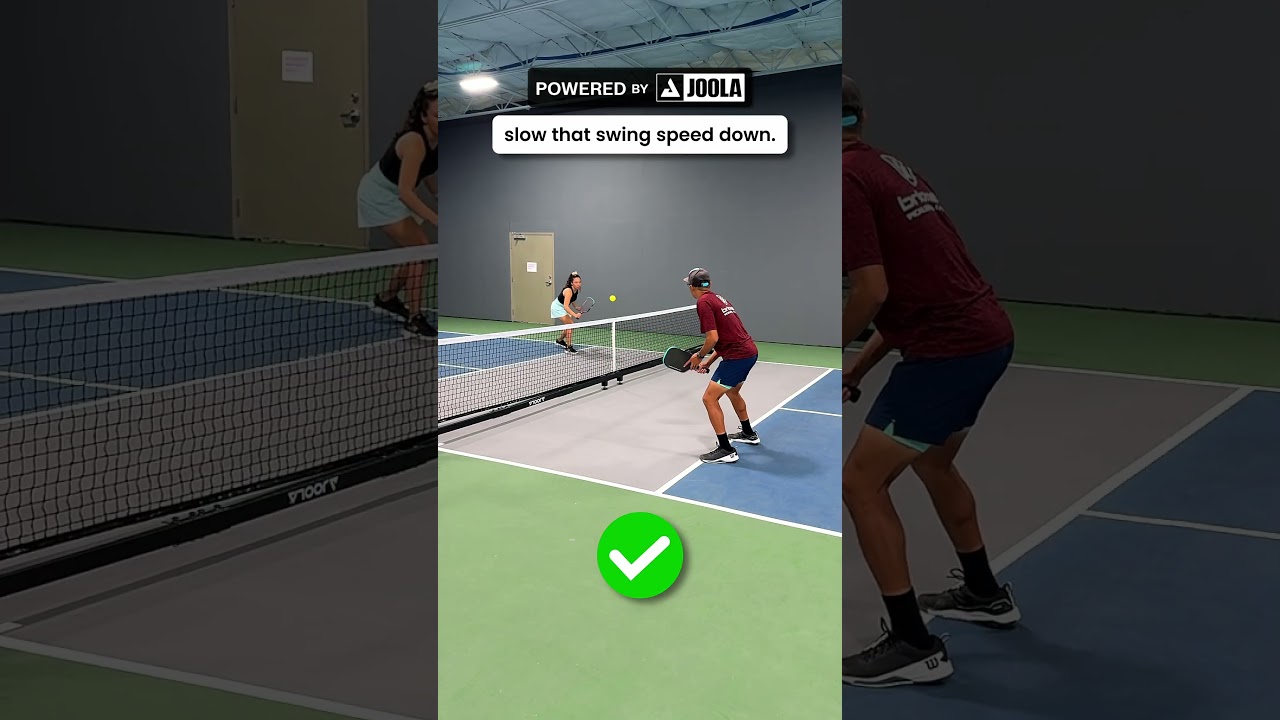
Here's the thing about an apex dink: because your opponent's shot has already died, you have significantly more control over what happens next.
You're not fighting against the energy of their paddle anymore. You're starting fresh.
This control manifests in several ways.
- First, you can direct the ball more precisely. Want to send it cross-court? Down the line? You can make that choice with confidence.
- Second, you have more options. From the apex, you can dink it back softly, speed it up, or even execute a lob.
The apex dink is your blank canvas.
For advanced players, the apex dink also allows you to add heavy topspin to your shots.
How to Practice Pickleball Alone: 7 Solo Drills
Learning how to practice pickleball alone is one of the fastest ways to close the gap between where your game is and where you want it to be. These 7 solo drills target the shots and movement patterns that actually matter during live play.
 The Dink PickleballThe Dink Media Team
This spin creates a lower bounce and makes it harder for your opponent to attack. But here's the catch: adding spin requires solid fundamentals first.
Don't rush into spin work if you're still building your dinking foundation.
The footwork required to hit an apex dink is more demanding, though.
You need to move your body so you're positioned behind the ball, then wait for it to crest before you strike.
This takes time and space. In a fast-paced rally, you might not always have that luxury.
💡
Need some new pickleball gear? Get 20% off select paddles, shoes, and more with code THEDINK at
Midwest Racquet SportsWhen the Short Hop Dink Makes Sense
The short hop dink has a reputation as the "lesser" option, but that's not entirely fair.
It has its place, and understanding when to use it is part of becoming a complete player.
The main advantage of a short hop dink is efficiency. You don't need as much footwork.
If you're stretched wide or caught off-balance, a short hop dink requires less movement to execute.
You're also robbing time from your opponent. Because you're hitting the ball earlier in its trajectory, they have less time to react and reset.
But here's where the short hop dink struggles. Because the ball still carries energy from your opponent's paddle, controlling it is much harder.
You're more likely to hit a pop-up, which is basically an invitation for your opponent to attack.You also can't direct the ball as easily. Your shot options are limited. Speed it up? Nearly impossible. Hit a lob? Virtually impossible. Add spin? Forget about it.
The short hop dink shines in one specific scenario: when you have no other choice. You're stretched, you're out of position, and you need to get the ball back in play.
In that moment, a short hop dink is a perfectly fine shot. It's not pretty, but it works.
How to Hit the Short Hop in Pickleball: A Complete Guide
The short hop is one of the most underrated skills separating good players from high-level competitors. Master this essential short hop pickleball technique to transform your midcourt game and handle pressure in transition.
The Dink PickleballThe Dink Media Team

What Do the Pros Actually Do?
Here's where it gets interesting. Professional players use both techniques, sometimes in the same rally.
Anna Bright, a top PPA Tour player, demonstrates the advantages of the apex dink beautifully.
She waits for the ball to crest, then uses that control to direct her shots and add spin. Her opponent, Jorja Johnson, relies more on short hop dinks.
The difference becomes apparent when Hayden Patriquin, Bright's partner, capitalizes on one of Johnson's errant short hop dinks and puts it away.
This isn't a knock on Johnson's technique.
It's a reminder that at the highest levels of pickleball, positioning and court sense matter as much as individual shot selection.
But when both players are in neutral positions, the player with better apex dink control tends to win the point.
Master the Pickleball Dink: 5 Essential Shots
Your pickleball dink game is either winning you points or gifting them away. Master these 5 essential pickleball dink shots and learn exactly when to deploy each one based on the ball you receive.
The Dink PickleballThe Dink Media Team
The Coaching Recommendation: Build Your Apex Dink First
If you have the footwork and positioning to get around the ball and hit an apex dink, you should prioritize that technique.
The control, shot variety, and spin potential make it the superior choice when you have time.
But don't abandon the short hop dink entirely. It's a valuable tool for situations where you're stretched or caught off-balance.
The key is knowing the difference and making a conscious choice rather than defaulting to one or the other.
Think of it this way:
The apex dink is your primary weapon in the kitchen. The short hop dink is your emergency option.Build your game around the apex dink, but keep the short hop dink in your back pocket for when you need it.
Pickleball Dinking Technique: The Complete Beginner’s Guide
This guide breaks down everything you need to know about proper dinking form, grip, stance, and drills to dominate at the kitchen line.
The Dink PickleballThe Dink Media Team

The Bigger Picture: Soft Game Mastery
Mastering the difference between an apex dink and a short hop dink is part of developing a complete soft game.
The kitchen is where rallies are won and lost in pickleball.
Players who can control the dink, vary their shots, and force errors from the baseline tend to dominate.
This is why footwork matters so much. If you can't move efficiently to get behind the ball, you'll be forced into short hop dinks more often than you'd like.
Improving your court positioning and footwork directly improves your ability to hit apex dinks consistently.
💡
Heads up: hundreds of thousands of pickleballers read our free newsletter.
Subscribe herefor cutting edge strategy, insider news, pro analysis, the latest product innovations and more.
Frequently Asked Questions
What exactly is an apex dink in pickleball?
An apex dink is a dink hit when the ball reaches the peak of its trajectory, where it has zero or neutral energy. This gives you maximum control over the shot because your opponent's energy has dissipated. It's considered the preferred technique when you have time and positioning to execute it properly.
Why is the short hop dink harder to control?
The short hop dink is harder to control because the ball still carries energy from your opponent's paddle when you strike it. This residual energy transfers into your paddle and can cause pop-ups or errant shots. You have less time to adjust and fewer options for shot variety.
Can I add spin to a short hop dink?
It's virtually impossible to add heavy topspin to a short hop dink. The energy dynamics make it extremely difficult. If you want to incorporate spin into your game, focus on developing your apex dink technique first, where spin is much more achievable.
When should I use a short hop dink instead of an apex dink?
Use a short hop dink when you're stretched wide, out of position, or simply don't have time to get behind the ball. It's also useful when you want to rob time from your opponent. But if you have positioning and time, an apex dink is almost always the better choice.
Improving your footwork requires deliberate practice. Focus on small, quick steps to position yourself behind the ball. Work on your court sense so you can anticipate where the ball will land. Drills that emphasize movement and positioning will help you get into apex dink position more consistently.
Anuncie Aqui / Advertise Here
Sua marca para o mundo Pickleball! / Your brand for the Pickleball world!




 English (US) ·
  Portuguese (BR) ·