
 English
  Spanish
  Portuguese
  German
  Italian
  Japanese
  French
  Polish
  Russian
  Netherlands
  Hungarian
  Turkish
  Videos
  Thedink Pickleball

Coach Jess from Athena Pickleball breaks down five essential third shot sequence patterns that will transform how you approach the kitchen.
The third shot sequence is where intermediate players separate themselves from beginners, and where advanced players separate themselves from everyone else.
Most players treat the third shot like a standalone moment—hit it, hope it's good, and figure out what happens next.
But Coach Jess from Athena Pickleball sees it differently.
In her latest breakdown, she reveals that the real magic happens when you stop thinking about shots in isolation and start thinking about sequences.
Love pickleball? Then you'll love our free newsletter. We send the latest news, tips, and highlights for free each week.
Why Does the Third Shot Sequence Matter So Much?
Here's the thing: your third shot doesn't exist in a vacuum. The moment you hit it, you're already committed to a decision tree.
Coach Jess, a former Division 1 tennis player and pro pickleball coach, has logged thousands of hours teaching this concept, and the pattern is always the same.
Players who understand sequences stop guessing and start executing.
The third shot sequence is fundamentally about reading your opponent's response and knowing exactly what your fifth shot needs to be before you even hit your third.
It's the difference between reacting and anticipating.When you master this, you're not just hitting better shots—you're building smarter points.
The Foundation: Split Step and Transition
Before diving into the five sequences, there's one non-negotiable element that makes everything else work: the split step.
This is the moment when you stop your body and prepare to react as your opponent makes contact with the ball.
Coach Jess emphasizes that regardless of whether you hit a great drop, a great drive, a bad drop, or a bad drive, the split step is your anchor point.
You're moving forward off your third shot, but you must stop your body at the exact moment your opponent strikes the ball.
This gives you the balance and positioning to execute your fifth shot with intention rather than desperation.
The split step is what separates a third shot sequence that flows naturally from one that feels chaotic.
Without it, you're either running through your opponent's block or getting caught off-balance at the net.
💡
Need some new pickleball gear? Get 20% off select paddles, shoes, and more with code THEDINK at
Midwest Racquet SportsSequence One: The Drive-to-Drop
The first third shot sequence is the most common for intermediate players: you hit a solid drive from the baseline, your opponent puts the ball into mid-transition, and your fifth shot becomes a drop or reset into the kitchen.
Here's why this works. When you drive from the baseline and move forward, you don't have much time before your opponent hits.
You stop, split step, and recognize that the ball is coming back at you from a mid-court position.
Your best move is to use your proximity to the net and hit a softer drop to get the rest of the way in.
Coach Jess flags one critical mistake: don't let your momentum carry you through your opponent's block.
She often sees players hit a great drive, then run so far forward that when the ball gets blocked back, they're forced to scoop it off their heels.
Pay attention to what your opponent is doing. Even if you only make it three feet into the court, you can still hit that reset cleanly.
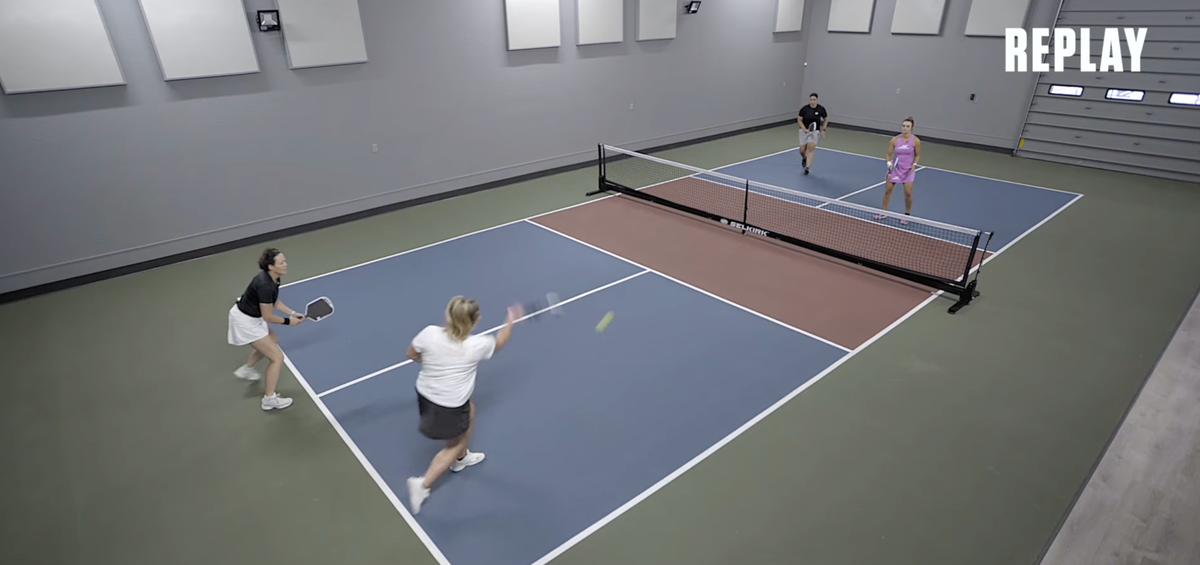
How and When to Hit the Drive-Drop Combo Shot in Pickleball
Most players think in binary terms. Drive or drop. Aggressive or defensive. But the reality of modern pickleball is more nuanced. Enter: The Drip.
 The Dink PickleballThe Dink Media Team
Sequence Two: The Drive-to-Attack
The second third shot sequence is more aggressive.
You get a shorter ball off the return, you whale on it with a big drive from mid-court, and then you're looking to counter-attack on your fifth shot.
This sequence typically unfolds when you've hit a good serve, the return comes back a little shorter, and you decide to take a big swing.
You're expecting that your opponent will block it back, potentially popping it up.
This is where you or your partner can come across and poach with a shake-and-bake, or you can bake yourself by hitting an attack ball above the net.
The key is that you're only driving that second ball out of the air if you've provoked a popup from your opponent.
You're not just ripping another drive for the sake of it. You're reading the situation and capitalizing on a weakness.
How to Practice Pickleball Alone: 7 Solo Drills
Learning how to practice pickleball alone is one of the fastest ways to close the gap between where your game is and where you want it to be. These 7 solo drills target the shots and movement patterns that actually matter during live play.
The Dink PickleballThe Dink Media Team
Sequence Three: The Drop-to-Attack
Now we shift to sequences that start with a drop.
The third third shot sequence is the ideal scenario: you hit a really good drop that bounces at your opponent's feet, they're stretched and stressed, and you've accomplished exactly what you wanted.
In this situation, you're moving in as the ball is in the air. You've got your split step right as they're reaching, and then you're looking for that ball above the net.
Your fifth shot is an attack ball. You've done your job with the drop, they're below the net, and now you're finishing the point.
This is the sequence that separates good players from great ones.
It requires confidence in your drop, commitment to moving forward, and the ability to recognize when you have an offensive advantage.
How to Attack (and Dodge Attacks) from the Pickleball Transition Zone
Due to technological advancements and pickleball athletes getting better and better, certain shots that were once rare or even considered taboo are now at the forefront of the game.
The Dink PickleballEric Roddy
Sequences Four A and Four B: The Step-Back Scenarios
The fourth third shot sequence actually has two variations, depending on how your opponent responds to a decent (but not perfect) drop.
In Sequence Four A, you hit a drop that's a little loftier than ideal. Your opponent steps off the baseline and starts coming from high to low.
In this case, you stabilize and reset the ball into the kitchen. You're not attacking here; you're neutralizing and getting the rest of the way in.
In Sequence Four B, the same drop comes off your racket, but your opponent steps off and decides to drive from low to high.
Now you have an opportunity to stabilize and potentially counter-attack before you even reach the no-volley zone.
You're reading the angle and height of their swing and making an early decision to be aggressive.
The difference between 4A and 4B comes down to one thing: reading your opponent's body position and swing path.
Are they coming down on the ball or up on it? That single detail determines whether you reset or attack.
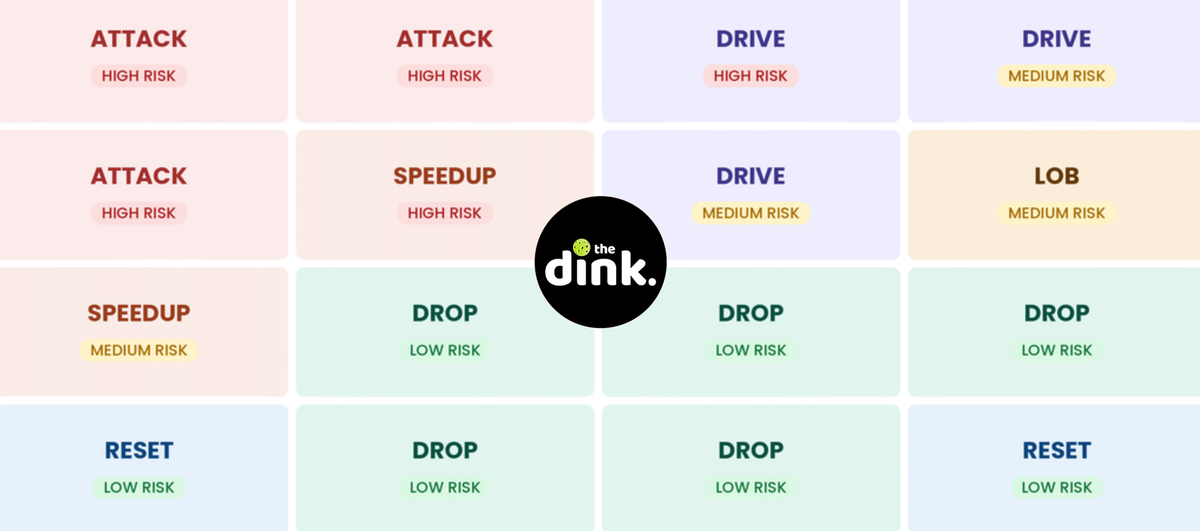
Decision Matrix: When to Attack or Reset in Pickleball
Pickleball is really all about two key factors: your court positioning and the height of the ball. This matrix decodes the game for you.
The Dink PickleballThe Dink Media Team
Sequence Five: The Bad Drop Recovery
The fifth and final third shot sequence is what happens when you hit a lofty drop that your opponent can attack.
This happens all the time, and it's not a reason to panic.
When you recognize that your drop isn't great and your opponent is coming from high to low, your fifth shot needs to be another drop.
You're going to hold back, stop your body, and look to reset softly into the kitchen.
You're not trying to win the point here; you're trying to neutralize it and get yourself up to the net where the returners already are.
Coach Jess calls this the "soft hand" approach. You're pushing forward with intention, but you're not swinging.
You're resetting, and that reset is your pathway to the kitchen.
How to Hit a 3rd Shot Drop in Pickleball
The 3rd shot drop is one of the hardest shots in pickleball to master, but it’s absolutely essential if you want to become an advanced player. This comprehensive guide breaks down the technique, positioning, and practice drills you need to hit consistent drops every time.
The Dink PickleballThe Dink Media Team

The Golden Rule: Opponent's Ball Height Determines Your Response
If you take nothing else from understanding the third shot sequence, remember this: if your opponent is hitting up on the ball, you can attack; if they're hitting down on the ball, you need to reset.
This single principle unlocks all five sequences. It's the decision tree that Coach Jess keeps returning to throughout her breakdown.
Once you internalize this, you stop overthinking and start executing.
You're not wondering what to do next; you already know based on the height of the incoming ball.
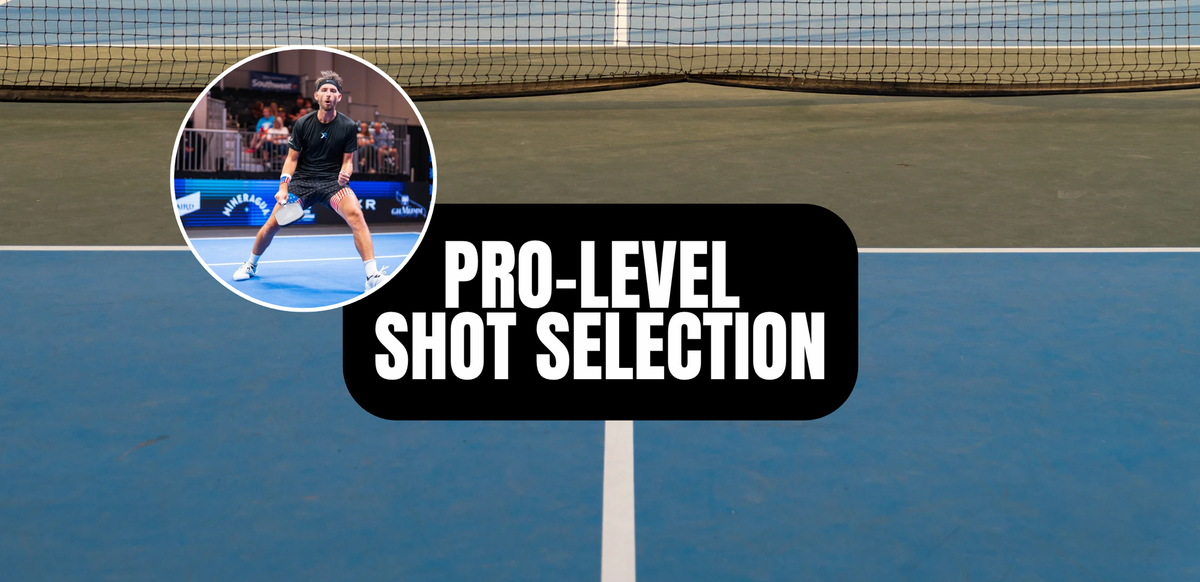
Pickleball Shot Selection: Ball Height & Court Positioning
Advanced pickleball means constantly analyzing the height of the ball and the court positioning off all four players in real time – and keeping this one rule sacred: just because you can hit a more aggressive shot doesn’t mean you should
The Dink PickleballEric Roddy
Building Sequences Into Your Game
The real power of understanding the third shot sequence is that it removes the guesswork from your game.
Really good players don't have to think about these sequences; they're ingrained in their body and their expectations.
The patterns are so familiar that they just happen.
To get there, you need to practice recognizing these situations in your rec games. Watch what happens when you hit a certain type of third shot.
What does your opponent do? What's your best response?
Over time, these patterns become automatic, and your game becomes smarter and more intentional.
The third shot sequence is ultimately about building better points.
It's about understanding that pickleball isn't a series of isolated moments; it's a puzzle where each piece connects to the next.
Master the sequences, and you'll master the game.💡
Heads up: hundreds of thousands of pickleballers read our free newsletter.
Subscribe herefor cutting edge strategy, insider news, pro analysis, the latest product innovations and more.
Frequently Asked Questions
What's the most important part of executing a third shot sequence?
The split step is non-negotiable. You must stop your body and prepare to react at the exact moment your opponent makes contact with the ball. Without it, you're either running through blocks or getting caught off-balance. The split step is what gives you the balance and positioning to execute your fifth shot with intention.
Should I always drop my third shot?
No. The drive and the drop are both viable options depending on the situation. The drive works well when you want to move forward quickly and put pressure on your opponent. The drop works when you want to give yourself time to get to the net. The key is understanding what comes next in each scenario.
How do I know whether to attack or reset on my fifth shot?
Read the height of the incoming ball. If your opponent is hitting up on the ball, you can attack. If they're hitting down on the ball, you need to reset. This single principle determines your response across all five sequences.
Can I use these sequences in competitive play?
Absolutely. These sequences aren't just for practice; they're the foundation of how advanced players build points in matches. Once you internalize the patterns, they become automatic, and your game becomes more consistent and intentional.
What if my opponent doesn't follow the pattern I expect?
That's where the split step and reading your opponent come in. You're not executing a rigid script; you're reading the situation in real time. The sequences give you a framework, but your ability to adapt based on what you see is what separates good players from great ones.
Anuncie Aqui / Advertise Here
Sua marca para o mundo Pickleball! / Your brand for the Pickleball world!






 English (US) ·
  Portuguese (BR) ·