
 English
  Spanish
  Portuguese
  German
  Italian
  Japanese
  French
  Polish
  Russian
  Netherlands
  Hungarian
  Turkish
  Videos
  Thedink Pickleball

Master the kitchen line, communication, the third shot drop, the middle, and patience, and your team climbs the ladder faster than teams that just hit harder.
Learning how to win pickleball as a beginner team starts with one blunt truth: the team that makes fewer mistakes wins almost every rec league match, not the team with the biggest forehand.
That's just math. If you're brand new to the sport, pair this guide with 3 tips every beginner needs to know before you step on the court with a partner.
Most points at the 2.5 to 3.5 level end on an unforced error, not a clean winner.
So before you buy a new paddle or drill topspin serves for three hours, get these five habits locked in.
Here's the five rule framework at a glance before we break down each one:
- Get to the kitchen line together, every single point.
- Communicate before the ball crosses the net, using a few simple tips to improve teamwork.
- Build your team around a reliable third shot drop.
- Own the middle and stop arguing about who takes it.
- Play patient. Let the other team make the first mistake.
Love pickleball? Then you'll love our free newsletter. We send the latest news, tips, and highlights for free each week.
Rule 1: Get to the Kitchen Line Together
The fastest way to answer how to win pickleball as a beginner team is to look at footwork before you look at shot selection.
The team that reaches the non-volley zone line first, together, wins the point far more often than the team still standing at the baseline.
That's true at every level, but it's the single biggest gap between beginner teams and everyone else.
Why does this matter so much?
Because pickleball is a net game dressed up as a paddle sport, and mid-court hesitation is where beginner teams lose the most ground.
Points are decided in the kitchen, not from the back of the court.
If one partner sprints up and the other lingers back, you've created a gap the other team will find immediately.
Move up as a unit after your return, not one player at a time.
How to Hit a Body Shot in Pickleball: Complete Bodybag Guide
Learning how to hit a body shot in pickleball starts with understanding the rule, not just the aim. This guide breaks down the mechanics, the timing, and the line between smart targeting and a foot fault waiting to happen.
 The Dink PickleballThe Dink Media Team
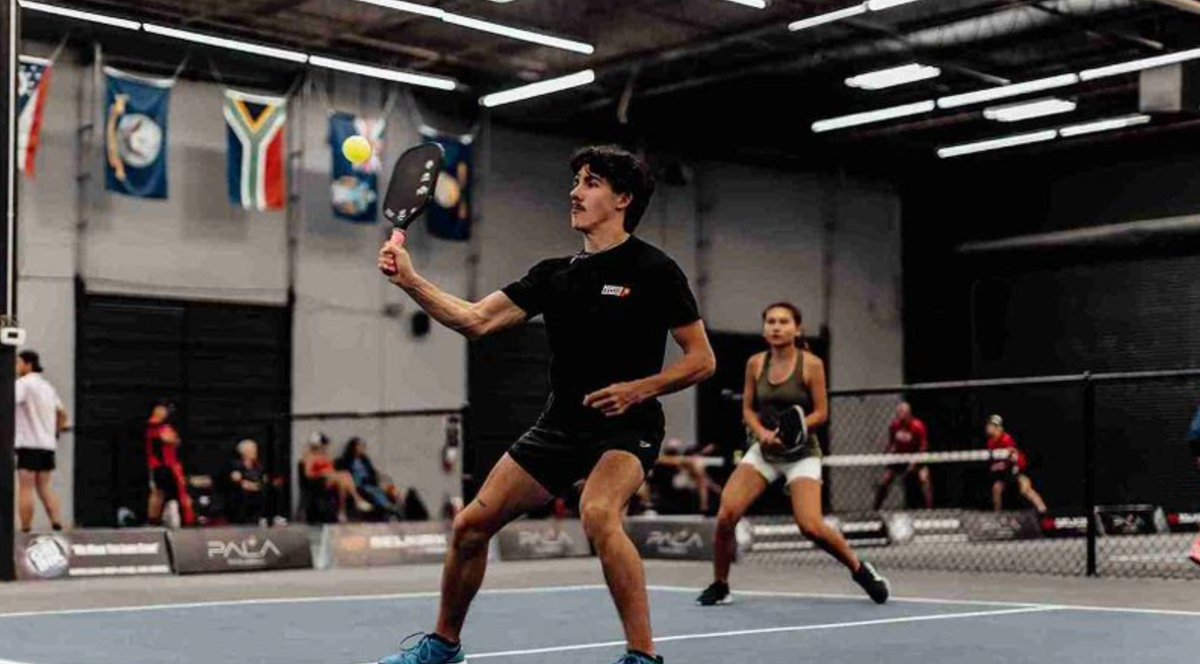
How to Win Pickleball as a Beginner Team Starting at the Kitchen Line
Here's the thing. When both partners hold the line side by side, you cut off angles, mix in a little shot deception, and cover the middle without lunging.
When one player camps back, the other is stuck defending two thirds of the court alone.
That imbalance is why so many beginner teams lose 11-4 sets they thought were close.
If your serve gets returned deep, that's your cue. Move up together, split the width of the court evenly, and treat the kitchen line like home base.
Reps from a drill like the hardest dinking drill in pickleball build that positioning into muscle memory faster than match play alone.
Everything else in this guide builds on that positioning.
💡
Need some new pickleball gear? Get 20% off select paddles, shoes, and more with code THEDINK at
Midwest Racquet SportsRule 2: Communicate Every Point, Not Just the Close Ones
You cannot talk about how to win pickleball as a beginner team without changing the way you think about doubles pickleball first. Silent teams lose.
Say "mine," "yours," "switch," and "middle" out loud, every single point, even in a casual rec game.It feels awkward at first. It works anyway.
Most beginner teams only call out the ball when it's genuinely up for grabs, right down the middle, moving fast.
That's backwards. Treat every shot as a shared decision, not an individual one, call it before contact, and watch the scoreboard swing your way.
Beginner teams that build this habit in practice see it show up fastest in matches.
If you and your partner haven't practiced together with communication drills specifically, that's a bigger lever than any paddle upgrade.
According to a 2025 review published in the Journal of Sports Sciences on doubles racquet sports, teams that used consistent verbal cueing reduced positional errors compared to pairs who played silently.
That pattern holds across every doubles sport with a shared court.
Communication is one half of a solid pickleball doubles strategy.
Consistent shot-making, built through repetition like the figure-8 dinking drill, is the other half.
How to Communicate With Your Partner in Pickleball
Knowing how to communicate with partner pickleball takes more than yelling “mine” at the right time. Here’s the exact system of calls, signals, and mid-game habits that keep doubles teams from falling apart under pressure.
 The Dink PickleballThe Dink Media Team
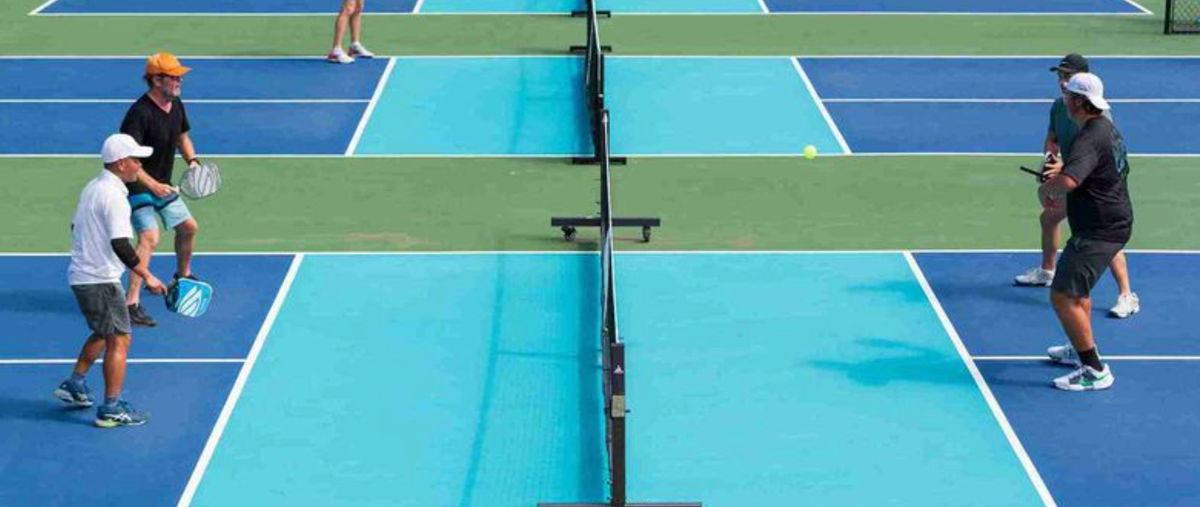
How to Win Pickleball as a Beginner Team With a Reliable Third Shot
Direct answer first: the team that lands a consistent third shot drop wins the neutralization battle, and that battle decides who gets to attack first.
Beginner teams often skip straight to power shots on the third shot. That's the fastest way to hand the point right back.
What is a third shot drop, exactly?
It's the shot hit from the baseline, right after the serve and return, arced softly so it lands in the opponent's kitchen and dies low.
It's not a winner. It's a reset button. It buys your team time to walk up to the line instead of getting stuck at the back defending fast exchanges.
If you don't have a partner around every day, solo drills you can run by yourself build the touch this shot demands.
Why Does the Third Shot Drop Matter So Much for New Teams?
Because the alternative, a hard drive from the baseline, sails long or gets picked off by a team already standing at the net.
If your third shot lands short and soft, you get to make your third shot spicy later in the rally instead of eating a putaway on shot four.
Can't land it consistently yet? Hit a lob or a soft reset instead. The goal is simple: reset the point, not force a winner you haven't earned.
USA Pickleball's official rules and shot glossary describes the drop shot as a core tactical tool for advancing to the net, and its 2026 rulebook update reinforces that positioning, not power, decides most points.
If your third shot sails long more often than it drops in, that's a different kind of reset worth drilling before your next league night.
Master the Third Shot Decision in Pickleball
The third shot decision is one of the most misunderstood moments in pickleball, but mastering it can transform your game. Here’s when to rush the kitchen, when to stay back, and how communication changes everything.
 The Dink PickleballThe Dink Media Team
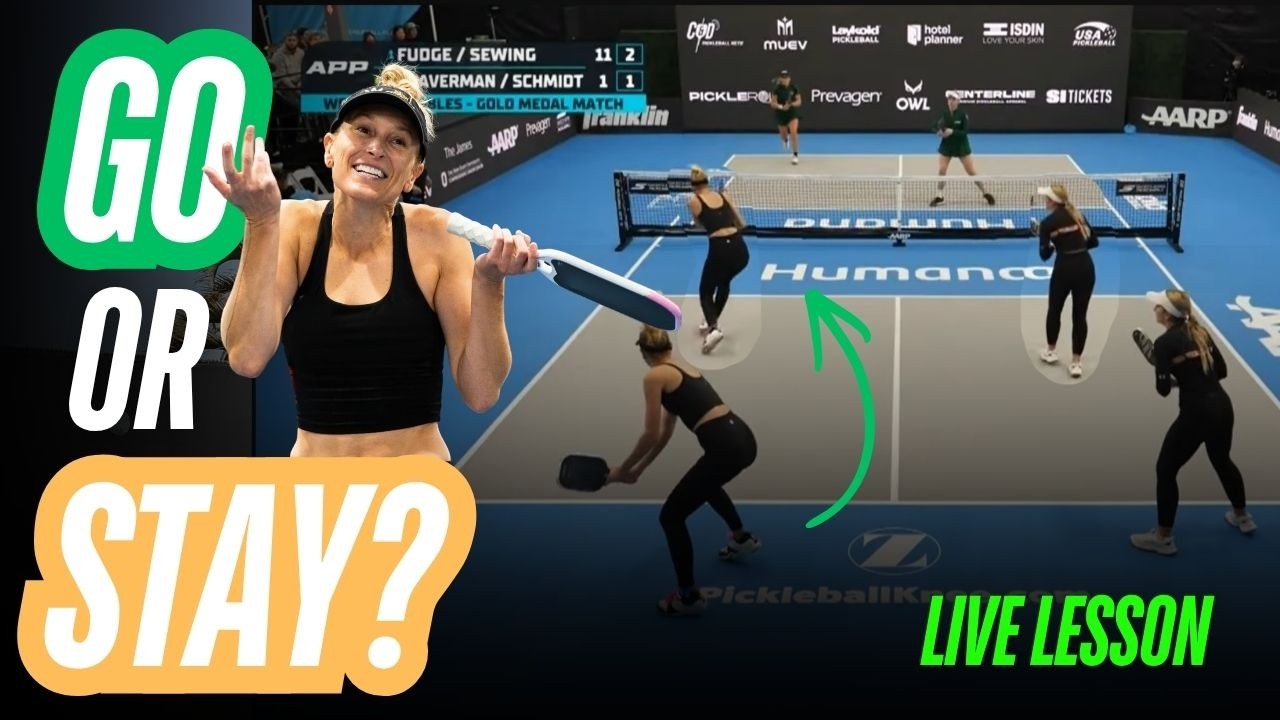
Rule 4: Own the Middle and Stop Arguing About It
Here's an argument every beginner team has at some point: who takes the ball down the middle? Settle it now, before it costs you a match.
The forehand of the player on the right typically takes middle balls, since most players have a stronger forehand than backhand.
Decide this with your partner before you ever step on the court together.
Sharpening your backhand volley still matters, but the middle rule prevents most collisions before they happen.
Who covers the middle shouldn't be a mid-rally debate. It should be a pre-match agreement, adjusted only if one partner is clearly the stronger player in that zone.
Hesitation kills more points down the middle than bad shot selection does.
Positioning matters just as much on the sidelines. A team that gets pulled too wide on a sideline placement leaves the middle and the opposite alley wide open.
Fix your court coverage as a pair, not as two individuals reacting independently, and the middle stops being a weakness.
Good court positioning beats good shot-making at the beginner level, every time.
A team standing in the wrong spot loses the point before the ball even arrives.
Bad positioning is the single most fixable, most common mistake in rec league doubles.
It's also why forcing the hardest swing you've ever hit from a bad spot rarely pays off for a beginner team.
Who Covers the Middle Ball at the Pickleball Kitchen?
Knowing who covers middle kitchen pickleball is one of the most decisive tactical questions in doubles. This guide breaks down the rules of thumb, situational exceptions, and how the best players settle it automatically, no guesswork required.
 The Dink PickleballThe Dink Media Team
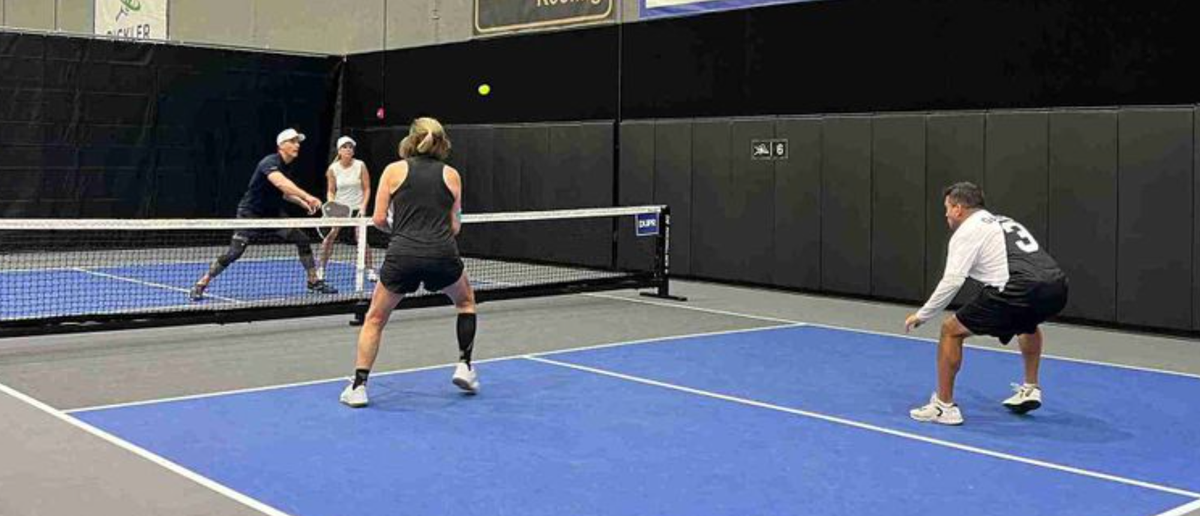
The Last Piece of How to Win Pickleball as a Beginner Team: Patience Over Power
Is it ever okay to go for the highlight reel shot? Rarely, not yet.
The team willing to hit one more ball back than their opponent wins the overwhelming majority of rec league points.
Beginner teams lose points by forcing low-percentage shots: a speedup on a ball still above the net, a driven return when a soft, deep shot would work fine.
This mistake shows up in nearly every beginner match, usually more than once a game.
Consistency compounds. A team that becomes unattackable at the net doesn't need many winners.
They just need the other team to miss first, and at the beginner level, the other team almost always does.
Your return of serve sets this tone from point one. Where you return the serve determines whether your team gets to the line clean or scrambles from behind.
Making the most of your return is one of the cheapest, easiest wins available to a new team.
As your team's DUPR rating climbs, this patience only pays off more.
Participation data from the Sports and Fitness Industry Association's 2025 report shows pickleball remains the fastest-growing sport in the country for a fifth straight year.
Track your progress with DUPR's updated rating system so you can see these fundamentals actually moving the needle.
💡
Heads up: hundreds of thousands of pickleballers read our free newsletter.
Subscribe herefor cutting edge strategy, insider news, pro analysis, the latest product innovations and more.
Key Takeaways
- How to win pickleball as a beginner team comes down to five habits: kitchen positioning, communication, a third shot drop, owning the middle, and patience.
- Both partners reach the non-volley zone line together, not one at a time.
- A soft third shot drop beats a hard, low-percentage drive at the beginner level.
- Decide who covers the middle before the match starts, not during a rally.
- The team that avoids unforced errors wins more often than the team that tries to make opponents hit the hard shots.
Frequently Asked Questions
What is the number one rule for a beginner pickleball team?
Get to the kitchen line together after your return. Positioning wins more beginner points than power does, and mixing in a well placed banana shot keeps opponents guessing while you get there.
How to Win Pickleball as a Beginner Team Against Better Opponents
Play patient, keep the ball in play longer than your opponents, and let them make the first unforced error. Learning when it makes sense to target a specific opponent helps too, once your consistency catches up.
Who should cover the middle in beginner doubles?
Usually the player with the stronger forehand, most often whoever is positioned on the right side. Understanding the advantages of both sides of the court helps you decide this before the match, so you're not debating it mid-rally.
What is a third shot drop and why does it matter for beginners?
It's a soft shot hit from the baseline that lands in the kitchen, giving your team time to move up to the net. It matters because it turns a defensive position into a neutral or offensive one, especially once you build reps through dedicated drill work.
Do beginner pickleball teams need to worry about DUPR ratings?
Not right away. Focus on the fundamentals first: positioning, communication, and shot selection. Your DUPR rating will follow once those habits are consistent, especially if you supplement match play with a simple routine like the fridge and toaster drill between sessions.
Anuncie Aqui / Advertise Here
Sua marca para o mundo Pickleball! / Your brand for the Pickleball world!






 English (US) ·
  Portuguese (BR) ·