
 English
  Spanish
  Portuguese
  German
  Italian
  Japanese
  French
  Polish
  Russian
  Netherlands
  Hungarian
  Turkish
  Videos
  Thedink Pickleball

Advanced pickleball isn't about hitting the same shot over and over. It's about reading your opponents in real-time and adjusting offensive and defensive strategy accordingly.
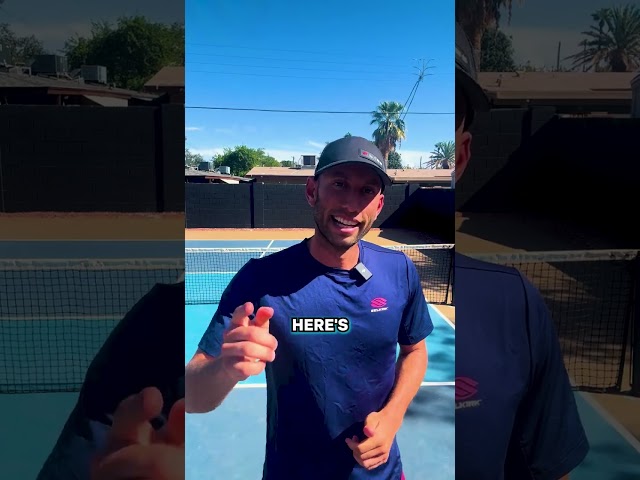
Jordan Briones just handed you the playbook. In a recent video from his YouTube channel, the pro-level coach walks through the exact offensive strategies he wishes he knew sooner.
And honestly? It's the kind of breakdown that makes you want to immediately hit the court and test everything out.
The video covers four core sections:
- Offense
- Setup
- Targets
- Real-life examples
But here's what makes it different from your typical pickleball tutorial: Briones doesn't just tell you what to do – he shows you why it works, then demonstrates it in actual points against live opponents.
That's the difference between understanding pickleball and actually playing it.
1. The Topspin Dink Is King (Everything Else Is Just Setup)
Let's start with the foundation. Briones is obsessed with one thing: getting himself into position to hit a topspin dink. That's his offensive weapon.
Everything else, the lifts, the shovels, the slices, those are just survival moves when you're out of position."When we talk about offense, I'm trying to do as much as I can to set myself up for topspin dinks," Briones explains in the video. "For me, it's the most aggressive thing I can hit."
This is where a lot of intermediate players get it wrong. They think offense means hitting hard. But Briones is saying something different. Offense is about positioning. It's about creating situations where you can hit that aggressive topspin dink from a stable stance with your feet set. If you're scrambling or off-balance, you're not on offense anymore. You're just trying not to lose the point.
The practical takeaway? Stop trying to end points with one shot. Instead, focus on rolling the ball to specific spots that force your opponents into defensive positions. Once they're scrambling, then you look for the topspin dink.
Stop Hitting Stupid Shots: Why Balance Changes Everything in Pickleball
It’s not about being passive. It’s about being strategic. You’re not giving up the point; you’re buying yourself the chance to win it on your terms, not theirs.
 The Dink PickleballThe Dink Media Team
2. Reading the Room: Identifying Your Targets
Here's where it gets tactical. Briones plays against a righty-lefty team, and he immediately starts thinking about court geometry. The middle of the court is tough to attack directly because both players can defend it with a forehand. So what's the play?
"One of the really good plays here as a right-handed player playing the right against a left-hander is rolling to the backhand on that side," Briones says.
But he doesn't stop there. He also talks about the "middle" in a way that might surprise you.
The middle isn't just the center line. It's the space between the two opponents' inside feet.That's a much bigger target than you might think, and it's where balls tend to land without much angle for a return.
Briones throws a couple balls into the middle early in a rally specifically to see who's going to take over. Is it the right-hander or the left-hander? Once he figures that out, he can start moving the ball away from the more aggressive player and toward the less aggressive one. It's like a chess match where you're constantly gathering information.
The real insight here is that pickleball isn't about hitting the same shot over and over. It's about reading your opponents and adjusting. Briones calls these his "one and two shots"; the first aggressive option and the second option if the first one doesn't work.
Having a plan B (and knowing when to use it) separates the good players from the great ones.
5 New Rules for Beating Bangers in Pickleball, According to Zane Navratil
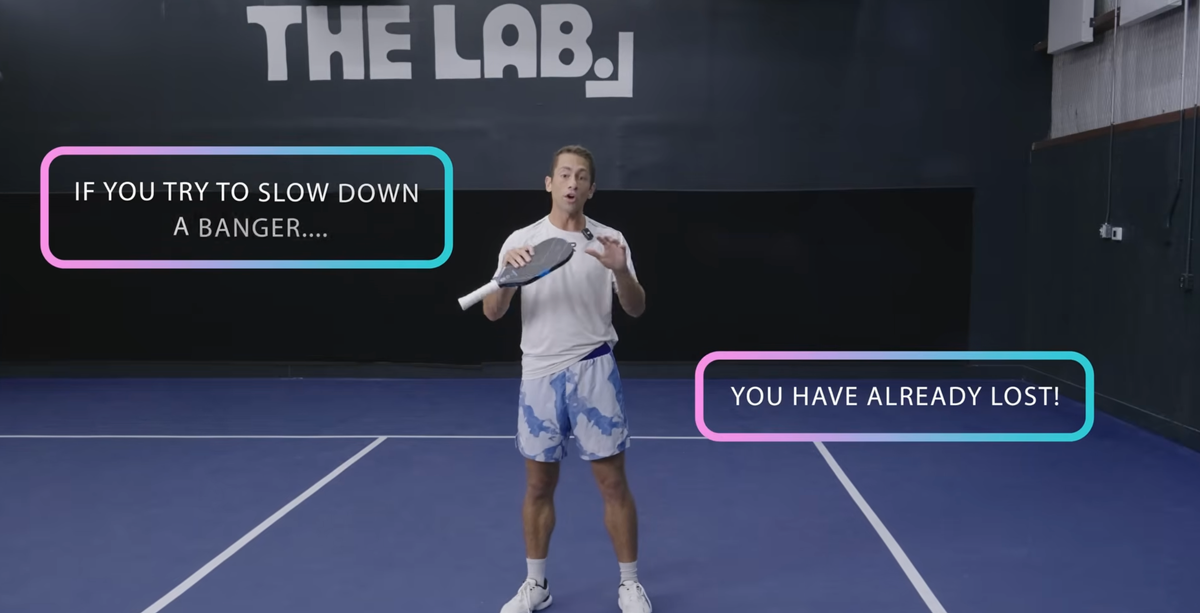
“If you start out with the mentality of slowing down the banger, you’ve already lost to the banger.”
 The Dink PickleballThe Dink Media Team
3. When You're Stretched, Go Middle
There's a specific moment in the video where Briones gets pushed wide and finds himself off the line. What does he do? He hits it to the middle.
"When I'm a little bit stretched or pressed and I'm kind of in this position, I'm going to hit that shot in between their inside feet," he explains.
This is practical wisdom. When you're out of position, you don't have the angle to hit a winner. So instead of trying to be a hero, you hit a neutral shot to the middle that gives you time to recover. Your opponents don't have much angle from the middle either, so they'll likely put it back in front of you. Now you're back in the point.
It sounds simple, but it's the kind of thing that separates players who grind out wins from players who make unforced errors when they're under pressure.
💡
Need some new pickleball gear? Get 20% off select paddles, shoes, and more with code THEDINK at Midwest Racquet Sports
4. The Attacking Targets: Where to Go When You Get Your Chance
Eventually, you'll get a ball you can attack. Maybe it's a weak dink you can speed up. Maybe it's a ball you can take out of the air. Now what?
Briones identifies two main targets when he's attacking from the right side of the court.
- First, there's the "chicken wing"; that spot near the opponent's body on their dominant side. It's hard to defend because you can't extend your arm fully.
- Second, there's the spot near the opponent's elbow on their non-dominant side.
"If I'm going crosscourt, I want to get him more on that dominant side and kind of keep away from the middle middle," Briones says.
The key is that he's not just hitting it hard. He's hitting it to a specific location that limits the opponent's options. And he's only developed those attacking opportunities because he spent the rally setting them up with his earlier shots.
15 Quick Pickleball Tips to See Immediate Improvement: Expert Strategies for Every Skill Level
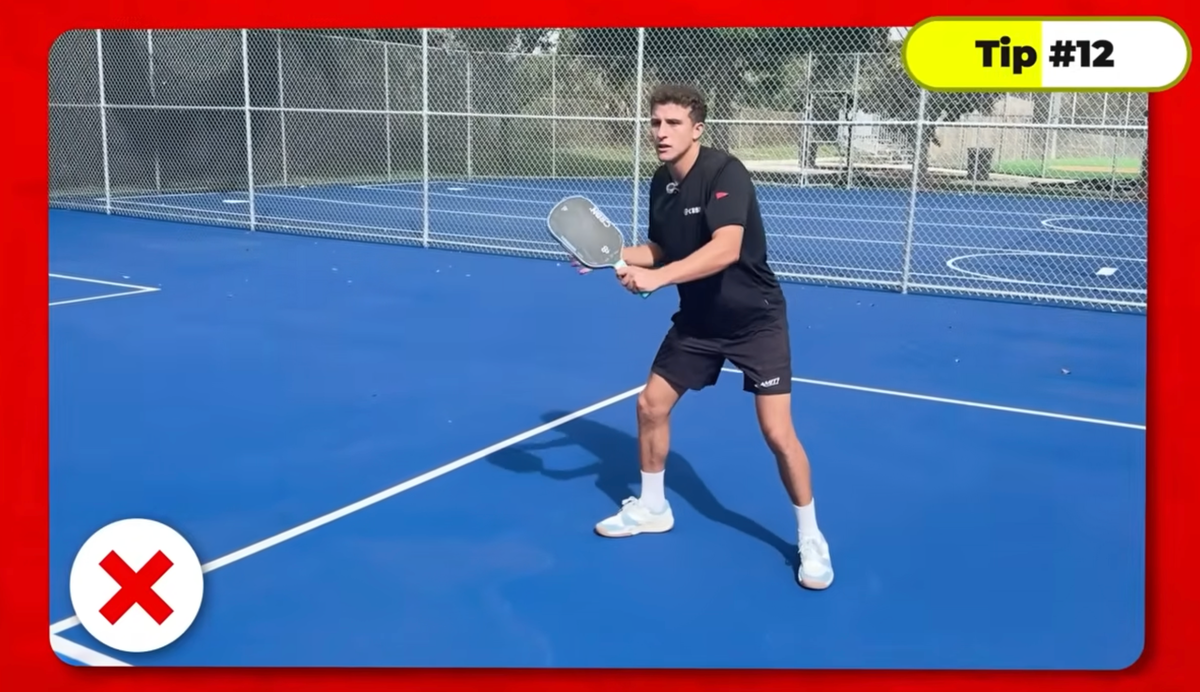
If you’re looking to level up without completely overhauling your game, these 15 tips are a solid starting point.
 The Dink PickleballThe Dink Media Team
Putting It All Together
The video ends with Briones playing out a five-point match where he tries to stick to these principles. He's not perfect. He misses some shots. But what's interesting is that even when he loses a point, he's still controlling the rally.
His opponents don't get many chances to attack because he's constantly moving the ball to spots that keep them on their heels.
That's the mindset shift. You're not playing to win individual points. You're playing to control the rally and create opportunities. The points will come if you do that consistently.
Anuncie Aqui / Advertise Here
Sua marca para o mundo Pickleball! / Your brand for the Pickleball world!




 English (US) ·
  Portuguese (BR) ·