
 English
  Spanish
  Portuguese
  German
  Italian
  Japanese
  French
  Polish
  Russian
  Netherlands
  Hungarian
  Turkish
  Videos
  Thedink Pickleball

Pickleball paddles are deceptively complex.
You might think it's just about picking a brand and hitting the court, but the real magic happens in the details: where you add weight, how the foam responds, and what shape fits your game.
James Ignatowich breaks down the science behind paddle customization and performance in a way that'll change how you think about your equipment.
Love pickleball? Then you'll love our free newsletter. We send the latest news, tips, and highlights for free each week.
Lead Tape Placement: Where Pop Comes From
If you want more pop on counter shots, the placement of lead tape matters more than you'd think.
Ignatowich recommends adding weight at the 3:00 and 9:00 positions on your paddle face, using about 1 gram per inch of lead tape on each side.This targets the effective sweet spot, which sits slightly higher than the paddle's dead center.
Why this spot? It's where the ball pops off the face most effectively.
If you're chasing pure power for singles play, you might move the tape higher up the paddle. But here's the catch: that move increases swing weight significantly, which can slow down your swing.
For stability without sacrificing speed, place tape closer to the handle instead. The weight won't increase swing weight as much, but it'll boost twist weight, making your paddle more resistant to twisting on off-center hits.
Twist Weight vs. Swing Weight: Don't Mix These Up
This is where things get interesting. Swing weight and twist weight sound similar, but they do opposite jobs.
You want swing weight to be lower (easier to swing), but twist weight to be higher (more stable on mishits). Confusing the two is a common mistake.
- Twist weight measures how resistant your paddle is to rotating in your hand when you hit off-center.
- A paddle with low twist weight will twist easily; one with high twist weight stays planted.
- To maximize twist weight, you need weight on the outside edges of the paddle.
- The farther the weight is from your hand, the harder it is to twist.
That's why adding lead tape to the perimeter is so effective for stability.
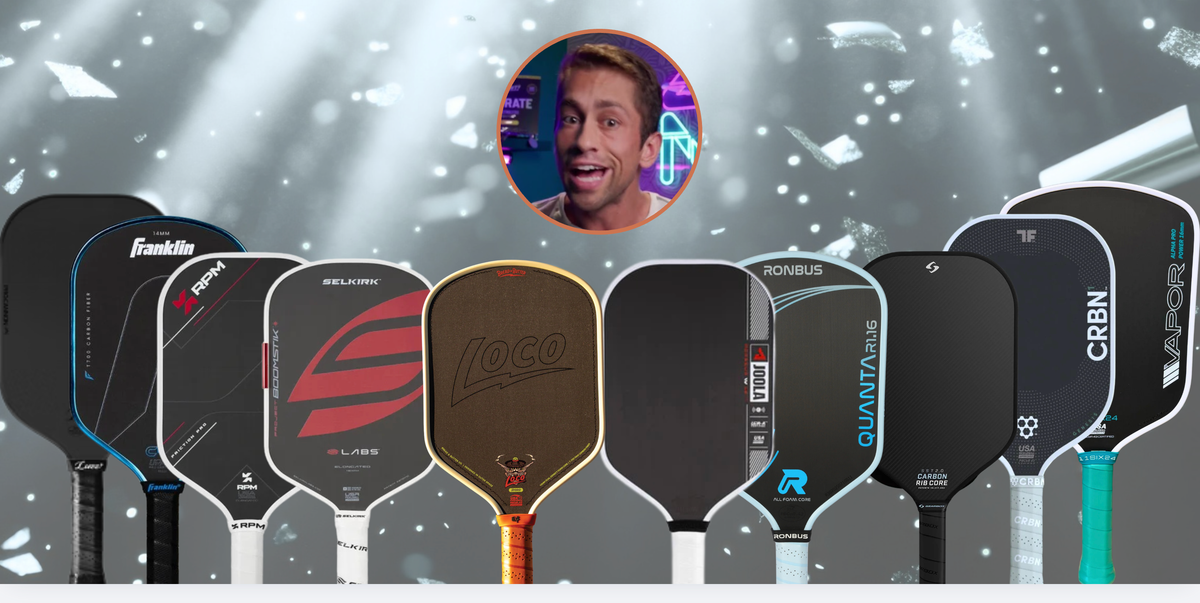
5 Tips for Choosing the Best Pickleball Paddle for Your Game
Pro Zane Navratil breaks down his top five picks for choosing the correct pickleball paddle for your game: don’t cheap out, trust the reviewers, and avoid extremes.
 The Dink PickleballThe Dink Media Team
The Foam Problem Nobody Talks About
Here's something that doesn't show up on spec sheets: the hardness of your paddle's outer foam layer.
Paddles have a hard core (usually EP foam, MPPP foam, or honeycomb) surrounded by softer foam on the edges (EVA, TPE, or TPU). If that outer foam is too hard, your paddle won't feel stable, even if the twist weight numbers look good on paper.
A hard outer foam doesn't give when the ball hits off-center, so the paddle twists in your hand instead of absorbing the impact.
Two paddles can have identical twist weight measurements but feel completely different if one has soft outer foam and the other has hard foam. That's why modern paddles always feature a soft foam ring on the outside. It's not just comfort; it's physics.
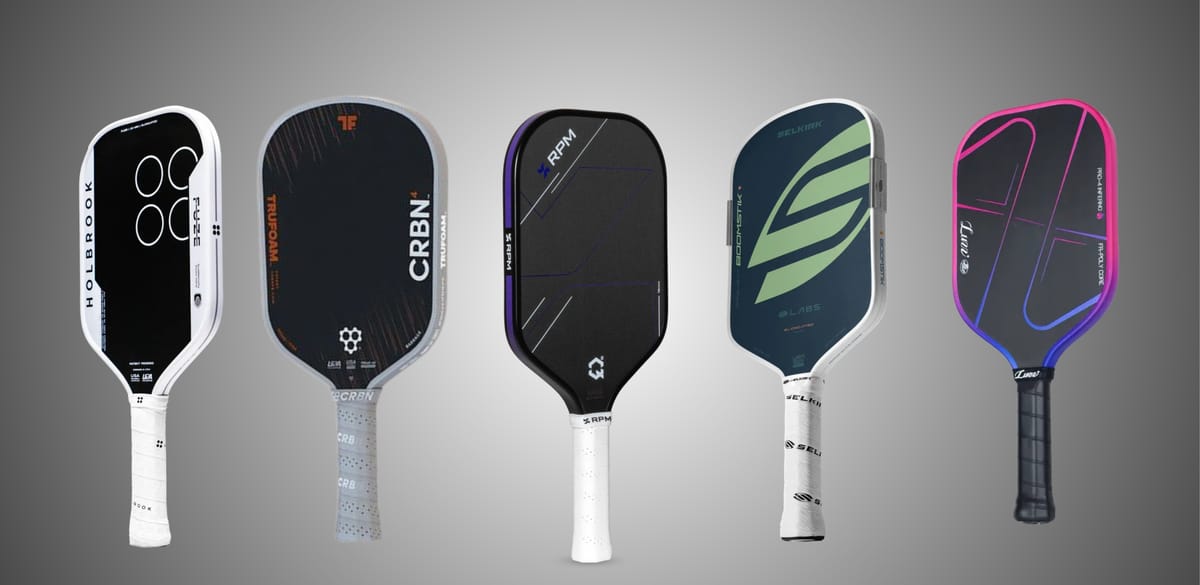
Full-Foam Pickleball Paddles: Options for Max Power
Foam-core pickleball paddles offer the sweet-spot of performance and durability. Here are five that tip the scales toward maximum power.
 The Dink PickleballThe Dink Media Team
Launch Angle Isn't One-Size-Fits-All
A common misconception is that a paddle with a higher launch angle will always produce higher shots, no matter what you're hitting. That's not how it works. Launch angle depends on how the ball slides across the paddle face, and that changes based on the shot.
- On serves and drives, a paddle with more dwell time (softer response) might produce a lower launch angle, requiring you to adjust your paddle angle upward.
- But on resets, where the ball comes down toward you, that same paddle might behave differently. The ball slides down the face instead of across it, changing the launch angle in the opposite direction.
So if you feel like one paddle requires you to adjust lower on every single shot, it's probably not the paddle's launch angle; it's something else entirely.
Heads up: hundreds of thousands of pickleballers read our free newsletter. Subscribe here for cutting edge strategy, insider news, pro analysis, the latest product innovations and more.
Paddle Shape Changes Everything
Wide-body and elongated paddles demand different lead tape strategies.
- With a wide-body paddle, Ignatowich places weight on all four corners because the natural swing weight is already lower. This adds stability without making the paddle feel sluggish.
- Elongated paddles are a different beast. They already have significantly higher swing weight than wide-bodies, so adding weight at the top makes them tough to swing, especially if you're trying to keep up with modern pace-of-play.
For elongated players, tape should stay in the lower half of the paddle. Unless you're playing with an edgeless paddle (where all the normal rules go out the window), keep weight below the midline.
The takeaway? Your paddle shape should drive your customization strategy. What works for a wide-body player will slow down an elongated player.
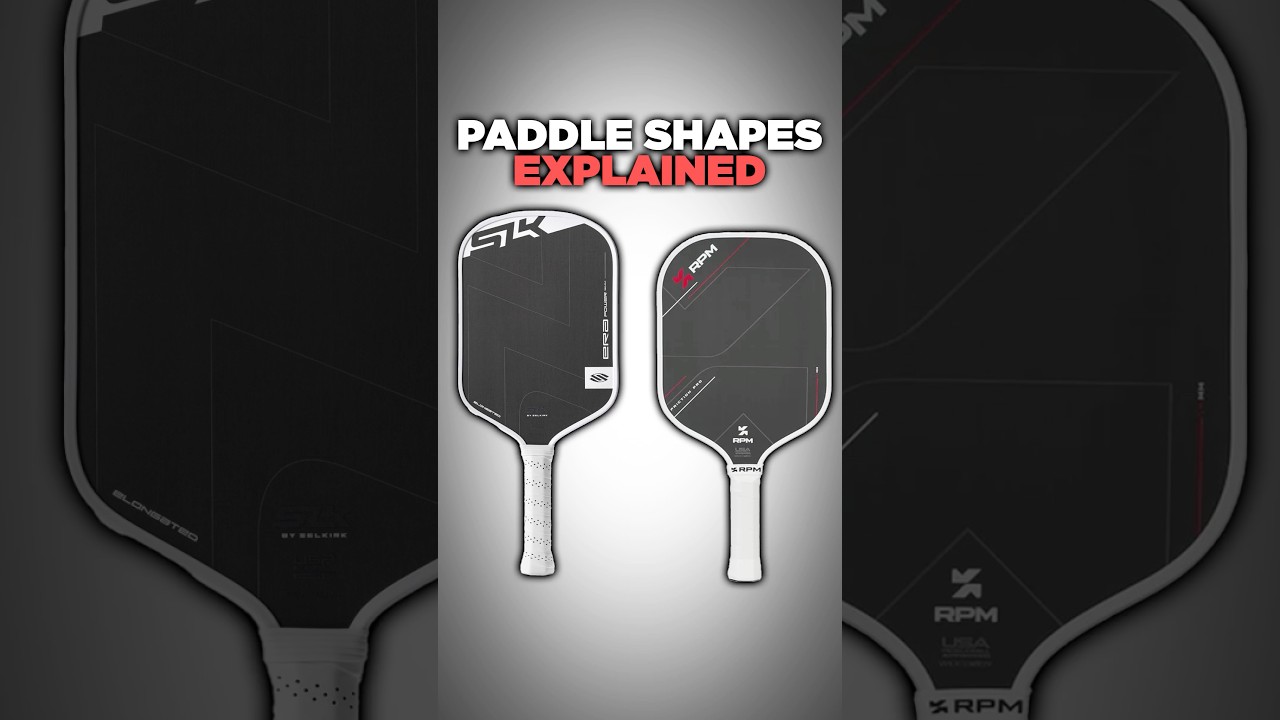
Pickleball Paddle Shapes Explained: Widebody vs. Hybrid vs. Elongated
Pickleball paddles come in three main shapes, and picking the right one can make a real difference in how you play.
 The Dink PickleballThe Dink Media Team
The Bottom Line
Paddle customization isn't magic, but it feels like it when you get it right. Understanding where to add weight, how foam affects feel, and why launch angle isn't universal gives you real control over your equipment. You're not just buying a paddle anymore; you're tuning an instrument to match your game.
Anuncie Aqui / Advertise Here
Sua marca para o mundo Pickleball! / Your brand for the Pickleball world!







 English (US) ·
  Portuguese (BR) ·