
 English
  Spanish
  Portuguese
  German
  Italian
  Japanese
  French
  Polish
  Russian
  Netherlands
  Hungarian
  Turkish
  Videos
  Thedink Pickleball

The backhand drop is one of the most avoided shots in pickleball, but it doesn't have to be. With the right progression and focus on fundamentals, you can build a reliable backhand drop that becomes a weapon instead of a weakness.
The backhand drop is one of the most avoided shots in pickleball. Most players would rather run around their backhand and hit a forehand than develop a reliable shot on their weaker side.
But here's the thing: avoiding your backhand doesn't make it go away. It just makes you predictable, and in pickleball, predictability gets punished.
Cori Elliott, a renowned pickleball coach and creator of the CCC (Cori's Court Correction) series, recently worked with a student named Bo to rebuild his backhand drop from the ground up. The session reveals exactly why so many players struggle with this shot and, more importantly, how to fix it.
Love pickleball? Then you'll love our free newsletter. We send the latest news, tips, and highlights for free each week.
Why Most Players Avoid the Backhand Drop
Let's start with the obvious: the backhand drop is hard. It requires coordination, feel, and confidence.
Most recreational players never develop these things on their backhand side because they simply don't practice it enough. Instead, they default to running around the ball or hitting a weaker backhand drive.
The problem is that this strategy falls apart at higher levels of play. Your opponents will notice the pattern.
They'll start hitting to your backhand intentionally, knowing you'll either miss or hit a weak shot. Suddenly, you're not controlling the point anymore; you're reacting to it.
Bo was doing exactly this. When asked about his third shot approach, he admitted he typically runs around to his forehand rather than hitting a backhand drop. This is a common pattern, but it's also a fixable one.
Building the Backhand Drop from the Kitchen
The key to developing a reliable backhand drop is progression. You don't start from the baseline and hope for the best.
You start at the kitchen line, where the ball doesn't have to travel far and the margin for error is smaller.
Elliott's approach begins with the push drop, a simplified version of the full backhand drop. The mechanics are straightforward: start your paddle at about shoulder height, push forward, and then up slightly.
There's no complicated wrist action or extreme paddle angles. Just a simple hinge from the shoulder.
The beauty of the push drop is that it teaches you the fundamental motion without overwhelming you with variables.
Your feet should be positioned at about 45 degrees to the net, and you're waiting for the ball to slightly descend before making contact. This timing is crucial because it gives you control over the ball's trajectory.
When Bo first tried this at the kitchen line, the results were immediate. The ball sailed softly over the net with minimal effort. This is the confidence builder you need before moving back.
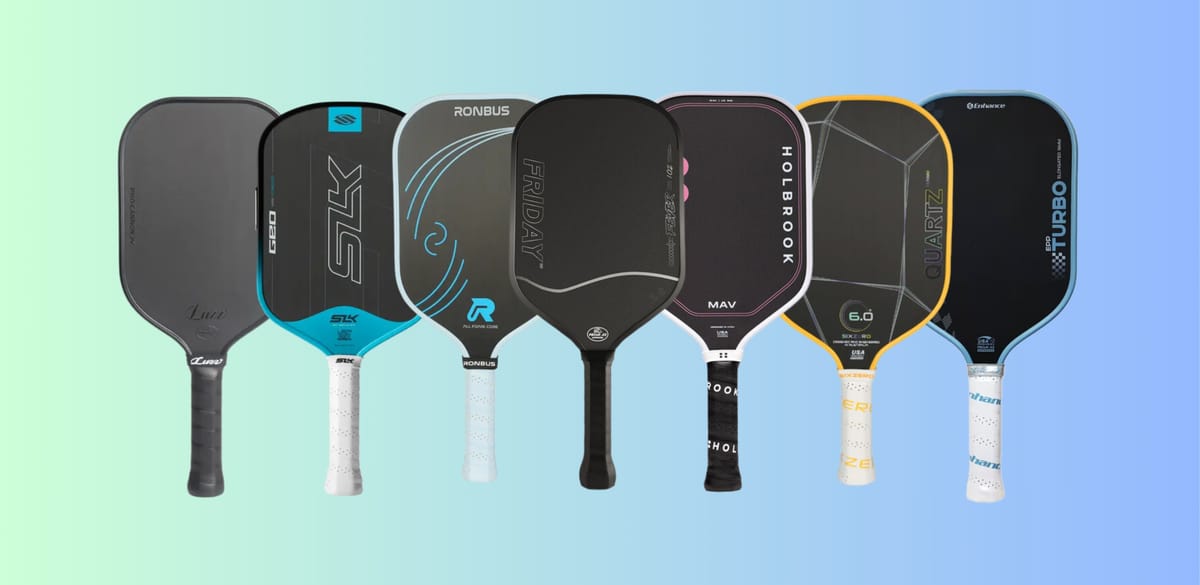
Cheap Pickleball Paddles: 7 Best Under $100
Reputable brands like Selkirk, Holbrook, Enhance, Six Zero, and more now offer high-tech paddles under the $100 mark.
 The Dink PickleballAlex E. Weaver
The Struggle Point: Moving Back from the Kitchen
Here's where most players break down with the backhand drop. The kitchen is one thing. Moving back to mid-court or the baseline is another entirely.
When Bo took a step back, his technique immediately deteriorated. The ball started sailing long. His timing fell apart.
This is the critical moment where many players give up and go back to running around their backhand.
But Elliott identified the issue: Bo wasn't using his legs enough. At the kitchen, you can get away with mostly arm and shoulder.
From further back, you need to engage your lower body. This means coming down with your knees, holding your paddle position longer, and transferring your weight from your back foot to your front foot.
The progression here is essential. You're not jumping from the kitchen to the baseline.
You're taking small steps back, adjusting your technique incrementally, and building confidence at each distance. This is how you develop a backhand drop that actually works in matches.
Nasty Nelson Pickleball: 10 Tips to Master the Shot
The nasty nelson pickleball shot is one of the game’s most underrated weapons, and pro player Ava Ignatowich just broke down exactly how to execute it. From disguising your serve to reading your opponents, here are the 10 tips that will transform your game.
 The Dink PickleballThe Dink Media Team
The Technical Adjustments That Matter
As Bo moved back, Elliott made several key technical adjustments:
- Lower body engagement became the priority. Instead of staying upright, Bo needed to bend his knees more and maintain that lower position through the shot. This gives you better control and allows you to hit the ball at the right height.
- Weight transfer is the second critical element. You're not just swinging your arm; you're shifting your weight from your back foot to your front foot. This generates power and stability, even on a soft shot like the drop.
- Hip rotation adds another layer of control. As you transfer your weight, your hips should rotate naturally. This isn't a forced movement; it's a byproduct of proper weight transfer and follow-through.
- Follow-through is where many players fail. They hit the ball and then stop, as if the shot is over. But the follow-through is part of the shot. Your arm should continue moving after contact, pointing out toward the net. This ensures you're hitting through the ball, not just at it.
Elliott emphasized this repeatedly with Bo: "Your follow-through is super key." Without it, you lose control and consistency.
💡
Need some new pickleball gear? Get 20% off select paddles, shoes, and more with code THEDINK at
Midwest Racquet SportsIntroducing the Backhand Slice Drop
Once Bo had the push drop down, Elliott introduced the next progression: the backhand slice drop. This is a more advanced version that uses a slightly different paddle angle and motion to create more spin and control.
The slice drop uses the same progression as the push drop. You start at the kitchen, build feel and control, and then move back.
The mechanics are similar, but the paddle angle is different. Instead of a straight push, you're using a slight slice motion that creates backspin.
This is where the backhand drop becomes a real weapon. With backspin, the ball dips faster and bounces lower.
Your opponent has less time to react and less room to work with. It's a shot that can actually win points, not just keep the ball in play.
Elliott was clear about the timeline: "Over time, he'll get the slice, but I wanted to introduce it today so that he could start practicing and next time we can just hone in on it."
This is the right approach. You don't master the slice drop in one session. You introduce it, let the player practice, and refine it over time.
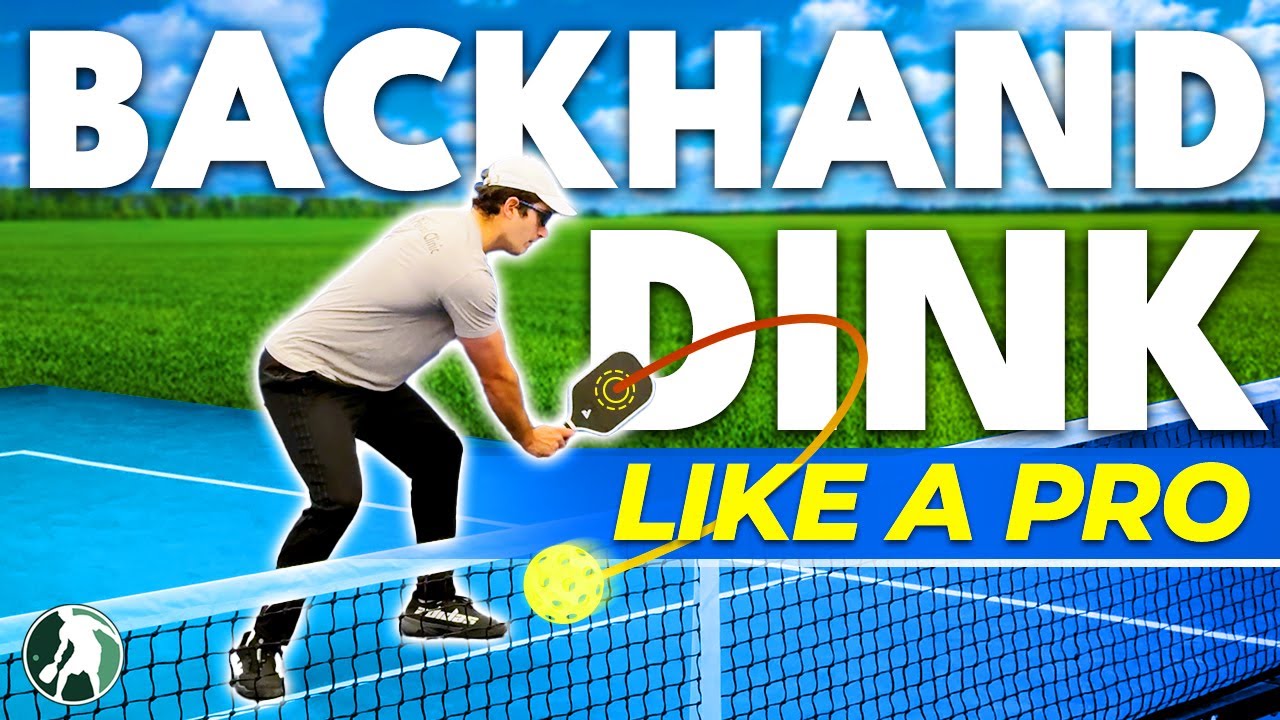
Perfect the Backhand Slice Dink with These 3 Essential Tips
When you’re locked in a tight dinking battle, this shot is your insurance policy
 The Dink PickleballThe Dink Media Team
The Mental Side of the Backhand Drop
Here's something that doesn't get talked about enough: the backhand drop is as much mental as it is physical. If you don't believe you can hit it, you won't. Your body will tense up, your timing will be off, and the shot will fail.
Bo started this session avoiding his backhand. By the end, he was hitting solid drops with decent consistency.
The difference wasn't just technique; it was confidence. Once he saw that the shot was possible, once he felt what it was supposed to feel like, his mindset shifted.
This is why progression matters so much. You build confidence at each stage. You prove to yourself that you can do this.
Then you move to the next stage and do it again. By the time you're hitting backhand drops from the baseline, you've already succeeded dozens of times. Failure feels less likely.
💡
Heads up: hundreds of thousands of pickleballers read our free newsletter.
Subscribe herefor cutting edge strategy, insider news, pro analysis, the latest product innovations and more.
Why the Backhand Drop Matters for Your Game
In pickleball, the third shot is everything. It's the shot that determines who controls the net and, ultimately, who wins the point.
If you can't hit a reliable backhand drop, you're limiting your options. You're forcing yourself into patterns that your opponents can exploit.
But if you can hit a solid backhand drop, you open up your game. You can attack the net from anywhere on the court.
You can respond to your opponent's shots with confidence. You're no longer predictable.
This is why Elliott's work with Bo matters. It's not just about one shot. It's about building a more complete player who can compete at a higher level.
Heads up: hundreds of thousands of pickleballers read our free newsletter. Subscribe here for cutting edge strategy, insider news, pro analysis, the latest product innovations and more.
Frequently Asked Questions
What's the difference between a push drop and a slice drop?
A push drop is a simplified version where you push the ball forward and slightly up with minimal wrist action. A slice drop uses a slightly different paddle angle and motion to create backspin, which makes the ball dip faster and bounce lower. The push drop is easier to learn, while the slice drop is more advanced and gives you more control.
How long does it take to develop a reliable backhand drop?
It depends on how much you practice, but most players can develop basic competency in a few weeks of consistent practice. The key is progression: start at the kitchen, build feel, and gradually move back. Don't rush the process.
Should I practice the backhand drop in matches or just in drills?
Start with drills to build confidence and consistency. Once you're hitting solid shots in practice, start using it in matches. You'll probably miss more at first, but that's normal. The more you use it in real situations, the faster you'll improve.
What if I'm still struggling with the backhand drop?
Go back to basics. Make sure you're using your legs, transferring your weight, and following through. Film yourself and compare your technique to videos of players hitting solid backhand drops. Sometimes a small adjustment in one area can make a huge difference.
Can I use the backhand drop as an attacking shot?
Absolutely. Once you develop consistency, the backhand drop can be an attacking shot. The key is hitting it with the right depth and spin so that your opponent has to hit up on their next shot. This gives you the opportunity to attack the net.
This article is based on coaching content from Cori Elliott, a pickleball instructor and creator of the CCC (Cori's Court Correction) series.
Anuncie Aqui / Advertise Here
Sua marca para o mundo Pickleball! / Your brand for the Pickleball world!






 English (US) ·
  Portuguese (BR) ·