
 English
  Spanish
  Portuguese
  German
  Italian
  Japanese
  French
  Polish
  Russian
  Netherlands
  Hungarian
  Turkish
  Videos
  Thedink Pickleball

Pickleball tournament strategy separates players who consistently medal from those who play well in practice but stall under pressure. This guide covers everything from mental prep to in-match adjustments so you can compete at your best when it counts most.
Pickleball tournament strategy is what separates the player who medals from the one who played great all week in rec play and then went 1-2 in pool.
The game you show up with on a random Tuesday morning at your local club? That's not the game you automatically bring to bracket play.
The lights are different. The stakes are different. And if you don't have a plan, you're just hoping.This isn't about talent. It's about preparation, mental clarity, and making smart decisions under pressure.
Let's get into exactly how you build a winning tournament game plan.
Love pickleball? Then you'll love our free newsletter. We send the latest news, tips, and highlights for free each week.
Why Most Players Underperform at Tournaments
Most players underperform at tournaments for one reason: they play not to lose instead of playing to win.
It's a subtle difference with a massive impact on shot selection, court positioning, and energy management across a long tournament day.
Research published in the Journal of Sport and Exercise Psychology (2025) confirms that competitive anxiety significantly reduces motor skill execution under pressure, even in well-trained athletes.
In plain terms: nerves make you worse, and ignoring that fact doesn't make it go away. Understanding it does.
The fix starts before you ever step on a tournament court. You need a game plan that accounts for who you are as a player, not who you wish you were.
What Does a Smart Pickleball Tournament Strategy Actually Look Like?
A smart pickleball tournament strategy is built on three pillars: knowing your strengths, reading your opponents, and managing your mental game in real time.
Everything else flows from those three things.
Start by being honest about your A-game. What shots do you hit confidently under pressure? What patterns make you feel in control?
Your tournament strategy should funnel the game toward those patterns as often as possible.
If your third shot drop is elite, your entire game plan might revolve around neutralizing pace and getting to the kitchen.
If your drive is your weapon, you're looking to create speed-up opportunities from the transition zone.
This isn't about being one-dimensional. It's about having a default mode you can fall back on when the match gets tight and your brain starts lying to you.
💡
Need some new pickleball gear? Get 20% off select paddles, shoes, and more with code THEDINK at
Midwest Racquet SportsHow Do You Prepare the Week Before a Tournament?
Preparation for a tournament starts at least five to seven days out. Not with extra drilling (though that helps), but with deliberate mental and physical readiness.
Three things to do in the week before:
- Play simulated pressure points. In your practice sessions, manufacture high-stakes moments. Play games where every point is worth double. Play tiebreakers. Make it cost something emotionally to lose. Solo drills are valuable for groove work, but you also need to practice competing.
- Lock in your equipment. No new paddles. No experimental grips. You want zero variables on match day. This is a common mistake players make, experimenting with gear right before a tournament instead of trusting what they know.
- Sleep and hydration. Studies from the National Institutes of Health (2025) consistently show that even mild dehydration (as little as 2% body weight) impairs athletic decision-making and reaction time. You don't perform well tired and dehydrated. Period.
How to Manage Pickleball Tournament Nerves
Pickleball tournament nerves hit almost every competitive player, even the ones who look ice-cold on court. This guide breaks down exactly how to manage pre-match anxiety with mental prep strategies that work when the pressure is on.
 The Dink PickleballThe Dink Media Team
Is Your Warm-Up Actually Helping You?
Most players warm up wrong. They show up 10 minutes before their first match, bang a few balls around, and wonder why they felt stiff in the first game.
Here's the thing: a proper warm-up is part of your pickleball tournament strategy.
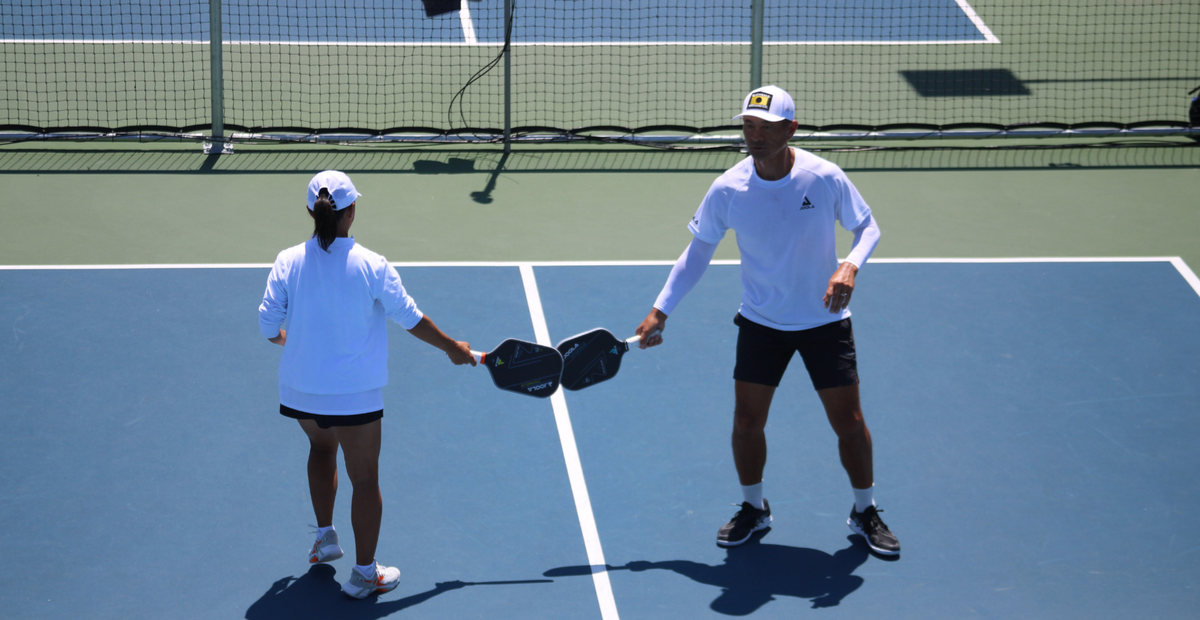
Arrive at least 30-45 minutes before match time. Start with dynamic movement (leg swings, lateral shuffles, arm circles) before you touch a paddle.
Then move to slow, controlled dinking to get your hands dialed in. Progress to drives and volleys.
Finish with a few third shots so that shot is warm when you need it most in game one.
Physically, your goal is to raise your heart rate gradually and rehearse your most important strokes before the match clock starts.
Research from the British Journal of Sports Medicine (2025) shows that sport-specific warm-ups improve first-action performance by up to 11% in racket sports.
That's not a marginal gain, that's a potential match-changer in game one.
Roll, Lunge, Jump: The Anna Bright Method for Warming Up Right
Take a page out of the pro book. Move your spine, lunge deep, and jump a little. Your knees and your win-loss record will thank you.
 The Dink PickleballThe Dink Media Team
How to Develop a Game Plan for Every Opponent
This is where tournament strategy for pickleball gets tactical. Pool play is your intelligence phase.
You're not just trying to win games, you're gathering data on opponents you might see again in bracket play.
Watch how they respond to pace. Do they panic when you drive? Do they speed up every ball that lands above the net?
Are they slow to retreat from the kitchen when you lob? Every tendency you spot is a tool you can use later.
Build a simple opponent profile in your head (or on your phone between games):
- Their strongest shot: and how to reduce its frequency
- Their weakest shot: and how to create opportunities to expose it
- Their mental tendencies: do they get rattled after errors? Do they heat up on long rallies?
For doubles, this doubles in complexity (no pun intended).
You need to think about doubles court coverage and which opponent to target, not just which shots to hit.
The weaker player almost always becomes the focal point, but how you attack them matters.
Crosscourt dinks into the middle of their body. Drives at their hip. Speed-ups to the backhand volley.
Check out how to think about doubles pickleball for a deeper framework on partner coordination.
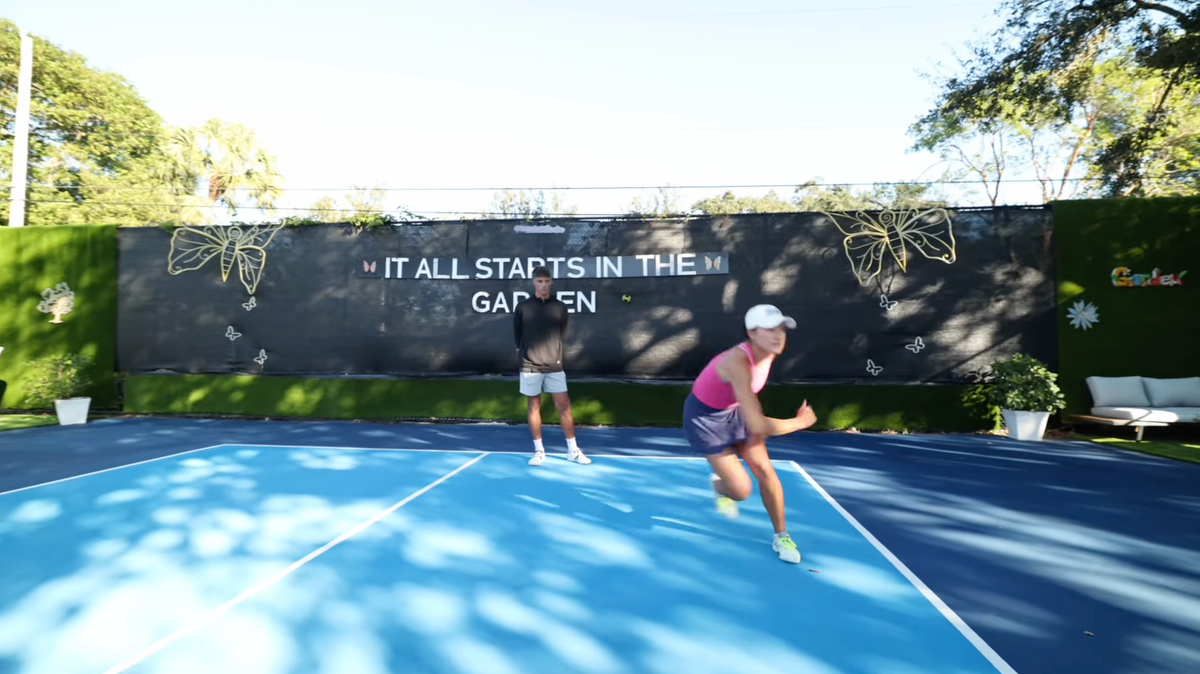
3 Patterns Top Pros Use to Plan Multiple Shots Ahead
Anticipation is everything in pickleball. Use these three pro-proven scenarios to read your opponents and put yourself in a position to make a high percentage, winning play.
 The Dink PickleballEric Roddy
The Mental Game: Competing Like a Champion
Here's an honest take: the mental side of pickleball tournament strategy is the part most players skip, and it's the most important part.
When you're down 8-2, your technique doesn't fail you, your brain does.
You start going for low-percentage winners. You get tight on the third shot. You start watching the scoreboard instead of the ball.This is tournament-specific pressure, and you can train yourself to handle it better.
Two mental frameworks worth building into your game:
- Process focus over outcome focus. Between every point, your only job is to reset and prepare for the next one. Not to solve why you just missed. Not to calculate what score you need to win. Building a champion mindset is a practice, and part two digs into how elite competitors reinforce that reset loop.
- Use timeouts strategically. A timeout isn't a sign of weakness. It's a momentum disruptor. If your opponent has won five straight points, call time. Change the pace of the match. Talk to your partner. Look at how to use timeouts in pickleball as an active weapon rather than a last resort.
A 2025 study in the Journal of Sports Sciences found that athletes who used deliberate self-regulation strategies between points (breathing, positive self-talk, reset routines) outperformed those who didn't by a statistically significant margin in competitive settings.
Build your between-point routine and stick to it.
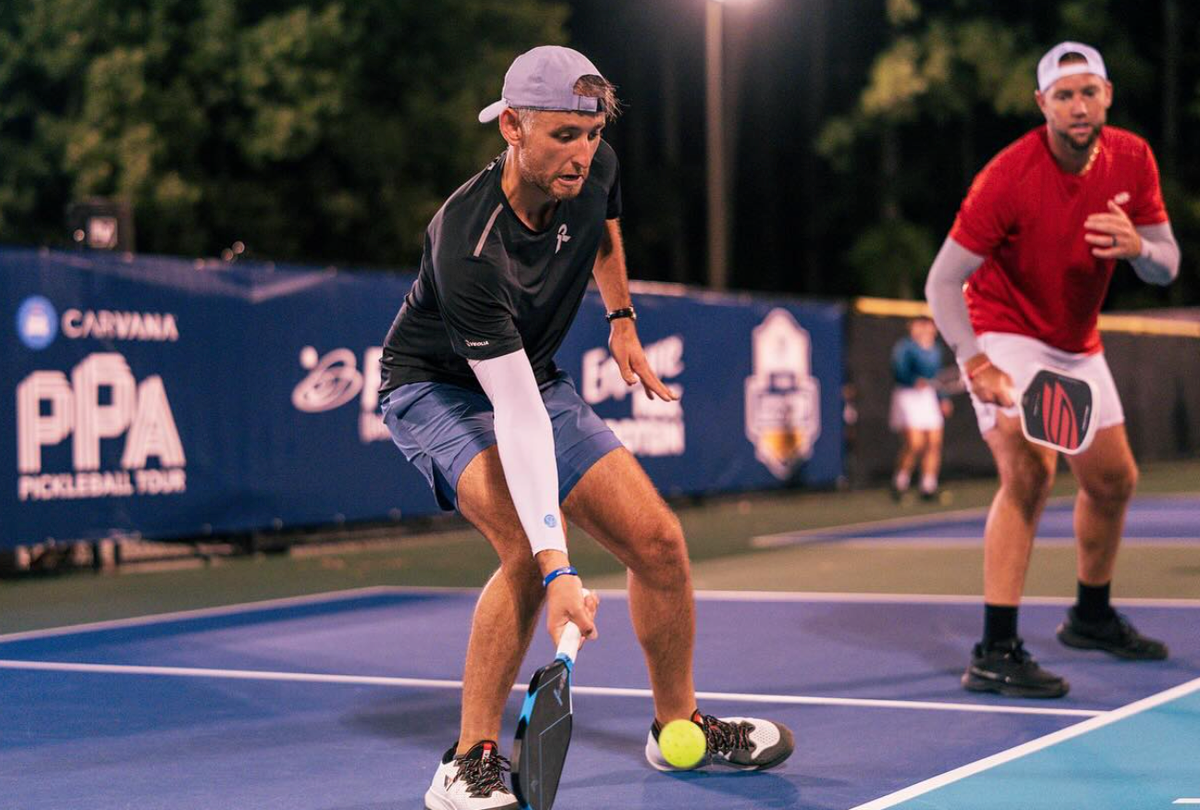
Pickleball Mental Game: Stay Calm Under Pressure and Win
The mental game competitive pickleball demands is just as important as your backhand or your third shot drop. Learn how top players stay calm under pressure, reset after errors, and build the focus that wins matches.
 The Dink PickleballThe Dink Media Team
In-Match Adjustments: When to Change and When to Commit
Good pickleball tournament strategy isn't rigid. You walk in with a plan, but you stay flexible.
The question is when to adjust and when to grind through a rough patch.
Rule of thumb: if something isn't working after five consecutive errors, adjust. If you've made one or two mistakes on a shot, stay the course.
Abandoning your game plan after a single error is panic. Recognizing a persistent pattern and making a tactical shift is intelligence.
Common mid-match adjustments that work:
- Slow the game down. If you're being out-powered, reset every ball and play a patience game. Resetting under pressure is a high-leverage skill in tournament play.
- Change your serve placement. If your opponent is teeing off on your serve, go body serves or switch up the speed. Advanced serve positioning can completely disrupt their return rhythm.
- Attack the backhand more. It's a cliche because it works. The backhand volley is the most common high-pressure breakdown point for recreational and intermediate tournament players.
- Move the point to mid-court. If your kitchen game isn't clicking, mid-court tactics can create new angles and disrupt your opponent's positioning.
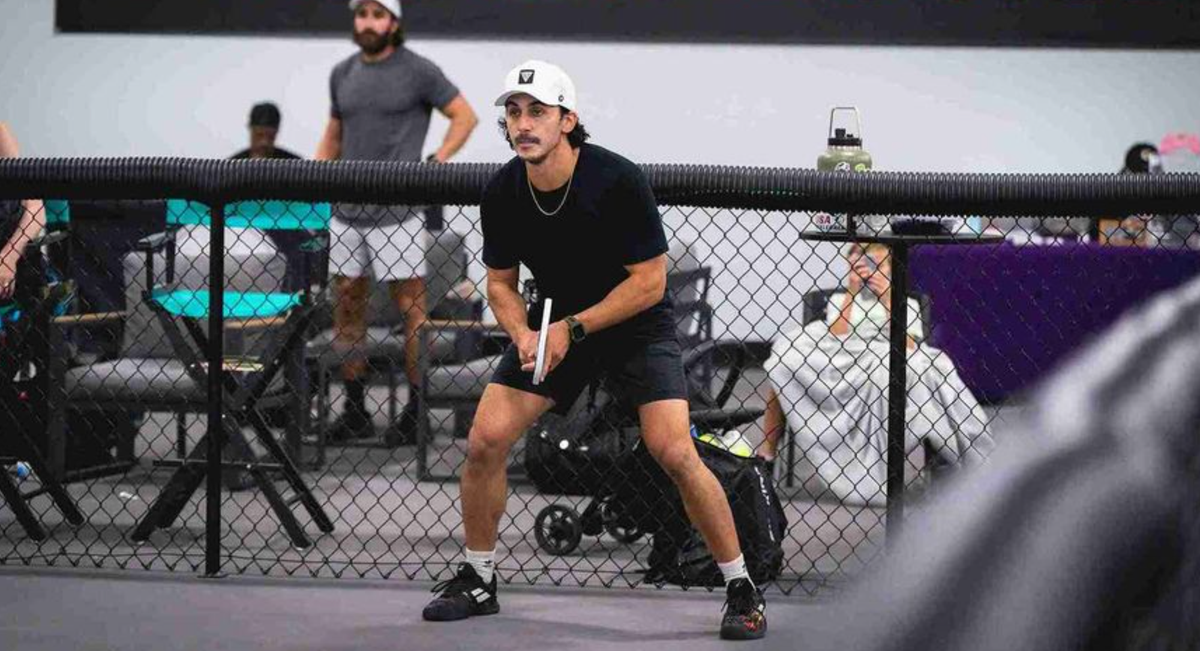
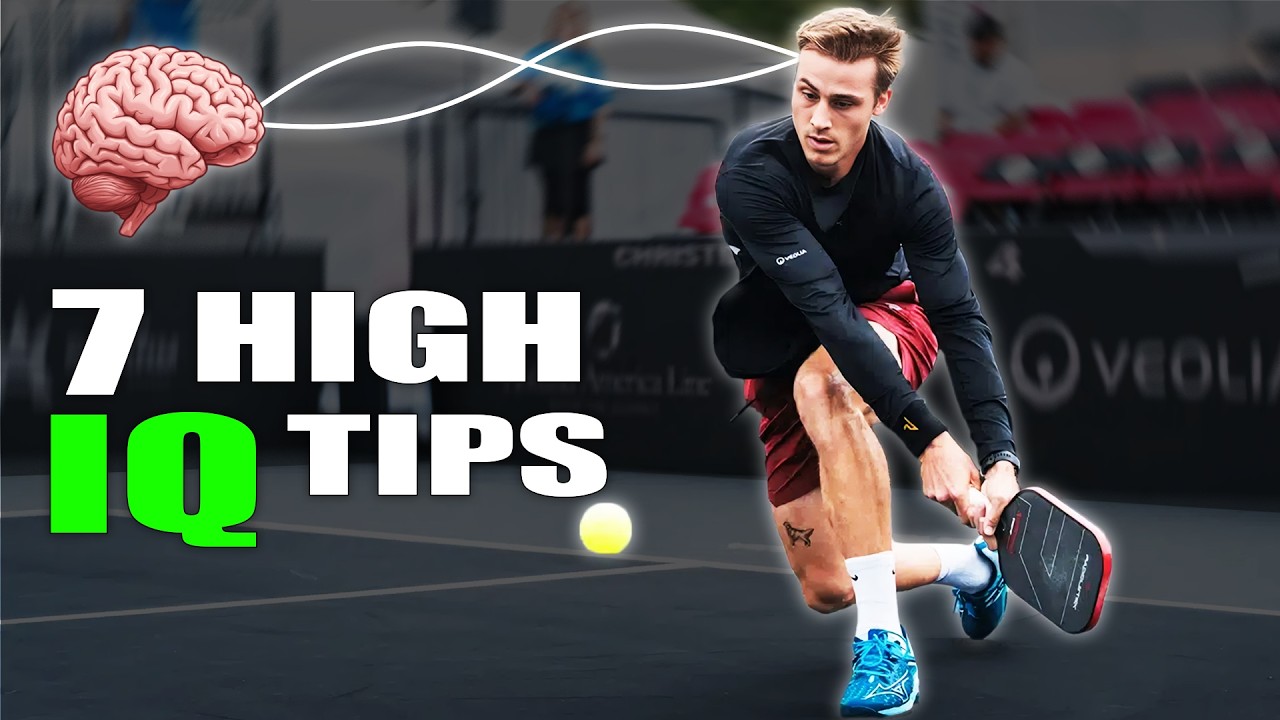
7 High-IQ Adjustments to Stop Playing Reactive Pickleball
When you combine smart decision-making with solid fundamentals, you’ll see immediate improvements in your win rate.
 The Dink PickleballThe Dink Media Team
Shot Selection: Winning the Points That Matter
Every point isn't equal in a pickleball tournament. Closing out a game at 10-9 requires different shot selection than playing from 0-0.
When the stakes are highest, go to your bread-and-butter shots. This isn't the time to try the Erne you've been working on for three weeks.
Your third shot selection sets the table for the entire rally. Drop when the return is deep and you're back. Drive when the return is short and you have an angle.
The drive vs. drop decision on the fifth shot follows similar logic.
Kitchen positioning is where tournaments are ultimately decided.
The team that gets to the non-volley zone first, stays there, and executes patient dinking wins the majority of points at every skill level below the pro game.
That's not an opinion. That's what the data shows.
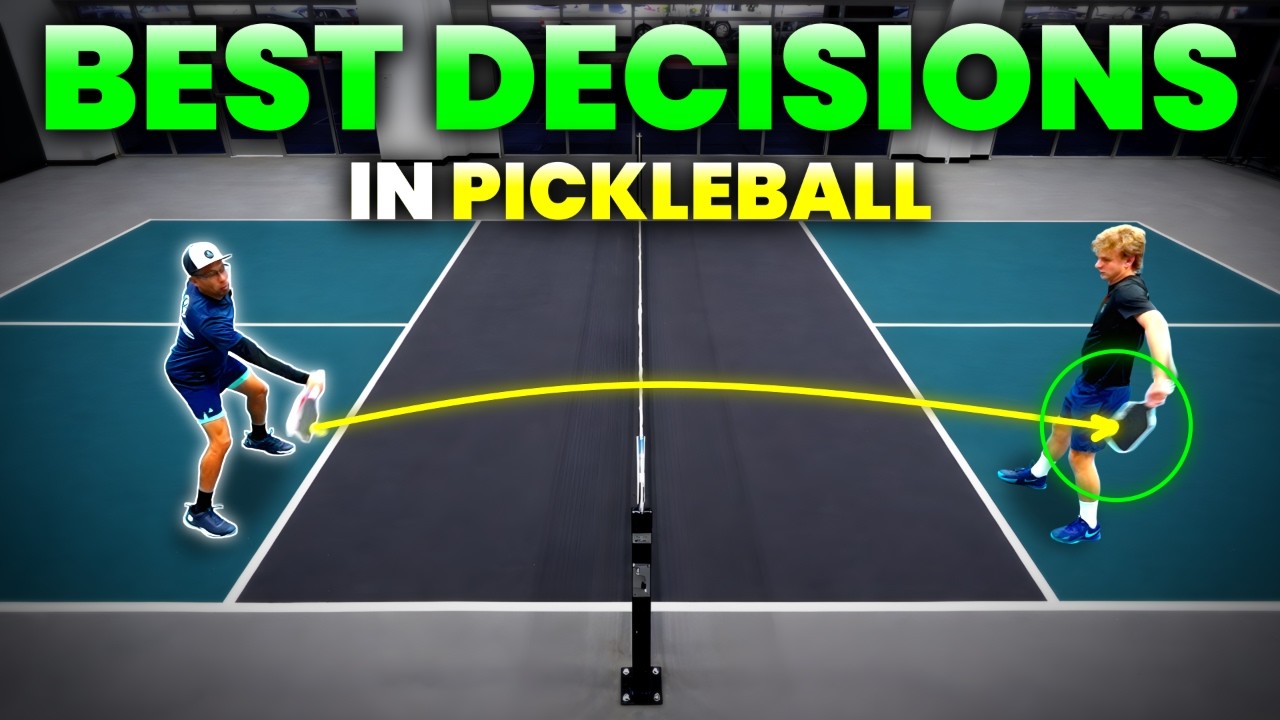
Pickleball Decision Making: Master Your Shot Selection
Pickleball decision making separates casual players from competitive ones. Master when to drive, drop, reset, and attack to transform your game.
 The Dink PickleballThe Dink Media Team
Key Takeaways
- Build your pickleball tournament strategy around your strengths, not around mimicking pros
- Mental composure is a skill, not a personality trait. Train it deliberately
- Warm up with intent, not just to break a sweat
- Scout opponents early in pool play and adjust before bracket play begins
- Use timeouts and scoring rhythm as active strategic tools
- Third shot selection and kitchen positioning win more tournament matches than raw power
💡
Heads up: hundreds of thousands of pickleballers read our free newsletter.
Subscribe herefor cutting edge strategy, insider news, pro analysis, the latest product innovations and more.
Frequently Asked Questions
What is the most important part of pickleball tournament strategy?
The most important part of pickleball tournament strategy is mental composure under pressure. Technical skill matters, but players who manage their nerves, reset between points, and stay process-focused win more matches than those who are technically superior but mentally reactive.
How should I warm up before a tournament match?
Arrive 30-45 minutes early. Start with dynamic movement, then work from slow dinking to drives and volleys, finishing with your most important shots like the third shot drop. A proper tournament warm-up rehearses your key strokes and raises your heart rate gradually so you're ready to compete from point one.
How do I scout opponents during pool play?
Watch how opponents respond to pace, placement, and pressure. Identify their strongest shot, their weakest shot, and whether they tend to go for low-percentage winners when frustrated. Build a simple mental profile and use it when you meet them again in bracket play.
When should I call a timeout in a pickleball tournament?
Call a timeout when your opponent is on a momentum run of four or more consecutive points. Don't wait until you're down a large margin. A timeout used early to break a run is far more valuable than one used as a last resort when the game is already out of reach.
How do I manage nerves at a pickleball tournament?
Train under pressure in practice, not just in competition. Use a consistent between-point routine (a breath, a phrase, a paddle tap) to create a mental reset after every point. Focus on the next rally, not the scoreboard. And give yourself permission to feel nervous, it means you care, and that energy can be redirected into focus.
Anuncie Aqui / Advertise Here
Sua marca para o mundo Pickleball! / Your brand for the Pickleball world!





 English (US) ·
  Portuguese (BR) ·