
 English
  Spanish
  Portuguese
  German
  Italian
  Japanese
  French
  Polish
  Russian
  Netherlands
  Hungarian
  Turkish
  Videos
  Thedink Pickleball

The UPA-A released a 71-page document detailing everything from a new card system governing on-court behavior to paddle challenges, line calls, and yes – blowing the ball over the net
The United Pickleball Association of America (UPA-A) just dropped its first official rulebook. It may, at first glance, read like a standard governance document, but the implications are much bigger.
This isn’t just a collection of rules. It’s a clear signal:
The UPA-A is establishing itself as the governing authority for pro pickleball—and tightening control over how the sport is played, officiated, and enforced.The new standards take effect May 22, 2026, at the opening event of the MLP 2026 season in Dallas.
The timing is not a coincidence: the UPA-A just received the green light from the IRS to become a not-for-profit, fully independent organization.
From serving rules to paddle challenges to player behavior, the new framework introduces structure, clarity, and, in some cases, real consequences to the PPA Tour and Major League Pickleball.
Here are five of the biggest takeaways.
💡
Love pickleball? Then you'll love our free newsletter. We send the latest news, tips, and highlights for free each week.
But First, Who Is This For?
This rulebook was created by the UPA-A, which governs play at the professional level on the PPA Tour and in Major League Pickleball.
In their words:
This milestone establishes a unified framework for competition across organized play and marks a significant step toward standardizing rules across the Professional Pickleball Association (PPA) and MLP, both domestically and internationally.Their stated mission is to "Champion, Regulate, and Grow the sport of pickleball all around the world."
As such, it's their hope that these standards will be adopted, in time, across other professional and minor leagues, competitive tournaments, moneyballs, etc.
Red Light, Green Light: Pro-Level Paddle Testing Is Coming to Amateur Pickleball Tournaments
The new Go-No-Go Machine weighs just 12 pounds and can test a paddle in under 60 seconds, enabling quick and intuitive on-site paddle testing at thousands of events nationwide.
 The Dink PickleballAlex E. Weaver
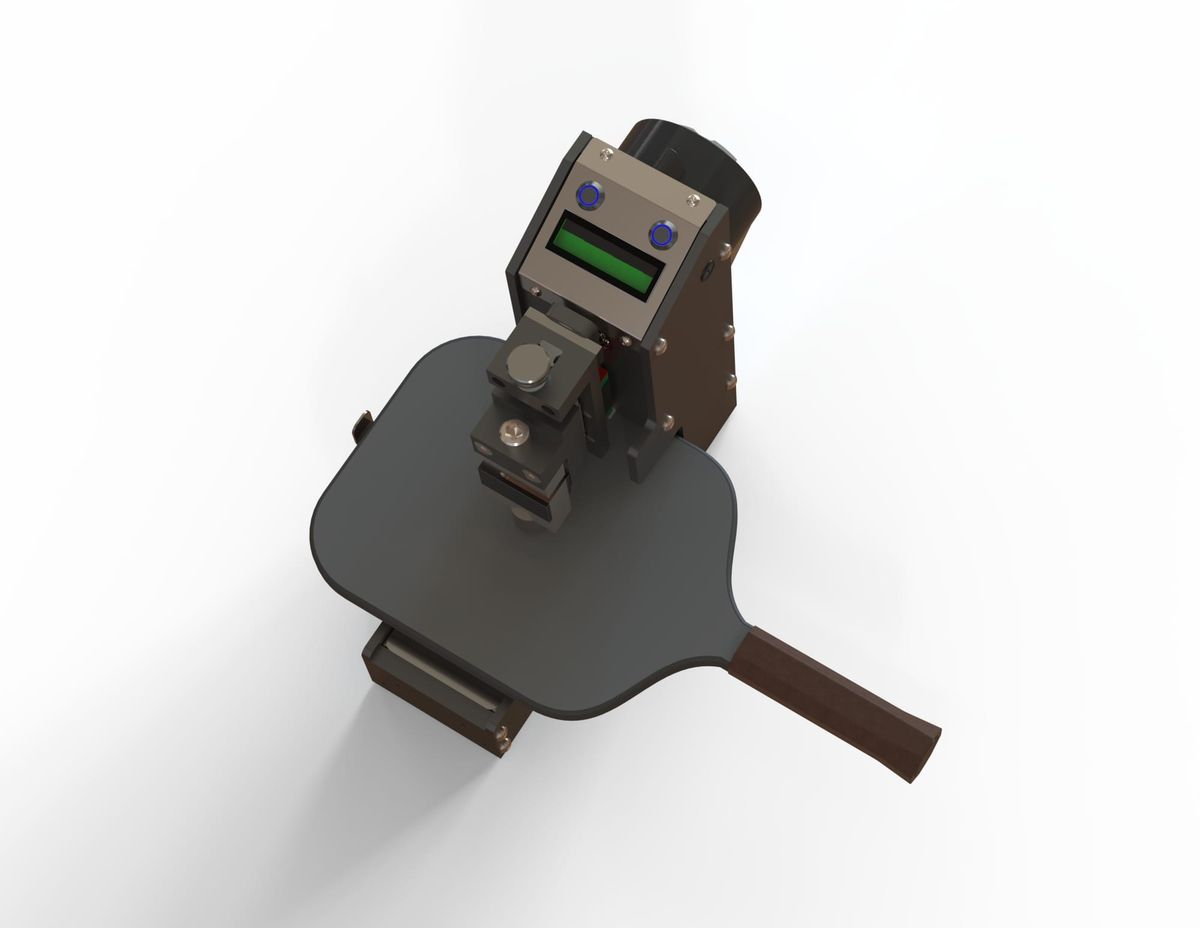
1. The Drop Serve Is Officially Dead in Pro Play
We're not sure anyone needed to hear this, but the UPA-A has eliminated the drop serve at the professional level. Full stop.
“Professional competition requires use of the Volley Serve. The Drop Serve is not permitted.”That alone is a major shift. But it doesn’t stop there.
The rulebook also tightens enforcement around the volley serve, including stricter requirements on ball release height and motion. Most notably, it introduces a zero-gray-area standard:
If feet placement, ball release, arm swing, point of contact, and/or paddle position was “close”, meaning legality cannot be clearly confirmed with certainty by visual observation, then the serve is not legal and a fault will be called.Translation: if it looks questionable or too close to call, it’s illegal.
This could have a real impact on players with borderline mechanics and puts more pressure on referees to make definitive calls.
2. Paddle Challenges Are Now a Formal Weapon
We’ve heard about paddle scrutiny for months. Now it’s fully codified.
Players can officially challenge an opponent’s paddle during a match—even in a gold medal match.
“A paddle challenge may be initiated at any time during an ongoing match, including the gold medal match.”Just know this: the match result will not change, regardless of the outcome.
Instead, penalties come after the fact:
- If the paddle passes → challenger gets fined
- If it fails → user gets fined and potentially sanctioned
This creates a fascinating dynamic. Challenges become less about immediate competitive advantage and more about long-term enforcement and accountability.
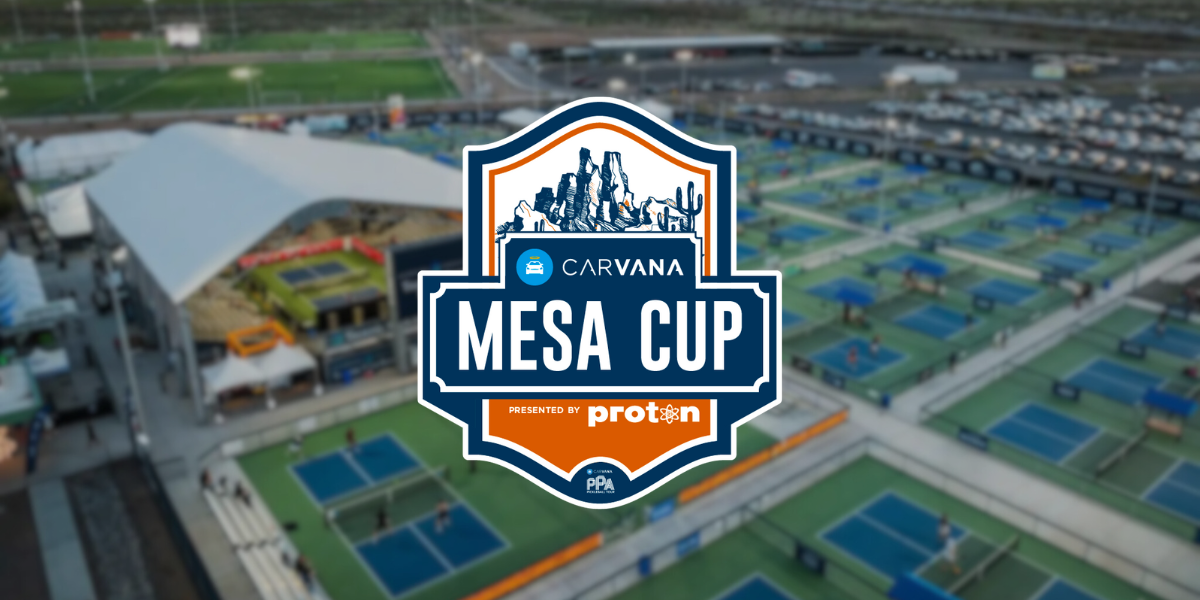
A Paddle Challenge, a Failed Test Result — Now, a Possible Rule Change for Pro Pickleball
Travis Rettenmaier challenged Liz Truluck’s paddle during their matchup in Mesa. Now the results are in -- and a possible rule change is in the works.
The Dink PickleballAlex E. Weaver
3. Video Challenges Now Come With Real Risk
UPA-A is also doubling down on video review—but with sharper edges.
Each team gets one free challenge per game. After that, you can still challenge… but you’re playing with fire.
“If a player/team loses a video challenge… a Mark is assessed, and one (1) point is awarded to the opponent.”A "Mark" is also a new addition; more on this below.
Even more interesting: line call accountability flips depending on the outcome.
“If the call is overturned, the player/team that made the incorrect OUT call is penalized.”That’s a big deal. It introduces true accountability for bad line calls, especially in high-stakes moments.
It's worth noting here that a more pervasive video line calling system through tech platforms like PlayReplay and OWL AI will be implemented at the beginning of this year's Major League Pickleball season next month.
Major League Pickleball Taps Owl AI to Automate Line Calls and Challenges for 2026 Season
Major League Pickleball (MLP)and Owl AI have announced a partnership for the 2026 MLP season. Owl AI will help with line calls and video challenge situations.
The Dink PickleballErik Tice
4. A Card System for Behavior
UPA-A is bringing structure to player conduct with a system that feels straight out of soccer.
- Warning = no penalty
- Mark (Blue Card) = formal warning that can escalate
- Foul (Orange Card) = automatic point to opponent
And it escalates quickly.
“If four (4) total points are awarded… the match is automatically forfeited.”The PPA Tour Is Instituting Stricter Cheating Penalties for Repeat Offenders
The new policy involves in-match penalties, post-match video review, and a running tally of offenses that can culminate in league-level consequences such as greater fines and even suspensions
The Dink PickleballAlex E. Weaver
This isn’t subtle. The rulebook explicitly targets:
- Paddle throwing
- Arguing with officials
- Delay tactics
- Coaching violations
- “Patterns of play that result in points… being conceded”
The following violations constitute Unsportsmanlike Behavior and will result in an Foul (Orange Card):
- Objectionable behavior, whether audible or visible, that is abusive, threatening, or degrading and that directly targets a person or otherwise compromises the integrity of the match.
- Hitting, kicking, throwing the ball outside the three-dimensional bounds of the playing surface when not in play.
- Striking or throwing the ball between rallies or games in disregard of surroundings, placing players, referees, or spectators at risk, with no person struck.
- Throwing or propelling a paddle in disregard of surroundings, placing players, referees, or spectators at risk, with no person struck and no property damaged.
- Any other pattern of conduct that rises to the level of extreme unsportsmanlike behavior (e.g., numerous egregious line calls, repeatedly refusing to acknowledge or comply with clear referee instructions affecting match administration).
And in case you're wondering, yes — the new rules do cover the act of blowing a ball over the net:
A player may not attempt to influence, propel, or alter the ball’s flight by any means other than a legal paddle strike (e.g., blowing on or fanning the ball, directing airflow, or using any object, apparel, or body movement to affect its path). A violation of this rule is a fault.Heads up: hundreds of thousands of pickleballers read our free newsletter. Subscribe here for cutting edge strategy, insider news, pro analysis, the latest product innovations and more.
5. Self-Officiating Just Got Much Less Messy
On any court, especially those that don't have an onsite referee, players cannot enforce faults on opponents.
A player/team may question a suspected opponent fault either at the time of occurrence or after a rally has concluded. However, a player/team has no authority to enforce a fault against an opponent. Enforcement authority rests solely with the player/team alleged to have committed the fault.If a disagreement arises:
- Question Raised After the Rally: If a suspected fault is brought to the attention of the opponent(s) only after a rally has concluded, and the opponent(s) do not acknowledge committing the fault, the rally will stand as played.
- Stoppage of a Live Rally: A player/team that stops play during a live rally to claim an opponent committed a fault has committed a stoppage-of-play fault if the opponent(s) do not acknowledge the alleged fault. The rally will be awarded to the player/team that did not stop play.
- Partner Disagreement: If partners on the same team disagree as to whether their team committed a fault, the benefit of the doubt will be given to the opposing team, and the rally will be awarded to the opposing team.
In short: play through, then sort it out—or live with the result.
6. New Leadership Brings the Rulebook to Life
UPA-A didn’t just publish a rulebook—it paired it with new key hires that directly support how these rules will be implemented, overseen, and enforced.
Two roles stand out:
- Onisha C. Smith, Director of Competitive Governance and Compliance
- Howard Hepworth, Director of Referee Training and Development
The titles themselves tell the story.
Smith’s role centers on governance and compliance, which ties directly to the rulebook’s broader mission: creating a consistent, enforceable standard across sanctioned competition.
Her first task, in fact, was leading the development of the rulebook itself.
“This rulebook is about more than rules, it’s about trust, consistency, and the integrity of competition,” said Smith.
“Our goal was to create a standard that can be applied uniformly while still respecting the realities of match play.”Hepworth’s role is just as critical, and more directly tied to what happens on court. He will be responsible for building and standardizing officiating—something the rulebook clearly leans into with expanded referee authority, video review procedures, and stricter enforcement language.
That connection is explicit in the rollout. The rulebook introduces more structure, but it also demands a higher level of officiating consistency to work as intended.
These hires reinforce the notion that this isn’t just a new set of rules; it’s the beginning of a more formal system for how pickleball is governed, officiated, and enforced on the PPA Tour and in MLP.
UPA-A Announces Reduced Paddle Certification Fees, Transition to Non-Profit Status
Beginning in 2026, the annual feel for paddle certification at the pro level will be cut in half to $10,000.
The Dink PickleballAlex E. Weaver
The Bigger Picture
There’s no single rule here that completely reshapes pickleball overnight.
But taken together, this rulebook does something more important:
It formalizes UPA-A as the authority over how pro pickleball is played on-court—and gives it the tools to enforce that authority.
From stricter serve rules to post-match paddle enforcement to behavioral penalties, this is about control, consistency, and credibility.
Or as the rulebook itself puts it:
“Rules do not limit competition, they make it possible.”For a sport still defining its professional identity, this feels like a significant step in the right direction.
Anuncie Aqui / Advertise Here
Sua marca para o mundo Pickleball! / Your brand for the Pickleball world!




 English (US) ·
  Portuguese (BR) ·