
 English
  Spanish
  Portuguese
  German
  Italian
  Japanese
  French
  Polish
  Russian
  Netherlands
  Hungarian
  Turkish
  Videos
  The Pickler

An inside look at the philosophy powering the sports’ fastest-growing ecosystem. A multi-platform strategy rooted in community, growth, and accessibility.
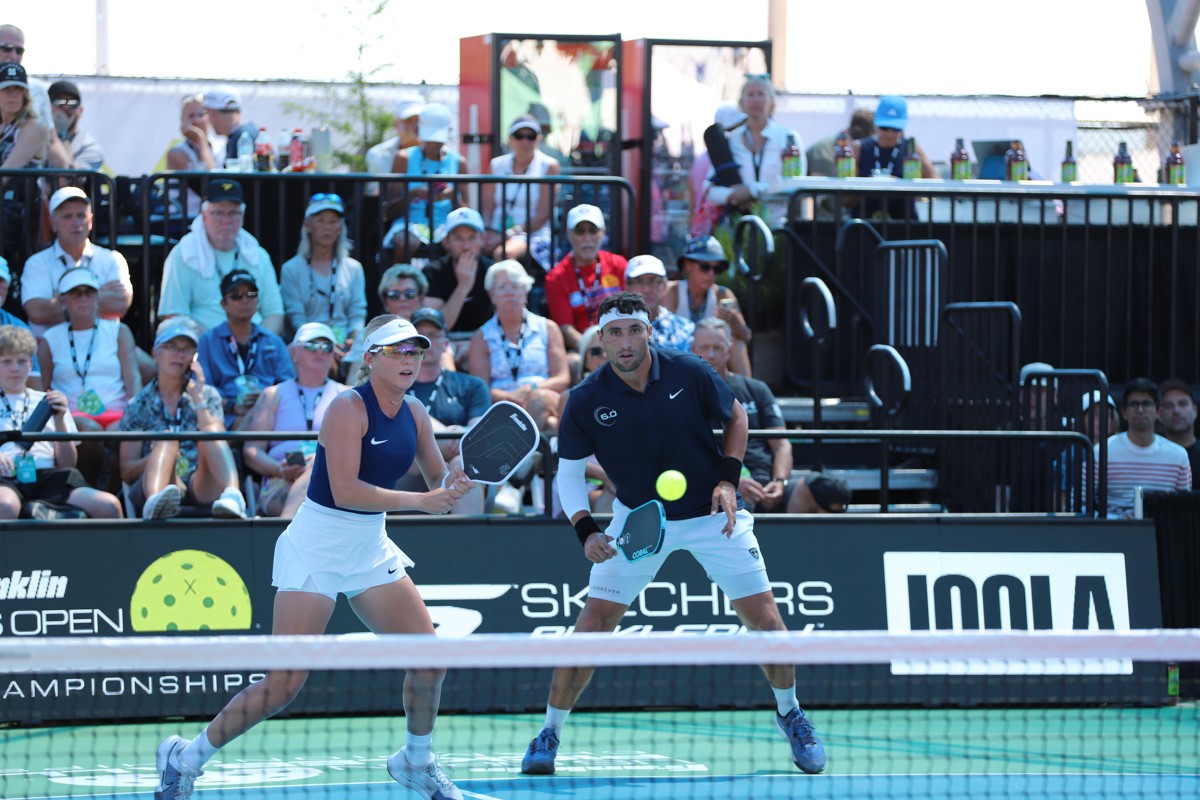
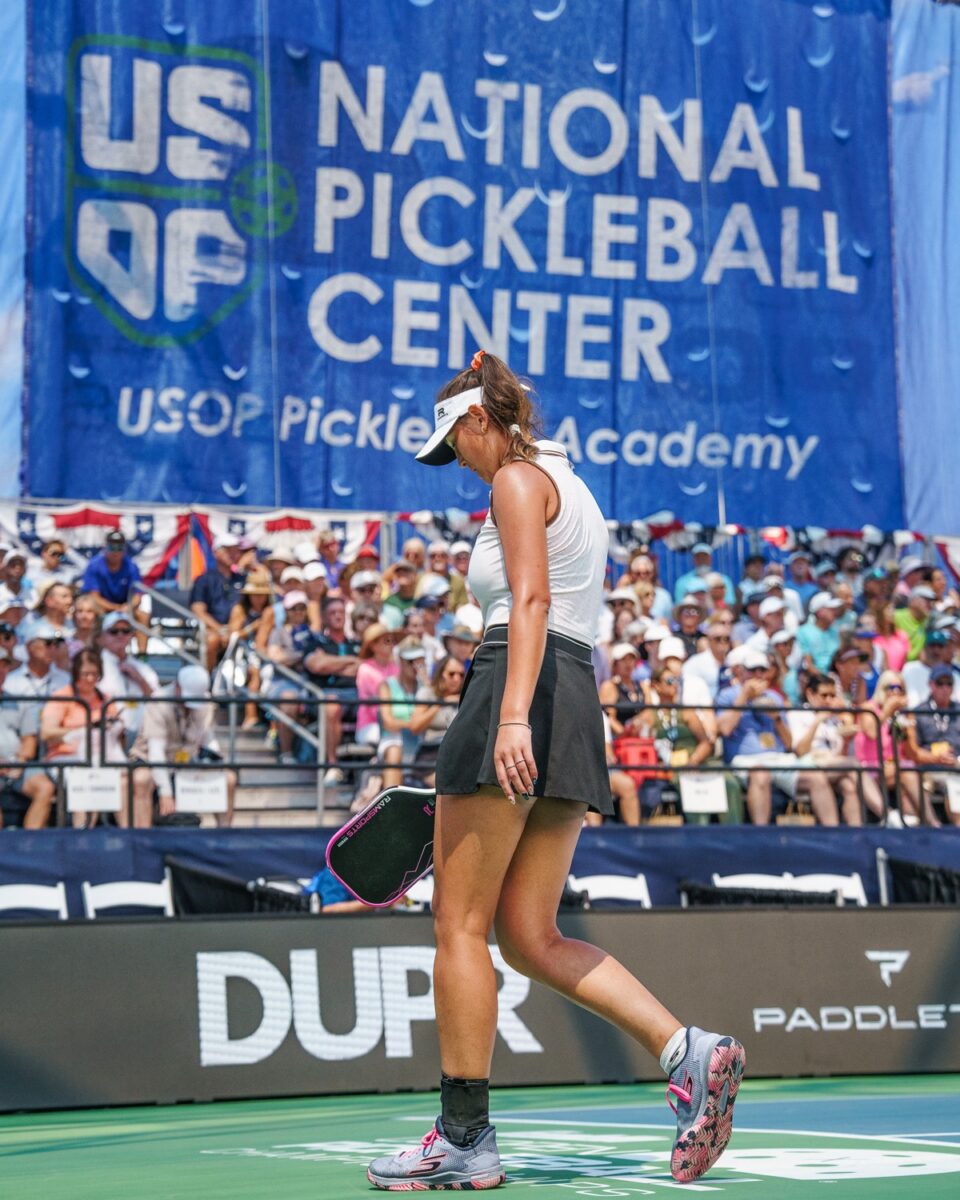
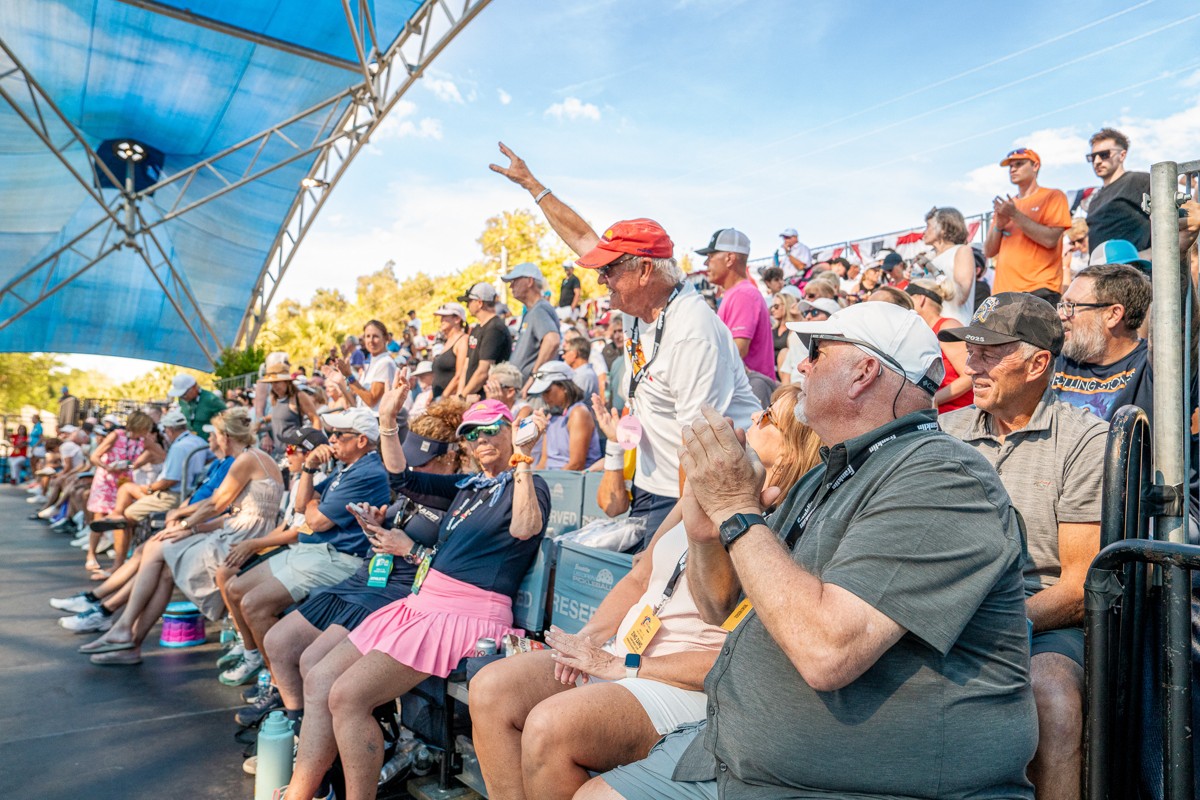
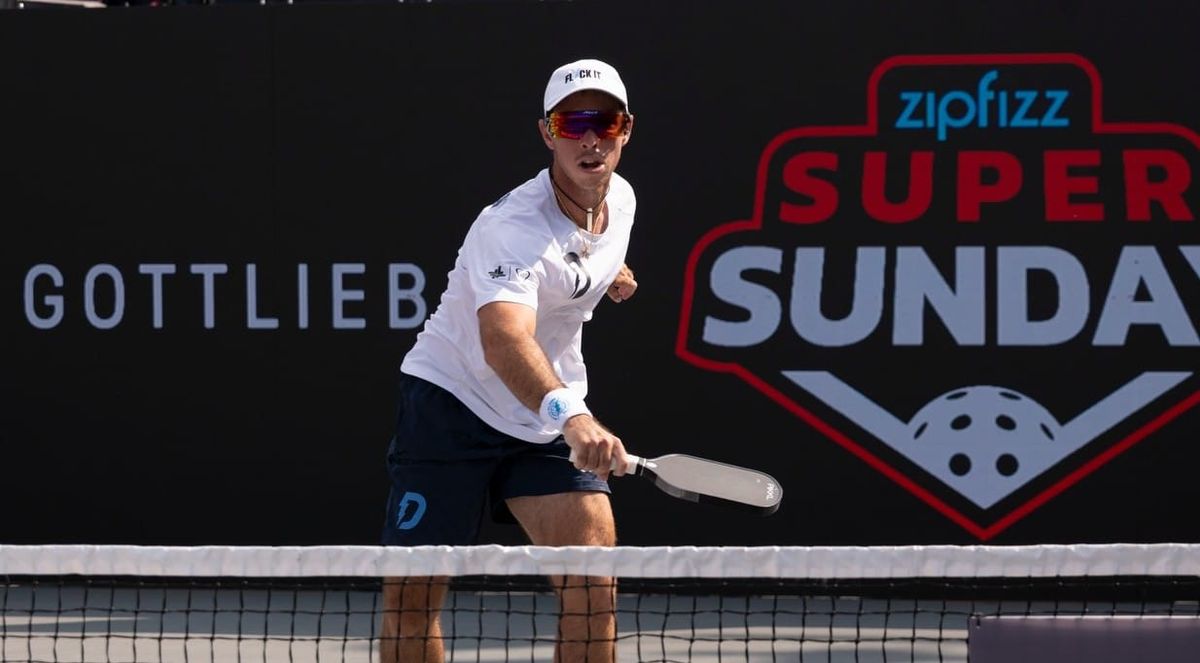
A record-setting Franklin US Open Pickleball Championships, the 10th anniversary edition, concluded on Saturday in dramatic fashion as world #1 player Anna Leigh Waters and her partner Jay Devilliers prevailed in an epic three-game match to win gold. This marked the final match of the 6,000 that took place at the National Pickleball Center over the eight days of The Open. Every match on center court was played before a sellout crowd of 1,300–a small but significant share of the 60,000 fans who attended throughout the week. And while this final match was a classic battle amongst the game’s very best, most of the activity throughout the week took place on the 59 courts surrounding the championship court where more than 3,800 amateur and pro players of all skill levels competed for gold. This duality—world-class competition alongside the full competitive field— is at the core of what makes pickleball unique, and the US Open its most significant and important annual landmark.
To fully understand this though, let’s take a step back.
The Open and its permanent home
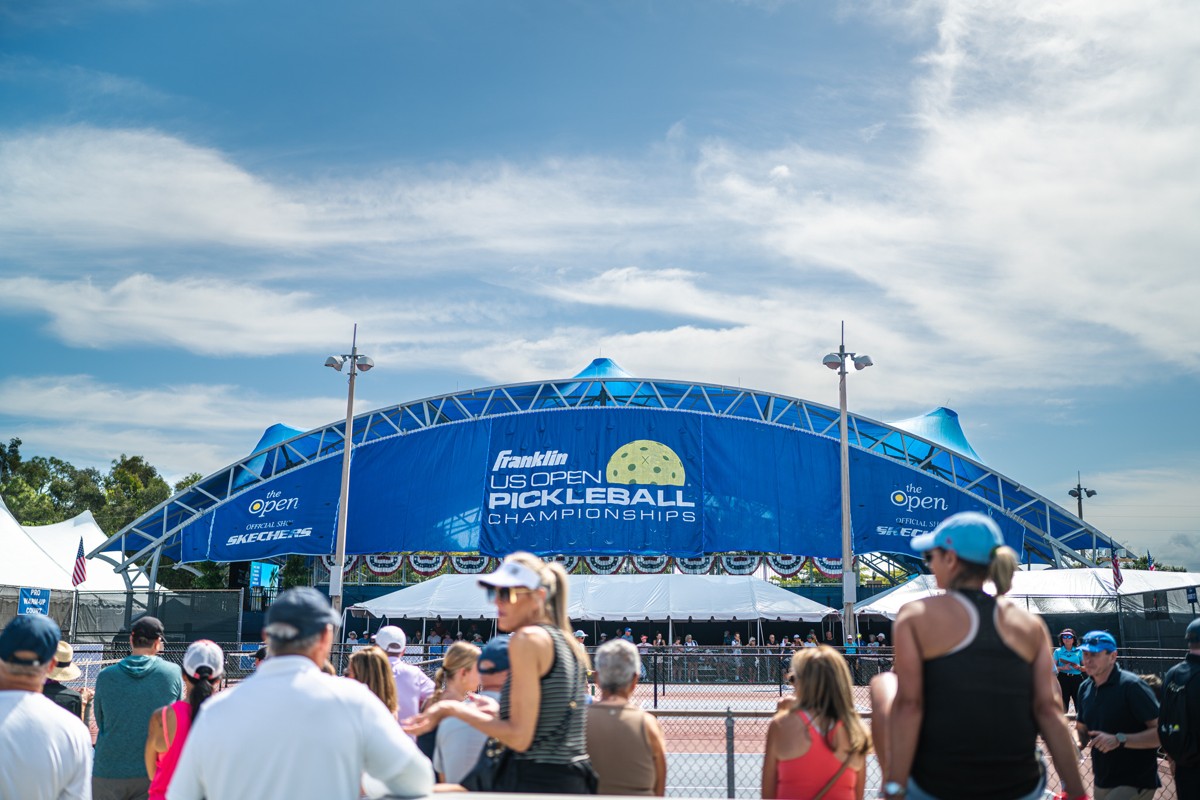
It took the recent pandemic to launch the popularity of a paddle game invented on the West Coast more than 60 years ago. Today, the heart and soul of the still-booming sport of pickleball has found a home at the 8,000-member USOP National Pickleball Center in Naples, Florida. It’s here where an annual competition-rich, margarita-soaked, good-vibes-only US Open Pickleball Championships serves as a splashy recess in the year-round service of the sprawling, still expanding 65-court campus. For much of the year, the facility provides a mecca for the international community of amateur pickleball players, drawing enthusiasts from around the world.
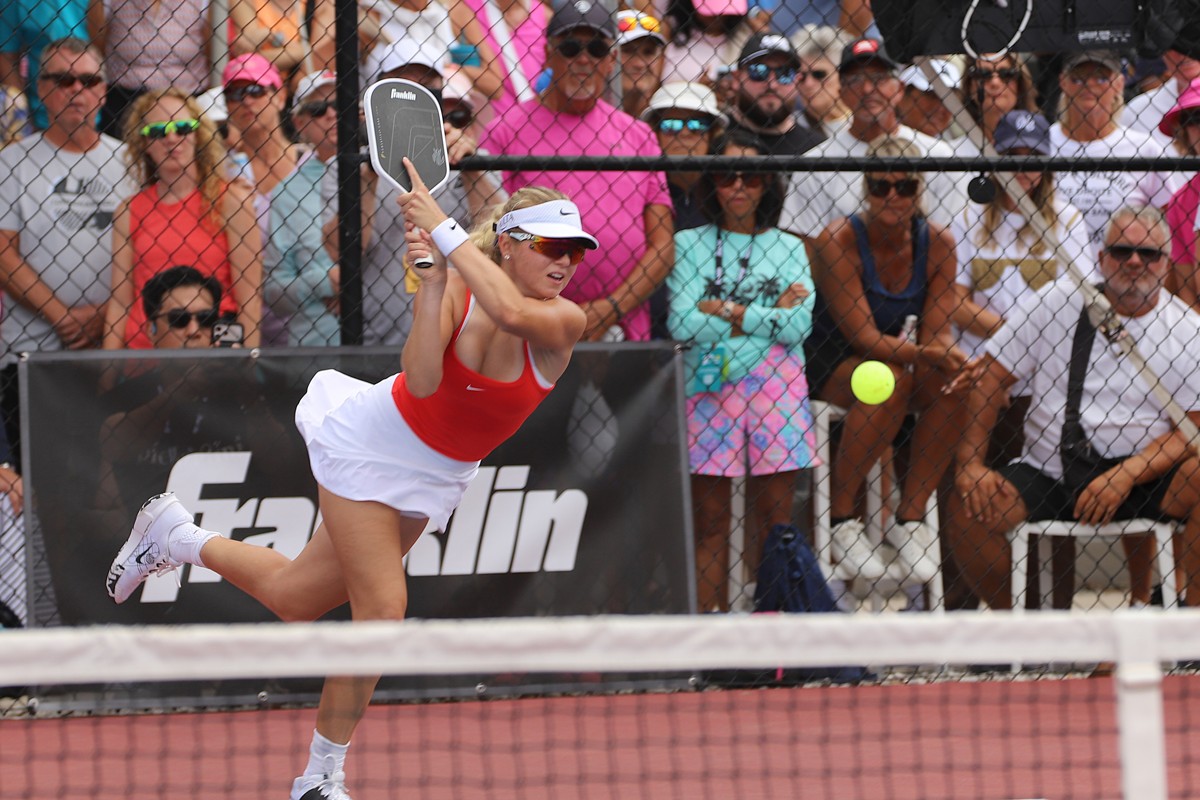
The presence of Waters and Devilliers in a field of 3,800 other players in Naples last week was just one element of a broader business vision held by the leaders of Pickleball4America, which owns both the tournament and the National Pickleball Center, as well as the Pickleball Den tech platform and Inside the Den blog. Together, these combined assets operate well outside the sphere of the professional pickleball tours—and they’re thriving. This success reinforces the organization’s “amateur-first, amateur-last” credo is a North Star worth following into the future. Burnishing the tournament’s reputation and scope—more than 60,000 spectators attended this year—remains a priority to P4A. If that means more pro pickleball players are able to play in the tournament, that’s fine, but also not essential. What’s more crucial is enhancing how the NPC serves players during the other 51 weeks of the year.
P4A’s growth strategy, which includes plans for the expansion of NPC’s academy, is centered on drawing the amateur pickleball player enthusiast to Naples as both an essential stop on their pickleball journey and sports bucket list. “We’re not trying to be a pro tour with some 52 events a year — what we’re trying to do is have year-round opportunities for playing, training, leveling up, participating in leagues and clinics,” said Ben Weinberger, president of the US Open. “We think what lifts the sport up is the amateur, and we can do that 365 days a year here in an incredibly focused way.”
Location, location, location
“It was nothing — just a park with a skateboard park, a roller rink, a tennis court, two soccer fields and that’s about it,” said Jim Ludwig about what he and his wife Carol Caefer saw of the East Naples Community Park in 2012, which is when the couple began playing pickleball. “We saw an opportunity down here to make this thing grow.”With Collier County officials in agreement, Ludwig and Caefer began networking and bringing their vision to life. The unused roller rink space was converted into nine temporary pickleball courts. By 2014, the complex had grown to 30 courts and more were planned for the following year, when Ludwig got a call from Terri Graham and Chris Evon who wanted to work with him to stage a US Open pickleball championship on the site. In 2016, the first tournament drew 700 competitors and about 2,500 spectators. Since then, the event has expanded dramatically, with participation increasing more than fivefold and attendance spiking over 24 times from year one—clear evidence of the tournament’s momentum and success.
Alongside the tournament’s evolution, into a 65-court megaplex that draws more than 400,000 players a year. Ludwig has witnessed a transformation in who is utilizing NPC and when.
“When we first started, the average age of the pickleball player was 67 years old,” said Ludwig. “The average age has gone down dramatically — now it’s down to around 41.” Today, the park operates from 7:30 am to 10:00 pm, with younger players filling the courts in the evenings after work, while the older cohort spends their daytimes there. The current membership fee is $100 for a year.
“We really think that there’s an opportunity to invest and help grow the sport year-round,” said Weinberger. “The National Pickleball Center provides that opportunity.” Weinberger pointed out that on almost any day of the year, the parking lots are full, every single court is in use, and “there’s a full pro shop of people and probably close to every one of them is an amateur. Maybe they’re a teaching pro and not a touring pro but it’s that integrated approach of whether you’re an endemic equipment or clothing brand, this provides a platform like nothing else that we’re aware of on an annual basis that culminates with the US Open every year on a global stage.” It’s that vision of making Naples a destination for both serious competitors and more casual pickleball enthusiasts that sits at the core of P4A’s strategy. “There’s a reason why Naples is the ‘pickleball capital of the world’ and we want to support that,” said Weinberger. “Anything we can do to support the broader pickleball community is great and inversely, anything the pickleball community believes would be good to have enables us with everything we do here.”
Leveling up as a destination
If the setup at the NPC brings to mind the way a casual golfer dreams of visiting Augusta, Georgia, if only to see where The Masters is held, or how a baseball fan would make an off-season trek to Chicago or Boston to tour Wrigley Field or Fenway Park, or how a basketball enthusiast would want to pop into Harlem’s Rucker Park, that’s very much part of P4A’s thinking, too. “There are people that come from all over the world to play pickleball here, to say that they’ve played pickleball here and part of that is the allure of being in this beautiful world class destination that they want to travel to time and time again,” said Mike Dee, the chairman and CEO of P4A. “We want to amplify the notion that NPC and the US Open are bucket list items — we want to take something that’s already very good and make it even better.” While the current experience at the NPC is already strong, its leaders see ample room to grow.
Many of the plans for enhancement and expansion are still in development , but its leaders, which include Dee, Weinberger and board member Bob Bowman, remain focused on ensuring any changes align to the interests of amateur pickleball players across the spectrum: those intent on leveling up from 3.5 to 4.5, those keen to try out the latest, greatest carbon-fiber, honeycomb-core paddle, or those who simply want to play a couple of games with friends and with an acceptable number of unforced errors. “We have definitely not reached capacity around here, we’re still in the early days,” said Weinberger.
The weather in Naples is usually ultra-cooperative, though excessive heat, humidity and wind can sometimes put a crimp on the fun, and rain can halt it altogether. As a result, building a weatherproof structure is a priority. Whether that means a totally enclosed, four-sided structure or more roofed courts is still being determined. At the same time, P4A is investing in the growth of the National Pickleball Center Academy, a destination for players looking to train at any level. “We want to provide that journey and provide the support, structure and infrastructure for them, whatever that means in terms of facility, coaching or training,” said Weinberger. “Besides a one-day intensive course that a local could sign up for, there could be week-long packages or even month-long residencies or camps for participants.”
As participation continues to climb, so does the need to support player health. While the initial wave of media attention around the surge of pickleball players’ visits to orthopedics’ offices has waned some, pickleball does generate its share of injuries. To address that, the USOP NPC is also exploring the benefits of having an on-site rehab clinic.
Starring: The vibes
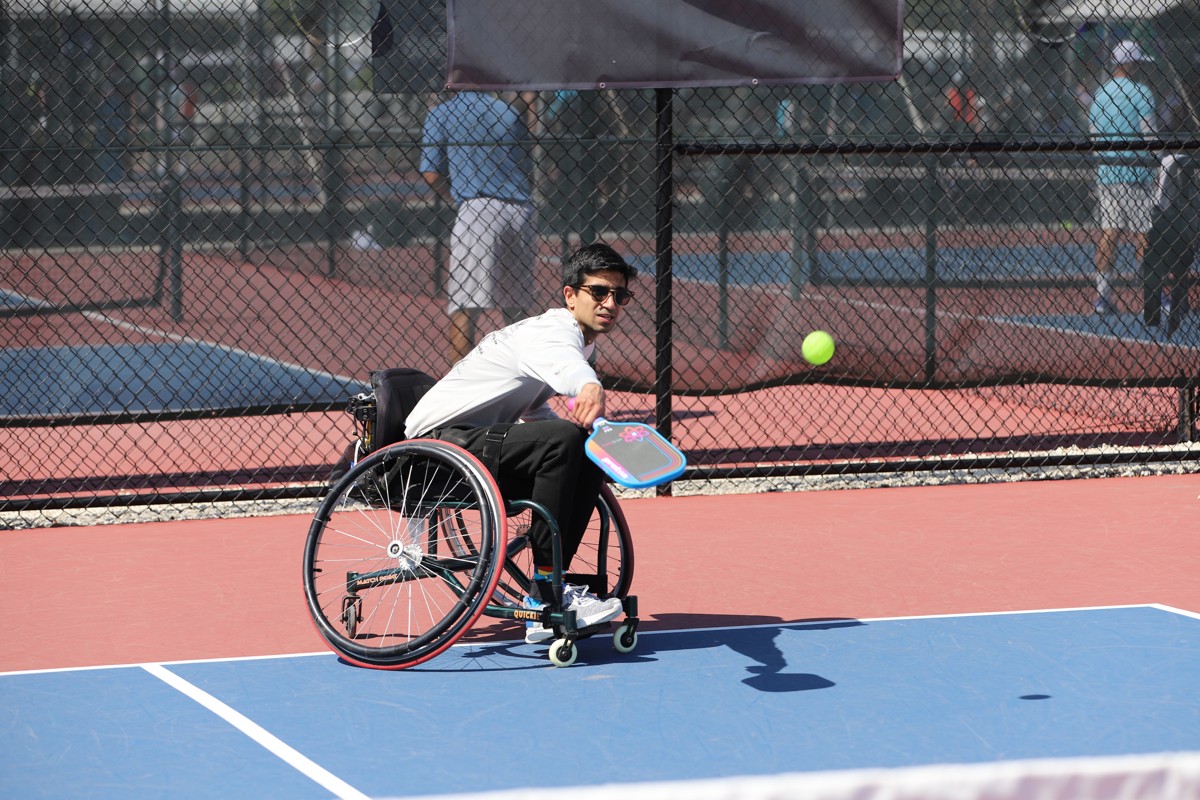
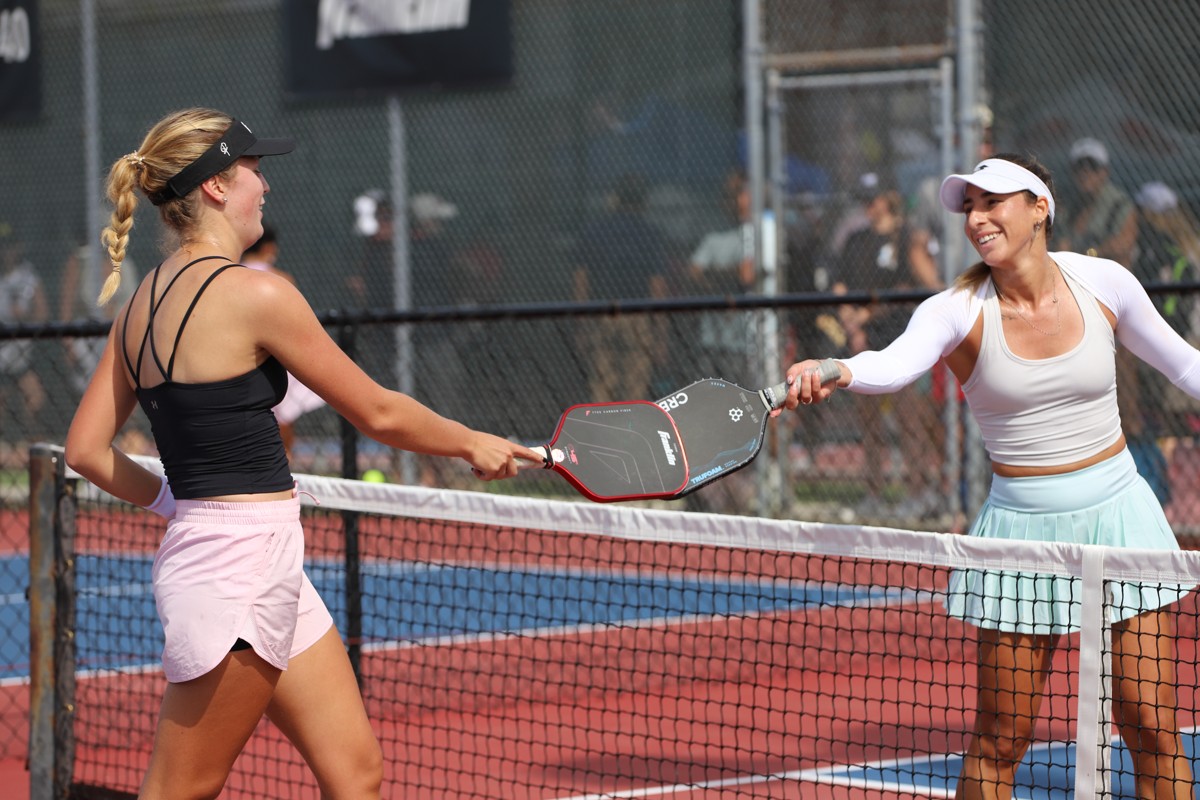
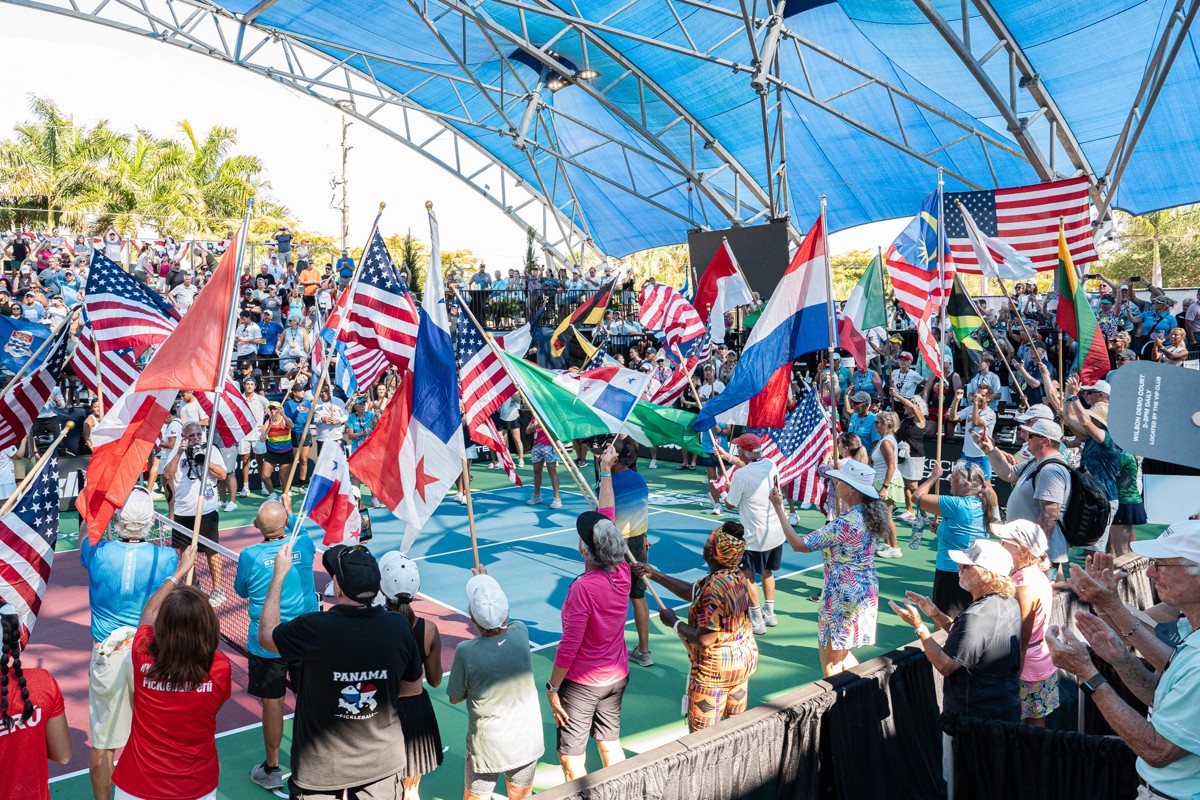
One thing P4A doesn’t have to tinker with too much is the US Open Pickleball Championships itself. The event continues to grow year after year—this year introducing a Special Olympics division for the first time, as well as the largest ever junior championship on opening weekend.
“Our view of the US Open is that it’s a tournament of the people, for the people and by the people,” said Dee. “It’s part Jimmy Buffett concert, it’s part county fair and it’s part US Open Pickleball Championships. It is accurately described as the Biggest Pickleball Party in the World.” The food vendors, bartenders and musicians keep the atmosphere light for the spectators but there’s no question they come to see high-level competition from some of the best pickleball players in the game. The fact that the PPA and MLP pro tours generally do not allow their tour members to compete at the US Open remains one of the more unusual unresolved issues in the pickleball universe. Weinberger said P4A essentially has adopted a “Switzerland, independent” stance when it comes to having more professionals at the tournament.
“We believe amateurs are at the heart and soul of pickleball and that they really drive what are the most important aspects of pickleball,” said Weinberger. “We love the pros. We embrace the pros. We have an incredibly rich pro category at the US Open — we’re one event, though, and not trying to be a tour. We are the US Open—and the name says it all. We welcome everyone: every country, every level of player, every tour. Anyone who loves this great game has a place here. “Open” isn’t just our name—it’s part of our DNA.”
Dee put a somewhat sharper point on the tournament’s “take them or leave them” attitude about more pro participation. “The quality of play we have at the professional level is extraordinary and very appealing to our fans,” said Dee. “Each year, we expand the field by approximately 10%, yet thousands of passionate players still miss out through the lottery. That reality is not lost on us. We also understand that some within the sport favor more restrictive models,” Dee added. “While perspectives may differ, we remain committed to the belief that greater access and openness help the game grow stronger for everyone—and we look forward to a future where more players have the opportunity to be part of it. Basic economic theory is on the side of freedom.”
Keeping it real
We’re a couple years past the blank-stare era of pickleball where the uninformed had never heard of it or simply assumed it was the national pastime of retirees.
With the Sports & Fitness Industry Association estimating about 5 percent of the U.S. population, or almost 20 million people, now play the sport, the industry that sprouted around the sport is entering a more mature phase. Exactly how and when the cracks that lie between the bright-lights of the professional tour and the amateur-centric community will be filled remains to be seen.
P4A’s vision for the future of pickleball is not so different than how it views the running world: A handful of elite marathons starring amazing and mostly anonymous runners sprinkled into a calendar of 10k’s and turkey trots powered by a foundation of recreational joggers who buy running shoes, strive to improve their PT’s and simply want to be outside and move their bodies because it’s fun and healthy.
While private equity circles the assorted equipment, apparel, leagues, clubs, clinics, rating systems, tours and media entities, P4A’s multi-platform operation is rooted firmly in Naples, tied directly to the NPC and the US Open and anchored in commitment to the amateur pickleball scene. The organization sees real and lasting value in that model. In today’s environment, P4A argues that appeal is more important than ever. “Pickleball’s just great — it’s a positive, unifying vibe in a world of polarization,” said Dee. “There are no red courts or blue courts; half the people are going home to watch Fox News and half the people are going home to watch MS Now. People go to the park, and they check whatever they believe or whatever their bank account says at the front gate to the facility. When they’re on the pickleball court, they’re just people playing pickleball. “How many things can you say that about in today’s world?”
As more schools around the country introduce pickleball into their athletic curriculum and more Gen Alpha and Gen Z’s embrace the sport’s accessibility and fun, participation numbers should only continue rising. “Pickleball is inclusive — there’s not a high-cost barrier to entry or is something that’s available only to those who can ‘afford it,’” said Weinberger. “Pickleball’s very affordable, it’s very attainable and it’s very reachable — we want to maintain the concept that pickleball is for any age, any skill level, any demographic, any country or nationality.”
The view of P4A from Naples is straightforward and not dependent on any single variable to succeed. The path forward, in its view, is already clear.
“The Open and the NPC provide us with somewhat of a blueprint so that we can look at things and say what’s best for the player, what’s best for the fans and spectators and how do we create that platform for continual double-digit growth, which is something we have seen every single year,” said Weinberger. “I don’t know what’s going to work in the pickleball world, and I don’t think it’s going to be a ‘winner take all.’ There’s room for a lot of models…
…We just know that our model is working.”
Source: The PicklerAnuncie Aqui / Advertise Here
Sua marca para o mundo Pickleball! / Your brand for the Pickleball world!



 English (US) ·
  Portuguese (BR) ·