
 English
  Spanish
  Portuguese
  German
  Italian
  Japanese
  French
  Polish
  Russian
  Netherlands
  Hungarian
  Turkish
  Videos
  Thedink Pickleball

The difference between 5.0 players and everyone else isn't speed or strength—it's understanding pickleball momentum. Master the three states of every rally and you'll start beating players who are technically better than you.
Here's what separates the best players from the rest: they understand pickleball momentum.
It's not about hitting harder or moving faster.
It's about reading the rally, knowing when you have the advantage, and making smart decisions about when to attack and when to reset.
Most amateur players think winning is about power. But 5.0-level players know better.
They win because they manage the momentum of every single point. Once you understand this skill, everything changes.
You stop scrambling and start controlling.
Love pickleball? Then you'll love our free newsletter. We send the latest news, tips, and highlights for free each week.
The Three States of Pickleball Momentum
Every rally in pickleball exists in one of three states. Understanding these states is the foundation of everything else.
- Neutral is when all four players are established at the kitchen line with no clear advantage. Everyone's on balance, everyone's patient, and nobody's created pressure yet. Think of it as a standoff. You're dinking, your opponents are dinking, and the point could go either way.
- Advantage happens when one team shifts the momentum in their favor. Maybe a ball gets left up and you can attack it. Maybe you hit a pressurized dink that makes your opponent uncomfortable. Suddenly, there's a clear winner and a clear loser in that moment.
- Disadvantage is the flip side. You're the one who's pressurized, off-balance, or scrambling. This is where most players make their biggest mistake.
Why Most Players Fail at Pickleball Momentum Management
Here's the mistake 90% of amateur players make: when they find themselves at a disadvantage, they immediately try to flip the point back to their advantage.
They're off-balance, they're getting pressurized, and their instinct is to hit a perfect drop shot that lets them come forward and take control.
But that's not how it works.
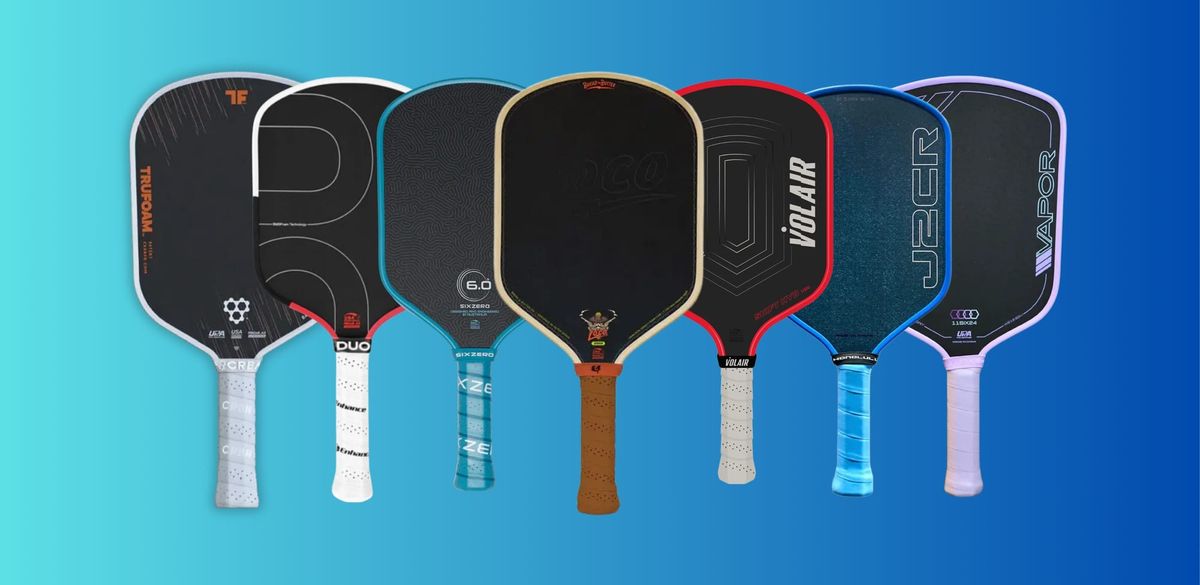
7 Hybrid Pickleball Paddles that Blend Power and Control
None of these are lacking in the oomph department. But their foam cores and hybrid shapes combine to offer more stability, control, and feel when it matters most.
 The Dink PickleballAlex E. Weaver
Most of the time, the smarter play is to get back to neutral first. Then, once you've stabilized the point, you can think about taking the advantage back.
This simple shift in thinking will improve your game immediately.
Think about it from the baseline. You're scrambling because the kitchen players are applying serious pressure.
Your natural instinct is to hit a perfect drop that allows you to advance. But if you're off-balance and pressurized, that drop is probably going to be short or weak.
Instead, focus on just getting the ball back. Hit it high if you need to. Get yourself back to neutral.
Once the point feels stabilized, then you can move forward.
The players who understand this concept make way better decisions on the court. They're not trying to be perfect every single time. They're being smart.
💡
Need some new pickleball gear? Get 20% off select paddles, shoes, and more with code THEDINK at
Midwest Racquet SportsWhen to Break the Rule: Exceptions to Neutral First
Now here's where it gets interesting.
There are specific situations where you can skip neutral and go straight from disadvantage to advantage. These exceptions matter.
In the transition zone, if your opponent fires a ball at waist level, you have a choice.
You could reset it and get back to neutral. But if that ball is at waist level, you can actually hit down on it and attack.
That's an opportunity to skip neutral and go straight to advantage. Why waste a reset when you can take the offensive?
The key is recognizing the ball. If it's coming at you above net level, you have the chance to angle your paddle down and hit down on it.
That's when you bypass neutral.
In kitchen line firefights, the team that wins is usually the team that can take a ball above net level and hit down on it first.
When you're in a firefight and you receive a ball at net level, look for the moment you can angle your paddle down.
That's your signal to attack. You're going from neutral or defensive straight to offensive in one shot.
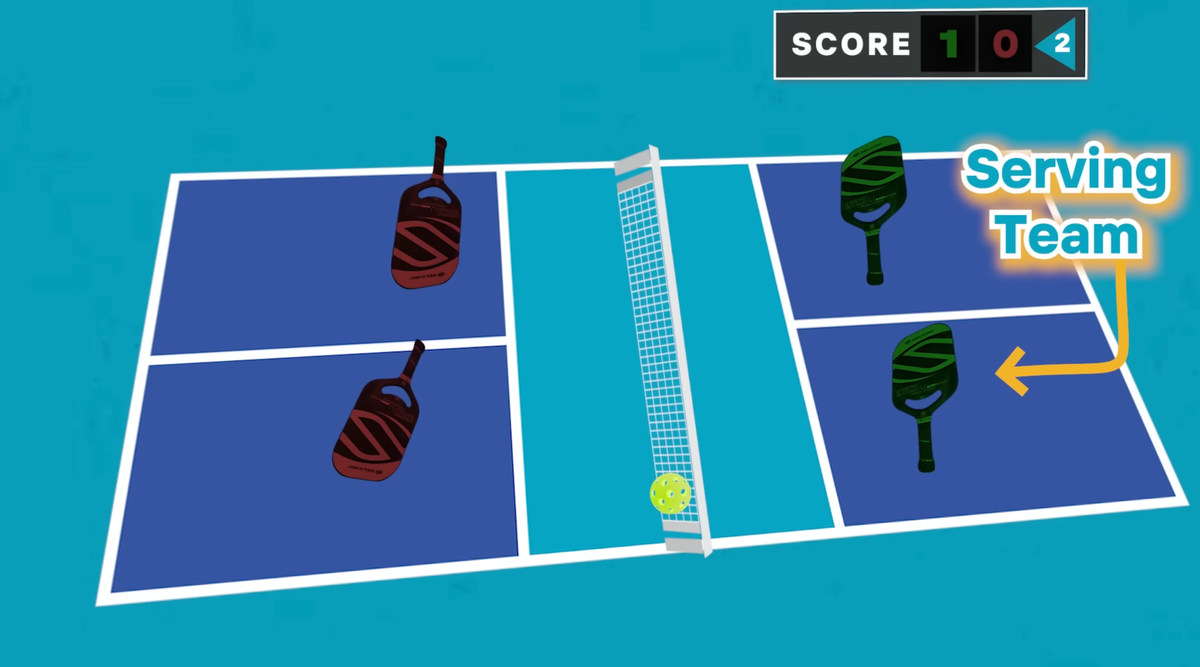
Pickleball Rules for Doubles: The Complete Breakdown
The beauty of pickleball is that once you understand these fundamentals, the game opens up. You start thinking about strategy, positioning, and shot selection. Pretty soon, you’re hooked.
The Dink PickleballThe Dink Media Team
The Trouble Drill: Putting It All Together
Understanding these concepts is one thing. Putting them into practice is another. That's where the Trouble drill comes in.
Here's how it works: one player starts at the baseline while the other is at the kitchen.
The kitchen player feeds an overhead at about 60 to 70% power, deep into the court.
The baseline player is at a massive disadvantage and has to figure out how to get back up to the kitchen line and win the point.
This drill forces you to make real decisions.
- Sometimes you'll focus on getting back to neutral first.
- Sometimes you'll be in the transition zone and have the chance to attack.
- Sometimes you'll be in a firefight and need to recognize when you can hit down on the ball.
The beauty of the drill is that it doesn't require perfection. You don't have to hit a perfect drop on your first shot. You can use a sky lob. You can use a drive.
You can hit a reset. There are multiple ways to get back to neutral, and the drill teaches you to recognize them all.
3 Pickleball Drill Alternatives to Level Up Your Game
Hate drilling? A top pickleball coach just revealed 3 pickleball drill alternatives that work better than traditional practice. These methods focus on intent, extended warm-ups, and court positioning to accelerate your improvement.
The Dink PickleballThe Dink Media Team
How Pickleball Momentum Changes Everything
Once you start thinking about pickleball momentum instead of just hitting the ball, your entire approach to the game shifts. You're no longer just reacting.
You're reading. You're thinking two shots ahead. You're making strategic decisions based on where the point is in its momentum cycle.
This is why 5.0 players seem to be in control even when they're on the run. They're not faster or stronger.
They're smarter about momentum.They know when to reset, when to attack, and when to be patient.
The good news? This skill is learnable. It's not about natural talent.
It's about understanding the framework and then practicing it until it becomes second nature.
💡
Heads up: hundreds of thousands of pickleballers read our free newsletter.
Subscribe herefor cutting edge strategy, insider news, pro analysis, the latest product innovations and more.
Frequently Asked Questions
What's the difference between neutral and advantage in pickleball?
Neutral is when all four players are at the kitchen line with no clear advantage. Advantage is when one team has shifted the momentum in their favor, usually by hitting a pressurized shot or getting a ball above net level. In neutral, the point could go either way. In advantage, one team has the upper hand.
Should I always try to get back to neutral first?
Most of the time, yes. If you're at a disadvantage and off-balance, getting back to neutral is the smart play. However, there are exceptions. If you're in the transition zone or in a kitchen line firefight and you get a ball at waist level or above, you can skip neutral and attack directly.
How do I know when to attack instead of reset?
Look at the ball's height. If it's coming at you above net level, you have the chance to angle your paddle down and hit down on it. That's your signal to attack. If it's below net level, a reset is usually the smarter play.
What's the Trouble drill and how do I practice it?
The Trouble drill has one player at the baseline and one at the kitchen. The kitchen player feeds an overhead deep into the court, putting the baseline player at a disadvantage. The baseline player then has to work their way back to the kitchen line and win the point. It teaches you to recognize when to reset, when to attack, and how to manage momentum under pressure.
Why do 5.0 players seem to always be in control?
They understand pickleball momentum. They're not trying to hit winners on every shot. They're making smart decisions about when to reset, when to attack, and how to manage the momentum of the rally. This strategic thinking is what separates the best players from everyone else.
Want to level up your pickleball game? Subscribe to our free newsletter for weekly tips, strategy breakdowns, and the latest news from the pickleball world.
Anuncie Aqui / Advertise Here
Sua marca para o mundo Pickleball! / Your brand for the Pickleball world!







 English (US) ·
  Portuguese (BR) ·