
 English
  Spanish
  Portuguese
  German
  Italian
  Japanese
  French
  Polish
  Russian
  Netherlands
  Hungarian
  Turkish
  Videos
  Thedink Pickleball

Staying mentally sharp late in a match for seniors isn't about grinding harder when your legs go. It's about the fuel, the reset routine, and the shot selection you lock in before fatigue ever shows up.
Staying mentally sharp late in a match for seniors is the difference between winning 11-9 and explaining why you tried a Houdini lob at 9-all.
You know the moment. Third game, legs heavy, and the crosscourt dink you've hit ten thousand times goes into the tape. Your technique didn't change.Your attention clocked out fifteen minutes ago and nobody told you. Here's the thing: that collapse is more fixable than most players assume.
Love pickleball? Then you'll love our free newsletter. We send the latest news, tips, and highlights for free each week.
Why Does Your Game Fall Apart in the Third Game?
Because your focus fades before your legs do.
Players blame conditioning, but attention goes first, and attention failing looks exactly like a body failing: late paddle, soft footwork, bad choices.That's the case for treating staying mentally sharp late in a match for seniors as a tactical skill, not a character trait, and for watching the ball all the way through contact when you're tired.
Racket sport research offers a useful parallel.
A 2024 review of mental fatigue in racket sports found mentally fatigued players showed slower psychomotor response times and reduced stroke accuracy in table tennis, badminton, and padel.It wasn't a pickleball study or a senior study, so treat it as a pointer rather than proof.
But anyone who has sprayed a routine third shot in game three knows the pattern. It's also why we keep coming back to a different kind of reset.Pickleball makes it worse because of the decision load. You're making a read every two seconds: attack or reset, in or out, mine or yours.
Those small choices stack, which is why so many players hit a mental wall before a physical one.
What Is Mental Fatigue, Exactly?
Mental fatigue is the drop in attention and decision quality that builds from sustained concentration, separate from how tired your muscles are.
In pickleball terms, it's when you still know the right shot but pick the wrong one anyway, a half second late.
It's why elite players guard their attention during long dink rallies.
💪
Ready to level up? Get the best discounts from Pickleball Central, automatically applied to your cart.
Staying Mentally Sharp Late in a Match for Seniors Starts Before You Serve
Most of your third-game focus is decided before the first serve.
Sleep, fluids, and a real warm-up do more for your late-match brain than any amount of in-game grinding, and all three are boring enough that nobody treats them as strategy.
Worth knowing alongside what senior players should actually avoid.
Sleep first. A 2023 review on sleep and cognition reported moderate to high quality evidence that seven to eight hours is an optimal range, with durations outside it associated with greater risk of impaired working memory and executive function.That's general adult research, not a pickleball study. Still, working memory is the system you lean on when you're tracking a paddle face at 9-all.
Then there's the warm-up, which most rec players treat as four minutes of crosscourt dinks and a stretch they half commit to.
Warming up your body and your mind properly is the cheapest focus upgrade available, and it sits on top of the fitness base senior players train.
How Much Should You Be Drinking During a Long Session?
Sip steadily rather than chugging between games.
A 2025 review on hydration in older adults describes drinking before activity, taking fluid roughly every 15 to 20 minutes during it, and rehydrating afterward.It also notes athlete research finding cognitive changes above about 2% body mass loss in fluid.
The flip side matters too. NATA guidance advises replacing what you sweat out without gaining fluid weight, a real caution against overdrinking.Needs vary by sweat rate, climate, and health, so treat this as a pattern, not a prescription.
More in why water consumption matters in pickleball and recovery habits between sessions.
How to Stay Focused During a Pickleball Match
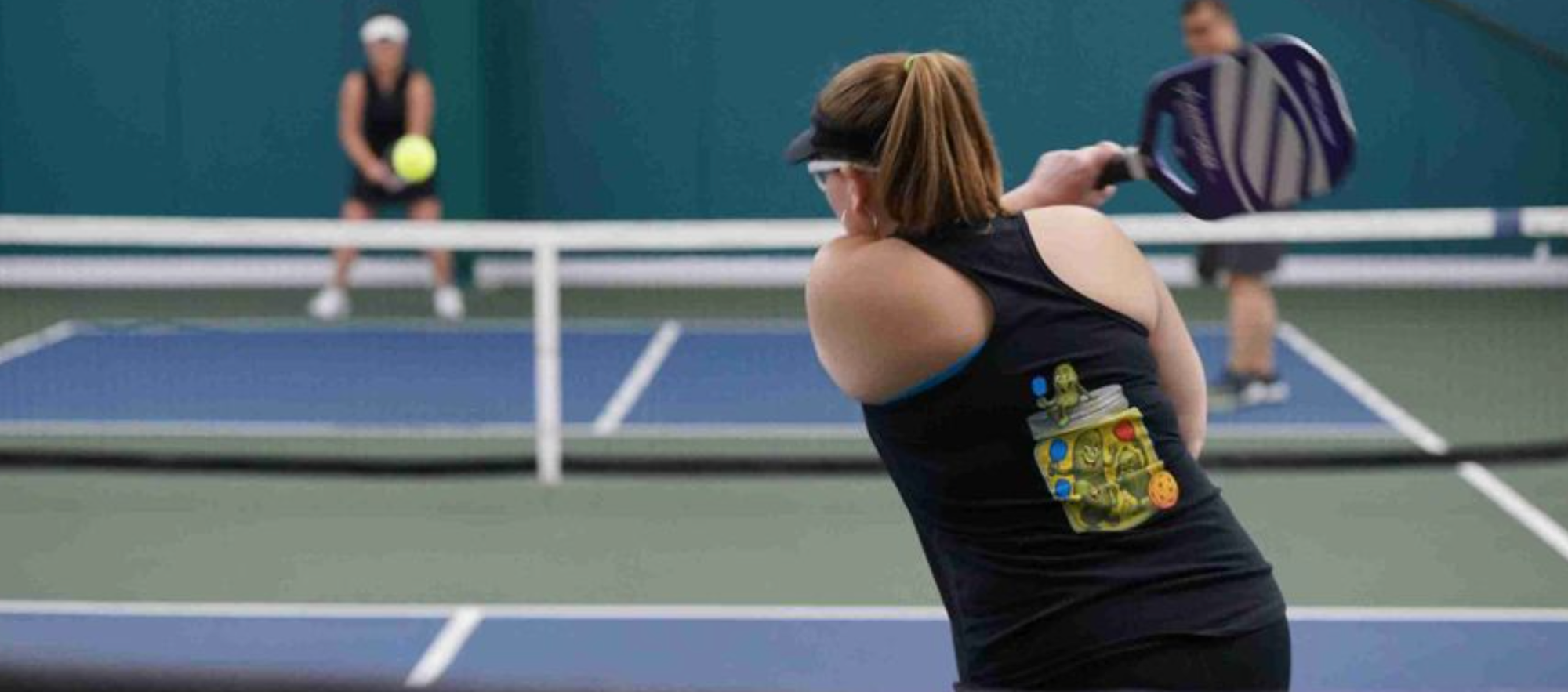
Learning how to stay focused during a pickleball match is the difference between players who choke under pressure and players who thrive. These 5 in-game mental techniques give you the tools to stay locked in from the first serve to the final point.
 The Dink PickleballThe Dink Media Team
The In-Match Habit Behind Staying Mentally Sharp Late in a Match for Seniors
Build a between-point routine and run it every point, especially after the ugly ones.
It gives your attention somewhere to land instead of drifting to the score, your knee, or the guy who keeps calling your serves out.It pairs with the grip and footwork mechanics seniors rely on.
Here's a four-step version that takes about eight seconds:
- Turn and walk away from the net. Physically separate from the point that just ended.
- One slow breath out. Longer exhale than inhale. That's it.
- Touch your strings or spin your paddle. A physical cue that tells your brain the last point is closed.
- Pick one target before you return to the line. Not a plan. One target.
That last step matters more than the breathing. Walking back with a specific intention is what separates a reset from standing there feeling annoyed.
More on that in the six second mental reset and in staying calm under pressure.Honestly, the players who hold up best in game three aren't the fittest ones.
They're the ones with the most boring pre-point habits, which is why staying mentally sharp late in a match for seniors is a rehearsal problem more than a willpower problem.
Finding mental clarity before a match starts the same process an hour earlier.
💪
Ready to level up? Get the best discounts from Pickleball Central, automatically applied to your cart.
Staying Mentally Sharp Late in a Match for Seniors Means Simplifying, Not Trying Harder
Cut your shot menu in half when you get tired. Fatigue degrades your hardest shots first, so the correct response is fewer options, not more effort.
The Erne stays in the bag. So does the around the post attempt. What's left is what you can execute at 70%: deep returns, high percentage dinks, resets to the middle.That's the argument for playing the percentages and for the case for boring pickleball, and it lines up neatly with the safe and simple scoring strategy built for senior players.
How to Manage Pickleball Tournament Nerves
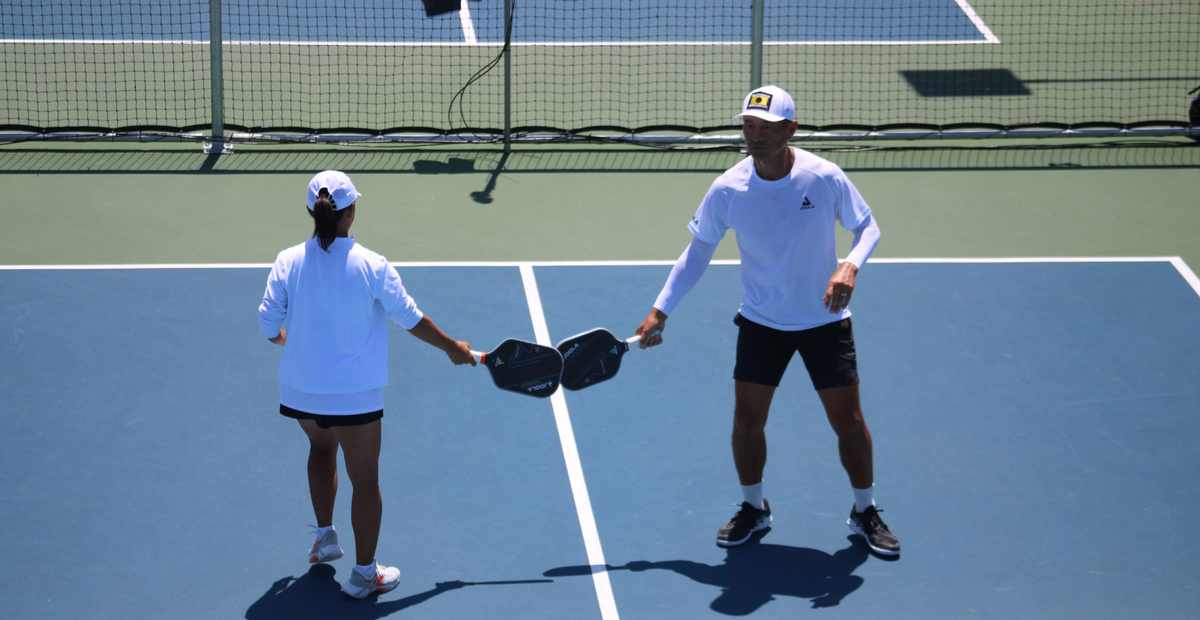
Pickleball tournament nerves hit almost every competitive player, even the ones who look ice-cold on court. This guide breaks down exactly how to manage pre-match anxiety with mental prep strategies that work when the pressure is on.
 The Dink PickleballThe Dink Media Team
What Should You Actually Hit When You're Gassed?
Hit higher, deeper, slower. Every late-match adjustment should buy time, because time is what mental fatigue takes first.
Raise your dinks four to six inches. You give up a little offense and get back a lot of margin.
Hit returns deeper and higher rather than flatter, which keeps opponents back and buys you an extra beat to reach the line; the return of serve keys for senior players are built on this.And when you're stuck in no man's land, stop trying to win the point from there and escape the transition zone cleanly.
Keep one weapon: the offensive lob.
Low effort, high reward against tired opponents who stop moving their feet, and senior players have two versions worth knowing.
Is there a fitness floor under all of this? Of course.
But most rec players lose those last four points to decision quality, not VO2 max, which is why staying mentally sharp late in a match for seniors starts with these five strategies for senior players rather than with another conditioning block.
Third Shot Pickleball Placement: 3 Rules That Work Every Time
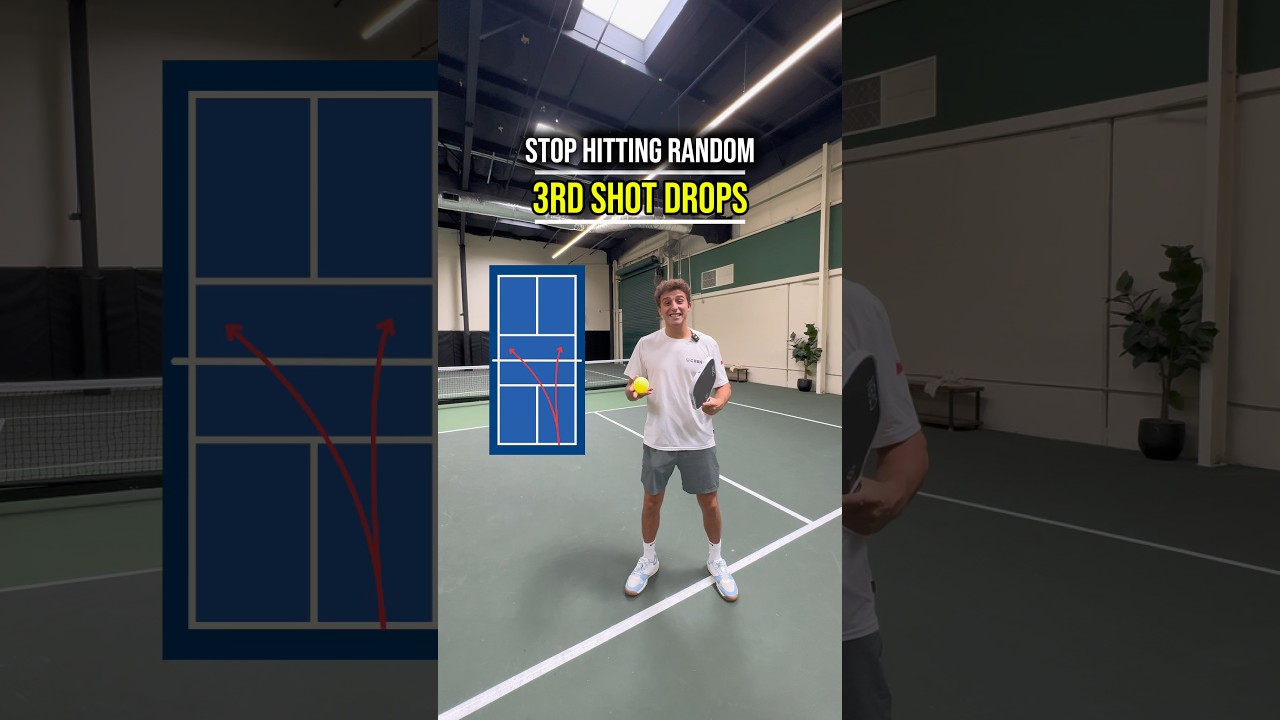
Third shot placement is not a guessing game. These 3 simple rules give you a specific target based on what the return looks like.
 The Dink PickleballThe Dink Media Team
Key Takeaways
- Staying mentally sharp late in a match for seniors is an attention problem before it's a fitness problem. Research in racket sports has linked mental fatigue to slower reaction times and reduced stroke accuracy.
- Sleep in the seven to eight hour range has been associated with better working memory and executive function, the systems you lean on at 9-all.
- Sip fluids roughly every 15 to 20 minutes rather than chugging between games, and replace sweat losses without gaining fluid weight.
- Run the same between-point reset every point: walk away, exhale, physical cue, pick one target.
- When you're tired, shrink your shot menu and raise your margins instead of trying harder, the same logic behind playing more consistent pickleball.
💡
Heads up: hundreds of thousands of pickleballers read our free newsletter.
Subscribe herefor cutting edge strategy, insider news, pro analysis, the latest product innovations and more.
Frequently Asked Questions
Why do senior pickleball players lose focus late in a match?
Sustained decision-making wears down attention over a long match, which shows up as late paddles and poor shot choices before it shows up as heavy legs. Research in racket sports has linked mental fatigue with slower response times and reduced stroke accuracy. Pickleball adds a heavy decision load, since you're reading attack or reset every couple of seconds.
Does drinking more water help you stay mentally sharp late in a match?
Hydration guidance for older adults supports drinking before activity, taking fluid regularly during it, and rehydrating after, and athlete research summarized there reported cognitive changes above roughly 2% body mass loss in fluid. More is not automatically better. NATA advises replacing sweat losses without gaining fluid weight, and needs vary by sweat rate, climate, and health.
How do you reset after a bad point in pickleball?
Use the same short routine every time so it becomes automatic: turn away from the net, take one slow exhale, use a physical cue like spinning your paddle, then pick one specific target before stepping back to the line. Consistency matters more than the particular steps. A routine you only run after mistakes becomes a reminder that you made one.
Is late-match decline just a conditioning problem?
Conditioning matters, but it's rarely the whole story for rec players. Most late-game points are lost to shot selection and timing, not to running out of air. If your errors are unforced ones on routine shots, that points more toward attention than fitness.
Can playing more pickleball improve your focus?
Possibly, though the evidence is early. One observational study of older adults found experienced pickleball players scored better than inactive participants on divided visual attention, multiple object tracking, and simple reaction time. Because it was observational, it can't establish that pickleball caused those differences, and it didn't measure late-match sharpness.
💪
Ready to level up? Get the best discounts from Pickleball Central, automatically applied to your cart.
Anuncie Aqui / Advertise Here
Sua marca para o mundo Pickleball! / Your brand for the Pickleball world!




 English (US) ·
  Portuguese (BR) ·