
 English
  Spanish
  Portuguese
  German
  Italian
  Japanese
  French
  Polish
  Russian
  Netherlands
  Hungarian
  Turkish
  Videos
  Thedink Pickleball

If your dinks keep floating up and getting slammed, you have an energy problem, not a technique problem. Fix your contact point and your follow-through, and your pop-up dink habit disappears.
If your pop-up dink keeps handing opponents easy putaways, you do not have a stroke problem. You have an energy problem.
Most players think their dinks go long because of grip pressure or swing speed.The real culprits are where you contact the ball and what your paddle does right after contact.
These two fixes come from Better Pickleball on YouTube, where coach CJ Johnson breaks down exactly why players gift the other team free points at the kitchen line and what to do about it.
Love pickleball? Then you'll love our free newsletter. We send the latest news, tips, and highlights for free each week.
Why Your Dinks Keep Going Up Instead of Staying Low
Every pop-up dink is an energy mistake.
You are either adding energy by contacting the ball too early, or you are adding energy through a popping motion at contact.
The ball itself carries energy when it bounces off the court.
That energy does not disappear instantly. It decreases as the ball rises and is essentially gone at the very top of the bounce.
When you make contact before that top point, you are absorbing the ball's remaining energy into your shot.
Your normal dinking stroke then stacks its own energy on top of that, and the ball sails longer than you planned.
That is the whole problem. Now here is how you fix it.
Fix Number One: Stop Short Hopping Your Dinks
The apex of the bounce is the highest point the ball reaches after it hits the court. Right before it starts falling back down, it has almost no remaining energy.
That is your ideal contact point.
A short hop is any contact point between when the ball hits the ground and when it reaches the apex.
Hitting the ball there is not automatically wrong, but it is a mistake to do it by default.Here is what happens when you short hop routinely:
- The ball still has upward momentum from the bounce
- Your normal dink stroke adds its own force on top of that
- The combined energy pushes the ball deeper than you intended
- That extra depth puts the ball in attackable territory
- Your opponent gets a free slam
The fix is to wait. Let the ball climb to the apex before you commit to contact. This is a timing adjustment, not a mechanical one.
You will notice an audible difference when you do it right. A short hop produces a sharper, crispier sound at contact.A ball taken at the apex sounds softer and more controlled because the ball has shed its bounce energy by the time you hit it.
This concept applies beyond dinks. If you have ever struggled with third shot drop placement, the apex principle works there too.It shows up again in the 6 essential pickleball shots every intermediate player should own.
💡
Need some new pickleball gear? Get 20% off select paddles, shoes, and more with code THEDINK at
Midwest Racquet SportsDoes This Mean You Should Never Short Hop the Ball?
No. There will be situations where waiting for the apex is not possible.
A ball with heavy topspin that kicks low, a fast exchange at the kitchen, or a ball that dies quickly may all force you to short hop.
The rule is simple: make the apex your default and short hop only when the ball gives you no other choice.When you do have to short hop, you need to adjust.
Use a softer touch, open the paddle face slightly, or take something off the stroke to account for the extra energy the ball is carrying.
What kills most players is short hopping by habit, not by necessity. They rush to the ball, tap it early, and wonder why their dinks keep getting attacked.
If your forehand dink keeps getting attacked, contact point is the first thing to examine.
Slowing down your approach to the ball and letting it rise is a discipline issue as much as a skill issue.
Train yourself to wait, and your control will improve immediately. That patience is one of the four key strategies to winning in 2026.
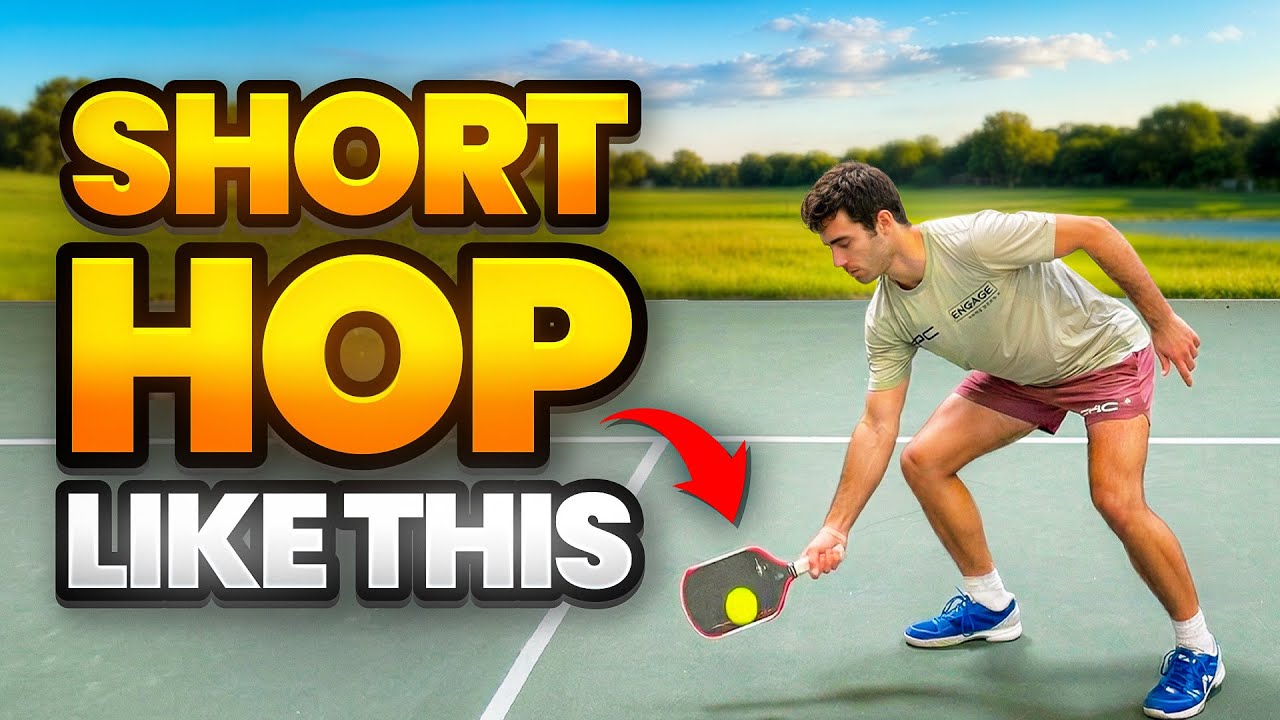
How to Hit the Short Hop in Pickleball: A Complete Guide
The short hop is one of the most underrated skills separating good players from high-level competitors. Master this essential short hop pickleball technique to transform your midcourt game and handle pressure in transition.
 The Dink PickleballThe Dink Media Team
Fix Number Two: Stop Popping the Ball and Start Pushing Through It
The second energy mistake is the popping motion.
This is when the paddle snaps through contact with too much wrist or elbow action, adding a burst of force right at the moment of impact.
You have probably seen players do this without realizing it.
The paddle flicks forward quickly, the ball pops upward, and it lands in the middle of the opponent's kitchen or deeper. Easy attack.The correction is to think of your shoulder as the engine of the dink shot. Your arm, wrist, and paddle are just the delivery system.
Here is how coach CJ Johnson frames it: imagine you are going to gently toss your paddle to your partner across the net.Your shoulder initiates that motion. Your elbow and wrist follow along as passengers.
The paddle simply extends through the ball rather than snapping at it.Think of it this way. You are not hitting one ball. You are pushing through four or five imaginary balls lined up on the other side of the contact point.
Your paddle keeps traveling forward through all of them.
That mental image changes everything about how the stroke feels.
The most common dink pop-up fixes all point back to this same follow-through concept, and the same idea underpins the 5 shots you must master before 2026.
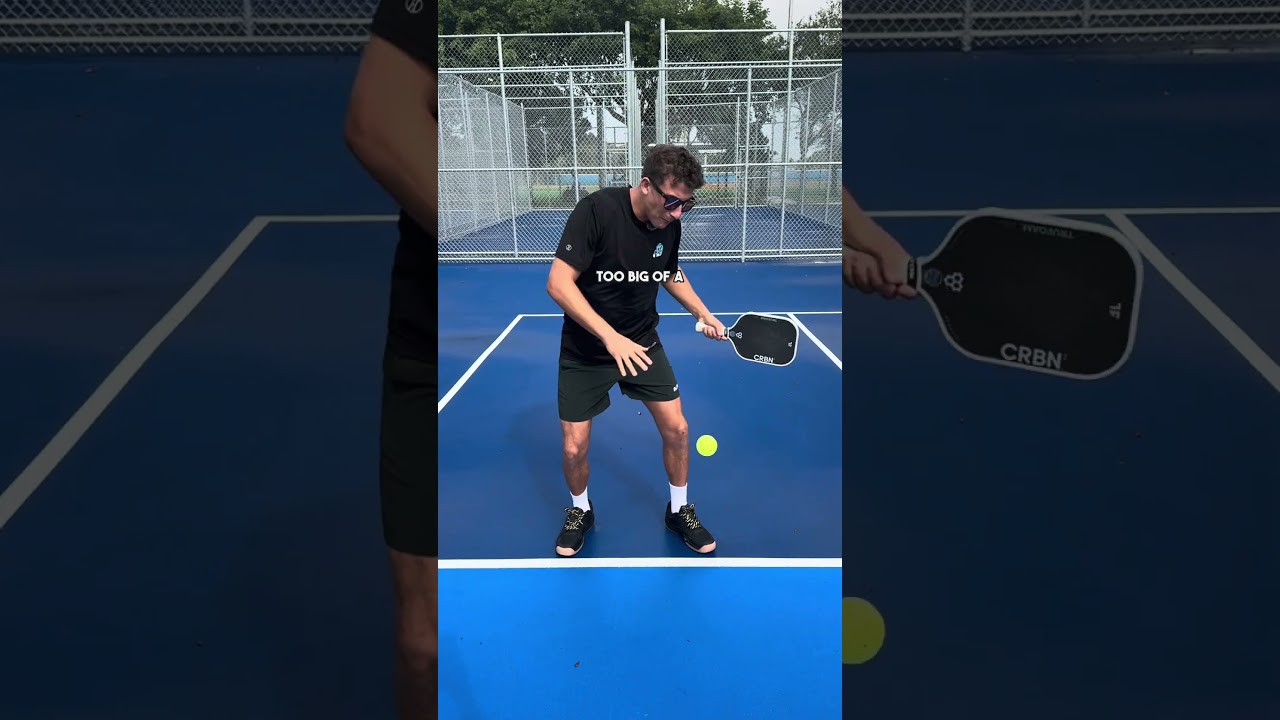
Why You Pop Up Dinks in Pickleball: 3 Fixes
Popping up dinks is one of the most common mistakes in pickleball, and it’s costing you points. Here are the three main reasons you pop up dinks and exactly how to fix each one.
 The Dink PickleballThe Dink Media Team
What Does Proper Shoulder-Driven Follow-Through Look Like?
When you do this correctly, your paddle will finish pointing toward your target rather than flicking upward or cutting across your body.
The trajectory of your dinks will flatten out noticeably.Instead of a ball that arcs high and lands deep, you will get a ball that clears the net with less height and drops into the kitchen closer to the net.
That low, net-skimming dink is what forces opponents to hit up on the ball. When they have to hit up, they cannot attack.
That is how you control kitchen rallies.Watch how Tyra Black operates at the kitchen line. Her dinks stay low and her paddle follows through toward the target on every single one. There is no pop.
There is no snap. Just a smooth push that stays low.
Compare that to recreational play where the paddle often stops short or flicks upward.
The difference in ball trajectory between those two motions is dramatic, and the gap is obvious if you watch clips of pickleball in the 1980s versus 2025.
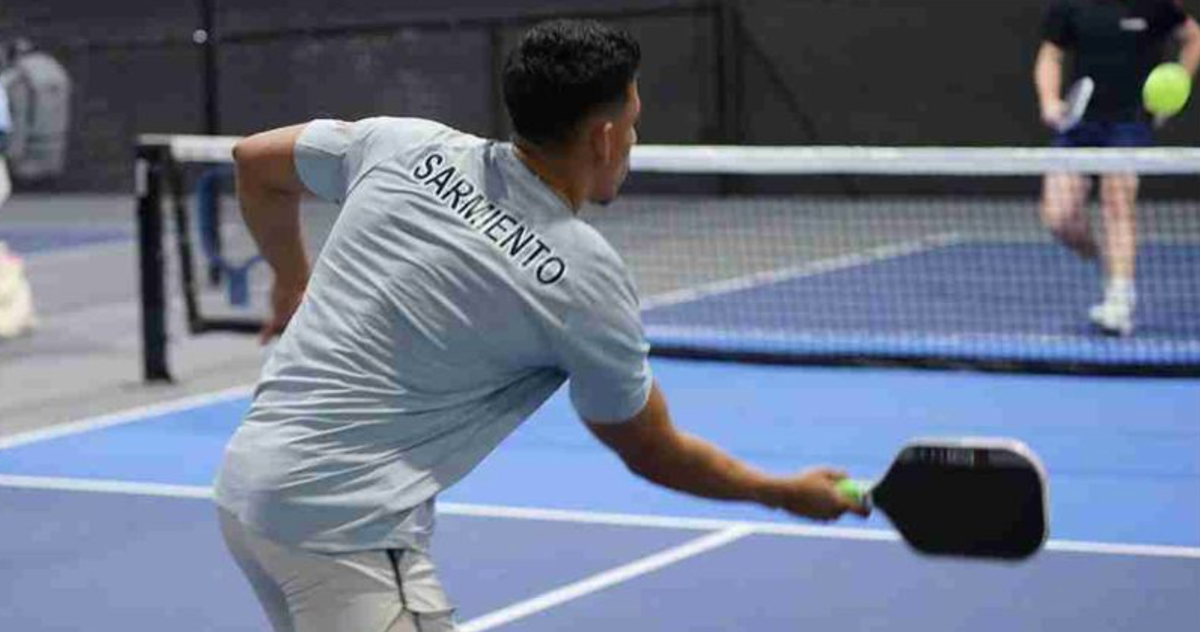
How to Hit a Forehand in Pickleball: Grip & Swing
Knowing how to hit a forehand in pickleball is the foundation for every aggressive shot in your arsenal. Master the grip, swing path, and follow-through and you’ll own the baseline.
 The Dink PickleballThe Dink Media Team
How Do You Train Both Fixes at the Same Time?
Start by drilling the apex concept in isolation. Stand at the kitchen and just let balls bounce without hitting them. Watch where the apex is.
Get comfortable reading it.Then add contact. Focus only on timing, not on the stroke itself. Hit easy, slow dinks and try to make contact right at the top of the bounce every time.
Once you are consistently finding the apex, layer in the shoulder-driven follow-through.
Here is a simple progression:
- Drop a ball and let it bounce to apex, then push your paddle through the contact point toward your target
- Have a partner feed slow balls from across the net while you focus only on follow-through direction
- Begin cross-court dinking rallies at medium pace, calling out "apex" before each shot as a timing reminder
- Increase rally speed gradually once both timing and follow-through feel automatic
- Add game-like pressure by counting consecutive dinks that stay below net height at the midpoint
If you want structured drilling for this, these backhand dink drills target exactly the same mechanics from the other side of your body. You can also fold them into the 12 drills you need for 2026.
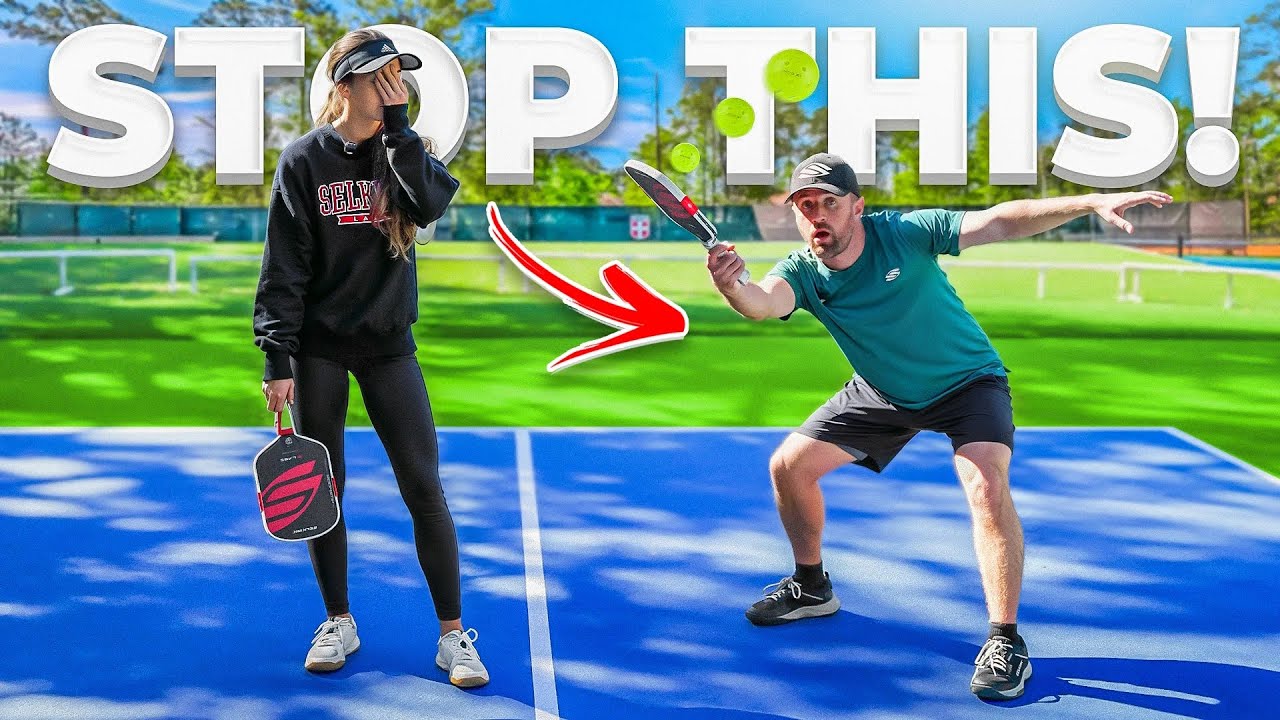
For players who also struggle with resets popping up in transition, the same shoulder-driven push applies to resets as well. The fix transfers directly.4 Fixes to Stop Popping the Ball Up in Pickleball
Soft grip, planted feet, early preparation, and smarter resets — the four fixes that keep the ball down and the point rolling on
 The Dink PickleballThe Dink Media Team
Why Most Players Keep Making These Mistakes Even When They Know Better
Knowing what to do and doing it under pressure are two different things. Most players understand the apex concept in theory.
They just revert to short hopping when the pace picks up.
The reason is that rushing the ball feels proactive. Moving forward and hitting early feels aggressive.Waiting for the apex feels passive, even though it produces far more controlled results.
You need to actively fight the urge to rush. Treat every dink rally as a patience exercise.
The player who waits for clean contact and follows through toward the target will almost always out-dink the player who rushes.
This is also why cross-court dinking strategy works so well for breaking opponents down.
Consistent, low, patient dinks create openings that rushed short hops never will.
If you are stuck at 4.0 and wondering why your kitchen game is not improving, look at these two mechanics first.
Before you add new shots or new strategies, fix the energy mistakes that are turning your neutral dinks into opponent opportunities.
The players who move up consistently are not hitting harder.
They are hitting cleaner. Apex contact and a shoulder-driven follow-through are two of the cleanest habits you can build, and they slot neatly into a simple 4-step system to win more games in 2026.
For more on reducing unforced errors that cost you matches, these three causes of unforced errors cover the broader picture beyond just dinking.
And if you want to understand how shot selection interacts with all of this, the low forehand, high backhand rule gives you a clear framework for deciding when to push and when to defend.
It also pairs well with the shift away from slice that pros made in 2025.
💡
Heads up: hundreds of thousands of pickleballers read our free newsletter.
Subscribe herefor cutting edge strategy, insider news, pro analysis, the latest product innovations and more.
Frequently Asked Questions
What is a pop-up dink in pickleball?
A pop-up dink is a dink shot that rises too high after crossing the net, landing in attackable territory and giving your opponent an easy put-away. It is almost always caused by too much energy at contact, either from hitting the ball too early or from a snapping motion at contact.
What is the apex of the bounce in pickleball?
The apex is the highest point the ball reaches after bouncing off the court, right before it begins falling back down. At the apex, the ball has shed nearly all of its bounce energy, making it the ideal contact point for a controlled dink.
Why does short hopping the ball cause dinks to go long?
When you short hop the ball, it still carries upward energy from the bounce. Your normal stroke adds force on top of that energy, and the combined result pushes the ball deeper than you intended. Waiting for the apex removes that extra variable entirely.
How should my paddle move when I hit a dink?
Your shoulder should initiate the motion and your paddle should extend forward through the ball toward your target. Think of pushing through several imaginary balls on the other side of the contact point rather than snapping or flicking at the ball.
How long does it take to stop hitting pop-up dinks?
Most players see improvement within one focused practice session when they isolate the apex timing and follow-through separately before combining them. The bigger challenge is maintaining both habits under match pressure, which takes a few weeks of deliberate repetition to make automatic.
Anuncie Aqui / Advertise Here
Sua marca para o mundo Pickleball! / Your brand for the Pickleball world!





 English (US) ·
  Portuguese (BR) ·