
 English
  Spanish
  Portuguese
  German
  Italian
  Japanese
  French
  Polish
  Russian
  Netherlands
  Hungarian
  Turkish
  Videos
  Thedink Pickleball

Most players lose points not because they hit bad shots, but because they hit the wrong shot at the wrong height. These three pickleball shot selection rules fix that instantly.
Bad pickleball shot selection is the number one reason recreational players lose rallies they should win.
It is rarely about technique. You know how to hit the ball.The problem is that you are choosing the wrong shot for the situation, especially when the pace picks up and you do not have time to think.
This article breaks down a simple three-part framework based entirely on ball height.
It tells you exactly what to do when the ball is low, when it is at net height, and when it floats up high enough to hurt someone.
Love pickleball? Then you'll love our free newsletter. We send the latest news, tips, and highlights for free each week.
The Framework Most Players Are Missing
The concept is simple: the height of the ball when it reaches you should determine your shot before your brain even has to think about it.This is the framework that Richard Pickleball breaks down in a short but direct tip that every player from 3.0 to 4.5 needs to hear.
Three heights, three responses, zero hesitation.Think of it as a decision tree you internalize through repetition.
Once you own it, your pickleball shot selection becomes automatic instead of reactive and panicked.
Rule 1: When the Ball Is Low, Concede the Net
A low ball is not an opportunity. It is a warning.
When the ball dips below the net and you are forced to dig it up from around your ankles or shoe level, you are in a losing position.
Your only job is to survive the exchange and reset without popping the ball up.Trying to attack a low ball is the most common unforced error you will see at the 3.5 and 4.0 level.
Players see the ball coming, get excited, and swing hard at something they can only push upward. The result is a floater that the opponent destroys.
When the ball is low, you concede the net. That means:
- Soft hands, open face on the paddle
- Absorb the pace instead of adding to it
- Push the ball back crosscourt or up the middle with no topspin
- Accept that this exchange is defensive and play it that way
Your goal with a low ball is a neutral reset that lands softly in the kitchen. Nothing more.
If you try to be a hero on a low ball, you will hand the point to your opponent.
Resetting under pressure is a skill, and it starts with understanding that a low ball is not your turn to attack.
💡
Need some new pickleball gear? Get 20% off select paddles, shoes, and more with code THEDINK at
Midwest Racquet SportsWhat Does "Conceding the Net" Actually Mean?
"Conceding the net" means accepting a temporary defensive position without panicking or forcing a shot you cannot execute.It does not mean giving up.
It means you are making a smart read that the geometry of the situation is not in your favor, and you are buying time to get back to neutral.
This is exactly what Ben Johns does at the elite level. He is extraordinarily patient on low balls and never forces the attack before the ball climbs.
That patience is the foundation of his control at the kitchen line.Pickleball Net Height: Official Measurements Explained
Pickleball net height is 34 inches at the center and 36 inches at the sideline posts, and that 2-inch difference shapes every strategic decision you make on the court. Understanding the official measurements gives you an edge whether you’re setting up a court or rethinking your shot selection.
 The Dink PickleballThe Dink Media Team

Rule 2: When the Ball Is at Net Height, Roll It
Net height is your opportunity to shift from neutral to offensive without overcommitting.
When the ball arrives at approximately tape level, you have enough leverage to generate topspin and push the ball down into the kitchen with pace.
This is the roll shot, and it is one of the most important weapons in a complete player's arsenal.
Rolling at net height works because the geometry finally allows you to swing slightly downward.
The ball is not below the net forcing you to lift, and it is not sitting up above the net begging to be crushed.
It is in the sweet spot for controlled aggression.How to Execute the Roll Correctly
- Move your feet to get behind the ball early
- Take a compact backswing with your elbow leading slightly
- Brush up and through the ball to generate topspin
- Aim crosscourt for the highest percentage target
- Follow through toward your target, not the sky
The roll is not a speed-up. It is a controlled, topspin-heavy shot that forces your opponent to deal with a ball diving toward their feet.
Understanding when to roll versus when to flick is the pickleball shot selection skill that separates 4.0 players from 4.5 players.Do not confuse net height with high.
A lot of players see the ball at tape level and try to go full speed-up when a disciplined roll is both safer and more effective at forcing errors.
Pickleball Net Height: Official Measurements Explained
Pickleball net height is 34 inches at the center and 36 inches at the sideline posts, and that 2-inch difference shapes every strategic decision you make on the court. Understanding the official measurements gives you an edge whether you’re setting up a court or rethinking your shot selection.
 The Dink PickleballThe Dink Media Team

Why Do So Many Players Miss This Rule?
Most players only have two modes: defensive and all-out attack.They see anything above ankle height and immediately try to rip the ball. That aggression is admirable but misplaced on a net-height ball.
The roll gives you the best of both worlds, pressure without the risk of missing long or wide.Knowing when to speed up off the bounce is closely tied to this principle. The height of the ball at contact, not just your instinct, should be making that call for you.
The Pickleball Rules Cheat Sheet Every Player Should Know
This pickleball rules cheat sheet breaks down scoring, serve rules, kitchen violations, and faults so you stop losing arguments at 6 all. Print it, fold it into your bag, and settle the debate before it starts.
 The Dink PickleballThe Dink Media Team
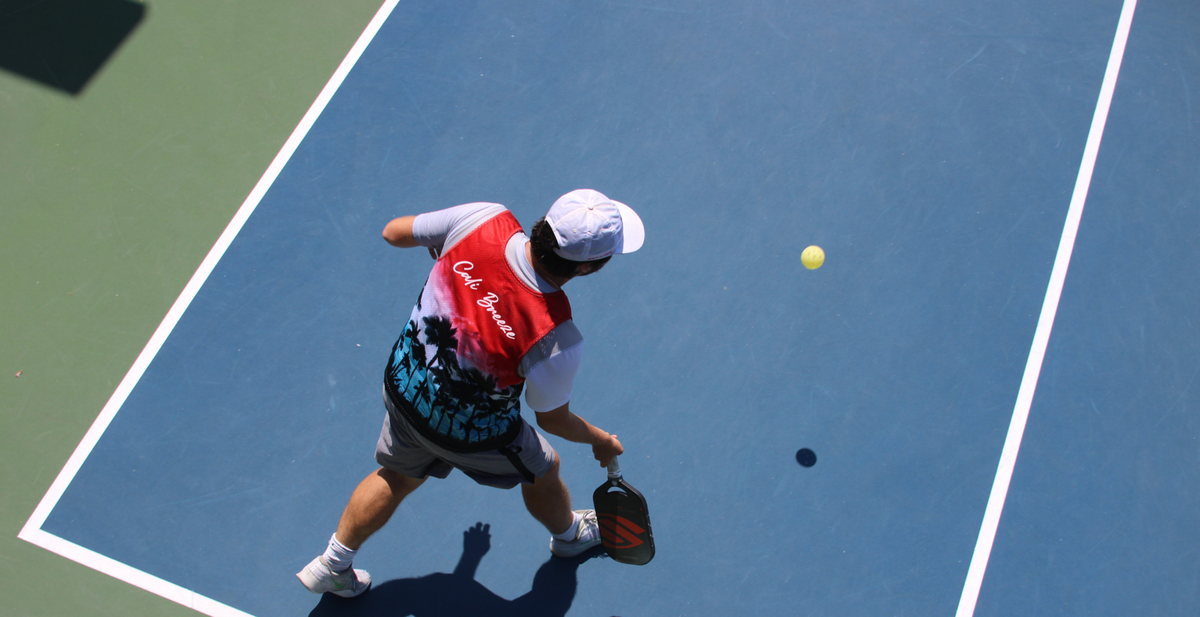
Rule 3: When the Ball Is High, Destroy It
A high ball is a gift. Accept it with full aggression.
When the ball floats above net height, especially anything above your waist while you are at the kitchen line, your only job is to put it away.This is not the time for patience or a conservative reset.
"Destroy it" means:
- Load your shoulder and swing with conviction
- Aim at the body or feet of the weaker opponent
- Use a downward angle to drive the ball into the court
- Commit fully, no half-swings
The biggest mistake players make on high balls is flinching. They pull back at the last second, hit a weak ball, and give the opponent time to recover.
That is worse than doing nothing.Finding the right contact point on a high ball is something worth drilling specifically. When a ball is sitting up and you choose the wrong side or the wrong angle, you give away a point you earned.
Tyra Black and Anna Leigh Waters are textbook examples of players who never waste a high ball.
They recognize it instantly and they commit to the put-away without hesitation.
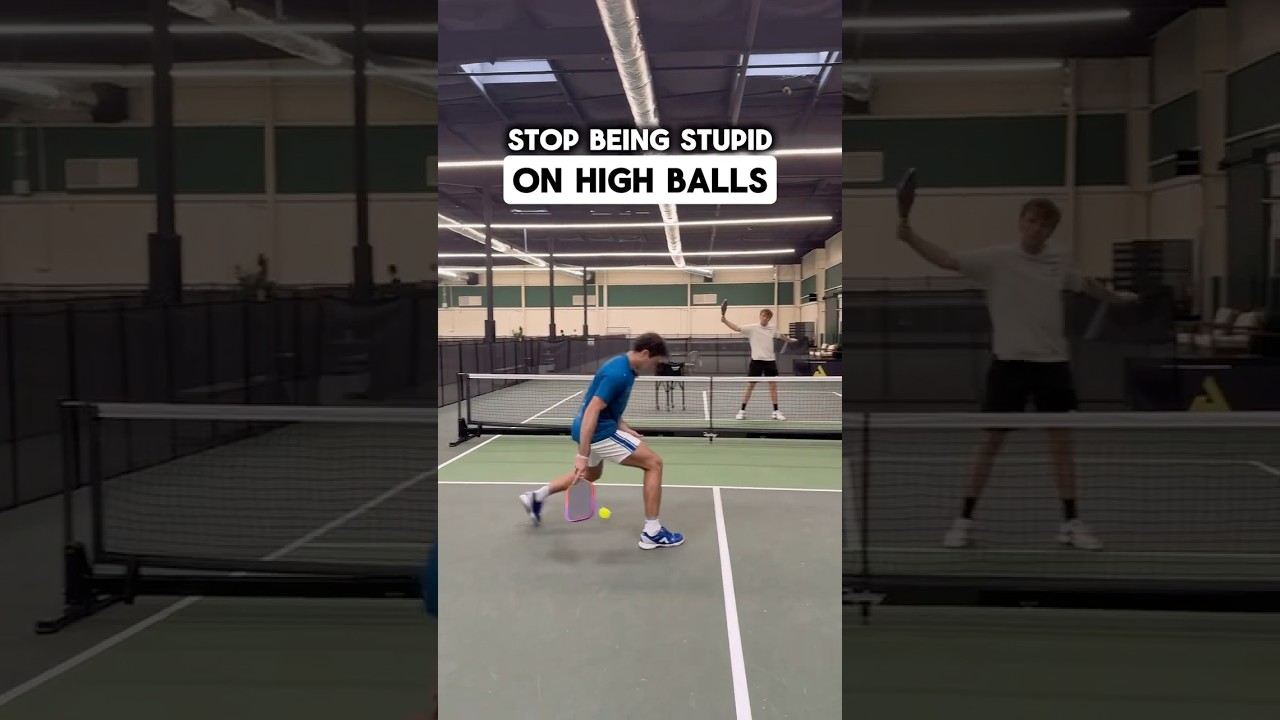
Pickleball High Ball: Find the Backhand Every Time
When a pickleball high ball comes at you, most players guess wrong and pay for it. This one backhand rule tells you exactly where to position every single time.
 The Dink PickleballThe Dink Media Team
How Do You Train This So It Becomes Automatic?
You train it by making the three-category system part of your drilling vocabulary, not just your game-play awareness.
Next time you are doing dink rallies or live kitchen work, narrate the height category out loud.
Say "low," "net," or "high" as each ball comes to you. Force your brain to categorize before it reacts.Over time, the decision happens before conscious thought. That is exactly what you want, because in a fast rally at the kitchen, you do not have time to analyze.
You need an ingrained response tied to the position of the ball.
Building pickleball IQ is not about memorizing complicated patterns.
It is about simplifying your decisions so your brain frees up bandwidth for positioning and reading your opponent.
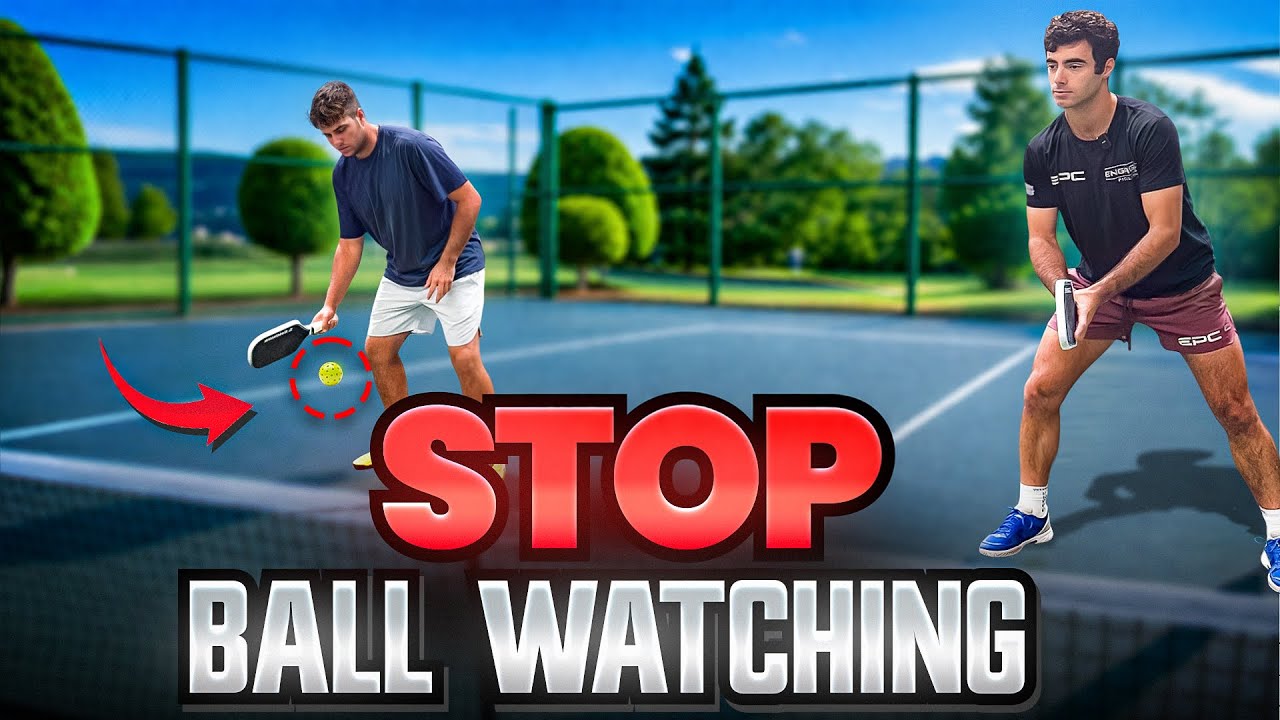
Off-Ball Positioning in Pickleball: Stop Ball Watching
Most pickleball players think the point is decided by whoever hits the ball, but at higher levels, off-ball positioning is what actually controls the court. Master this skill and you’ll transform how you play at the net.
 The Dink PickleballThe Dink Media Team
How This Changes Your Game at the Kitchen Line
Once you internalize these three rules, you stop making shot selection errors that are purely mental.
You will stop attacking low balls. You will stop rolling over with soft shots when you have a genuine net-height opportunity to apply pressure.And you will stop flinching on high balls.
The kitchen line is where most points are decided in doubles.
Your kitchen arrival percentage and execution rate are the stats that define what level you actually play at, regardless of what your DUPR says on paper.
The three-height framework directly impacts both of those numbers. When you reset low balls properly, you get to the kitchen more often.
When you roll net-height balls with topspin, you force your opponents into low returns.
When you put away high balls, you close out rallies instead of extending them.
This is a shot selection system, not a one-trick fix. It applies to volleys, dinks, and transition shots.It works from the kitchen, from mid-court, and from the baseline if the ball somehow sits up that far back.
The low forehand and high backhand rule connects directly to this height-based thinking.
Once you start reading the ball by zone, your entire court awareness sharpens.
Stop making the game complicated. Low means reset. Net height means roll.High means attack. That is the whole system.
Now go drill it until you do not have to think about it anymore.
💡
Heads up: hundreds of thousands of pickleballers read our free newsletter.
Subscribe herefor cutting edge strategy, insider news, pro analysis, the latest product innovations and more.
Frequently Asked Questions
What is the most important pickleball shot selection rule for beginners?
The most important rule is to never attack a low ball. When the ball is below net height, your only job is to reset it softly into the kitchen. Trying to be aggressive on a low ball creates pop-ups that opponents put away easily.
When should I roll the ball instead of driving it in pickleball?
Roll the ball when it arrives at approximately net height, meaning around tape level at contact. A roll shot uses topspin to push the ball down into the court with controlled pace, making it harder for opponents to counter without giving them an easy set-up.
How do I know when a ball is truly "high" enough to attack in pickleball?
Any ball that rises above net height, especially above your belt while you are at the kitchen line, is attackable. The higher the ball, the more downward angle you can use. If you can swing with a slight downward trajectory and still clear the net comfortably, you have a high ball.
Why do I keep popping up balls when I try to reset low shots?
Popping up low balls usually comes from gripping too tightly and adding upward swing speed instead of absorbing the pace. Soft hands, an open paddle face, and a punch rather than a swing will keep the ball from floating. Think of it as a block, not a stroke.
How does ball height relate to shot selection in fast kitchen exchanges?
In fast exchanges, you do not have time to consciously analyze every ball. The height-based system works because it simplifies the decision to a single visual cue: where is the ball relative to the net when it reaches me. Train the three responses in drilling until they become automatic, and your reactions in live play will follow the same pattern without any deliberate thought required.
Anuncie Aqui / Advertise Here
Sua marca para o mundo Pickleball! / Your brand for the Pickleball world!




 English (US) ·
  Portuguese (BR) ·