
 English
  Spanish
  Portuguese
  German
  Italian
  Japanese
  French
  Polish
  Russian
  Netherlands
  Hungarian
  Turkish
  Videos
  Thedink Pickleball

If your bounce speed up feels weak and your dinks keep popping up, your pickleball court positioning is probably the problem. One small adjustment changes everything.
Your pickleball court positioning might be the single biggest thing holding your game back, and most players never even question it.
You step up to the kitchen line, plant your feet, and wonder why your bounce speed up has no pop.The shot dies, or it sails, or you feel like you are reaching backward just to make contact.
That problem has almost nothing to do with your swing. It has everything to do with where you are standing and where your weight is going when you hit.This breakdown comes from Jilly B Pickleball on YouTube, and the fix is simpler than you think.
Love pickleball? Then you'll love our free newsletter. We send the latest news, tips, and highlights for free each week.
The Real Problem With Being Glued to the Kitchen Line
Most players treat the kitchen line like a wall they need to press their chest against.
They get there as fast as possible, plant their feet right on the line, and refuse to budge.
That sounds disciplined. It is actually costing you on almost every shot.When you are glued to the line, your weight has nowhere to go when you hit. You cannot transfer forward because the net is already right in front of you.
So instead of weight moving through the ball, it either stays flat or drifts backward.
Watch yourself on video sometime.
If you are popping dinks up or producing weak speed ups, there is a strong chance you are falling away from the shot as you make contact.That backward movement bleeds every ounce of controlled power out of your swing.
The fix is not complicated. Give yourself space off the line.
What Does "Space Off the Line" Actually Mean?
You do not need to back up to the transition zone. You are not retreating. You are not retreating.
You are simply giving yourself a few inches to a foot of breathing room behind the kitchen line so your body has somewhere to move when you hit.
Think of it like a baseball batter. A hitter who is jammed against the back of the box cannot fully extend through the ball.
Step into the pitch and suddenly you have weight, extension, and power. Same concept here.When you start slightly behind the line, here is what changes:
- Your weight can shift forward as you make contact instead of staying stuck or pulling back.
- Your bounce speed up has real momentum behind it because your body is moving into the shot.
- Your dinks feel more controlled because you are not crowding the ball or reaching awkwardly.
- You can read the incoming ball better because you have a split second more time before it reaches you.
None of that happens when you are pressed right up against the tape with nowhere to go.
💡
Need some new pickleball gear? Get 20% off select paddles, shoes, and more with code THEDINK at
Midwest Racquet SportsWhy Does Weight Transfer Matter So Much?
Weight transfer is the engine behind almost every good shot in pickleball. It is not your wrist snap. It is not your paddle angle.
It is your body moving into the ball at the moment of contact.
When your weight transfers forward, you generate force without muscling the shot.The ball travels with more pace and more control, because your whole body is behind it rather than just your arm.
When your weight goes backward, you are fighting your own momentum.
Your arm has to work harder to compensate, and even then the shot usually comes out flat, weak, or floaty. That is not a technique problem.That is a positioning problem.
This is why playing slightly off the kitchen line has real mechanical advantages that most recreational players never take advantage of.
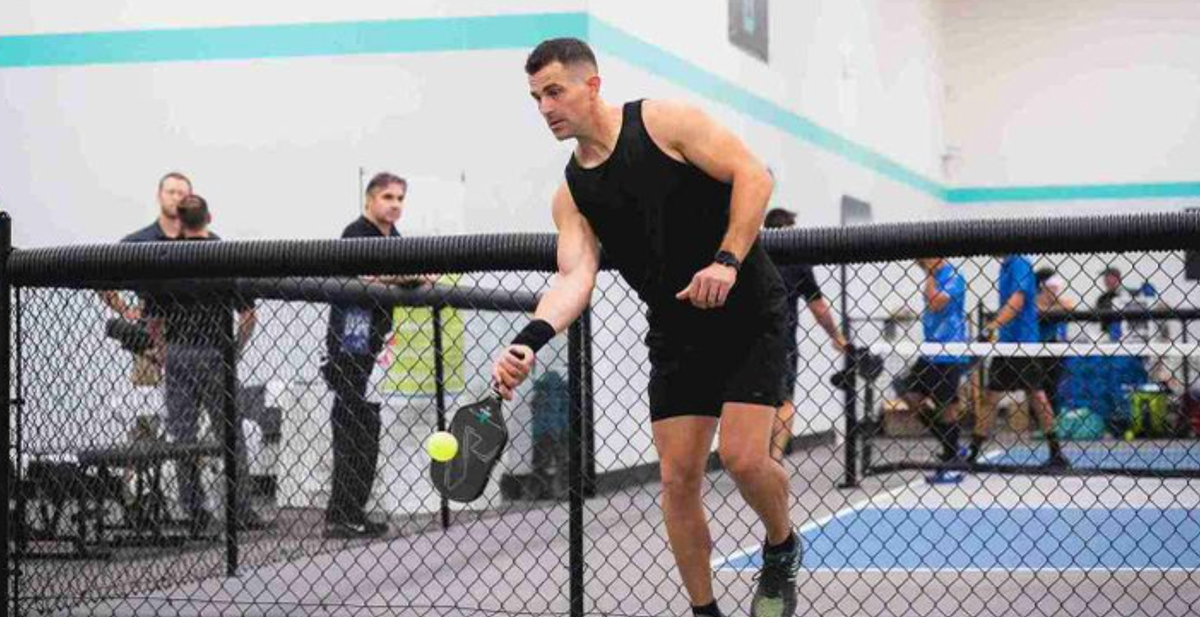
Pickleball Serve Footwork Stance: Load & Weight Transfer
Your pickleball serve footwork stance is the foundation of every point you start: get it wrong and no amount of arm swing will save you. This guide breaks down exactly how to set your feet, load your hips, and transfer weight for a serve that’s both powerful and repeatable.
 The Dink PickleballThe Dink Media Team
How Does This Fix Your Bounce Speed Up Specifically?
The bounce speed up is one of the most misunderstood shots in pickleball.
Players try to generate pace purely through arm speed, and then wonder why the shot lacks teeth.
A bounce speed up requires weight.
The ball has dropped lower than a volley speed up, which means you are already working against gravity to get it over the net with pace.If your weight is going nowhere when you swing, the shot has no foundation.
Here is the correct sequence for a bounce speed up when you give yourself space:
- Start your ready position a few inches behind the kitchen line, weight centered.
- As the ball bounces and you prepare to swing, shift your weight forward toward the line.
- Make contact with your body moving into the shot, not sitting still or pulling back.
- Follow through with your weight finishing forward, paddle ending toward your target.
That forward finish is the proof. If you are ending the shot with your weight still behind you, the positioning problem has not been fixed yet.
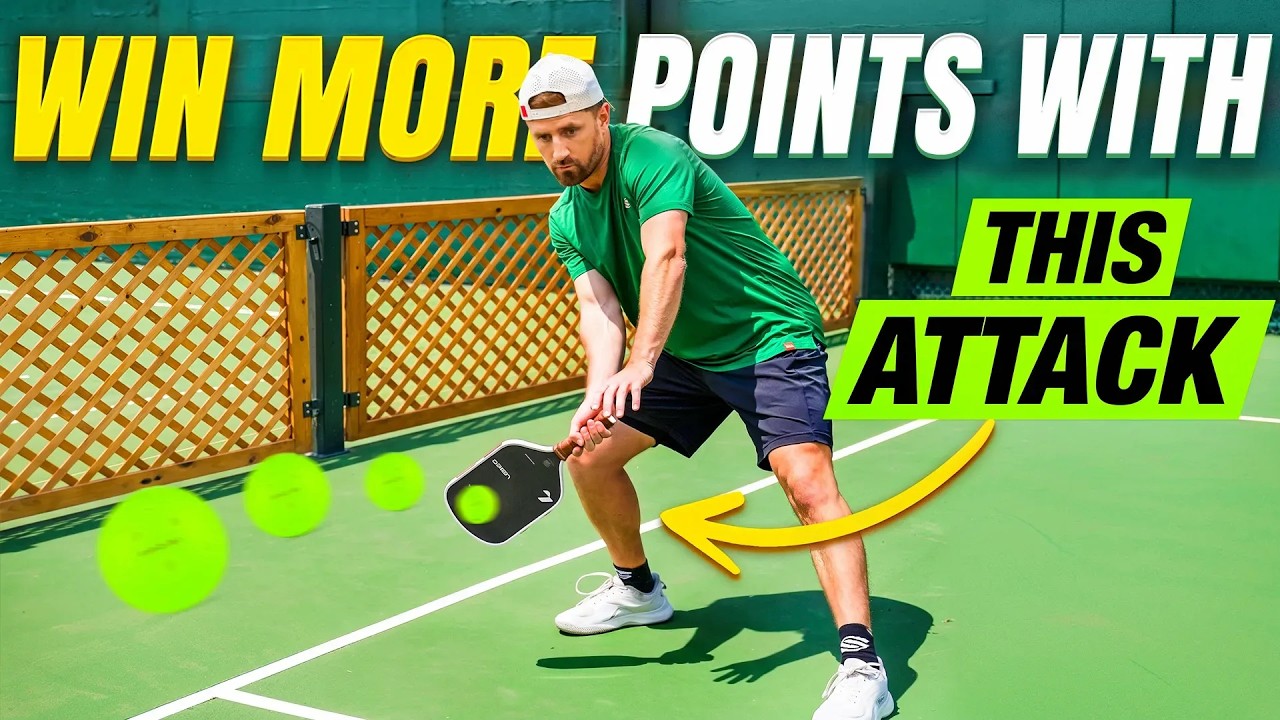
When, How, and Why to Hit a Speed-Up Off the Bounce in Pickleball
Most players pull the trigger on a speed up off the bounce at the worst possible moment. Here is the full breakdown of when to go, how to prep, and how to disguise it like the pros.
 The Dink PickleballThe Dink Media Team
What About Your Dinks? Does This Apply There Too?
Yes, and this is where a lot of players are making a hidden mistake without realizing it.
Most recreational players let the ball bounce before dinking. That is not a bad instinct.
Taking the ball out of the air requires more timing and more precision, and dinking with intention means making smart, controlled choices about when to attack.But here is the problem.
If you are letting everything bounce while standing right at the line, you have to reach down for the ball as it drops below net height, and your weight is likely drifting backward to give you room to swing.You are now hitting while falling away from the net.
Falling backward while dinking is one of the fastest ways to produce pop ups. Your paddle face opens as you drift back, the ball climbs, and your opponent gets a free speed up.
Starting slightly behind the line solves this immediately. You let the ball bounce, your weight moves forward into the dink, and the ball stays low where it belongs.
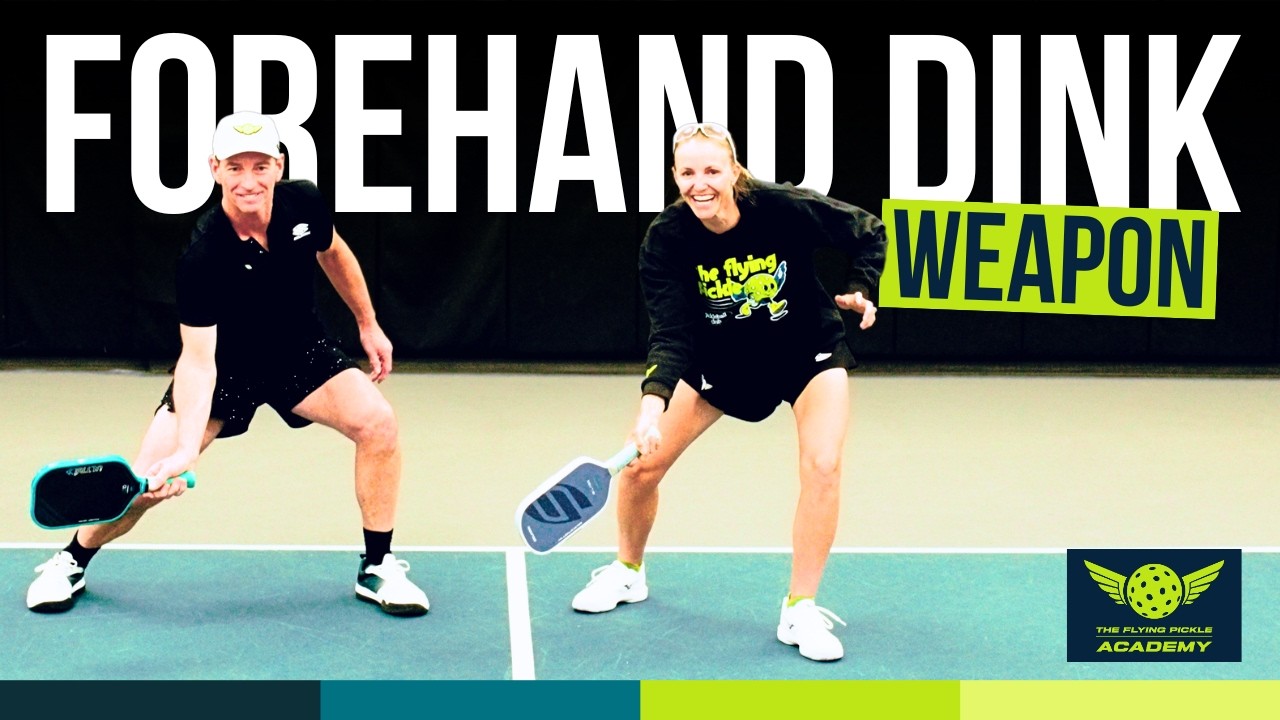
4 Forehand Dink Fixes That Make It a Consistent Weapon
A consistent forehand dink is a starting point, not a finish line. These four technique fixes will help you add real pressure and pace to your forehand dink at the kitchen line.
 The Dink PickleballThe Dink Media Team
Is This the Same as Cheating Back From the Line?
Some players hear "stand back a little" and immediately think they are giving up ground. That is the wrong way to read this.
There is a difference between strategic court position and abandoning the kitchen.
You are setting up a few inches behind the line so you can move into your shots instead of being frozen by them.
The goal is always to end your shot with your weight at or past the kitchen line. You start just behind it, you attack forward, and you land forward.That is proactive movement, not passive retreat.
Players who stay rigid at the line are the ones who get exploited by hard hitters and forehand speed ups directed right at their feet.A little space gives you time, options, and real weight transfer on your response.
Pickleball Line Calls: When Does Bad Calling Mean Cheating?
PPA Tour pro Zane Navratil discusses a pattern of questionable line calls at a recent event — and what the league should do about it.
 The Dink PickleballThe Dink Media Team
What Does Good Positioning Actually Look Like?
Think of your ready position at the kitchen as a launching pad, not a parking spot. You want to be set up so that forward movement is always available.
Here are the key checkpoints to build this habit:
- Feet should be shoulder width apart with knees slightly bent, not locked out.
- Weight starts on the balls of your feet, not your heels.
- Your body position should allow you to step forward comfortably without lunging.
- After every shot, reset slightly behind the line rather than creeping up to press the tape.
- Watch where your weight ends after contact. Forward means you are doing it right.
This applies whether you are dinking, speed upping, or blocking a hard shot. Footwork is not just about getting to the ball.
It is about arriving in a position where you can actually hit with purpose.
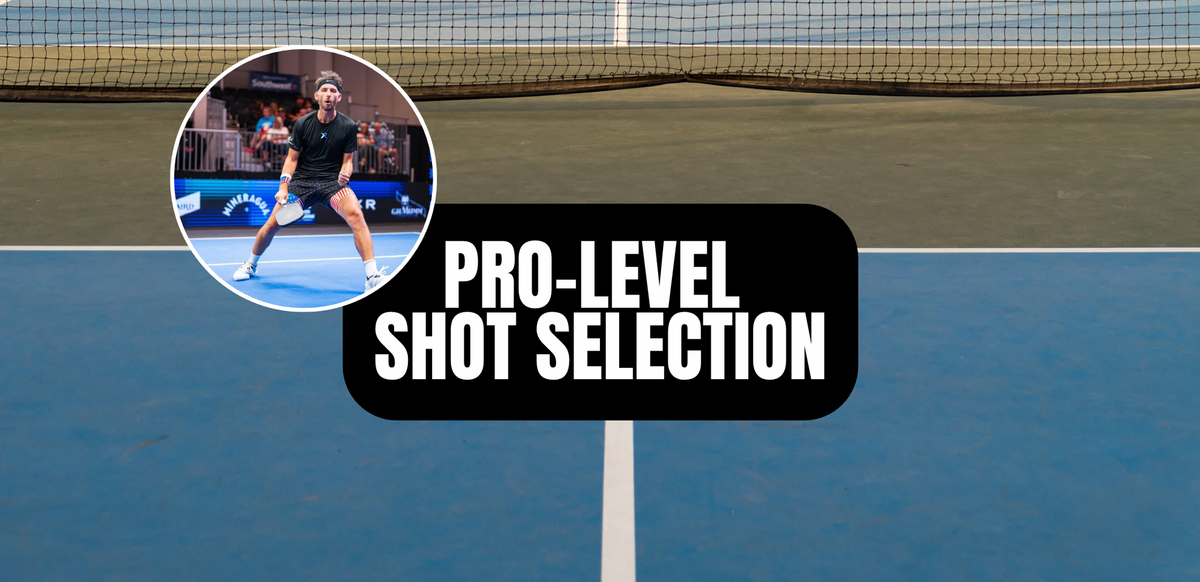
Pickleball Shot Selection: Ball Height & Court Positioning
Advanced pickleball means constantly analyzing the height of the ball and the court positioning off all four players in real time – and keeping this one rule sacred: just because you can hit a more aggressive shot doesn’t mean you should
 The Dink PickleballEric Roddy
Why Most Players Never Fix This
The reason this mistake persists is that being glued to the line feels correct.
You have been told to get to the kitchen, stay at the kitchen, and not give ground. All of that advice is right in spirit.
But it gets applied too literally.
Players hear "stay at the kitchen" and they interpret it as "plant your feet on the line and never move." That rigidity is what kills weight transfer.
The best kitchen line players in the sport, including Anna Leigh Waters, are constantly making small adjustments based on the ball, the situation, and the shot they want to hit.They are never truly static.
If you want to use the kitchen line as a target rather than a rigid rule, you will immediately give yourself more shot options and more power on every ball you hit.
The adjustment is small. Stand a little back, move into your shots, and finish forward every single time. Your dink consistency will improve.
Your bounce speed ups will have real teeth. And you will stop feeling like you are fighting the shot every time a ball drops at your feet.
One positioning tweak. Every shot in your game gets better. That is the entire point.
If you want to take this further and clean up the specific mechanics of your dinking, this dinking technique breakdown is worth your time.And if your dinks keep popping up, the root cause is almost always connected to exactly what we covered here.
Stop treating the kitchen line like a finish line. Treat it like a launch pad. Your whole game changes when you do.
💡
Heads up: hundreds of thousands of pickleballers read our free newsletter.
Subscribe herefor cutting edge strategy, insider news, pro analysis, the latest product innovations and more.
Frequently Asked Questions
How far back should I stand from the kitchen line in pickleball?
A few inches to about one foot behind the line is enough to give your weight somewhere to go. You are not retreating to the transition zone, just creating space so you can move into your shots with forward momentum.
Why does my bounce speed up have no power?
Your bounce speed up loses power when your weight has nowhere to go at the moment of contact. Standing right on the kitchen line traps your weight, so the shot relies entirely on arm strength instead of body momentum. Give yourself space and move forward through the ball.
Is it bad to stand back from the kitchen line in pickleball?
Standing slightly back is not the same as giving up position. The mistake is staying far back and never moving forward. The goal is to start slightly behind the line and finish your shots with your weight moving forward toward the net.
Why do my dinks pop up when I am at the kitchen line?
Dinks pop up most often because your weight is drifting backward as you make contact, which opens your paddle face and lifts the ball. Starting just behind the kitchen line and transferring weight forward through the dink keeps the ball low and controlled.
What is weight transfer in pickleball and why does it matter?
Weight transfer means your body shifts forward into the ball as you hit rather than staying still or pulling back. It is the main source of controlled power in pickleball, and without it your shots rely solely on arm speed, which creates inconsistency and loss of direction.
Anuncie Aqui / Advertise Here
Sua marca para o mundo Pickleball! / Your brand for the Pickleball world!






 English (US) ·
  Portuguese (BR) ·