
 English
  Spanish
  Portuguese
  German
  Italian
  Japanese
  French
  Polish
  Russian
  Netherlands
  Hungarian
  Turkish
  Videos
  Thedink Pickleball

The backhand drive is one of the most misunderstood shots in pickleball, and frankly, it's one of the most important.
Whether you're trying to break out of a dinking rally or put pressure on your opponents, knowing how to execute a solid backhand drive can completely change your game.
That's exactly what pro Mari Humberg demonstrates in her latest live lesson with a 4.2 DUPR player named Matt.
Love pickleball? Then you'll love our free newsletter. We send the latest news, tips, and highlights for free each week. Subscribe to our free newsletter
Why Does the Backhand Drive Matter So Much?
Here's the thing: most recreational players treat the backhand drive like a last resort. They'd rather stay in a dinking rally or hit a forehand than commit to a backhand attack.
But at higher levels of play, your ability to hit an aggressive backhand drive separates you from the competition. It's not just about power; it's about having options.
When you can confidently step into a backhand drive, you force your opponents to respect your shot selection. They can't just sit back and wait for you to make a mistake.
You become unpredictable, and unpredictability wins matches. That's the foundation of what Humberg teaches in this lesson.
Understanding the Decision-Making Process
Before you even think about technique, you need to understand when to hit a backhand drive versus when to hit a drop shot.
This is where many players get stuck. In the video, Humberg spends time gathering information from Matt about his current skill level and tendencies. She asks questions, observes his movement, and identifies where his game needs work.
The lesson shows that backhand drive execution isn't just mechanical; it's strategic.
You need to read the court, understand your opponent's positioning, and know when you have the opportunity to be aggressive. Humberg demonstrates this by having Matt practice against different types of returns, from hand-fed neutral balls to paddle-fed returns with cone targets.
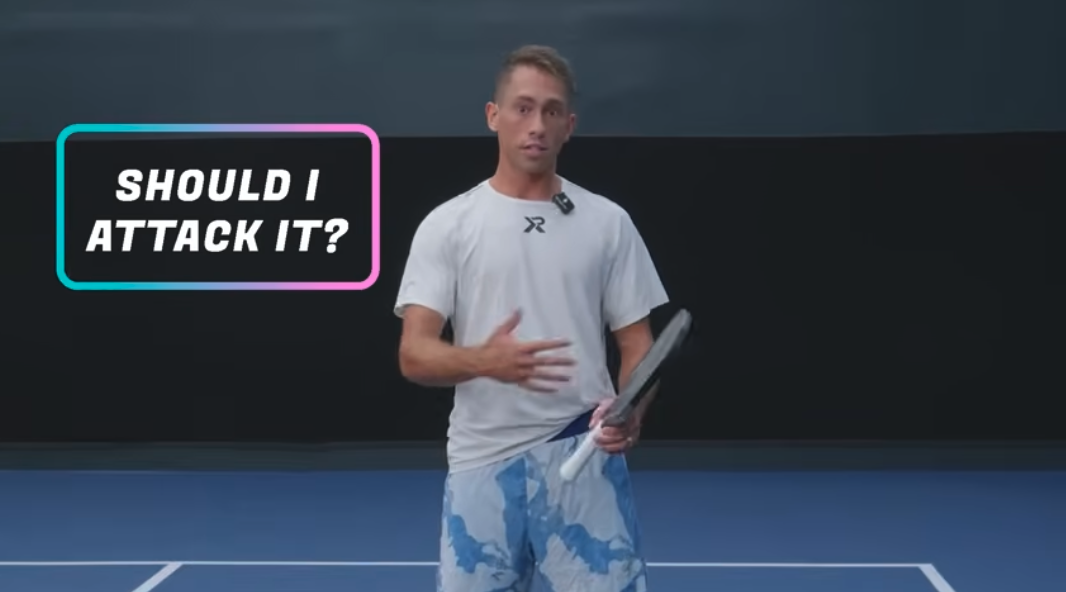
The Backhand Decision Tree: One Pro’s Real-Time Strategy for Cooking at the Kitchen
Zane Navratil has boiled the key steps for a successful backhand dink down to five critical questions he cycles through in real-time. Learn his framework and watch your shot selection – and winning percentage – improve dramatically.
 The Dink PickleballAlex E. Weaver
Breaking Down the Backhand Drive Mechanics
Once the decision-making framework is in place, Humberg focuses on the actual mechanics of the backhand drive.
The lesson progresses through two distinct phases: hand feeding and paddle feeding. This progression is intentional. By starting with hand-fed returns, Matt can focus purely on his stroke mechanics without worrying about the pace or spin of incoming balls.
During the hand-feeding phase, Humberg makes real-time adjustments to Matt's form. She watches his footwork, his paddle position, and his follow-through.
The backhand drive requires a specific sequence of movements, and even small adjustments can dramatically improve consistency and power. Humberg doesn't just tell Matt what to do; she shows him, feeds him balls, and corrects his positioning in the moment.
The paddle-feeding phase introduces more realistic conditions. Now Matt is facing balls with actual pace and spin, and he needs to apply what he's learned while adapting to live returns. Humberg places cone targets on the court to give Matt specific targets to aim for. This transforms the drill from abstract practice into goal-oriented training.
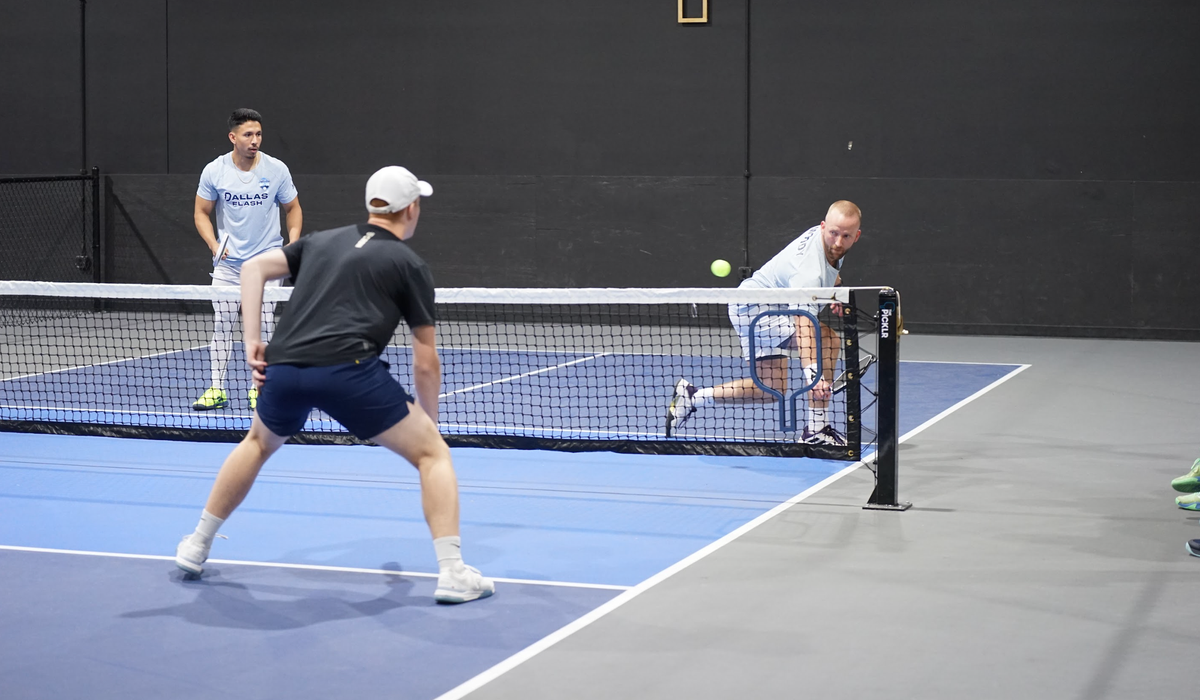
How to Stop Popping the Ball Up at the Kitchen
If you want to stop popping the ball up at the kitchen, the problem almost always starts before you even swing. This guide breaks down the root causes and gives you the exact mechanical fixes to keep your dinks low and your opponents off-balance.
The Dink PickleballThe Dink Media Team
What Makes This Lesson Different
What sets this lesson apart is its focus on real-world application. Humberg isn't just drilling technique in isolation; she's teaching Matt how to use the backhand drive in actual game situations. The progression from hand feeding to paddle feeding to targeted drills mirrors what you'd encounter in a real match.
Additionally, Humberg's coaching style emphasizes immediate feedback and adjustment. She doesn't overwhelm Matt with ten different things to fix at once. Instead, she identifies the most impactful adjustments and builds from there. This is a lesson in coaching philosophy as much as it is about the backhand drive itself.
The fact that this is part one of a two-part lesson also matters. Humberg is taking a comprehensive approach to Matt's development, which suggests that mastering the backhand drive requires more than a single session. It's a skill that builds over time with deliberate practice and feedback.
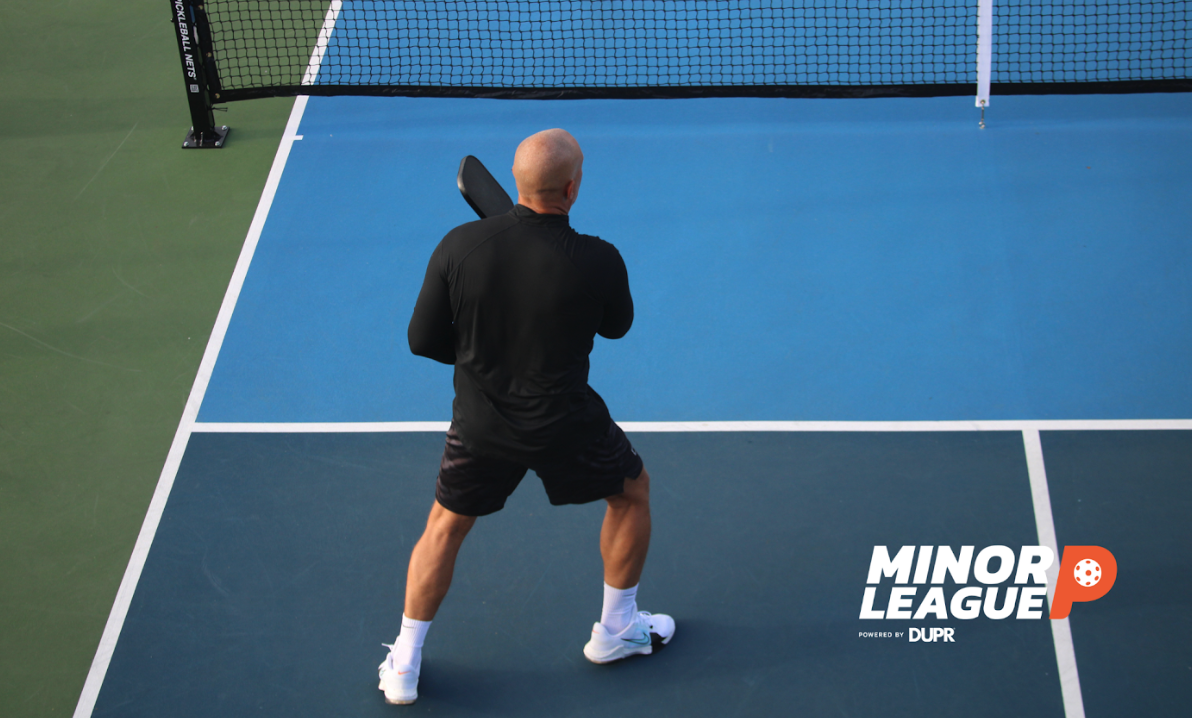
How to Practice Pickleball Alone: 7 Solo Drills
Learning how to practice pickleball alone is one of the fastest ways to close the gap between where your game is and where you want it to be. These 7 solo drills target the shots and movement patterns that actually matter during live play.
The Dink PickleballThe Dink Media Team
Applying These Lessons to Your Game
So how do you take what Humberg teaches and apply it to your own backhand drive? Start by being honest about your current level. Are you comfortable hitting a backhand drive in a match, or does it feel like a last resort? If it's the latter, you need to spend time in practice building confidence.
Next, focus on the decision-making aspect before you obsess over mechanics. When should you hit a backhand drive? When should you drop? Understanding the strategic element will make your practice more purposeful. Then, work on the mechanics through progressive drills, just like Humberg does in the lesson.
Finally, get feedback from someone who knows the game. Whether that's a coach, a higher-rated player, or even video analysis of your own stroke, external perspective is invaluable. The backhand drive is a complex shot, and small adjustments can yield big improvements.
100s of thousands of pickleballers read The Dink Newsletter, including pros, business owners, beginners & (probably) your grandma. Click here to subscribe, it's free.
The Bigger Picture
This lesson also highlights something important about pickleball coaching in 2026. The best coaches aren't just drilling technique; they're teaching players how to think about the game. Humberg's approach combines mechanical instruction with strategic awareness, which is exactly what separates good coaching from great coaching.
For players looking to improve their backhand drive, resources like this are invaluable. You can watch a professional coach work with a player at your level (or higher) and see exactly how adjustments are made and why they matter. It's like having a front-row seat to a private lesson.
💡
Heads up: hundreds of thousands of pickleballers read our free newsletter. Subscribe here for cutting edge strategy, insider news, pro analysis, the latest product innovations and more.
Frequently Asked Questions
What's the difference between a backhand drive and a backhand drop?
A backhand drive is an aggressive, attacking shot hit with pace and intended to put pressure on your opponent. A backhand drop is a soft, controlled shot designed to land near the net. The choice between them depends on court positioning, opponent location, and the incoming ball's height and pace.
How long does it take to develop a solid backhand drive?
It varies by player, but most recreational players can develop a functional backhand drive within a few weeks of focused practice. However, mastering it to the point where it's a reliable weapon in matches typically takes several months of consistent work and feedback.
Can I learn the backhand drive from video alone?
Video is a great learning tool, but it's most effective when combined with practice and feedback. Watching Humberg's lesson will give you the framework and mechanics, but you'll need to practice and ideally get feedback from someone who can see your stroke in person.
Why do so many players avoid hitting the backhand drive?
Many players avoid the backhand drive because it feels less natural than the forehand, and it requires more confidence. Additionally, if you haven't practiced it extensively, it's easier to default to shots you're more comfortable with. Building confidence requires deliberate practice and successful repetitions.
Is the backhand drive important at all skill levels?
Yes. Whether you're a 3.0 or a 5.0, having a reliable backhand drive makes you a more complete player. At higher levels, it's almost essential. At lower levels, it's a skill that will accelerate your improvement faster than almost anything else.
Anuncie Aqui / Advertise Here
Sua marca para o mundo Pickleball! / Your brand for the Pickleball world!




 English (US) ·
  Portuguese (BR) ·