
 English
  Spanish
  Portuguese
  German
  Italian
  Japanese
  French
  Polish
  Russian
  Netherlands
  Hungarian
  Turkish
  Videos
  The Pickler

Good footwork is one of the most important and often overlooked fundamentals in pickleball. It influences how you move around the court, where you make contact with the ball, and how consistently you execute your shots.
Strong footwork can also help eliminate unnecessary unforced errors. When you arrive in position with your body under control, you have more time and space to make a quality shot. Developing these movement habits gives you a foundation you can rely on throughout every rally.
Every Shot Starts With Your Feet
Before your paddle ever touches the ball, your feet have already influenced the outcome.
Good positioning allows you to make contact in front of your body and execute your shot naturally. When you’re late to the ball or out of position, you may find yourself reaching, leaning, or hitting while still moving. Even with solid technique, those awkward positions can lead to mishits, pop-ups, and balls into the net.
In other words, some unforced errors aren’t a problem with your swing—they start with your feet.
Developing efficient footwork helps you get to the ball sooner and establish a stronger position before you make contact. From there, you can execute your shot with greater control and recover more easily for the next ball.
Start With the Pickleball Ready Position
Good footwork starts with a solid base. The Pickleball Ready Position keeps you balanced, mobile, and prepared to react to your opponent’s next shot. After each shot, work to return to this position so you’re ready for whatever comes next.
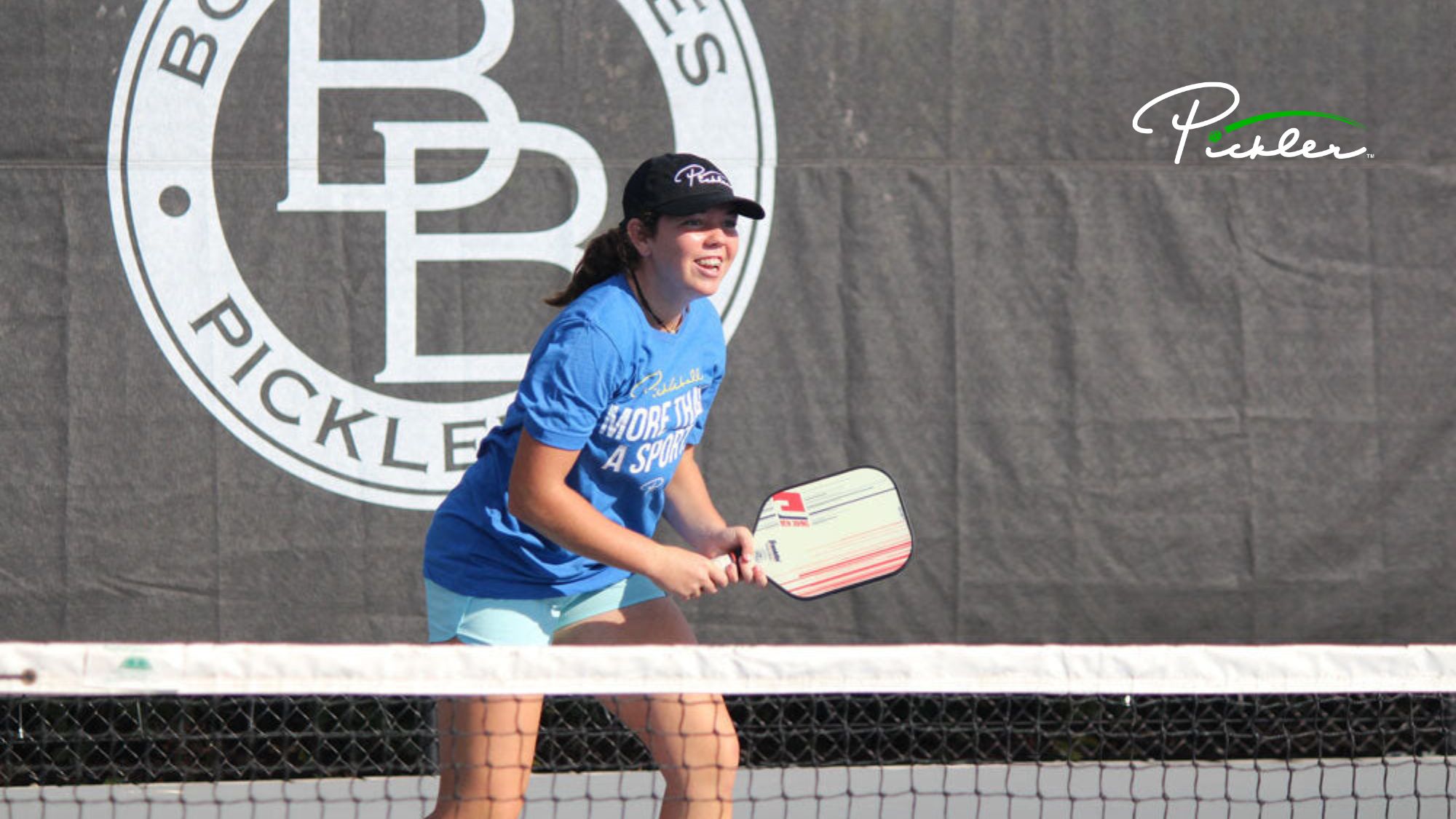
A strong ready position includes:
- Feet shoulder-width apart: Creates a stable, athletic base while allowing you to move laterally.
- Knees slightly bent: Keep your weight forward on the balls and insides of your feet for quick movement in any direction.
- Paddle out in front: Keep your elbows slightly bent and your paddle up and visible in your peripheral vision.
- Paddle at a comfortable height: Chest to belly-button height provides coverage for both high and low shots and allows for quick reactions.
- Relaxed grip: A light grip helps you absorb pace and make quick adjustments.
Think of this position as your home base. As you move around the court, returning to a balanced ready position keeps you prepared to respond to the next shot.
Want to fine-tune your ready position? Check out our complete guide to the Pickleball Ready Position for a deeper look at stance, paddle position, grip, and positioning at the Kitchen.
The Split Step Is Your Foundation
Once you’re in the ready position, the split step helps you transition into your next movement.
A split step is a small hop into an athletic ready position just before your opponent contacts the ball. As you land, your feet should be about shoulder-width apart, your knees bent, your weight on the balls of your feet, and your paddle up in front of your body.
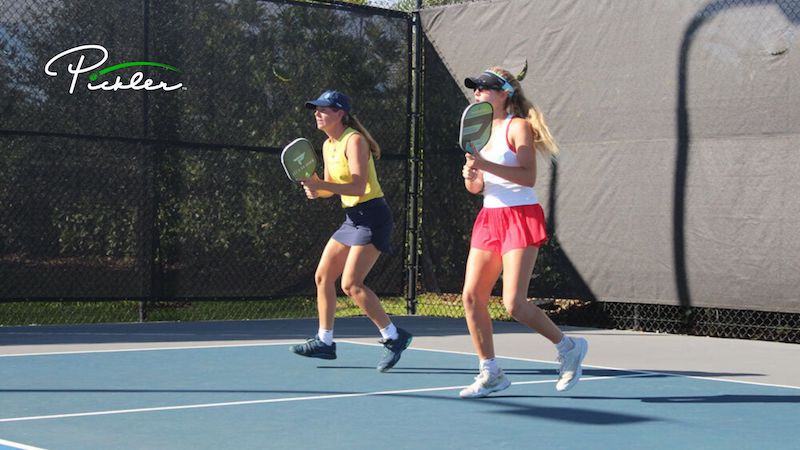
The movement loads your legs and prepares you to move in any direction. Timing is key: aim to land your split step just as your opponent strikes the ball so you can immediately react to the direction and speed of the shot.
Once you’re comfortable with the motion, practice the split step while moving around the court. With repetition, it becomes a natural part of your movement pattern and helps you avoid being caught flat-footed or off balance.
Move Efficiently at the Kitchen
Footwork becomes even more important once both teams establish themselves at the Non-Volley Zone.
When dinking, try to keep your body parallel to the Kitchen line. If you need to reach for a ball, avoid crossing one foot over the other. A crossover step pulls you out of your ready position, making it more difficult to control your dink and leaving you less prepared for your opponent’s next shot.
Instead, take a lateral step with the foot closest to the ball, make your shot, then immediately return to your ready position.
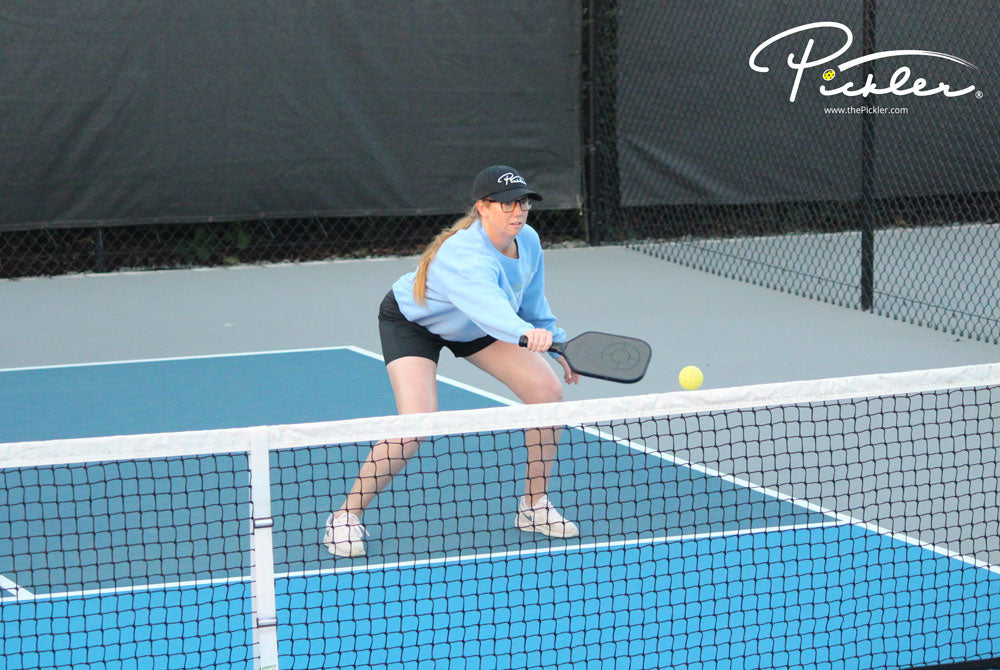
It’s equally important to hold the Kitchen line whenever possible. Retreating several feet off the line creates larger openings for your opponents, gives them more room to place dinks, and forces you to hit from farther away from the net. Those deeper dinks are also more likely to sit up, creating attackable opportunities for your opponents.
If you’re pressured, use a small drop step to protect yourself, stay compact, and work your way right back to the Kitchen line. The goal is to hold your position whenever possible.
Good Footwork Creates Better Opportunities
Once strong movement becomes second nature, it opens the door to more advanced strategy.
Shots like the Erne depend on precise footwork just as much as paddle skill. An Erne requires you to move around or jump over the Kitchen while volleying the ball near the net, all without touching the Non-Volley Zone or its line before making contact. Success comes from knowing exactly where your feet are throughout the shot.
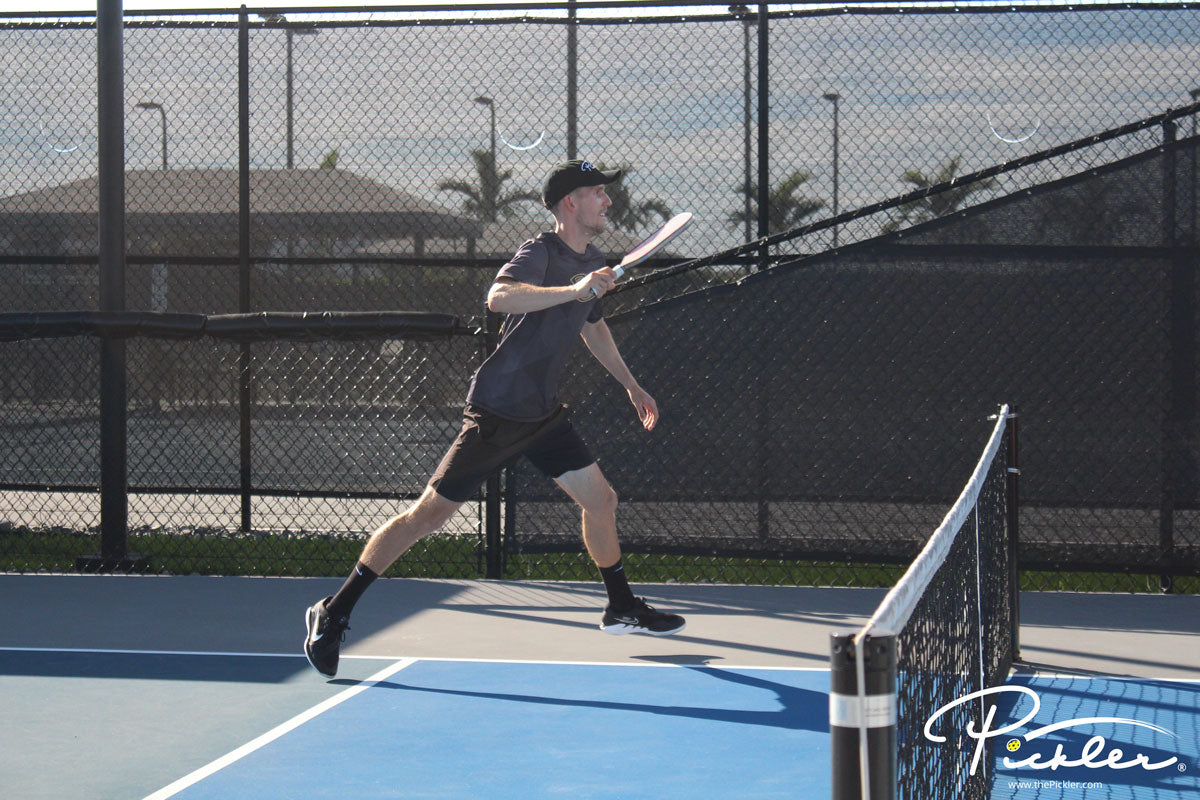
Even if you’re not practicing Ernes yet, developing good movement patterns and body awareness will prepare you for advanced techniques as your game continues to improve.
Move Smarter, Play Longer
Good footwork improves your performance and also helps protect your body.
Efficient movement reduces unnecessary lunging, twisting, and reaching, placing less stress on your knees, hips, ankles, and lower back. You’ll also conserve energy throughout long recreational sessions, league nights, and tournaments because you’re taking efficient steps instead of scrambling after every shot.
Moving well isn’t about being the fastest player on the court. It’s about taking the right steps at the right time.
Make Footwork Part of Every Practice
Good footwork develops through repetition. The more you practice moving with purpose, the more naturally those movements become part of your game.
During your next practice, pay attention to your movement as much as your swing. Work on timing your split step, using lateral steps at the Kitchen, returning to the ready position after each shot, and holding the Kitchen line whenever possible.
Looking for ways to build these skills? Try these 5 Simple Footwork Drills to Improve Your Agility on the Pickleball Court. They can help you develop quicker reactions, more efficient movement, and the footwork habits that translate directly to play.
With consistent practice, better footwork can help you reduce unforced errors, improve your shot execution, and move with greater confidence around the court.
Source: The PicklerAnuncie Aqui / Advertise Here
Sua marca para o mundo Pickleball! / Your brand for the Pickleball world!




 English (US) ·
  Portuguese (BR) ·