
 English
  Spanish
  Portuguese
  German
  Italian
  Japanese
  French
  Polish
  Russian
  Netherlands
  Hungarian
  Turkish
  Videos
  Thedink Pickleball

Reaching 4.0 in pickleball is not about flashy winners. It comes down to four unglamorous shots that quietly fix the holes in your game.
If you want to reach 4.0 in pickleball, the fastest path is not another highlight reel speed-up. It is four unglamorous shots that most 3.5 players skip.
Coach Jess of Athena Pickleball put it plainly: these shots are "not necessarily the most exciting," but together they make your game far more capable.
Each one solves a completely different problem on the court.
Learn all four and you stop being the player who survives points by luck. You become the player who controls them.
Love pickleball? Then you'll love our free newsletter. We send the latest news, tips, and highlights for free each week.
What It Really Takes to Reach 4.0 in Pickleball
To reach 4.0 in pickleball, you need shots that work in all three phases of a point: when you are defending, when you are neutral, and when you are attacking.
Coach Jess picked four shots that map onto exactly those moments: the reset, the topspin attack volley, the aggressive roll dink, and the backhand counter.
None of them is flashy. All of them are the difference between a 3.5 and a 4.0.
Here is the honest part. You already know how to hit a forehand.
What is holding you back is the shot you avoid because it feels uncomfortable. That is where we start.
Shot 1: The Reset That Keeps You in the Point
The reset is a ball you place softly at the feet of opponents who are already at the kitchen, forcing them to hit up.
It is the single most underrated shot for anyone trying to climb from 3.0 to 4.0.
Think about what happens when you are stuck in the transition zone. You are off the line, slightly behind in the point, and the ball is coming fast.
Your instinct is to hit it hard. That usually just sends it right back at you harder.A reset flips that. As Coach Jess describes it, you can "reset someone to death and frustrate them."
The reset is not about winning the point. It is about getting yourself back into it.
Anna Leigh Waters, the Soccer Prodigy Who Pickleball Stole
The greatest pickleball player in the world was a soccer prodigy with pro potential. Then another sport came calling, and it was too loud to ignore.
 The Dink PickleballThomas Shields
How do you actually practice a reset?
Start simple and controlled, then add pressure. Coach Jess suggests beginning at the kitchen line before you ever try it on the move.
- Stand at the kitchen line and have a partner feed you medium-pace balls.
- Soften your grip and think about catching the ball rather than hitting it.
- Let their power do the work, meeting the ball out in front with a stable paddle.
- Once that feels natural, move back a few feet and reset while stepping forward.
This is also your best defense when someone targets you.
If you struggle to handle balls hit right at your body, a calm reset keeps you from popping the ball up and handing over the point.
💡
Need some new pickleball gear? Get 20% off select paddles, shoes, and more with code THEDINK at
Midwest Racquet SportsShot 2: The Topspin Attack Volley for Controlled Offense
The topspin attack volley replaces your flat, slappy put-away with a low-to-high brush that gives you power and control at the same time.
This is how you attack a floating ball without spraying it long.
At the 3.0 to 4.0 levels, most players swing high to low with an open paddle face. It comes off almost like a slice, and it is hard to control.
Hit it slightly wrong and the ball sails up. Slap at it and it goes in the net.
The fix is a change in direction.
Instead of coming down on the ball, you get under it and drive from low to high, the same principle behind a good topspin drive.
What is the simplest cue for topspin?
Coach Jess gives one clean cue: "This leading edge is going to be the top edge." Leading with the top edge closes the paddle face, so you can brush up the back of the ball and still hit it hard.The topspin grabs the ball and pulls it back down into the court.
That is what lets you swing with commitment and still keep the ball in, the same feel you want when keeping it low on a drop.
Start your paddle below the ball, finish high, and trust the spin.
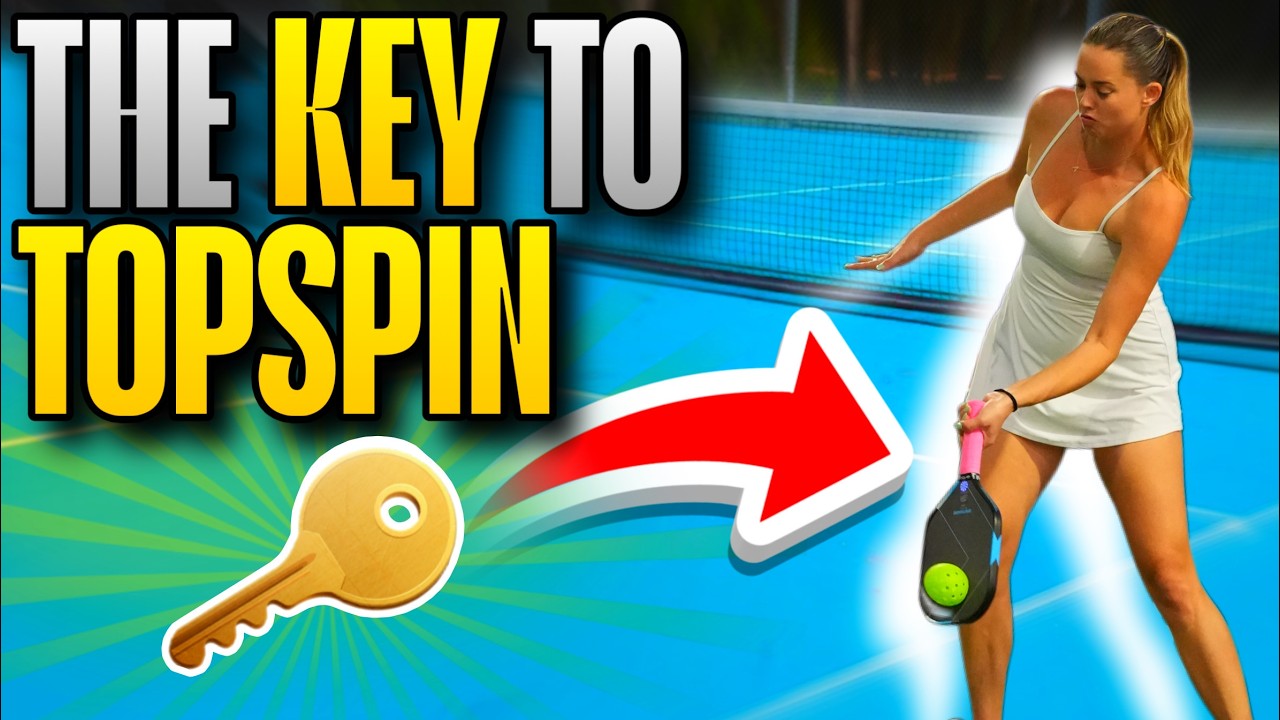
Pickleball Topspin: Master the Easiest Spin Technique
Pickleball topspin doesn’t have to be complicated. Professional player Ava Ignatowich reveals the simple wrist mechanics and paddle positioning that make pickleball topspin easier to learn than most players think.
 The Dink PickleballThe Dink Media Team
Shot 3: The Aggressive Roll Dink That Applies Real Pressure
The roll dink is a dink with topspin that lets you move from simply placing the ball to actively pressuring your opponent.
It is the shot that turns a neutral kitchen exchange into an opening.
Most 3.5 players are decent at a neutral dink. The balls are well placed, but they never actually threaten anyone.
Nobody is under pressure, so the rally just resets over and over.
With the roll dink, you set up the same way you would for a normal push dink.
Then, as Coach Jess explains, you accelerate up the ball, "brushing up the back of the ball," grabbing the underside to get it spinning.More commitment, more spin, more penetration.
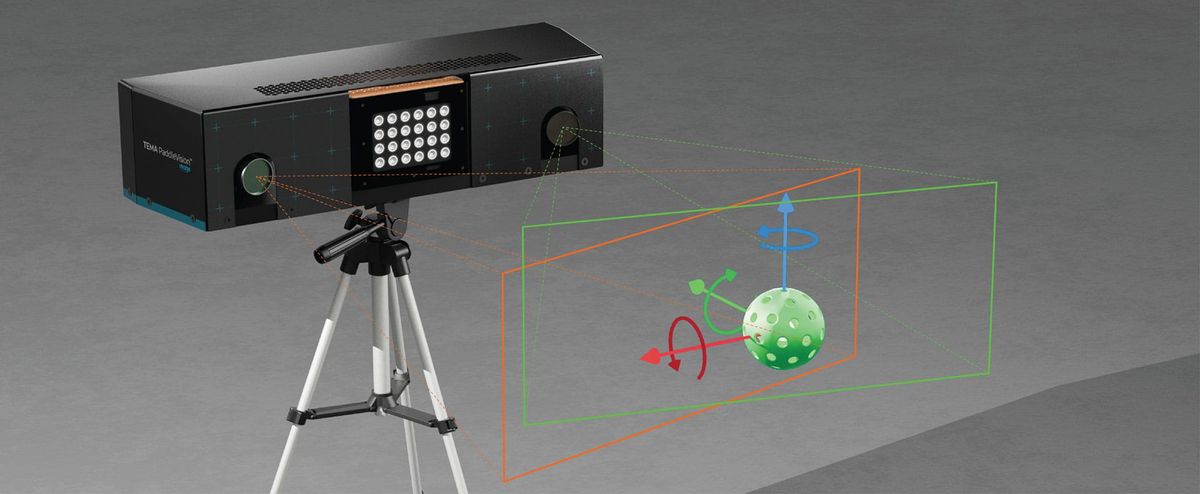
USA Pickleball Launches Long-Awaited Spin Rate Test
“This is an important step in ensuring our equipment standards continue to support fair competition while allowing for responsible innovation.”
 The Dink PickleballAlex E. Weaver
When should you fire the roll dink?
Patience matters. You do not roll every dink. You wait for one that sits up a little, something more handleable, and that is your green light to attack.
- Trade neutral dinks and watch your opponent's contact point.
- The moment you see a ball you can take comfortably, commit to the roll.
- For a right-hander, come slightly around the right side of the ball on the forehand and the left side on the backhand.
- Aim at the inside foot or an open pocket, then get your paddle back up to attack the reply.
This is exactly the mindset Yahoo Sports describes when it tells players to dink with a plan rather than dink and hope.
Done well, the roll dink is how you turn the kitchen into a weapon instead of a holding pattern.
Pickleball Dink Strategy: Master the Neutral Game
This approach might not feel as satisfying as crushing a winner, but it’s far more effective. Over time, this mentality will show up in your win-loss record.
 The Dink PickleballThe Dink Media Team
Shot 4: The Backhand Counter That Meets Offense With Offense
The backhand counter lets you take a fast ball aimed at your body and push it back down on your opponent instead of shielding or popping it up.
It is how you stop losing hands battles at the kitchen.
When a ball comes down the middle at pace, it is usually a one-handed counter.
The goal is not to swing big. The goal is to stay structured and redirect the speed your opponent gave you.
Coach Jess wants a "nice strong structured arm" with the knuckles down.You meet the ball from the side, right about even with your body, not way out in front where the paddle face opens and floats the ball up.
What is the key to a clean counter?
Stability and timing win this exchange.
Keep soft knees, stay balanced, and think about "sticking the landing" rather than following through big.Bring the paddle back slightly toward your chest, then meet the ball out front with your knuckles down.
Anticipate that the fast ball is coming and decide early that you are going to counter, not defend.
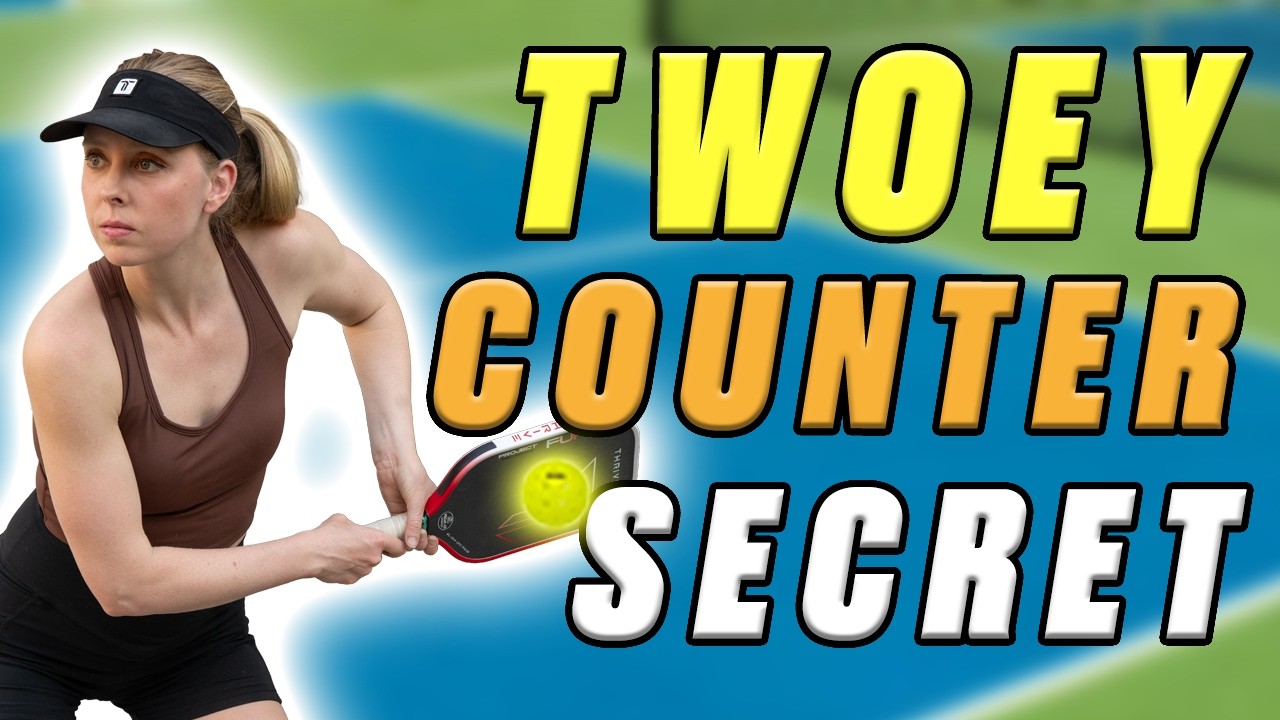
These are the same habits that win hands battles, and dialing in your backhand counter makes you far harder to attack.
Ben Johns is the model here: watch how quiet and compact his hands stay when balls come at the middle.
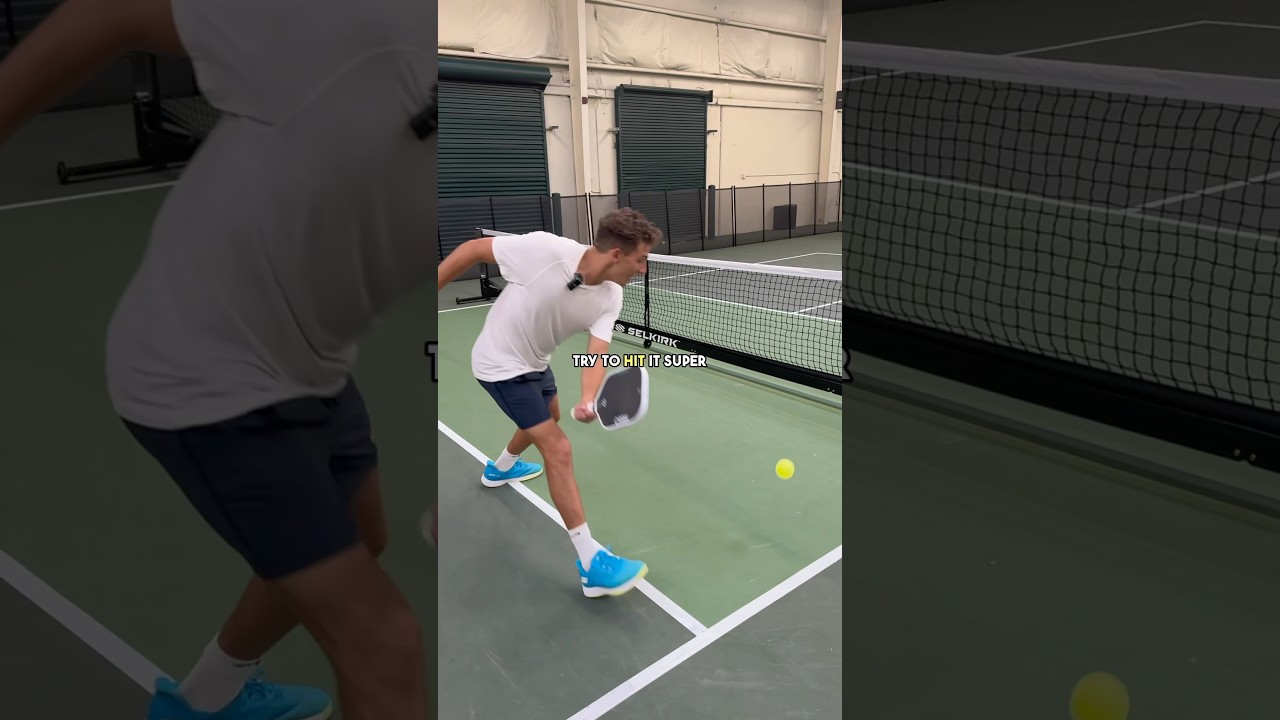
Advanced Pickleball: Crush the Two-Handed Backhand Counter at the Kitchen
The key to an effective two-handed backhand counter is simplicity, balance, and hip-driven power
 The Dink PickleballThe Dink Media Team
How These Four Shots Help You Reach 4.0 in Pickleball
These four shots worth your practice time are not random, and that is the whole point.
Each one covers a different moment in the point, so together they close the gaps that keep you at 3.5.
The reset helps you survive pressure and get back into points. The topspin volley gives you controlled offense.
The roll dink applies steady pressure at the kitchen. The backhand counter lets you meet offense with offense.
If you were trying to reach 4.0 in pickleball as fast as possible, these are the four shots worth your practice time.
Pick one, drill it this week, and know exactly when to speed up once the opening appears. Master one at a time and the level takes care of itself.
💡
Heads up: hundreds of thousands of pickleballers read our free newsletter.
Subscribe herefor cutting edge strategy, insider news, pro analysis, the latest product innovations and more.
Frequently Asked Questions
How long does it take to reach 4.0 in pickleball?
There is no fixed timeline, because it depends on how often you play and how deliberately you practice. Players who drill specific shots like the reset and roll dink, rather than only playing games, tend to reach 4.0 in pickleball noticeably faster.
What shots should I learn first to reach 4.0 in pickleball?
Start with the reset. It keeps you in points you would otherwise lose and builds the soft hands you need for every other shot. From there, add the topspin volley, the roll dink, and the backhand counter in whatever order fits your current weaknesses.
What is the difference between a reset and a dink?
A reset is hit from off the line or the transition zone to neutralize a fast ball and buy time to move up. A dink is hit at the kitchen line during a slower exchange. Both are soft, but the reset is defensive and the dink can be neutral or offensive.
Why do my volleys keep sailing long?
Usually because you are swinging high to low with an open paddle face. Switch to a low-to-high brush with the top edge leading, so topspin pulls the ball back down into the court. That single change adds both control and power.
Is a 4.0 rating good in pickleball?
Yes. A 4.0 player has reliable fundamentals, real shot selection, and the ability to both defend and attack under pressure. It is a strong recreational and competitive level, and it is a realistic target for most committed 3.5 players.
Anuncie Aqui / Advertise Here
Sua marca para o mundo Pickleball! / Your brand for the Pickleball world!






 English (US) ·
  Portuguese (BR) ·