
 English
  Spanish
  Portuguese
  German
  Italian
  Japanese
  French
  Polish
  Russian
  Netherlands
  Hungarian
  Turkish
  Videos
  Thedink Pickleball

If you're over 50 and playing pickleball, some of the things you're working hardest on may actually be hurting your game.
That's the core insight behind a new coaching breakdown from Tony Roig, a Sr. Pro Player and coach at In2Pickle, who recently shared five proven pickleball strategies for 50+ players designed specifically for the over-50 demographic.
Rather than forcing older players into a mold built for younger, faster athletes, these strategies work with your natural strengths and limitations.
Love pickleball? Then you'll love our free newsletter. We send the latest news, tips, and highlights for free each week.
1. Why Paddle Ready Position Matters More as You Age
The first pickleball strategy for 50+ players centers on something most people overlook: where you hold your paddle before the ball even arrives.
Roig explains that a traditional ready position works fine for younger players with quick reflexes, but older players benefit from a modified approach that prioritizes body protection.
Instead of holding your paddle out in front of you in the standard ready position, Roig recommends opening your paddle fully to a backhand position, keeping it parallel to the net.
This gives you maximum protection for your body and prepares you to block any incoming ball.
The trade-off is that you'll have a slightly harder time transitioning to your forehand, but for players dealing with aggressive "bangers" (players who hit hard drives), the added safety is worth it.
There's also a variation using your off-hand. If you're a left-handed player, for example, you can present the paddle with your right hand behind it for extra stability.
This works especially well if you feel nervous or uncomfortable when facing hard-hit balls.
2. How to Handle Aggressive Bangers Without Exhausting Yourself
One of the biggest mistakes pickleball players over 50 make is trying to hit every ball that comes their way, especially when facing bangers.
Roig demonstrates this with a simple but powerful lesson:
Sometimes the best shot is no shot at all.When a banger hits a short ball into your court, your instinct might be to smack it back. But Roig shows that this almost always results in an error.
Instead, the smarter play is to simply get out of the way and let the ball go out of bounds.
This accomplishes two things: it saves your energy and it forces your opponent to make a decision.
The next time that same banger gets a short ball, they now have to choose between hitting another hard drive (knowing you'll likely let it go) or dinking it back in.
💡
Need some new pickleball gear? Get 20% off select paddles, shoes, and more with code THEDINK at
Midwest Racquet SportsMost will choose to dink, which means you've successfully pulled them into a game you can control.
This is a game-changer for pickleball strategies for 50+ players because it shifts the dynamic from "can I hit harder?" to "can I be smarter?"
Roig even suggests you don't have to wait until the ball is hit.
When you see a banger getting ready to drive, you can preemptively move to the sideline or grab water.
This removes the pressure and lets your opponent know you're not playing their game.
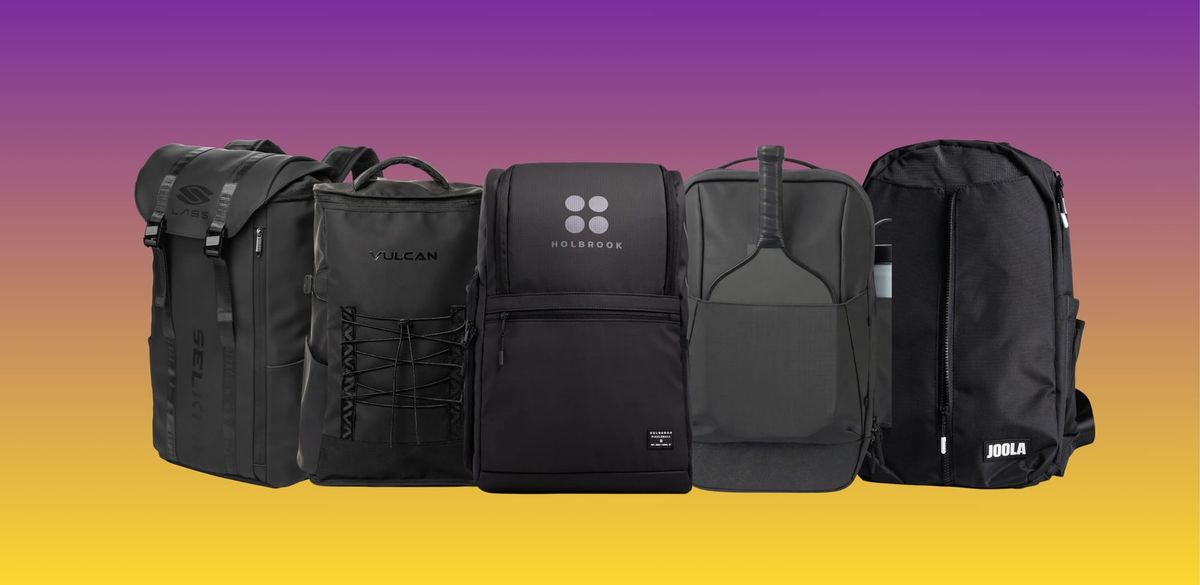
Best Pickleball Backpacks 2026: Options for Every Budget
From small and budget-friendly to large and more premium, here are five pickleball bags we’ve tested and would trust with our paddles any day.
 The Dink PickleballAlex E. Weaver
3. The Paddle Wrist Position That Changes Everything
Here's something that separates good pickleball strategies for 50+ players from great ones: how you hold your wrist.
Roig breaks this down into two positions: natural wrist and hinged wrist.
A natural wrist position is exactly what it sounds like. If you let your arm hang by your side with a paddle in hand, that's your natural wrist position.
A hinged wrist is when you bend your wrist upward, bringing the paddle more parallel to the court.
For players over 50, Roig strongly recommends adopting a natural wrist position with the paddle head down. This offers several advantages.
- First, it's easier on your arm and allows you to hit softer reset shots with better control.
- Second, it gives you more reach, especially on dinks to the outside of your backhand.
When you hinge your wrist, you have to get down much lower to reach those shots because pickleball doesn't bounce high.
The difference is noticeable immediately. With a hinged wrist, you're fighting against your own body mechanics.
With a natural wrist position, everything flows more easily.
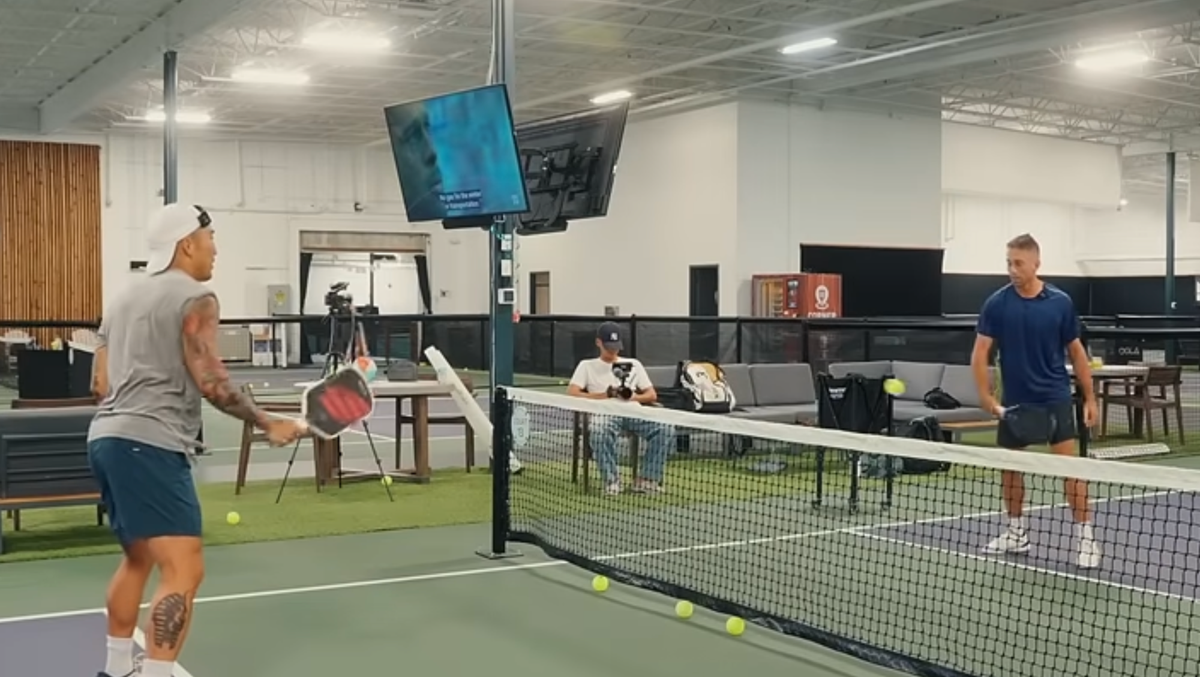
Stop Popping the Ball Up: Modern Pickleball Hand Speed and Paddle Positioning
Winning the kitchen today isn’t about swinging harder—it’s about creating space with your coil and controlling contact with smarter paddle positioning
The Dink PickleballThe Dink Media Team
4. Mastering the Soft Game as Your Secret Weapon
The soft game is perhaps the most important pickleball strategy for 50+ players because it plays to the strengths of experienced athletes rather than their weaknesses.
Roig contrasts two styles of play: the chaotic banger approach where balls are hit hard repeatedly with no strategy, and the controlled soft game focused on placement and patience.
The perfect shot for the soft game is the dink. You can use it defensively to neutralize an aggressive opponent or offensively to create opportunities.
The beauty of this approach is that it doesn't require explosive power or lightning-fast reflexes. It requires touch, positioning, and court awareness.
When you master the soft game, you change the entire dynamic of the match. Bangers are forced to adapt to your pace rather than you adapting to theirs.
You control the tempo, the placement, and the rhythm. For pickleball players over 50, this is where experience becomes your greatest asset.
How to Stop Being a Pickleball Banger and Master Soft Game Skills
Calm hands and repetition unlock control under pressure
The Dink PickleballThe Dink Media Team

5. The Mental Edge: Knowing When Not to Play
One of the most underrated pickleball strategies for 50+ players is psychological.
Roig emphasizes that you don't have to engage with every ball or every opponent's style.
If someone is hitting hard drives at you and you're uncomfortable, you have options.
- You can adjust your paddle ready position for more protection.
- You can let balls go out of bounds instead of chasing them.
- You can move to the sideline before your opponent even hits.
These aren't signs of weakness; they're signs of intelligence.
The goal isn't to prove you can do everything a younger player can do.
The goal is to win matches by playing smart pickleball.Roig's entire framework for pickleball strategies for 50+ players is built on this principle: work with your strengths, not against your limitations.
💡
Heads up: hundreds of thousands of pickleballers read our free newsletter.
Subscribe herefor cutting edge strategy, insider news, pro analysis, the latest product innovations and more.
Frequently Asked Questions
What's the best paddle ready position for players over 50?
The backhand-ready position, where your paddle is parallel to the net, offers maximum body protection. This is especially useful if you're facing aggressive bangers. You can also use your off-hand behind the paddle for extra stability if you feel uncomfortable with hard-hit balls.
Should I try to hit every ball in pickleball?
No. One of the biggest mistakes older players make is trying to hit every ball. Sometimes the smartest play is to let the ball go out of bounds, which saves your energy and forces your opponent to adjust their strategy. This is a core principle of pickleball strategies for 50+ players.
Why is the soft game important for older players?
The soft game relies on touch, placement, and court awareness rather than power and speed. For pickleball players over 50, this plays to your strengths as an experienced athlete. Mastering dinks and controlled shots lets you control the match tempo and wear down opponents.
What's the difference between natural and hinged wrist positions?
A natural wrist position is when your paddle hangs naturally by your side. A hinged wrist is when you bend your wrist upward. Natural wrist positions are easier on your arm, allow better control of soft shots, and give you more reach on outside dinks.
How do I handle aggressive bangers as an older player?
Adjust your paddle ready position for more protection, let short balls go out of bounds instead of trying to hit them, and pull bangers into a soft game where you control the pace. You can also preemptively move away from the court when you see a banger getting ready to drive.
Anuncie Aqui / Advertise Here
Sua marca para o mundo Pickleball! / Your brand for the Pickleball world!




 English (US) ·
  Portuguese (BR) ·