
 English
  Spanish
  Portuguese
  German
  Italian
  Japanese
  French
  Polish
  Russian
  Netherlands
  Hungarian
  Turkish
  Videos
  Thedink Pickleball

Hand battles decide points at the highest levels of pickleball, and most players lose them because they react late or swing too big. Pro player Michael Loyd reveals 9 secrets to winning every hand battle pickleball exchange, from paddle positioning to reading your opponent's tells.
A hand battle pickleball exchange can decide an entire match.
If you're losing these fast-paced rallies at the net, you're basically handing your opponent free points on a silver platter.
The good news? Michael Loyd, a top-10 ranked pro player who's won over 135 matches on the Pro Tour, just revealed exactly how to dominate these critical moments.
Love pickleball? Then you'll love our free newsletter. We send the latest news, tips, and highlights for free each week.
Why Hand Battles Matter More Than You Think
Here's the thing: at higher levels of pickleball, you can't avoid hand battles.
They happen every single game, and the players who win them control the scoreboard, the momentum, and honestly, the entire psychological edge.
Loyd has been competing professionally since 2023 and has seen firsthand how these exchanges separate elite players from everyone else.
Most players lose hand battles for the same reasons.
- They react too late.
- They swing too big.
- They try to hit harder instead of smarter.
The result? Dumped balls, unforced errors, and lost points that should have been wins.
The game is getting faster with new balls and paddle technology, which means if you're not practicing these hand skills, you're going to get left behind.
But here's the encouraging part:
Winning hand battles is one of the fastest ways to level up without completely overhauling your game.1. Get Your Paddle Ready Before the Ball Even Comes
The first secret to winning hand battle pickleball exchanges is counterintuitive: you're not reacting. You're already prepared.
Most players wait for the ball to come at them, then scramble to get their paddle up. By then, it's too late.
Loyd explains that pros don't react or try to get ready in the moment.
They're already prepped, giving themselves the best chance to cover the percentages instead of guessing where they need to be.
Here's what this looks like in practice: keep your paddle up and out in front of your body, around chest height.
💡
Need some new pickleball gear? Get 20% off select paddles, shoes, and more with code THEDINK at
Midwest Racquet SportsYour arms should be about a ball's length away from your body, but don't let your elbows sway out.
Think of your paddle as a shield, not a sword.Watch Ben Johns, arguably the greatest player in pickleball history. His paddle barely moves from his ready position until he attacks.
By keeping your hands high, you have a better chance to get the angle and keep the ball down.
- Everything coming down low is going to be slow.
- Everything coming up high is going to be fast.
So you'd rather have your paddle up to protect the fast stuff, then get it down in time for the slow stuff.
The Simple Drill to get Lightning-Fast Hands in Pickleball
You’re not just getting quicker hands. You’re getting smarter hands. And in pickleball, that’s the real difference.
 The Dink PickleballThe Dink Media Team

2. Shorten and Strengthen Your Swing
This is not the time for a forehand windshield wiper or a big, looping drive swing.
In a hand battle pickleball moment, you need a compact stroke. Think punch volley instead of a dry volley.
Loyd uses a helpful mental image: pretend you're in an enclosed space like a foam booth or a sleeping bag.
You physically can't take a big backswing in those scenarios. That's exactly what you want at the net during a hands battle.
The key is keeping everything out in front. Loyd sees players make the same mistake repeatedly: the longer a rally goes on, the more they want to put pace on the ball, so they take a bigger and bigger backswing.
Then they dump one into the net.
A good drill for this is to have a partner feed you rapid-fire balls while you volley them back using a tiny push forward, never letting the paddle travel behind you on a backswing.
This trains your muscle memory to stay compact and explosive.
Pickleball Dinking 101: Small Swings, Big Results
You’re not trying to hit winners from the kitchen. You’re trying to create situations where your opponent makes a mistake or gives you a ball you can attack
The Dink PickleballThe Dink Media Team
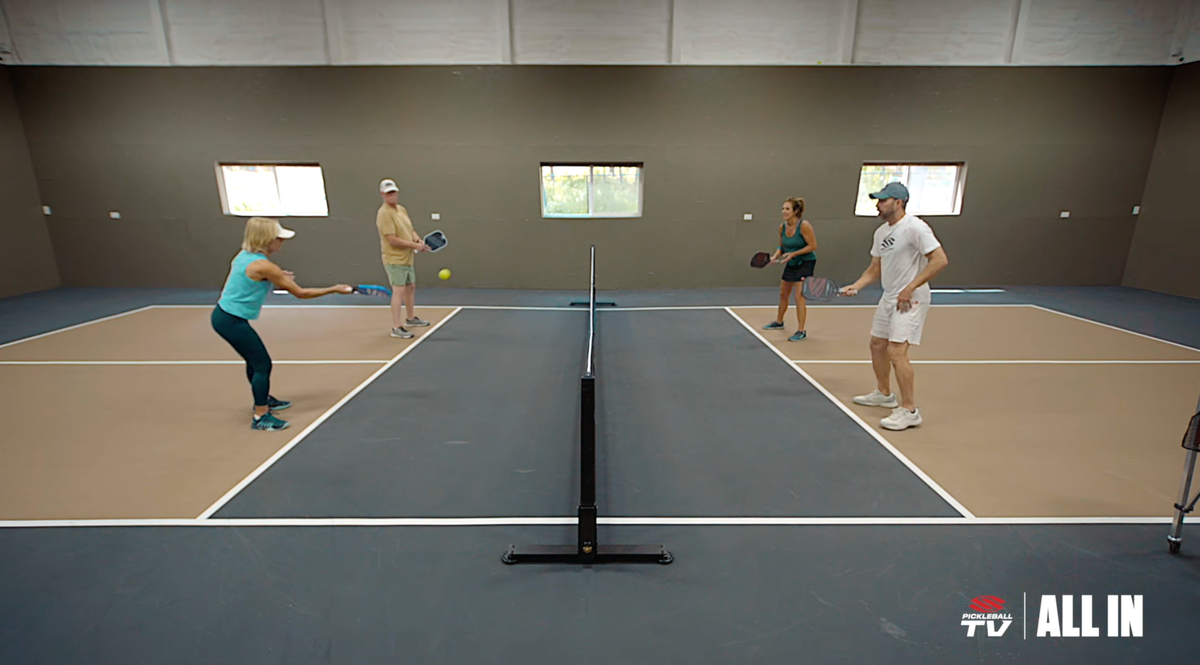
3. Target Weakness, Not Just Speed
It's tempting to just hit harder and harder during a hand battle pickleball exchange. But here's what separates pros from everyone else:
Placement beats power, every single time.Instead of trying to overpower your opponent, aim at their paddle hip, elbow, or shoulder.
This is the crossover zone where they have to decide whether to continue hitting a backhand or switch to a forehand. Watch the pros.
They'll often take some pace off the ball in the middle of a battle just to make sure they hit the perfect spot.
Loyd's personal favorite spot to aim is the opponent's paddle-side hip.
Why? It gives him something clear and precise to aim for, and it's often getting down.
So even if they get the ball back, a lot of times it's a pop-up for him to kill on the next shot.
A drill to practice this: have a partner feed you balls while calling out one of the three spots where they want you to hit your shot.
- Shoulder
- Hip
- Elbow
Repeat this over and over. It helps you practice split-second decision-making and aiming your speedups.
Attack the Right Spots: Win More Points in Pickleball
You can’t go to the same spot every single time you go on offense – eventually, your opponent will catch on. And make you pay for it.
The Dink PickleballEric Roddy
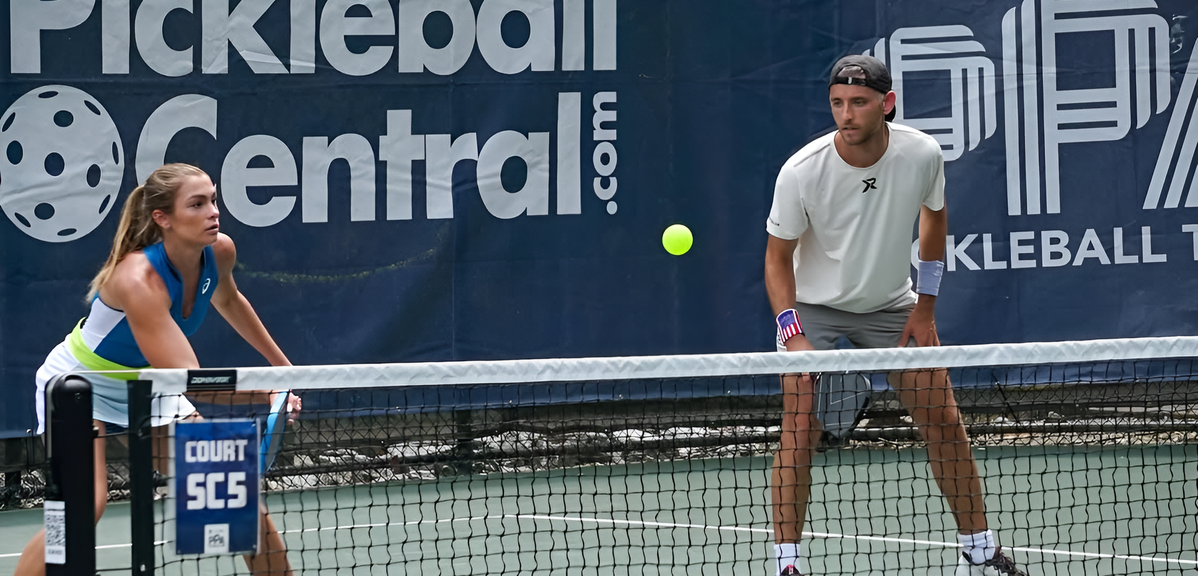
4. Spot the Speedup Before It Happens
The fastest hands in the world won't save you if you're caught off guard.
So the next secret to mastering hand battle pickleball is learning to read your opponent's tells before they even attack.
Speedups usually come from high balls that your opponent can take out of the air and volley at you with pace, or balls that bounce up around the height of the net.
Most people are going to speed up from their strong side, meaning forehand speedups are the most common (unless that player has a wicked backhand).
Heads up: hundreds of thousands of pickleballers read our free newsletter. Subscribe here for cutting edge strategy, insider news, pro analysis, the latest product innovations and more.
Speedups also come as pattern breakers. During a long dink rally, note which players tend to pull the trigger on a slightly high dink the quickest and get ready for it.
Pay attention to when they like to attack. Backhand down the line? Forehand through the middle?
Data is power.The more you recognize their tells, the sooner your paddle is in position before the ball even comes your way.
Jorja Johnson, a top pro, is known for not being afraid to take the ball hard at the player in front of her.
You'll notice she often steps back, uses her legs to accelerate through the ball, and takes that at her opponent.
Once you spot these patterns, you're no longer reacting. You're anticipating.
How to Defend Against a Body Bag in Pickleball
The key is to let the ball do some of the work for you. Rather than generating your own power, you’re redirecting the incoming pace back toward your opponent.
The Dink PickleballThe Dink Media Team

5. Master the Triangle Effect and Anticipation
In a speedup, the ball usually comes back in one or two ways, and this is predictable based on where the first speedup was hit.
Understanding this physics principle, which Loyd calls the "triangle effect," is a game-changer.
Let's say all your speedups are directed toward the person in front of you.
If you speed up straight ahead to your opponent's line, the ball will come back straight to the same side you hit from.
If you speed up across the person's body, the ball will come straight back to your opposite side, creating the triangle effect.
By using the principles of probability, you're not reacting blindly. You're waiting in the most likely spot.
A good drill to practice this is to rally fast at the kitchen line with a partner.
Speed up with intention, then prepare in the most likely spot where that ball is going to go. This forces your brain to start predicting rather than just reacting.
Loyd does this drill for hours on end with the sole purpose of getting as many reps as possible.
He often spends 30 minutes on one side and then 30 minutes on the other with Colin Johns.
It may sound boring, but once you get into a rhythm, things start to become second nature.
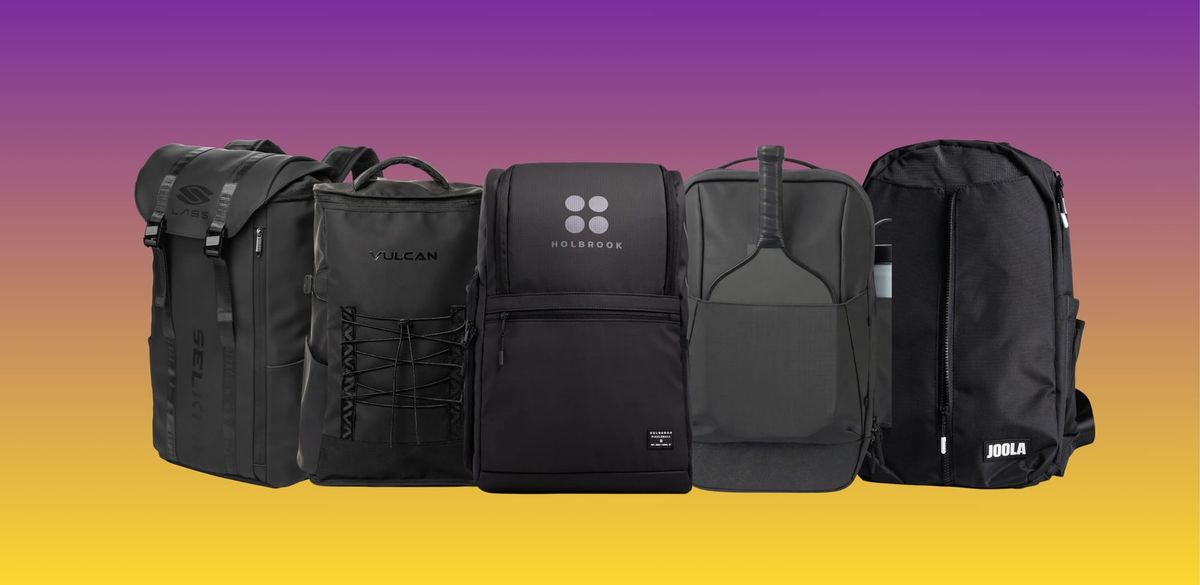
Best Pickleball Backpacks 2026: Options for Every Budget
From small and budget-friendly to large and more premium, here are five pickleball bags we’ve tested and would trust with our paddles any day.
The Dink PickleballAlex E. Weaver
6. Learn to Let It Fly (and Know When to Let Out Balls Go)
One of the biggest mistakes in hand battle pickleball is reflex hitting balls that are going out.
Most out balls are above shoulder height or still on a rising trajectory when they meet you at the kitchen line.
Train yourself to read the height and the pace of the ball. If it's climbing and you're at the kitchen line, there's a good chance it's sailing out.
Winning a point by not touching the ball is the simplest formula of all.
A bonus tip: pay attention to where the ball is being attacked from.
If your opponent is trying to counter back from a low position and it has a lot of pace, more times than not, that ball is going to continue to rise as it goes past you and land out.
Loyd also always tries to help his partner by yelling out as early as possible to help them make the decision to let it go.
Pickleball Pull Attack: 5 Factors to Master
A pickleball pull attack can be a game-changer, but only when you understand the five factors that determine success. Coach Tony Roig breaks down exactly when you should initiate an aggressive attack and when patience pays off.
The Dink PickleballThe Dink Media Team

7. Learn the Reset Button
If you're losing hand battle pickleball exchanges, sometimes it's a good idea to stop swinging for the fences and soft block the speedup back into the kitchen zone to slow the point down.
The key here is estimating pace and blocking the ball back appropriately.
To drill this, alternate between three fast volleys and then a soft reset.
Remember to keep your paddle face open on the reset to help redirect it back into the kitchen.
A higher reset that bounces short in the kitchen is better than a deep dink that they can take out of the air or a ball without enough margin that lands in the net.
Colin Johns does this better than almost anyone in the world.
Whenever he's behind in a rally or at a disadvantage, he always takes the time to reset and start the point over. It's a mental reset as much as a tactical one.
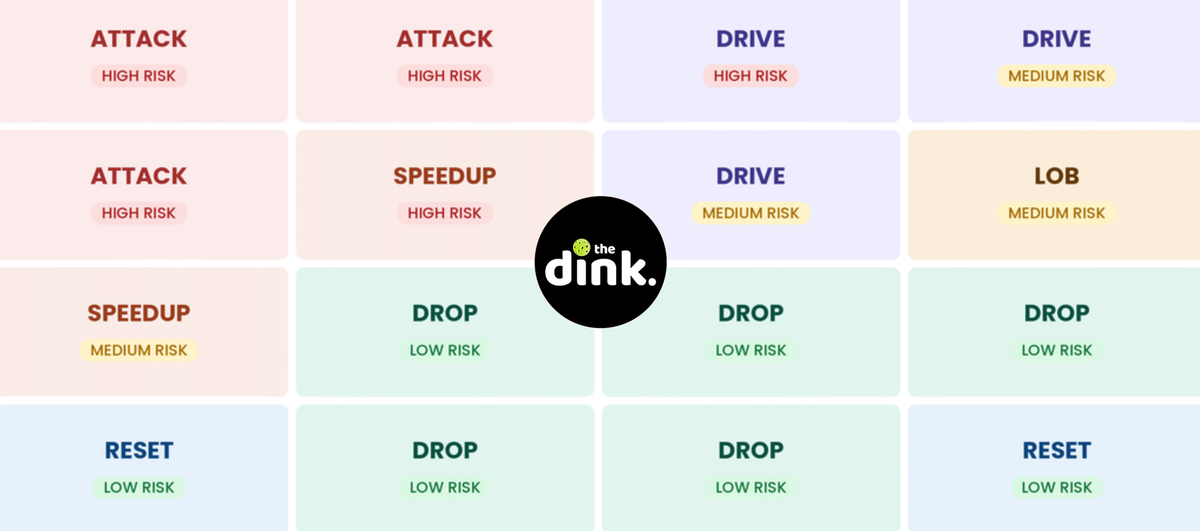
Decision Matrix: When to Attack or Reset in Pickleball
Pickleball is really all about two key factors: your court positioning and the height of the ball. This matrix decodes the game for you.
The Dink PickleballThe Dink Media Team
8. Eyes First, Hands Second
Most players flood their guess. Pros track the ball all the way in. This is the eighth secret to winning hand battle pickleball moments.
Avoid jumping upon impact or making larger body movements. Instead, keep your feet set shoulder-width apart with toes turned slightly out.
Practice exaggerated ball tracking by saying "hit" when you make contact to train your focus.
Over time, the ball will feel slower and you'll win more exchanges.
Want to level up the difficulty? Hit reflex volleys standing halfway inside the kitchen and slowly move back after every couple of rallies.
By the time you and your partner are back behind the kitchen line, you'll feel like you have forever to react to the ball.
Loyd does this drill a lot before his matches on the tour. It's a quick and easy way to get reflexes sharp.
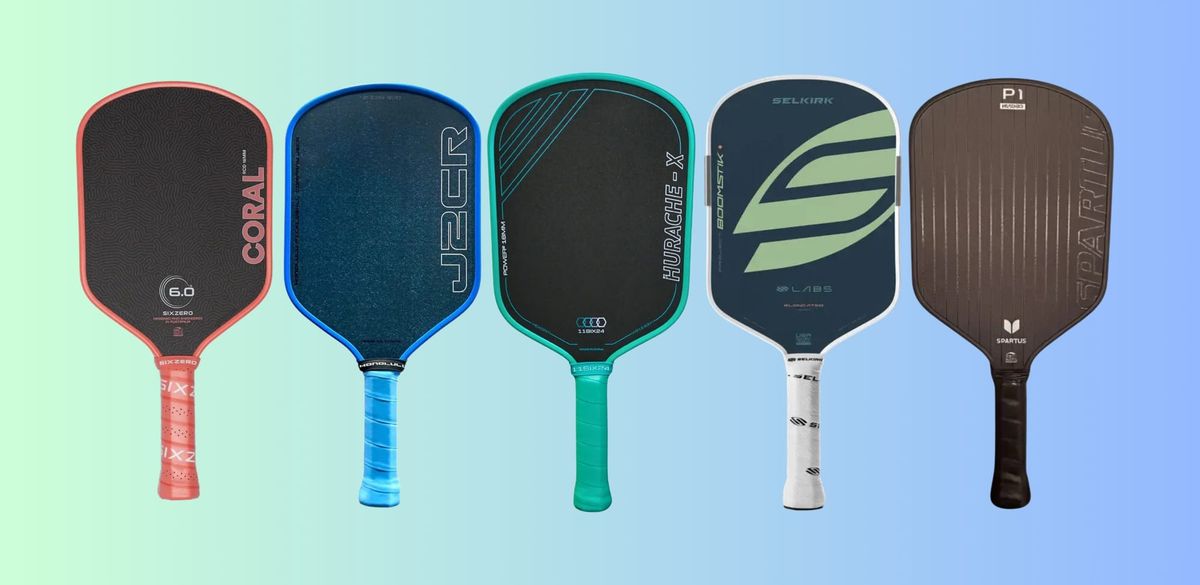
Pickleball Paddle Grit: 5 Durable Paddle Picks
Traditionally, a paddle’s surface grit is the first thing to wear out. Until now. A slew of top brands have entered the market with longer-lasting grit technology. Here are 5 of the best.
The Dink PickleballAlex E. Weaver
9. Drill Real-Life Scenarios to Maximize Training
The final secret is putting all of this into practice in a way that mimics what might really happen on court.
Play half court with a partner and start the rally at the kitchen line.
After a collaborative feed plus one dink, the ball is live for speedups, hand battles, and resets.
Don't forget to look for out balls, pick your spots, and prepare for counters according to probability. Keep score up to 11.
This drill will help you start to implement your new skills before taking your new lightning-fast hands to the rep courts.
Don't have a friend to practice with? Find a wall to practice on instead.
When Christian Alstrom was in school without pro partners to train with, he spent countless hours drilling his skills using a wall.
And now he's one of the best players in the world. If it worked for him, it can work for you.
💡
Heads up: hundreds of thousands of pickleballers read our free newsletter.
Subscribe herefor cutting edge strategy, insider news, pro analysis, the latest product innovations and more.
Frequently Asked Questions
What is a hand battle in pickleball?
A hand battle is a fast-paced volley exchange at the kitchen line where both players are hitting the ball back and forth with pace and aggression. These exchanges are decided by quick reflexes, positioning, and anticipation rather than power alone. Hand battles typically occur when one player attempts a speedup (an aggressive shot) and the rally becomes a rapid-fire exchange.
Why do most players lose hand battles?
Most players lose hand battles because they react too late, swing too big, or try to hit harder instead of smarter. They also often have poor paddle positioning before the ball arrives, which costs them precious reaction time. Additionally, many players don't anticipate their opponent's patterns and instead rely purely on reflexes.
How can I improve my hand battle skills?
You can improve by practicing the nine secrets outlined in this article: maintaining a ready position with your paddle up, shortening your swing, targeting specific spots instead of just hitting hard, reading your opponent's tells, understanding the triangle effect, knowing when to let balls go out, using soft resets, tracking the ball with your eyes, and drilling real-life scenarios. Consistent practice with a partner or against a wall is essential.
What's the triangle effect in pickleball?
The triangle effect is a physics principle where the direction of your speedup determines where your opponent's return shot will go. If you speed up straight ahead to your opponent's line, the ball comes back to the same side you hit from. If you speed up across their body, the ball comes back to your opposite side, creating a triangle pattern. Understanding this helps you anticipate where the next shot will go.
Do I need a partner to practice hand battles?
While a partner is ideal for practicing hand battles, you can also use a wall. Many top pros, including Christian Alstrom, have used wall drills to develop their hand battle skills when training partners weren't available. Wall drills help you work on footwork, positioning, and swing mechanics.
Anuncie Aqui / Advertise Here
Sua marca para o mundo Pickleball! / Your brand for the Pickleball world!





 English (US) ·
  Portuguese (BR) ·