
 English
  Spanish
  Portuguese
  German
  Italian
  Japanese
  French
  Polish
  Russian
  Netherlands
  Hungarian
  Turkish
  Videos
  Thedink Pickleball

Most pickleball players repeat the same mistakes without understanding the root cause, leading to frustration and stalled improvement. A new framework breaks down five simple adjustments that eliminate pickleball mistakes and immediately improve consistency.
Most pickleball players repeat the same pickleball mistake without understanding why.
- They drop their paddle between shots.
- They keep it at the wrong height.
- They hit to the sidelines instead of the center.
- They time their footwork after the opponent strikes the ball instead of before.
- They fight against spin instead of working with it.
The result? Frustration. Stalled improvement. The feeling that no matter how much you practice, you're stuck at the same level.
But here's the thing: pickleball mistakes aren't random. They follow patterns. And patterns can be fixed with the right system.
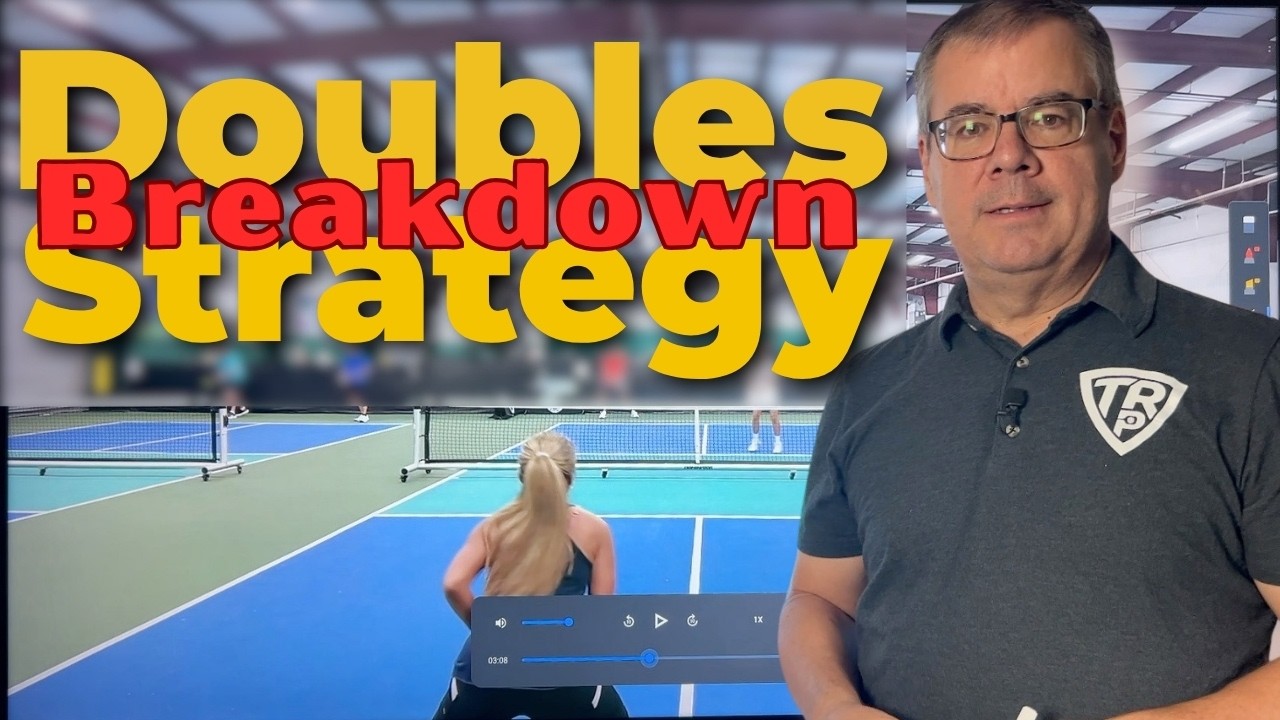
PADDLIX, a pickleball coaching channel, recently broke down five core adjustments that address the root causes of most errors in the sport.
The framework is simple enough for beginners to understand but sophisticated enough to help intermediate and advanced players tighten their game.
It's not about hitting harder or moving faster. It's about positioning, awareness, and decision-making.
Love pickleball? Then you'll love our free newsletter. We send the latest news, tips, and highlights for free each week.
1. The Laser Pointer Theory: Why Your Paddle Position Matters More Than You Think
One of the most common pickleball mistakes is not being ready for the next ball.
During a rally, players tend to drop their paddle or let it drift out of position. This delays reaction time when the ball is hit toward them.
The solution is called the laser pointer theory.
Imagine a laser extending from the tip of your paddle, continuously pointing toward the ball whenever it's on your opponent's side of the court.
This keeps your paddle aligned with the incoming shot and prepares you to respond immediately.
But there's a refinement that makes this even more effective: don't point directly at the ball.
Instead, shade slightly toward the backhand side. The reasoning is simple.
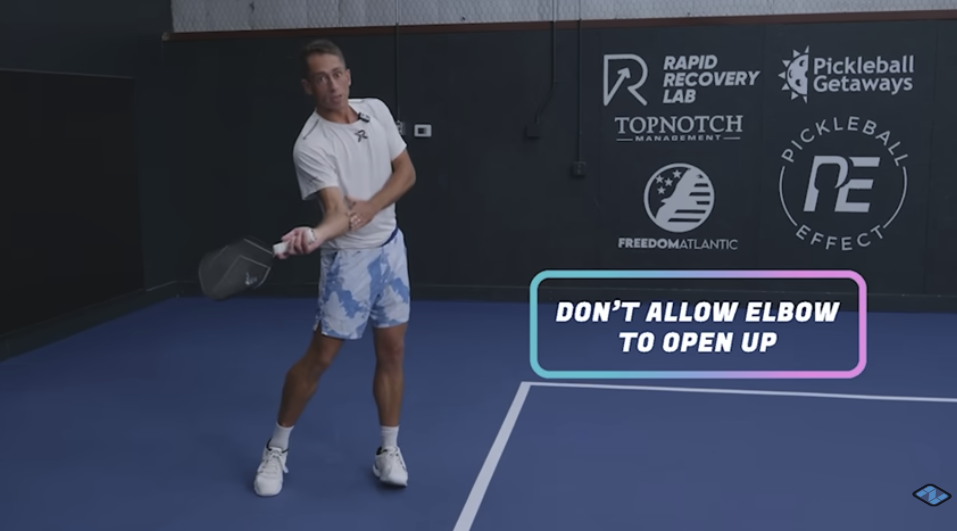
The backhand typically covers more of your body than the forehand.By favoring the backhand, you're better prepared to handle the majority of incoming shots with a more efficient counter.
As your paddle tracks the ball, your hips naturally align with it, creating a more complete ready position.
This applies across all areas of the court, from the baseline to the kitchen.
The result is improved reaction time, better positioning, and a more consistent ability to handle incoming shots.
2. The Seessaw Effect: Adjusting Paddle Height for Every Court Position
Another major source of pickleball mistakes is incorrect paddle height.
Many players keep their paddle in the same position regardless of where they are on the court. This leads to inefficient movement and late contact.
The seessaw effect addresses this by adjusting paddle height based on your location. Here's how it works:
- At the baseline, position your paddle low around your hips. This prepares you for balls that are likely to be driven toward your feet.
- As you move into the transition zone, raise your paddle to around your belly button. This creates a balanced position that allows you to handle both low balls and potential volleys.
- At the kitchen line, raise your paddle to chest height. This is where the fastest exchanges occur, and having your paddle already elevated minimizes the movement required to respond to speed ups and volleys.
This adjustment reduces unnecessary motion and improves timing.
Instead of reacting late and making large adjustments, you're already in the correct position for the expected shot.
An additional benefit of this system is improved decision-making on out balls.
Your paddle position acts as a reference point.If a ball is above your paddle at a given position, it's likely to go out.
This provides a simple visual cue that helps you avoid unnecessary contact on balls that would otherwise land out of bounds.
💡
Need some new pickleball gear? Get 20% off select paddles, shoes, and more with code THEDINK at
Midwest Racquet Sports3. Why Shot Selection Might Be Your Biggest Problem
Poor shot selection is another major source of errors.
Players often try to hit perfect winners or aim for difficult targets, which increases the likelihood of mistakes.
The solution is to simplify your decision-making by focusing on two specific target areas.
These targets are positioned between the center of the court and the sideline on both sides. Aiming for these zones provides several advantages.
- First, the net is slightly lower in these areas compared to the edges, which increases your margin for error.
- Second, these targets reduce the risk of hitting out of bounds since they're not directly aligned with the sidelines.
- Additionally, hitting toward these areas limits your opponent's options. When the ball is placed closer to the sideline, your opponent has more angles to attack.
By targeting more central zones, those angles are reduced, making your opponent's responses more predictable.
This is one of the most underrated adjustments in pickleball. Most players focus on hitting harder or placing the ball in tighter spots.
But the real skill is hitting to zones that give you the best chance of success while limiting your opponent's ability to attack.
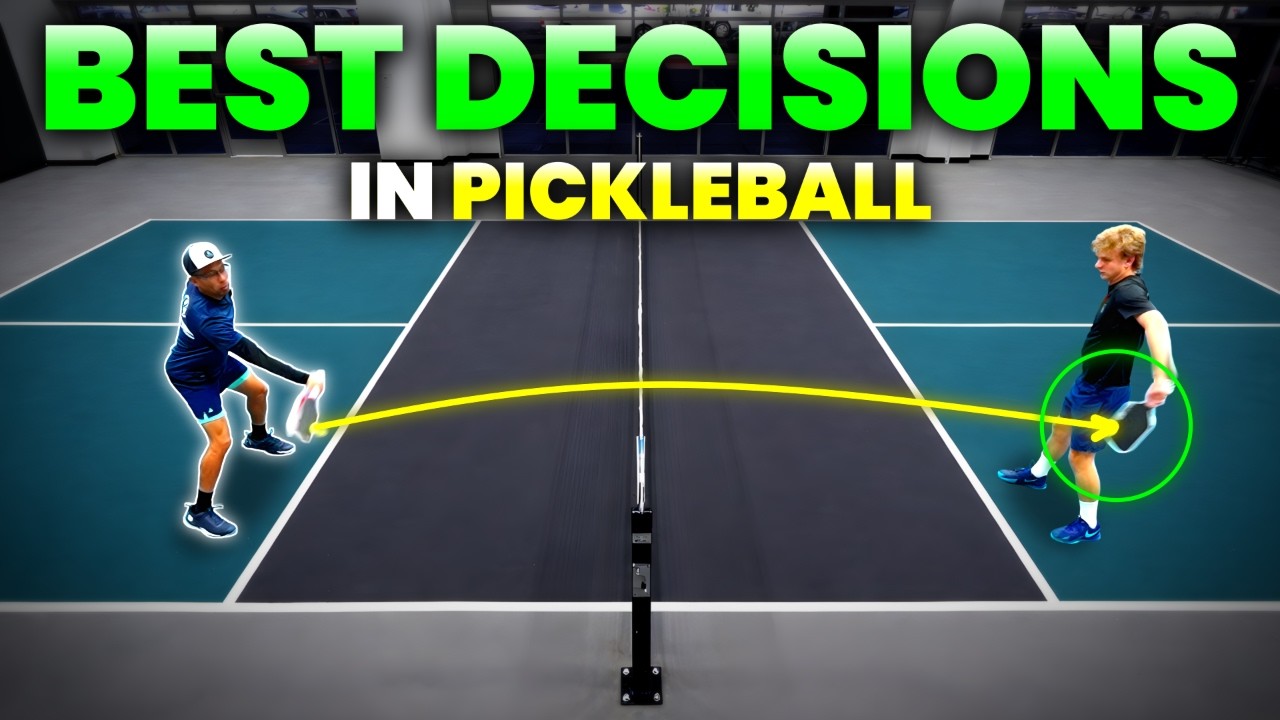
Pickleball Decision Making: Master Your Shot Selection
Pickleball decision making separates casual players from competitive ones. Master when to drive, drop, reset, and attack to transform your game.
 The Dink PickleballThe Dink Media Team
Footwork issues often stem from improper timing of the split step.
Many players perform the split step after their opponent makes contact with the ball, which delays their ability to move effectively.
This is a pickleball mistake that costs players countless points.
The correct approach is to complete your split step before your opponent makes contact.
This ensures that you're already low and balanced when the ball is struck, allowing immediate movement in response to the shot.
The split step creates a stable base by positioning you on the balls of your feet with your weight centered. From this position, movement becomes more efficient.
Once you recognize the ball's direction, you use controlled shuffling movements to reach the shot.
This maintains balance and keeps your body stable throughout the motion.
This timing adjustment significantly improves reaction speed.
Instead of spending time getting into position after the shot is hit, you're already prepared and can focus entirely on moving to the ball.
The result is better positioning, improved balance, and more consistent shot execution.
Split Step Pickleball: Footwork Tips for Seniors
By mastering this simple footwork move, you’ll stop your forward momentum and give your brain the split second it needs to read your opponent’s paddle.
The Dink PickleballThe Dink Media Team

5. Spin Continuation: Working With Spin Instead of Against It
As players improve, they encounter more spin, which can be difficult to handle without a clear strategy.
A common pickleball mistake is trying to counter spin with the same type of spin, which often leads to errors.
Spin continuation provides a more effective approach. The idea is to use your opponent's spin rather than fight against it.
When facing topspin, the ball rotates in a way that resembles backspin from your perspective.
Applying backspin in response aligns with that rotation, making the shot easier to control.
Similarly, when facing backspin, the ball behaves like topspin from your side.
Applying topspin in this situation helps you manage the incoming spin more effectively.
This method simplifies your interaction with spin by working with the ball's natural movement rather than resisting it.
Attempting to override heavy spin with the same type often requires excessive effort and leads to inconsistency.
When there's little or no spin, you have more freedom to choose your shot. In these cases, applying topspin is generally effective and provides control.
Understanding and applying spin continuation allows you to handle a wider range of shots with greater consistency and confidence.
What Is Wrist Lag in Pickleball? The Pro Technique for Power, Spin & Control
Pros use this technique to generate more power, more spin, and better control on serves, returns, drives, and speedups. And you should, too.
The Dink PickleballThe Dink Media Team
Putting It All Together: A Framework for Consistency
Reducing errors in pickleball comes from simplifying key aspects of the game.
- Maintaining proper paddle positioning through the laser pointer concept improves readiness.
- Adjusting paddle height with the seessaw effect ensures efficiency across different court positions.
- Limiting shot selection to high-percentage targets increases consistency. Executing the split step at the correct time enhances movement and balance.
- Finally, using spin continuation allows you to handle challenging shots with greater control.
Together, these adjustments create a more stable, consistent, and effective overall game. The beauty of this framework is that it's not about talent or athleticism.
It's about awareness and positioning. Any player, at any level, can implement these adjustments and see immediate improvement.
The next time you're on the court and you make a mistake, pause and ask yourself:
- Which of these five systems broke down?
- Was it my paddle position?
- My paddle height?
- My shot selection?
- My footwork timing?
- Or my spin management?
Once you identify the root cause, you can address it directly instead of just hitting more balls and hoping things improve.
That's the difference between practice and purposeful practice.
And that's how you stop repeating the same pickleball mistakes and start building a game that actually works.
💡
Heads up: hundreds of thousands of pickleballers read our free newsletter.
Subscribe herefor cutting edge strategy, insider news, pro analysis, the latest product innovations and more.
Frequently Asked Questions
What is the laser pointer theory in pickleball?
The laser pointer theory is a mental framework where you imagine a laser extending from your paddle tip, continuously pointing toward the ball on your opponent's side of the court. This keeps your paddle aligned with incoming shots and prepares you to respond immediately. The key refinement is shading slightly toward the backhand side, which covers more of your body and makes you better prepared for most incoming shots.
How should I adjust my paddle height at different court positions?
The seessaw effect dictates three positions: at the baseline, keep your paddle low around your hips to prepare for driven balls; in the transition zone, raise it to your belly button for a balanced position; and at the kitchen line, raise it to chest height where the fastest exchanges occur. This adjustment reduces unnecessary motion and improves your timing on all shots.
Why is shot selection so important in pickleball?
Poor shot selection is a major source of errors because players often try to hit perfect winners or aim for difficult targets. By focusing on two specific target areas positioned between the center and sideline on both sides, you increase your margin for error, reduce the risk of hitting out of bounds, and limit your opponent's attacking options. This simplifies decision-making and increases consistency.
What is spin continuation and how does it work?
Spin continuation means using your opponent's spin rather than fighting against it. When facing topspin, apply backspin in response; when facing backspin, apply topspin. This method works with the ball's natural movement instead of resisting it, making shots easier to control and reducing the effort and inconsistency that comes from trying to override heavy spin.
When should I perform the split step in pickleball?
You should complete your split step before your opponent makes contact with the ball, not after. This ensures you're already low and balanced when the ball is struck, allowing immediate movement in response. Proper split step timing significantly improves your reaction speed and overall positioning throughout the rally.
Anuncie Aqui / Advertise Here
Sua marca para o mundo Pickleball! / Your brand for the Pickleball world!





 English (US) ·
  Portuguese (BR) ·