
 English
  Spanish
  Portuguese
  German
  Italian
  Japanese
  French
  Polish
  Russian
  Netherlands
  Hungarian
  Turkish
  Videos
  Thedink Pickleball

Due to technological advancements and pickleball athletes getting better and better, certain shots that were once rare or even considered taboo are now at the forefront of the game
If you have played pickleball throughout the last 2-5 years, then you have personally witnessed how much the game has grown. Not only are more people playing pickleball now than ever before, but technology has grown exponentially in the past few years as well.
As a result of these technological advancements, certain shots that were once rare or even considered taboo are now at the forefront of the game.
Attacking from the transition zone
I should start by saying that I still shy away from this when teaching amateurs.
Most of the time, attacking from the midcourt or transition zone is still ill-advised, especially as you climb the skill ladder in the game. Thanks to the increased speed of both paddle and ball technology, however, this shot has become more possible in the right scenarios.
First, the height of the ball you are attacking from the transition zone is the first determining factor of whether to attack or not.
- If the ball is at least waist high, then it is worth weighing the risk of attacking.
- If the ball is chest-high or higher, then bombs away.
For me, attacks from the transition zone either need to be hit hard enough right at your opponent that they can’t dodge the ball, or they need to be angled down towards your opponents’ feet.
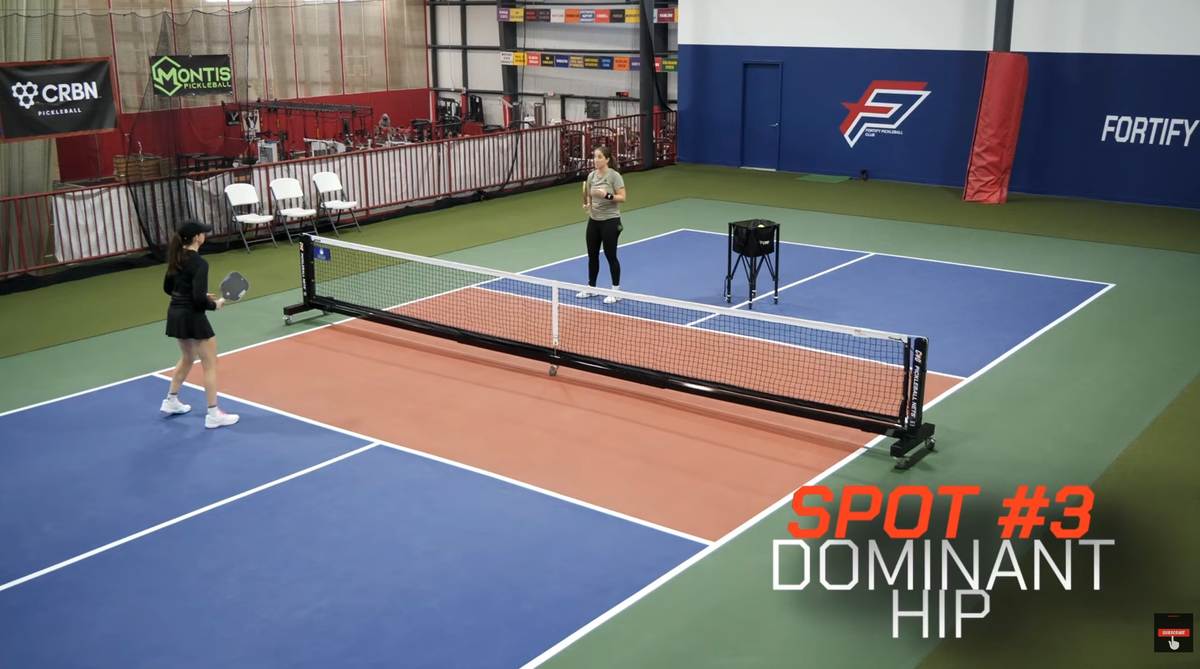
6 Slick Spots to Attack Your Opponents in Pickleball
Defense in pickleball has gotten too good. You can’t just hit a speed-up and expect to win the point outright. Not anymore.
 The Dink PickleballThe Dink Media Team
To do one or the other, the ball you are attacking needs to be struck at a high point. Waist-high shots are riskier, as you will have to add some top spin to get the ball to clear the net before dipping down to your opponent.
Otherwise, you’ll have to hit it flat, perfectly balancing power (too much and its going to go out) with accuracy (too low, and its going in the net).
Heads up: hundreds of thousands of pickleballers read our free newsletter. Subscribe here for cutting edge strategy, insider news, pro analysis, the latest product innovations and more.
So, when should you look to attack from the transition zone?
I teach my students to follow good drops, drives or drips (hybrid drop-drives) and look to attack the next ball in the transition zone.
This play is much more prevalent in mixed doubles, where the left-side guy can play a more aggressive game style.
If you believe your drop, drive, or drip will reach your opponents’ feet and they’ll have to hit up on the next shot, that is a good indicator that you may get an opportunity to move forward and attack the next ball from the transition zone.The last factor in attacking from the transition zone is weighing the risk/reward of the scenario.
Here are some things to consider:
- How good are your opponents’ fourth shots and volleys off your drops and drives?
- Do you and your partner feel athletic enough to move forward quickly and judge the height of the ball to determine if you can attack or not?
- What number is this game and what is the score?
These factors all play a role in decision-making. When in doubt, I always teach my students to reset the ball in the transition and get to the kitchen, where it is much easier to play offense.
5 Game-Ruining Mistakes You Don’t Even Know You’re Making
Fix your grip. Use your legs. Soften your third shot drop. Stay low at the net. Be patient. Any questions?
 The Dink PickleballThe Dink Media Team

Dodging attacks at the Kitchen
I can say this from personal experience at the pro level:
It is harder now than ever to dodge or leave an opponents’ speed up at the kitchen, especially if it is well-disguised.A direct result of the improved paddle and ball technology is increased power and speed on almost every shot. If it felt like you had half a second to decide to leave or counter a ball at the kitchen before, that decision-making time has reduced even greater.
Watch this Pickleball Body Bag in Stunning 20,000 FPS Slow-Motion
Body bags aren’t going away. So what better way to better understand this aspect of the game than at 20,000 frames per second?
 The Dink PickleballThe Dink Media Team
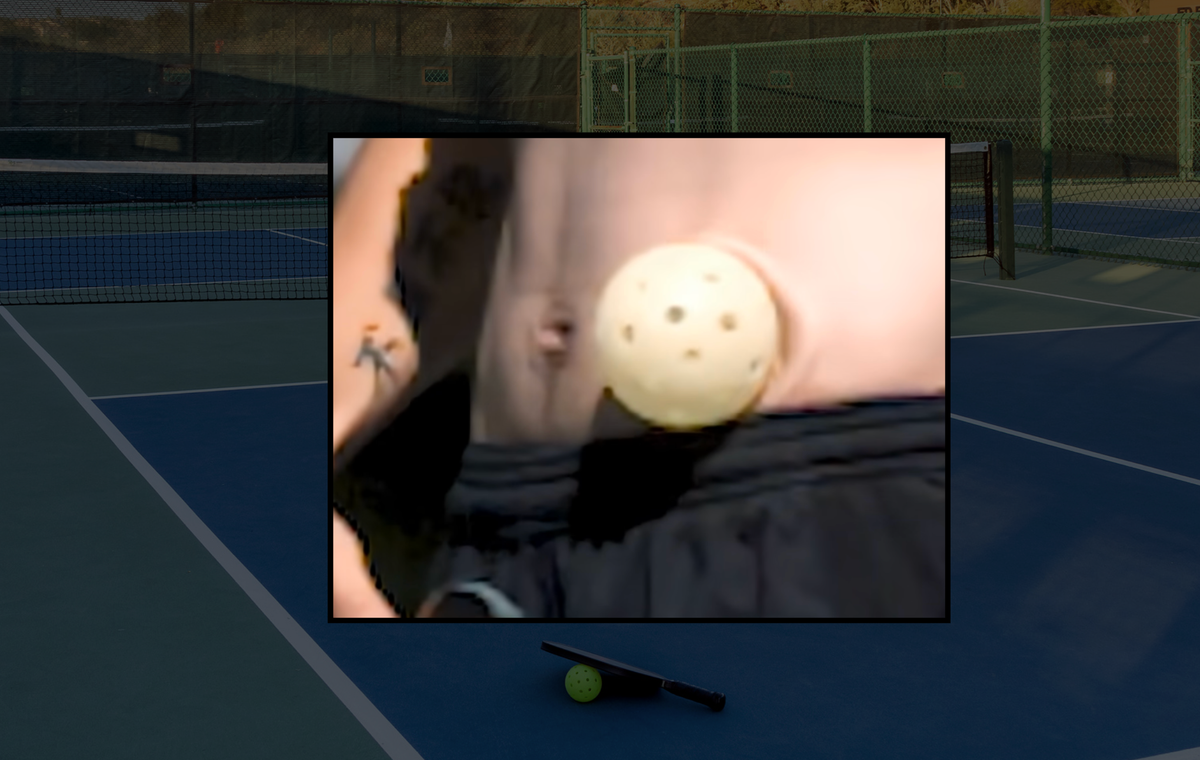
Now, unless you are 100% positive a speed up is coming, it is extremely difficult to leave or dodge an opponents’ speed up to let the ball go out. Better paddles mean players can now hold speed ups even longer without sacrificing too much spin or power, reducing your reaction time.
As a result, body bags are increasing. More players are wearing eye protection for that reason. And at the amateur level, I am teaching my students to hunker down even lower if they think an attack is coming, and to take a step or two off the kitchen line to gain reaction time.
Not only can attacks be hit faster, but off-speed attacks have become more potent as well. If your opponent has to plan for lightning-fast speed ups and are planning on the ball flying quickly at them, an off-speed attack can really trip them up.
To conclude, pickleball’s evolution has made the game more nuanced than ever before. The softer game from five years ago has evolved into a more-athletic, faster-paced gameplay with more fire fights, speed, and even quicker reaction time and decision making. Keep an eye out for the two shots listed above, and remember that awareness and preparation are the best skills to improve on.
Professional pickleball player Eric Roddy has teamed up with Jittery Joe’s to release a new pickleball coffee – The Kitchen Brew. Whether you are hitting dinks or chasing dreams in the Kitchen, our medium roast gives you the perfect boost to power through every game. Start your day right, both on the court and in your cup!
You can purchase The Kitchen Brew on the Jittery Joe’s website.
Anuncie Aqui / Advertise Here
Sua marca para o mundo Pickleball! / Your brand for the Pickleball world!








 English (US) ·
  Portuguese (BR) ·