
 English
  Spanish
  Portuguese
  German
  Italian
  Japanese
  French
  Polish
  Russian
  Netherlands
  Hungarian
  Turkish
  Videos
  Thedink Pickleball

Each step has a clear purpose. Your grip sets the paddle angle. Your turn and weight transfer load the shot. Your swing path and follow-through deliver it. Your reset gets you ready for the next one.
Cliff Pickleball's latest lesson proves that fixing your forehand doesn't require a complete overhaul.
In just 15 minutes, he walks through a straightforward four-step system that helped one player boost consistency by 20 to 30 percent in a single session.
If your forehand feels weak, inconsistent, or keeps finding the net, this breakdown covers the mechanical fundamentals that separate casual hitters from players who can drive with confidence.
Love pickleball? Then you'll love our free newsletter. We send the latest news, tips, and highlights for free each week.
The Four-Step Forehand System
Cliff breaks down the forehand into four sequential movements that should flow as one continuous motion. The system sounds simple on paper, but the execution requires attention to detail and repetition to feel natural.
- Turn your body and transfer weight to your back leg. This is where the power starts. Many players skip this step or rush through it, which kills consistency.
- Transfer your weight forward to your front leg. This happens before you even swing. It's the engine that drives the shot.
- Follow through with a full swing. Don't slap the ball with a short, choppy motion. Extend through the contact point.
- Return to your ready position. Complete the motion and reset for the next shot.
The key insight here is that steps two and three should feel like one fluid action, not two separate movements. Cliff emphasizes this repeatedly because it's where most players break down. They take the paddle back, pause, then swing. That hesitation kills rhythm and consistency.
Grip and Paddle Angle Matter
Before diving into footwork, Cliff addresses grip. The student was already using a continental grip, which is solid for a topspin forehand. But the angle of the paddle face at setup makes a difference.
For a topspin drive, the bevel should sit slightly angled rather than perfectly flat.This small adjustment helps you brush up on the ball and generate spin without forcing an awkward wrist position.
It's a detail that doesn't sound revolutionary, but it's the kind of thing that prevents compensatory movements later in the swing.
💡
Need some new pickleball gear? Get 20% off select paddles, shoes, and more with code THEDINK at Midwest Racquet Sports
Swing Path Is Everything
One of the biggest issues Cliff identifies is a short, slapping swing. The student was essentially punching at the ball rather than swinging through it. Cliff demonstrates the difference in slow motion: his paddle starts way back, his hips turn, and he creates a full arc from backswing to follow-through. The student's swing was maybe a quarter of that length.
This is why the four-step system works.
By forcing yourself to turn, transfer weight, and follow through as distinct phases, you naturally create a longer, more powerful swing path.You can't rush it. The mechanics demand that you take your time.
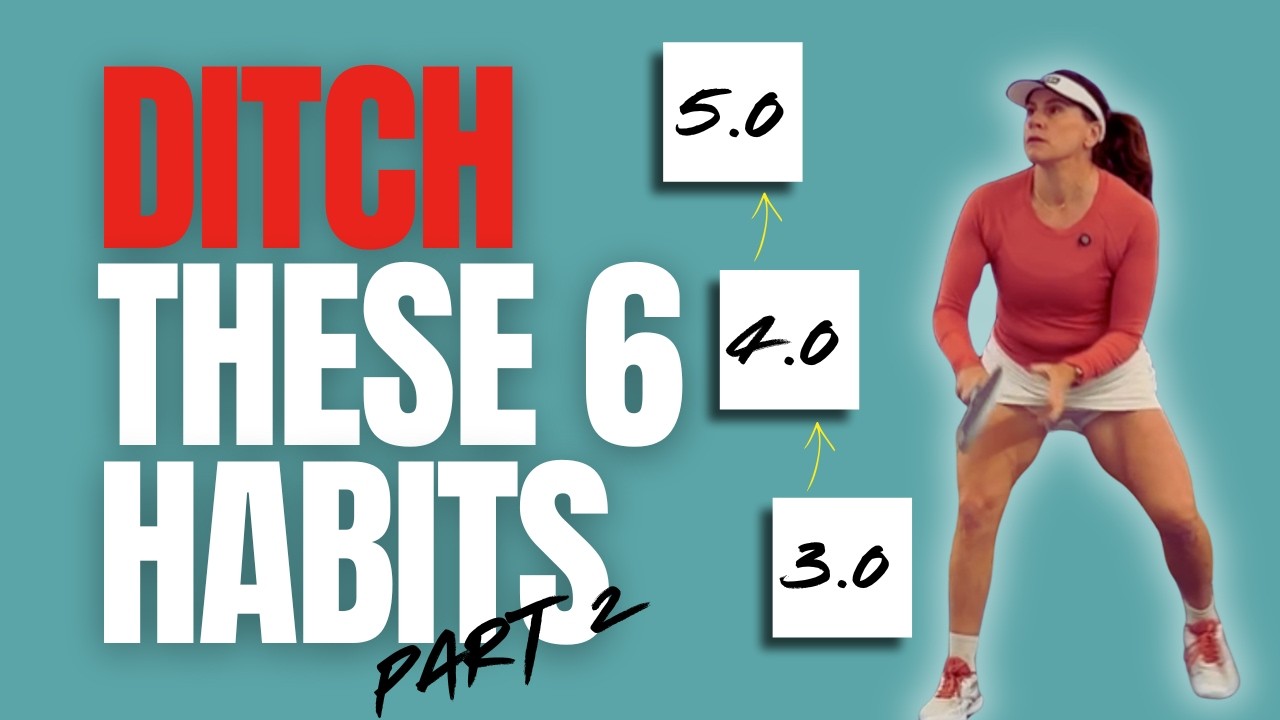
Six More Stubborn Habits Losing You Pickleball Points
Pick one this week, work on it during your rec games, and let it become automatic. Rome wasn’t built in a day, and neither is a 5.0 game.
 The Dink PickleballThe Dink Media Team
Footwork and Stance
Cliff introduces two stances: open and closed.
The student was using an open stance, which is fine for some situations, but Cliff pushes her toward a closed stance for drives. In a closed stance, your feet are positioned so your body can rotate more fully, and your weight transfer becomes more pronounced.
He also emphasizes staying low. When you're making contact with the ball, your legs should be bent and athletic. This gives you better control and lets you get under the ball to generate topspin. If you're standing tall and stiff, you're fighting gravity and losing power.
Heads up: hundreds of thousands of pickleballers read our free newsletter. Subscribe here for cutting edge strategy, insider news, pro analysis, the latest product innovations and more.
The Weight Transfer Is the Secret Sauce
If there's one thing Cliff hammers home, it's weight transfer. He even has the student practice it without a paddle, almost like a dance move. Back leg, then front leg, then swing. The rhythm matters because it forces you to load and unload your weight in sequence rather than trying to generate power from your arms alone.
This is why the student's shots improved so dramatically by the end. She wasn't hitting harder; she was hitting smarter. Her body was doing the work, not her arm.
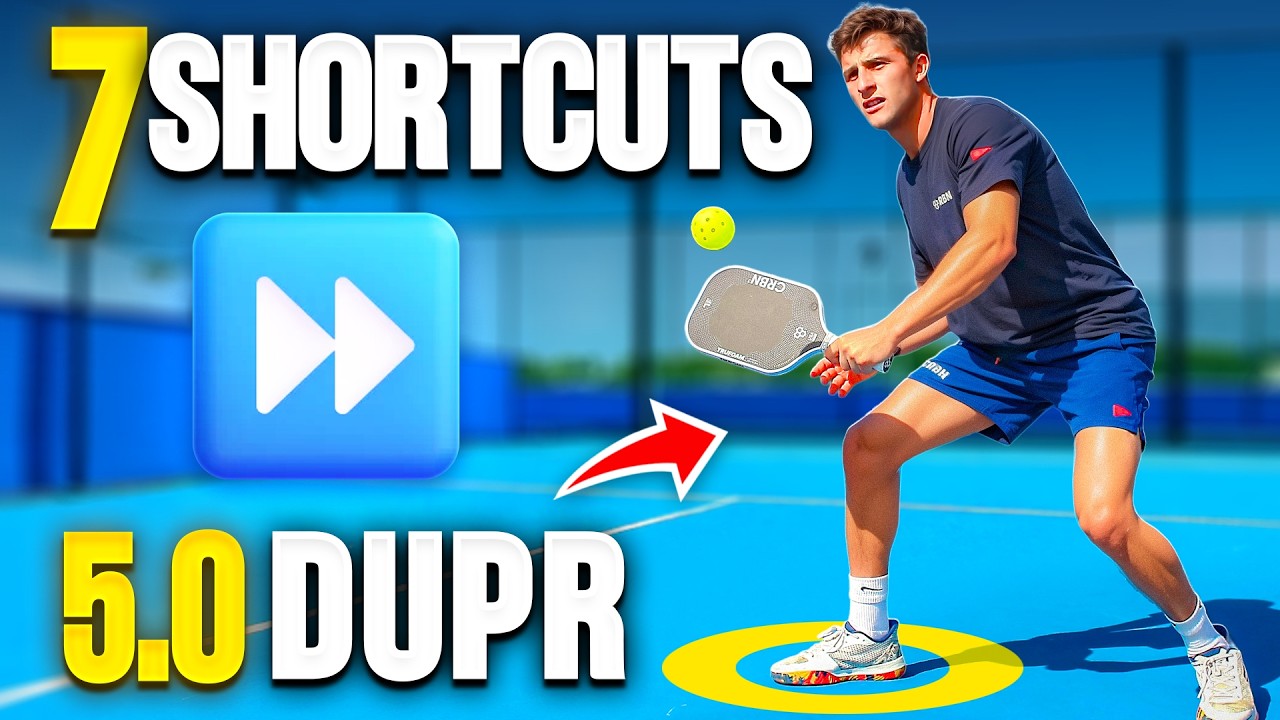
7 Pickleball Shortcuts to Reach 5.0 Faster
None of these shortcuts are revolutionary on their own. But stacked together, they create an entirely different player.
 The Dink PickleballThe Dink Media Team
Why This Works
The reason Cliff's system is effective is that it removes guesswork. Instead of thinking about 10 different things while you're hitting, you focus on four steps in order. Each step has a clear purpose.
- Your grip sets the paddle angle.
- Your turn and weight transfer load the shot.
- Your swing path and follow-through deliver it.
- Your reset gets you ready for the next one.
By the end of the lesson, the student is hitting consistent topspin drives that land deep and low, making them hard to attack. She went from driving into the net to driving with control. That's the power of solid mechanics.
Anuncie Aqui / Advertise Here
Sua marca para o mundo Pickleball! / Your brand for the Pickleball world!







 English (US) ·
  Portuguese (BR) ·